Design story
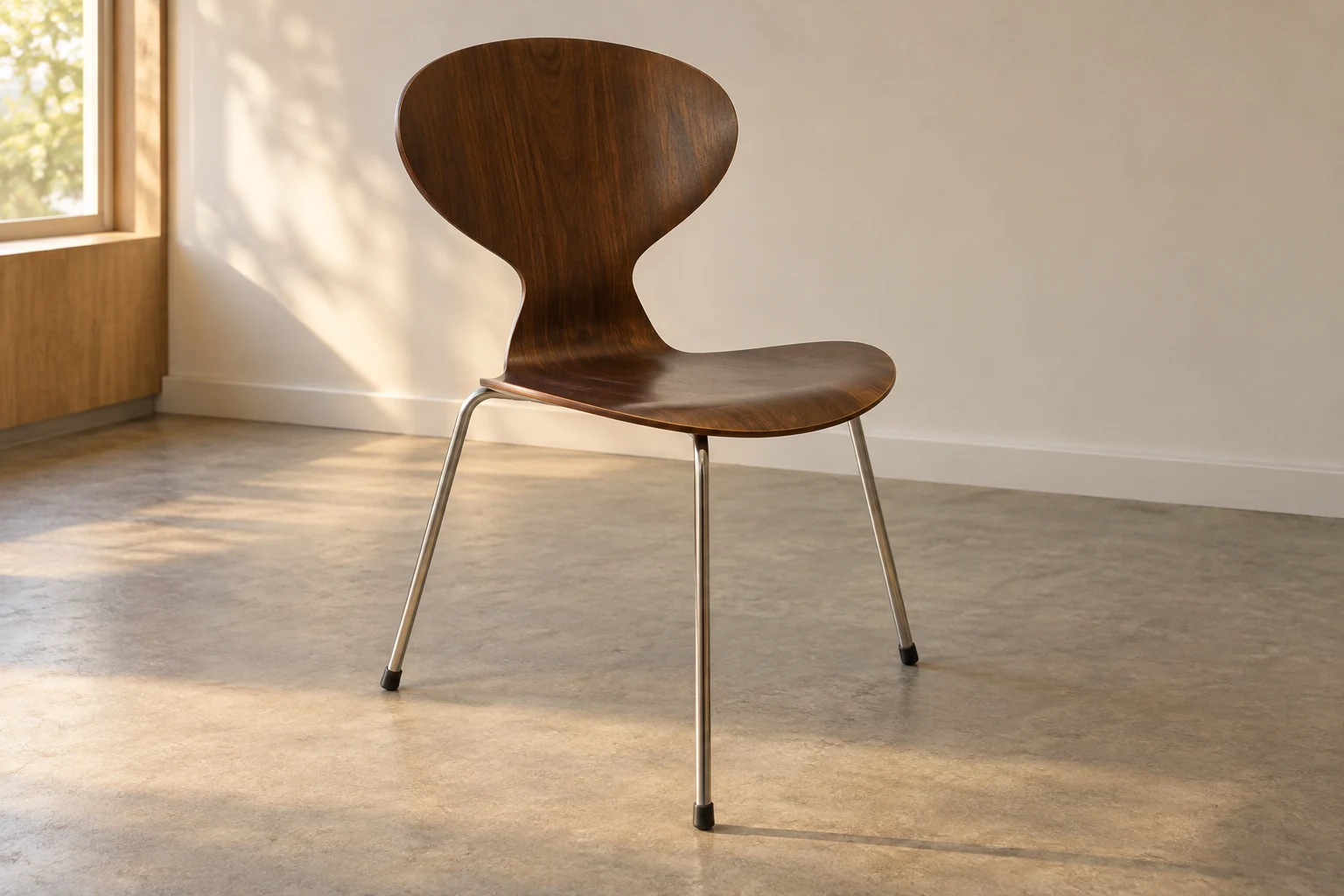
Ant Chair: the chair that cleared the floor
See how Arne Jacobsen's 1952 Ant Chair turned a canteen brief, one double-curved plywood shell and three legs into an economy of space and material.
Designs
Individual designs and coherent families examined through reliable records.
Design story
See how Arne Jacobsen's 1952 Ant Chair turned a canteen brief, one double-curved plywood shell and three legs into an economy of space and material.
Design story
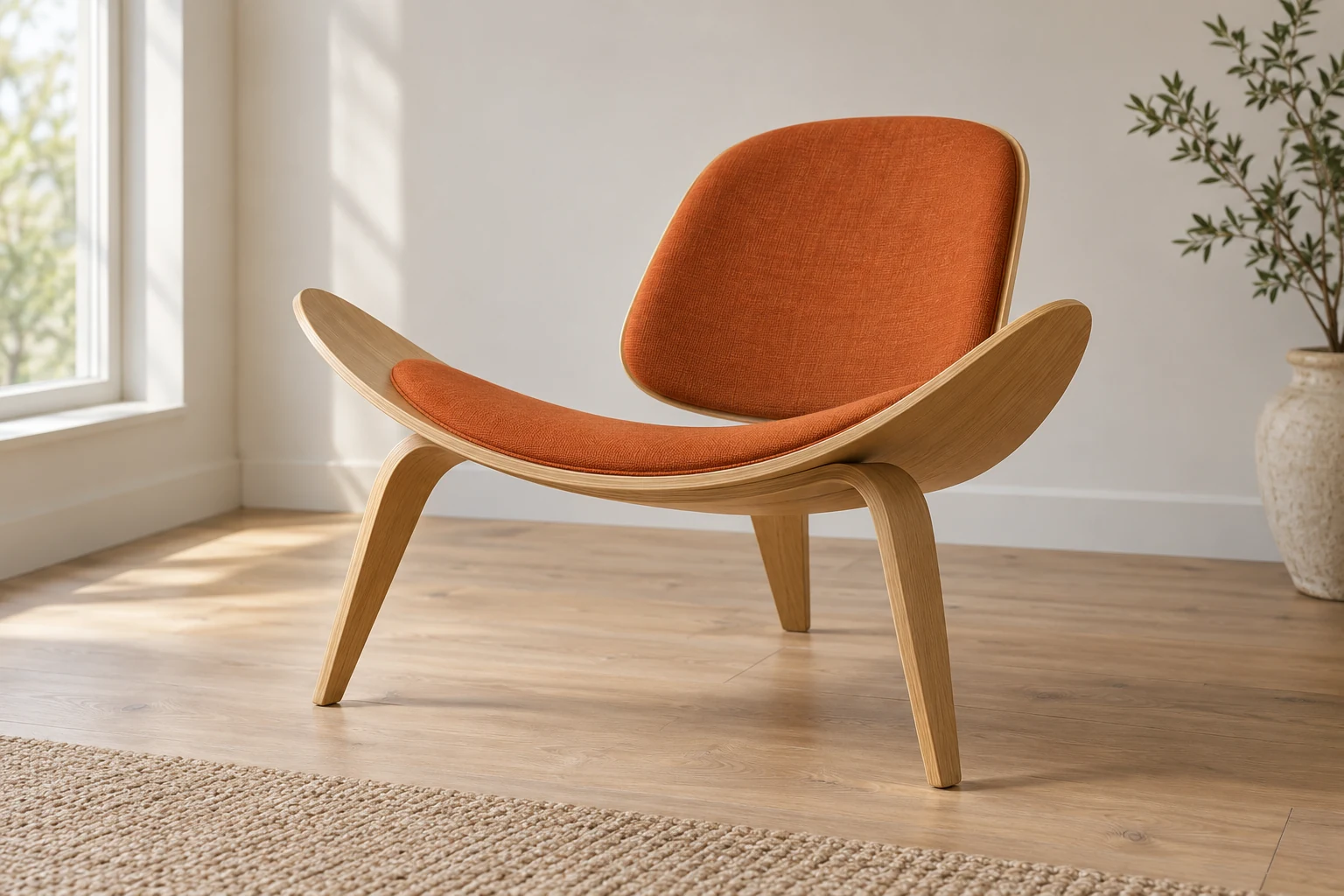
See how Hans J. Wegner's 1963 CH07 Shell Chair uses two curved wooden shells, deliberate gaps and three legs to make support appear almost weightless.
Design story
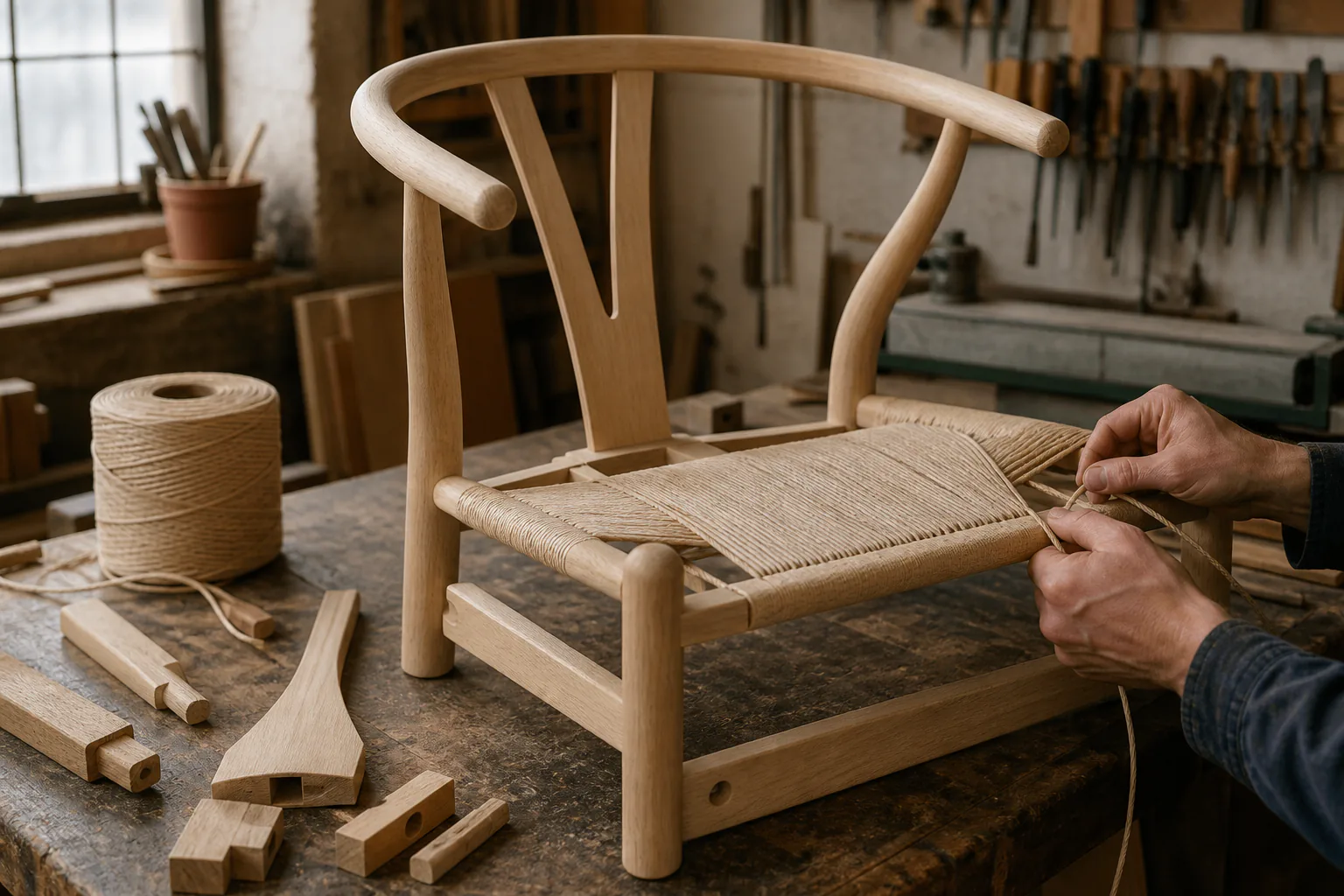
Read the CH24 Wishbone Chair through its dates, curved frame, Y-shaped support, joinery and paper-cord seat—then separate model history from vintage-object evidence.
Design story
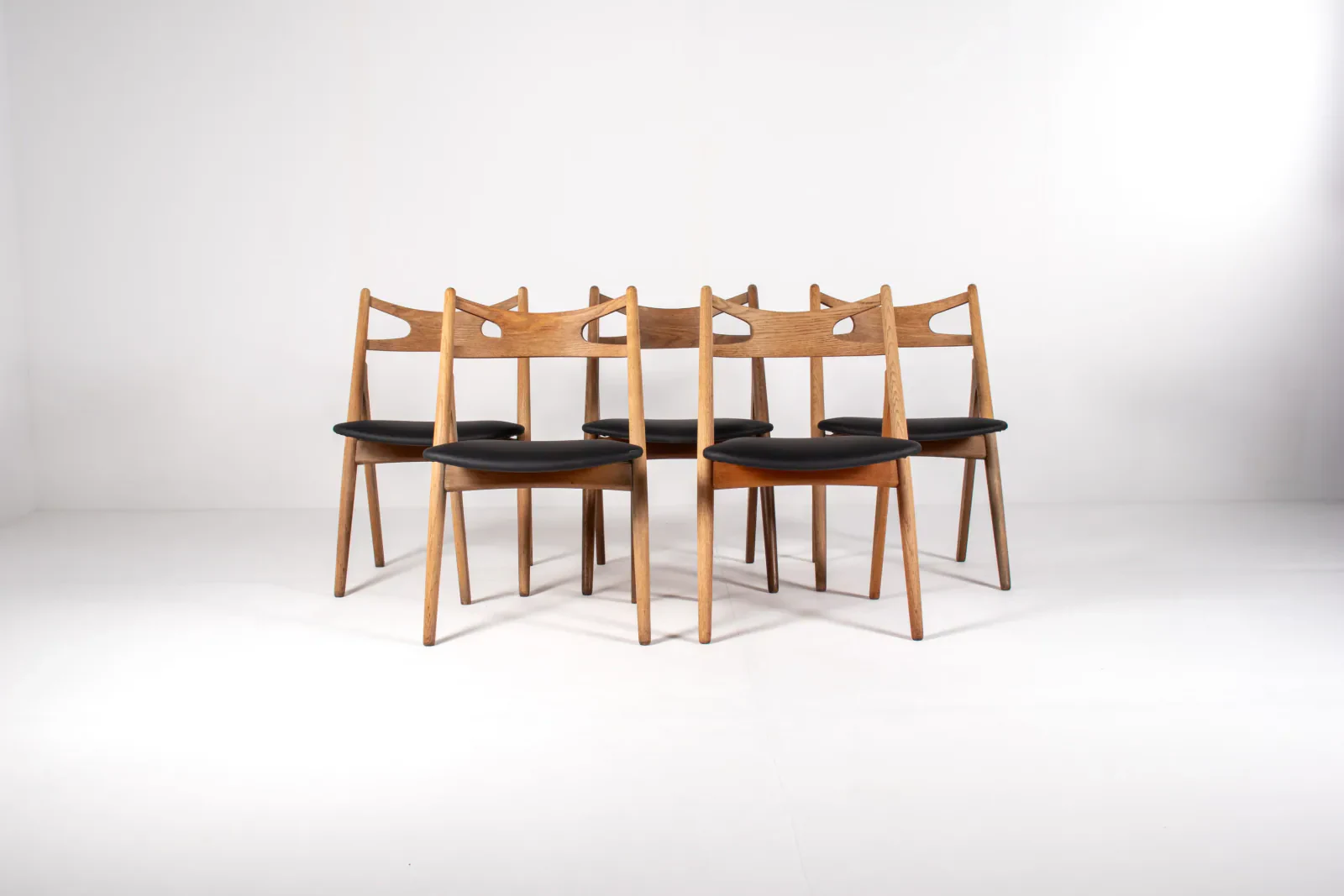
See how Hans J. Wegner’s 1952 CH29 turned the splayed support of a carpenter’s sawbuck into a wide, curved and unexpectedly sociable dining chair.
Design story
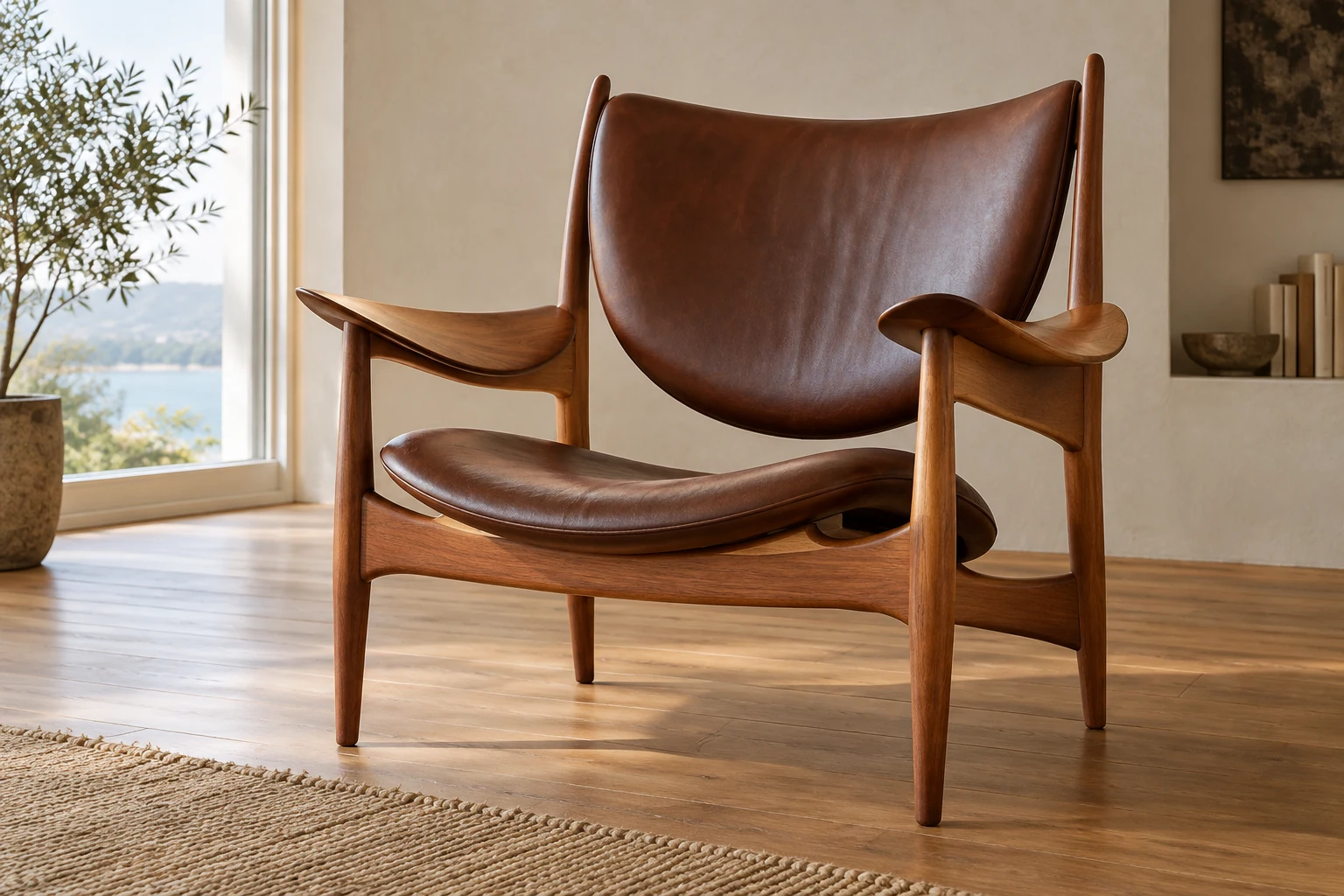
Read Finn Juhl's 1949 Chieftain Chair through its commanding scale, exposed timber frame, suspended leather forms, Guild debut and complicated name.
Design story
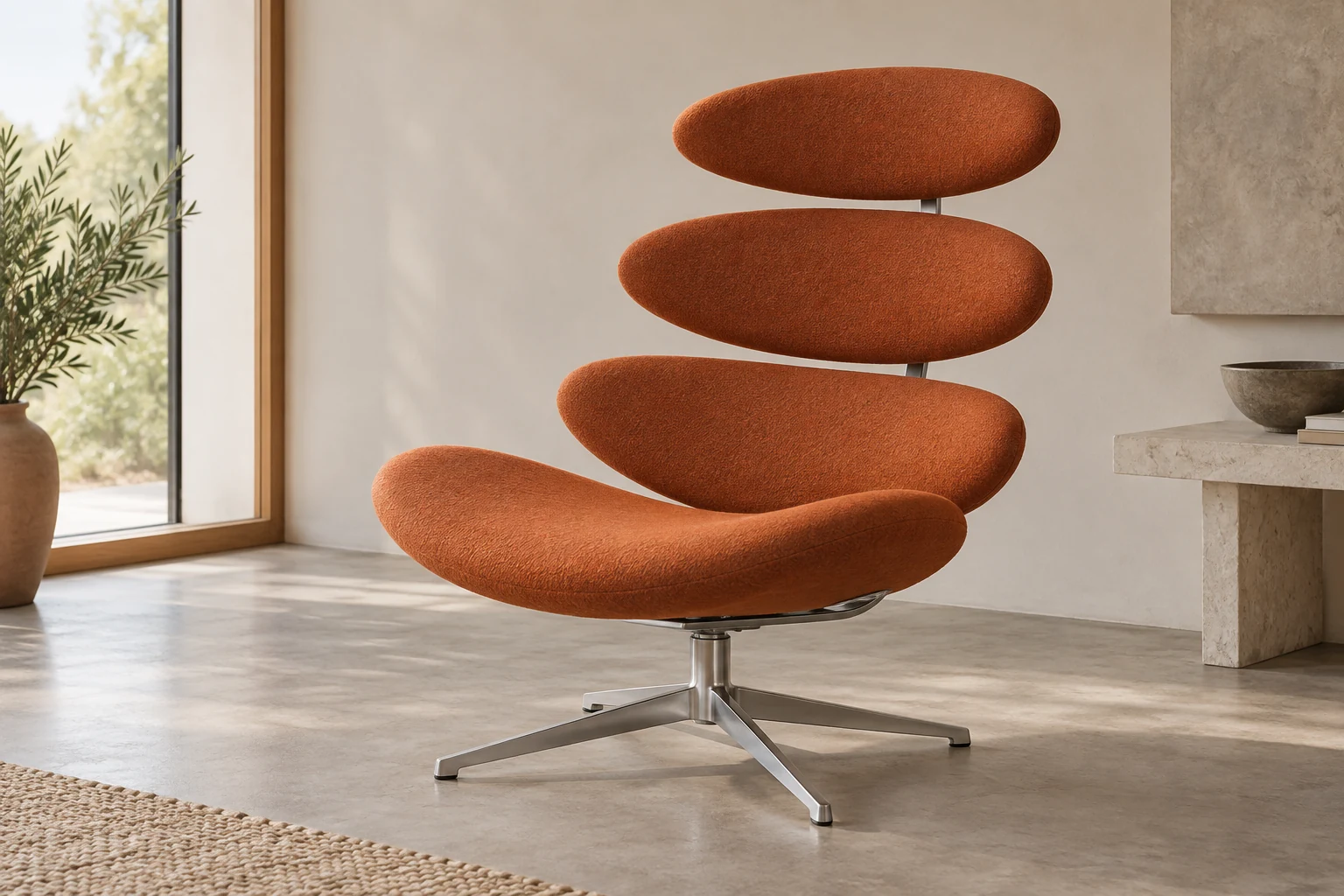
See how Poul M. Volther's Corona Chair divides one reclining body into four elliptical support zones, turning gaps and a spring-steel spine into the design.
Design story
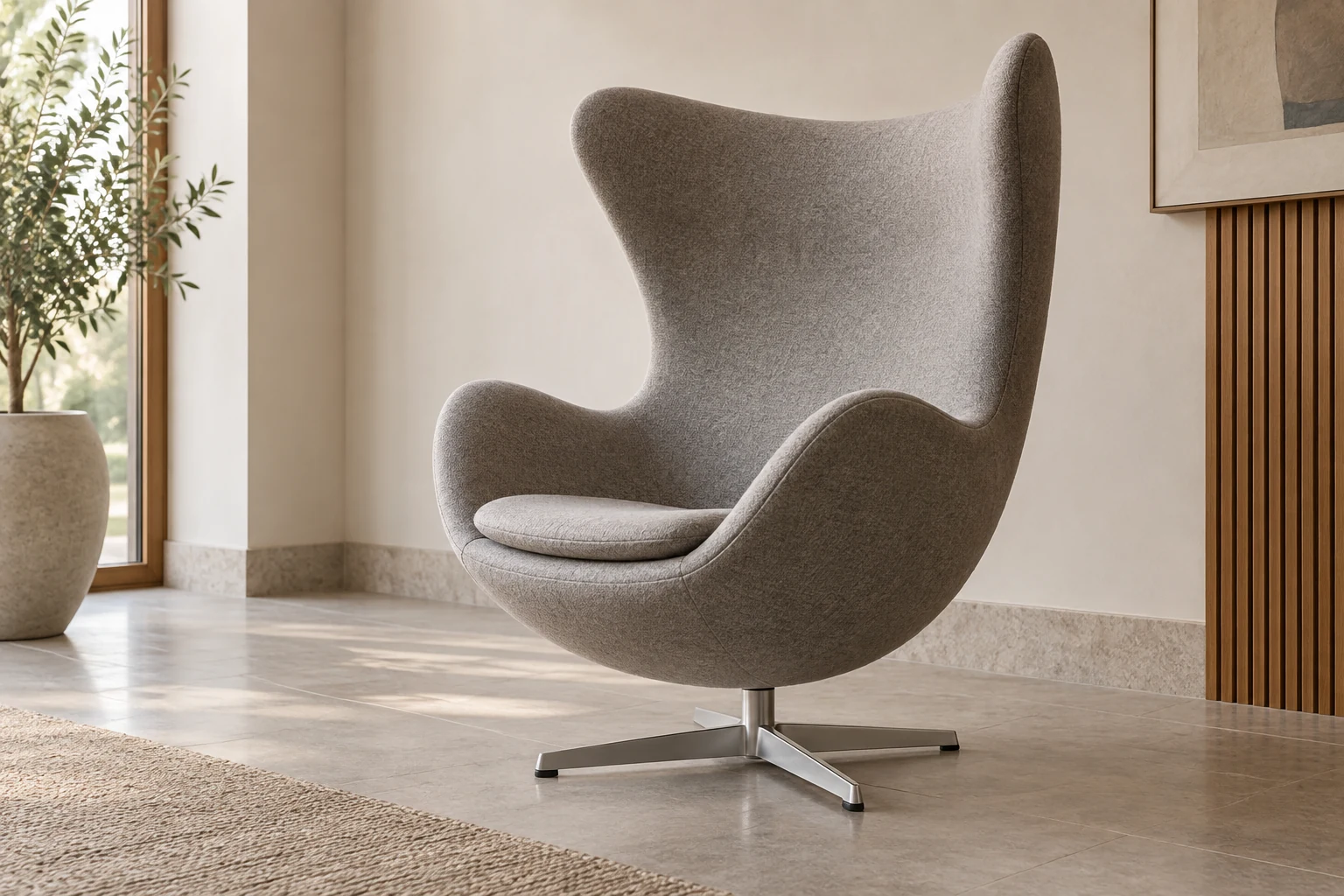
See how Arne Jacobsen's 1958 Egg Chair used a padded moulded shell to create privacy, focus and small social enclaves inside the SAS Royal Hotel lobby.
Design story
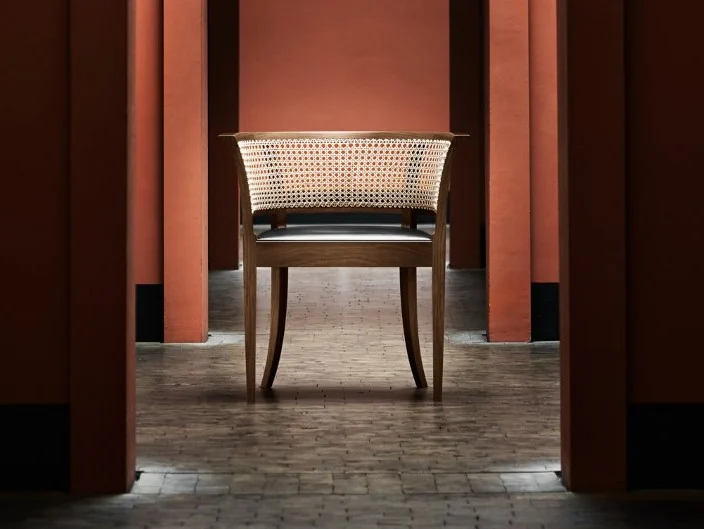
See how Kaare Klint's 1914 Faaborg Chair used mobility, open cane work and visual restraint to help museum visitors look at art rather than at the chair.
Design story
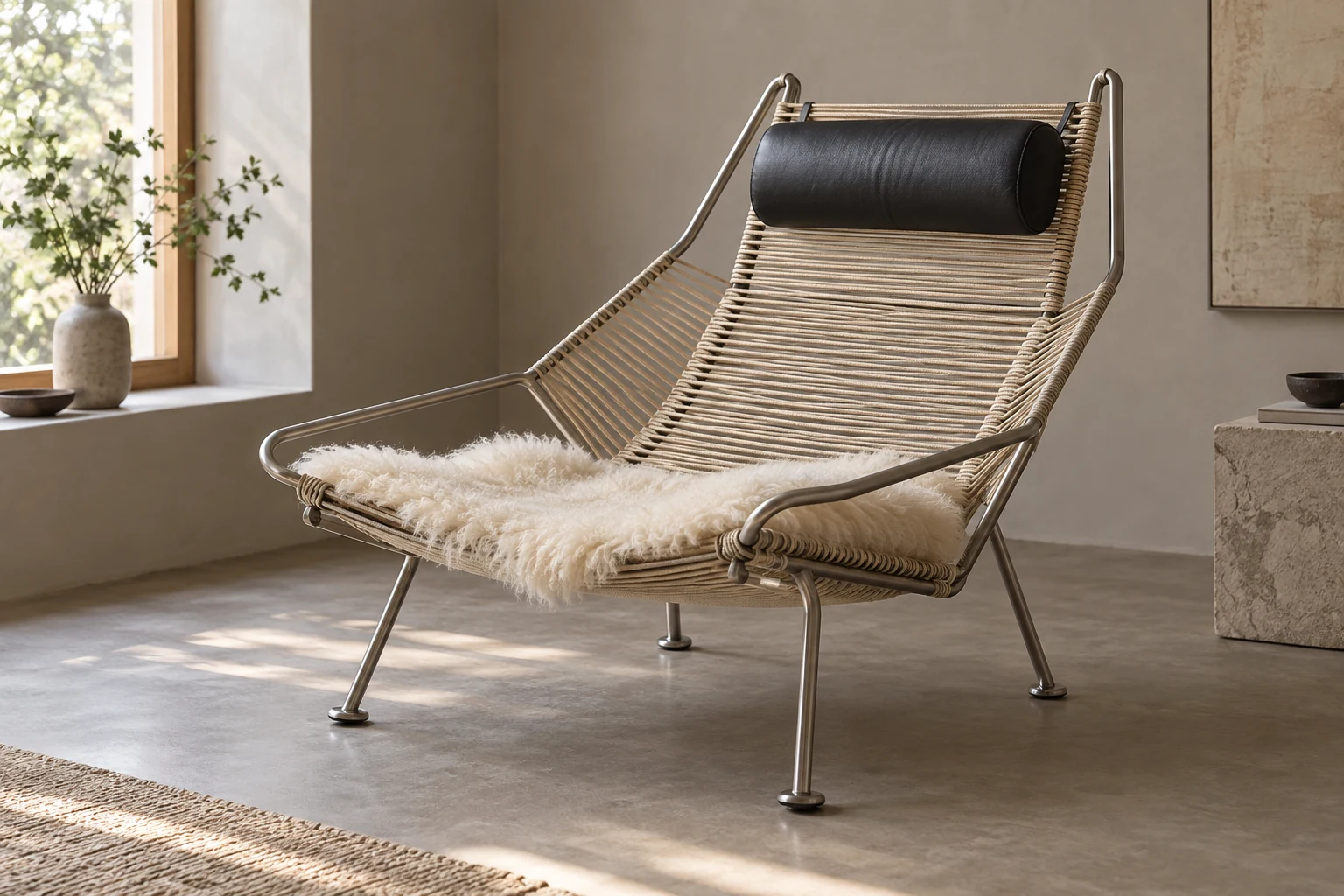
Read Hans J. Wegner's 1950 Flag Halyard Chair through its steel outline, repeated cord, selective softness and unusually exposed structure.
Design story
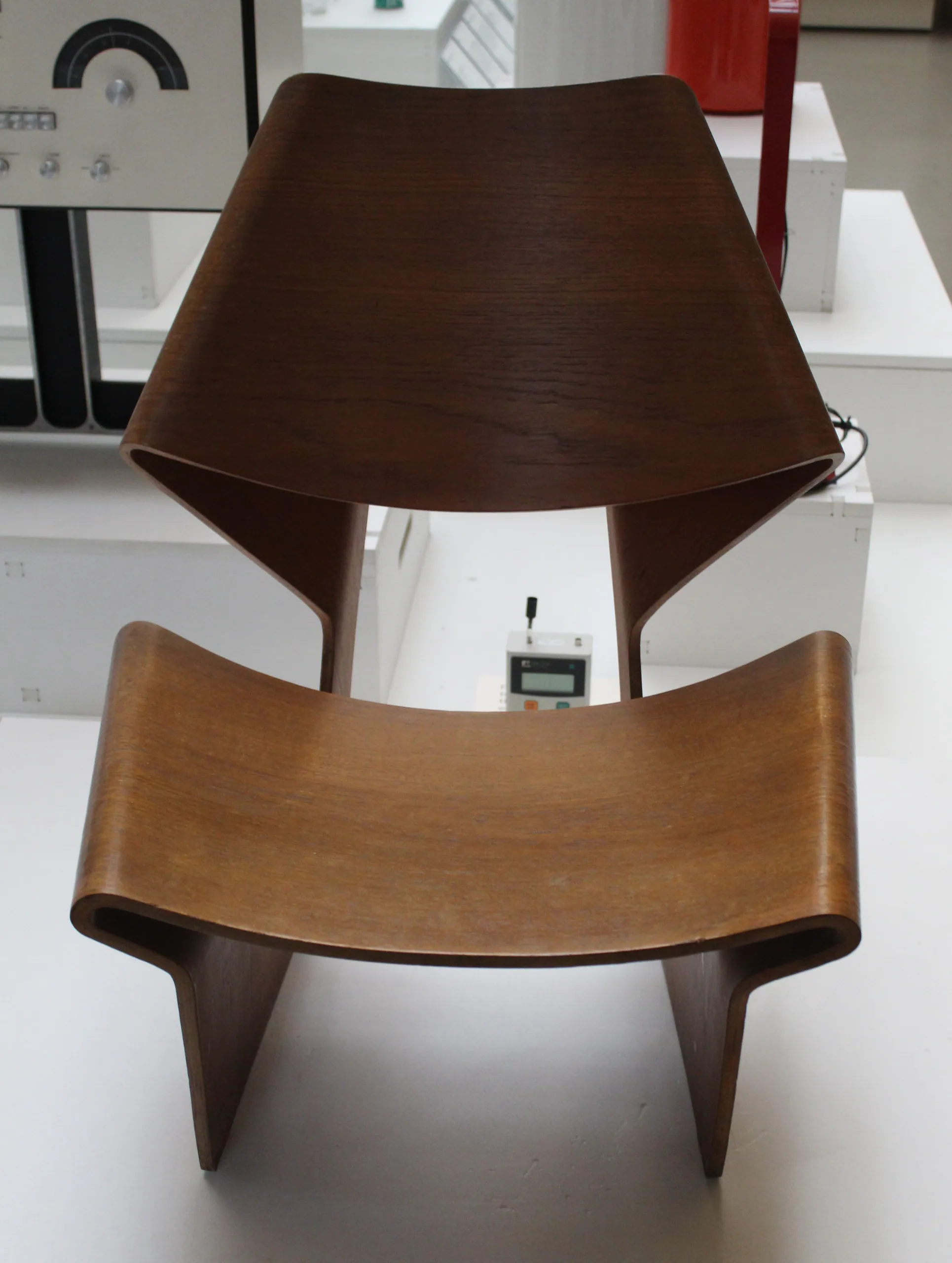
See how Grete Jalk's 1963 GJ Chair turns two moulded-plywood shells, a narrow gap and demanding lamination into the illusion of one continuous bow.
Design story
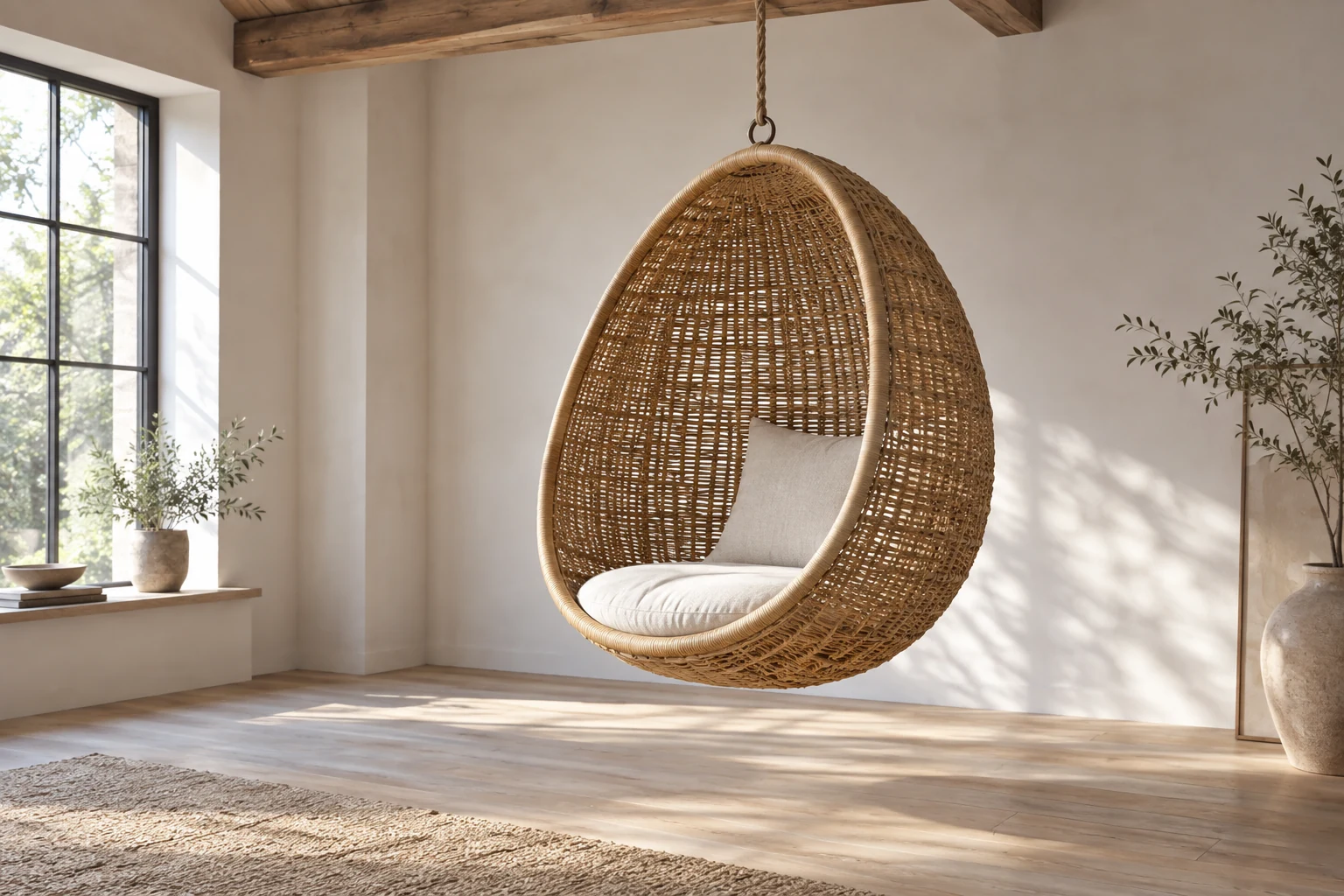
See how Nanna and Jørgen Ditzel's Hanging Egg removes legs, suspends a woven rattan shell and turns sitting into a gently moving room within a room.
Design story
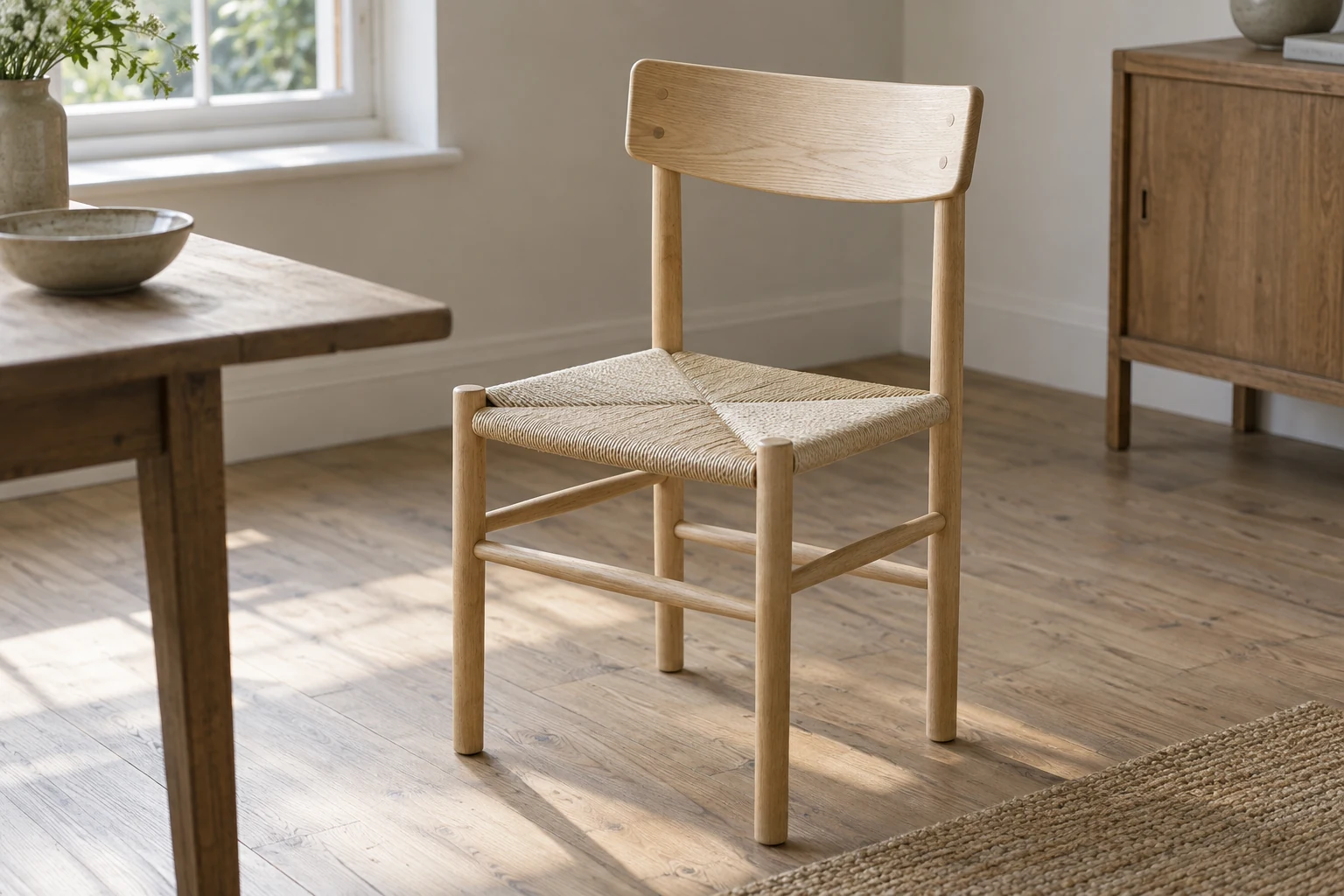
See how Børge Mogensen's 1947 J39 turns four plain legs, a curved back and a woven seat into a Danish classic whose modesty is carefully designed.
Design story
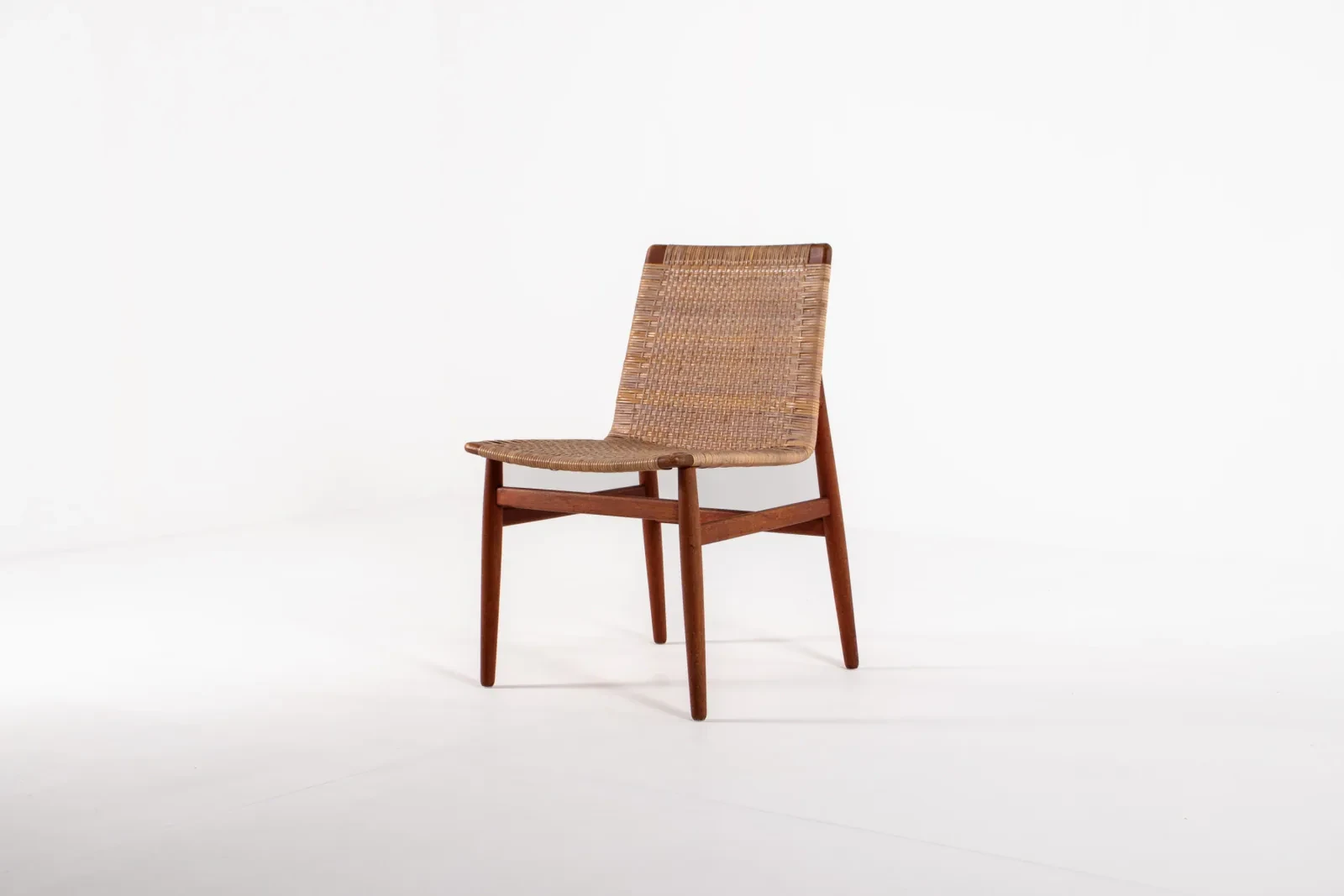
Read Jørgen Høj’s 1951 side chair through its two visual systems: a slender timber frame and broad woven rattan seat and back planes.
Design story
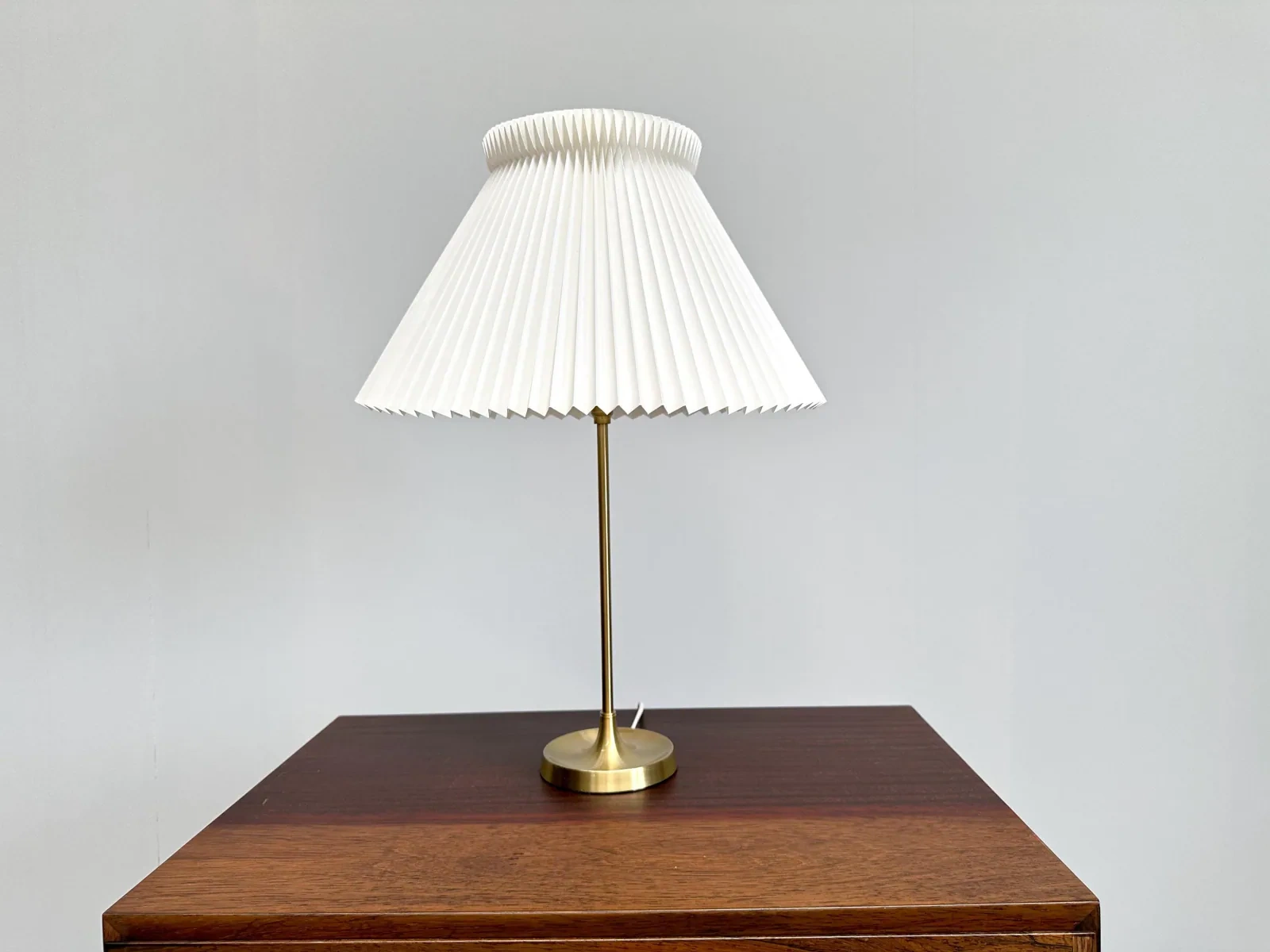
Discover Esben Klint’s 1948 Model 307, where a slender brass stand lets a hand-folded Model 2 shade create volume, stiffness and softened light.
Design story
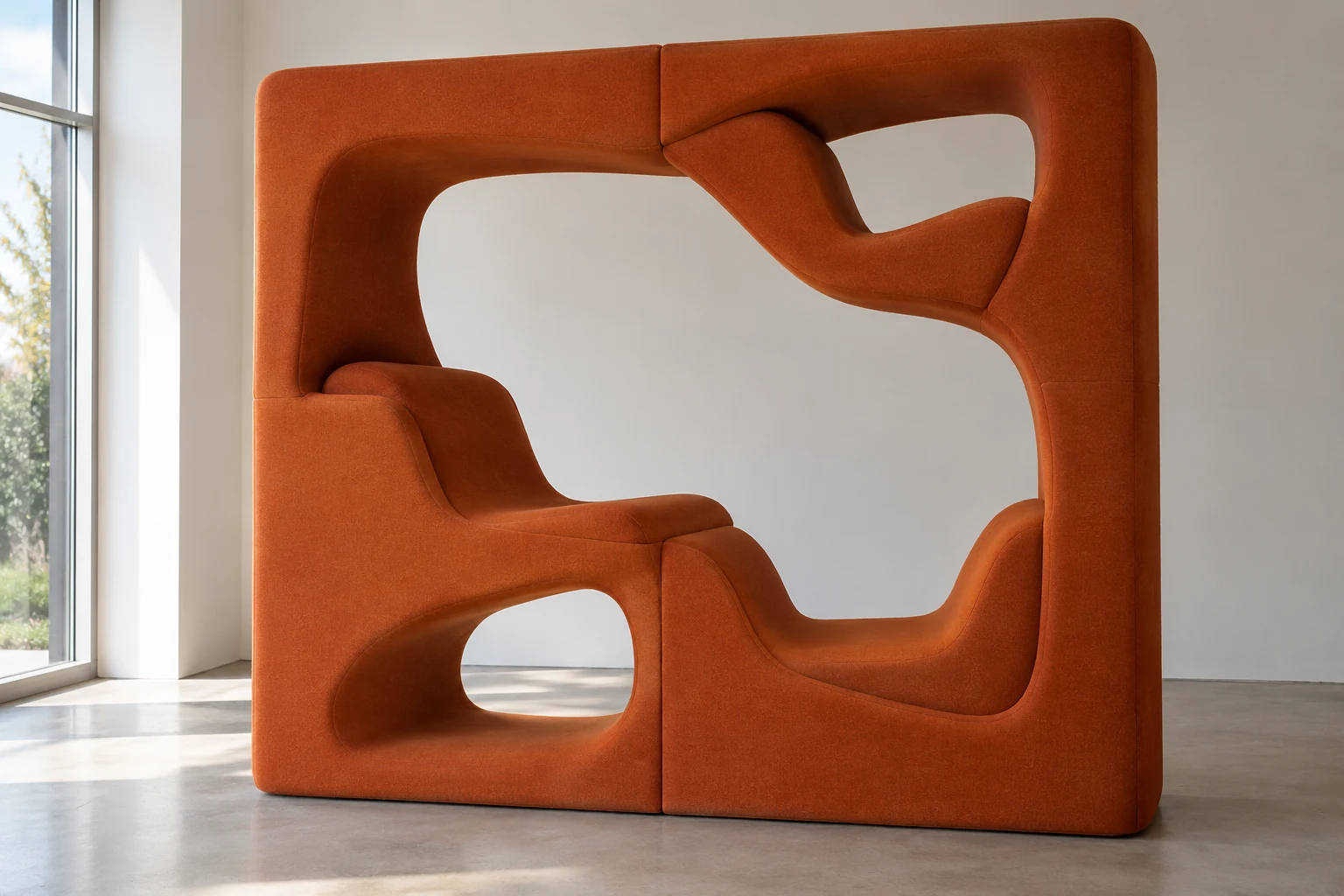
Climb inside Verner Panton's Living Tower and see how two upholstered elements, four seating levels and one great void turn furniture into social architecture.
Design story
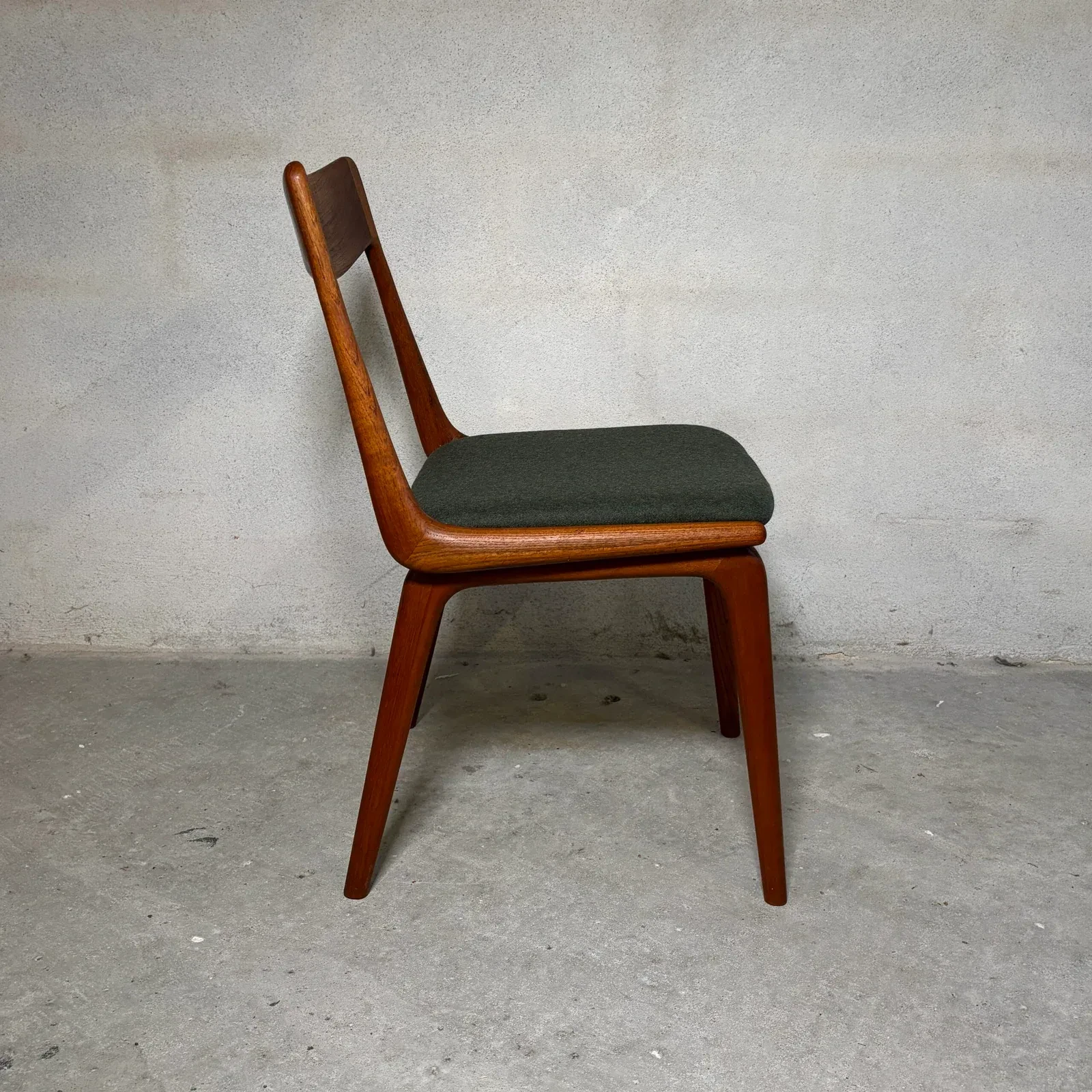
Read Alfred Christensen’s Model 370 Boomerang Chair in profile, where one angular timber side member turns seat support into the defining silhouette.
Design story
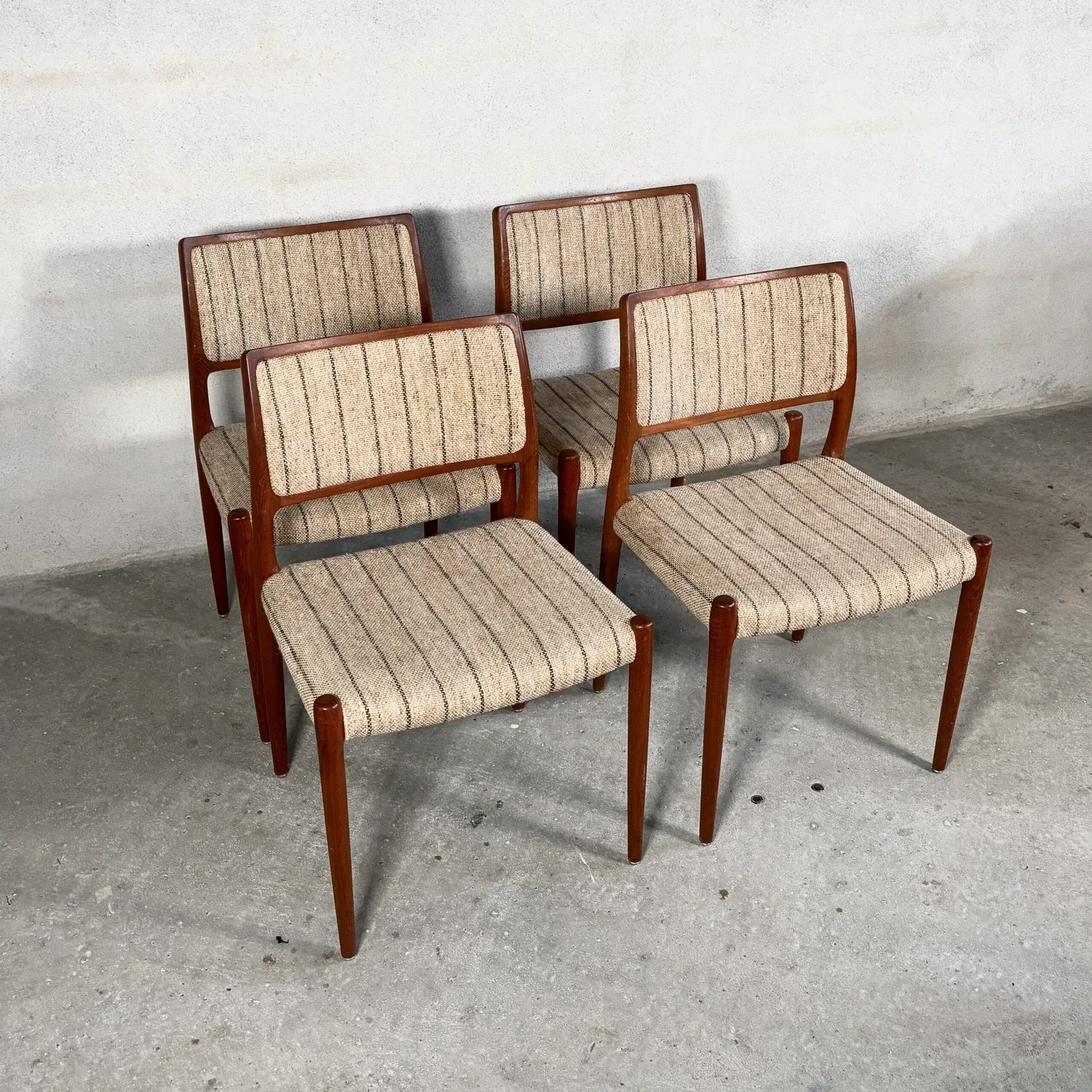
Explore Niels O. Møller’s 1968 Model 80 as a precise timber outline holding two upholstered planes rather than hiding beneath them.
Design story
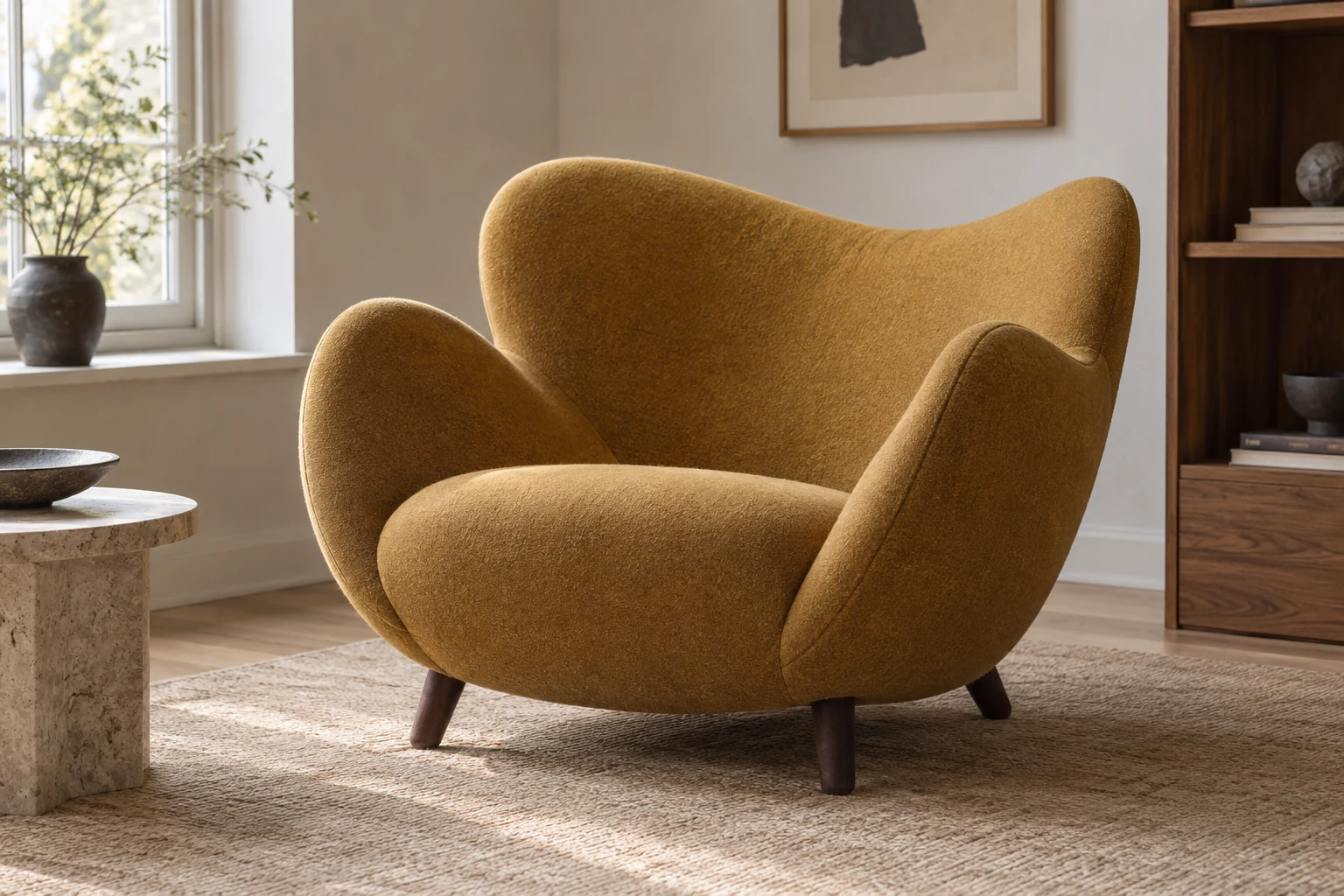
Read Finn Juhl's 1940 Pelican Chair through its hidden frame, low upholstered body, projecting sides, difficult debut and much later return.
Design story
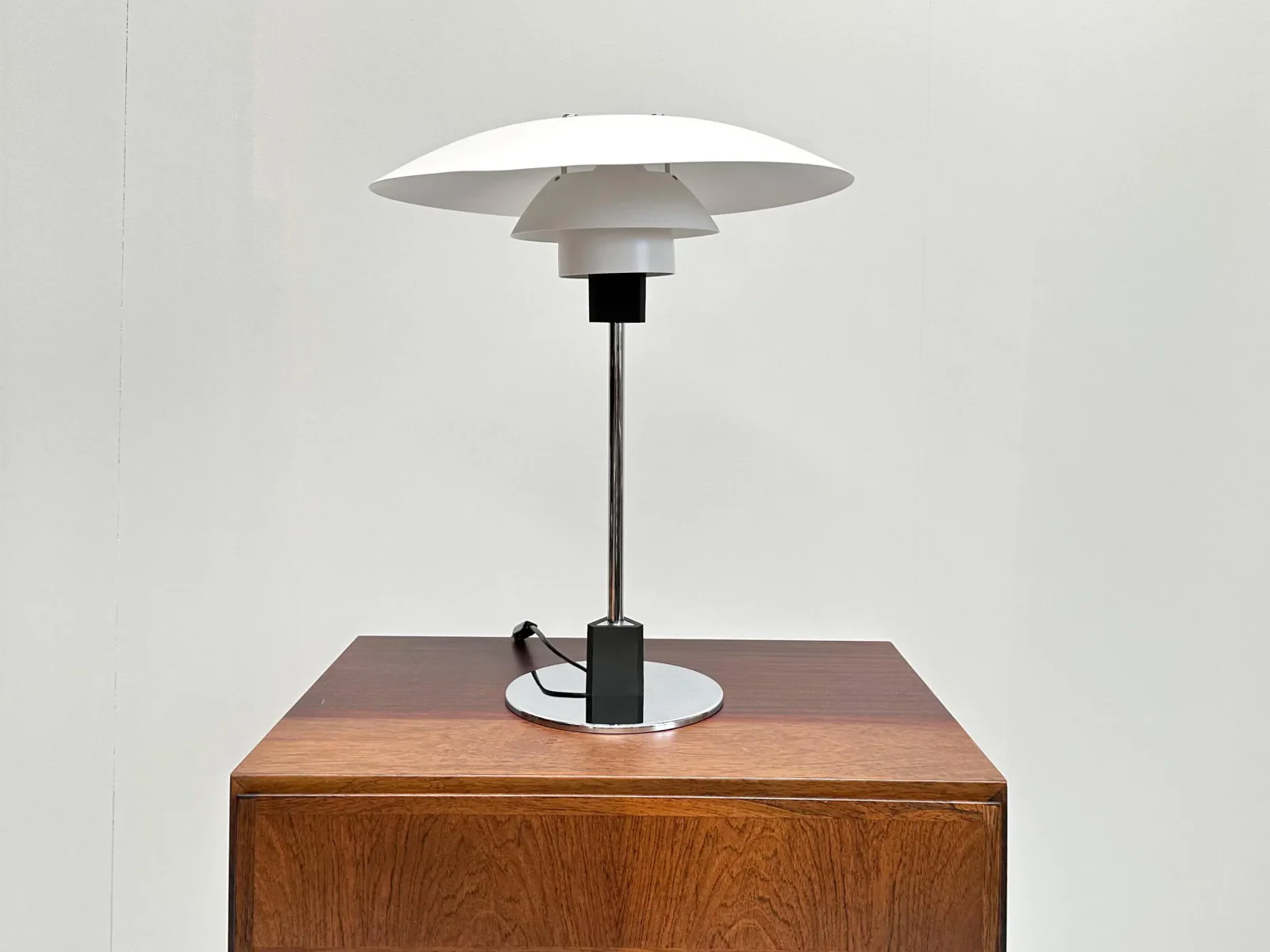
Decode Poul Henningsen’s PH 4/3: a 40-centimetre-class top shade paired with smaller 3/3 lower shades to control glare and bring light closer.
Design story
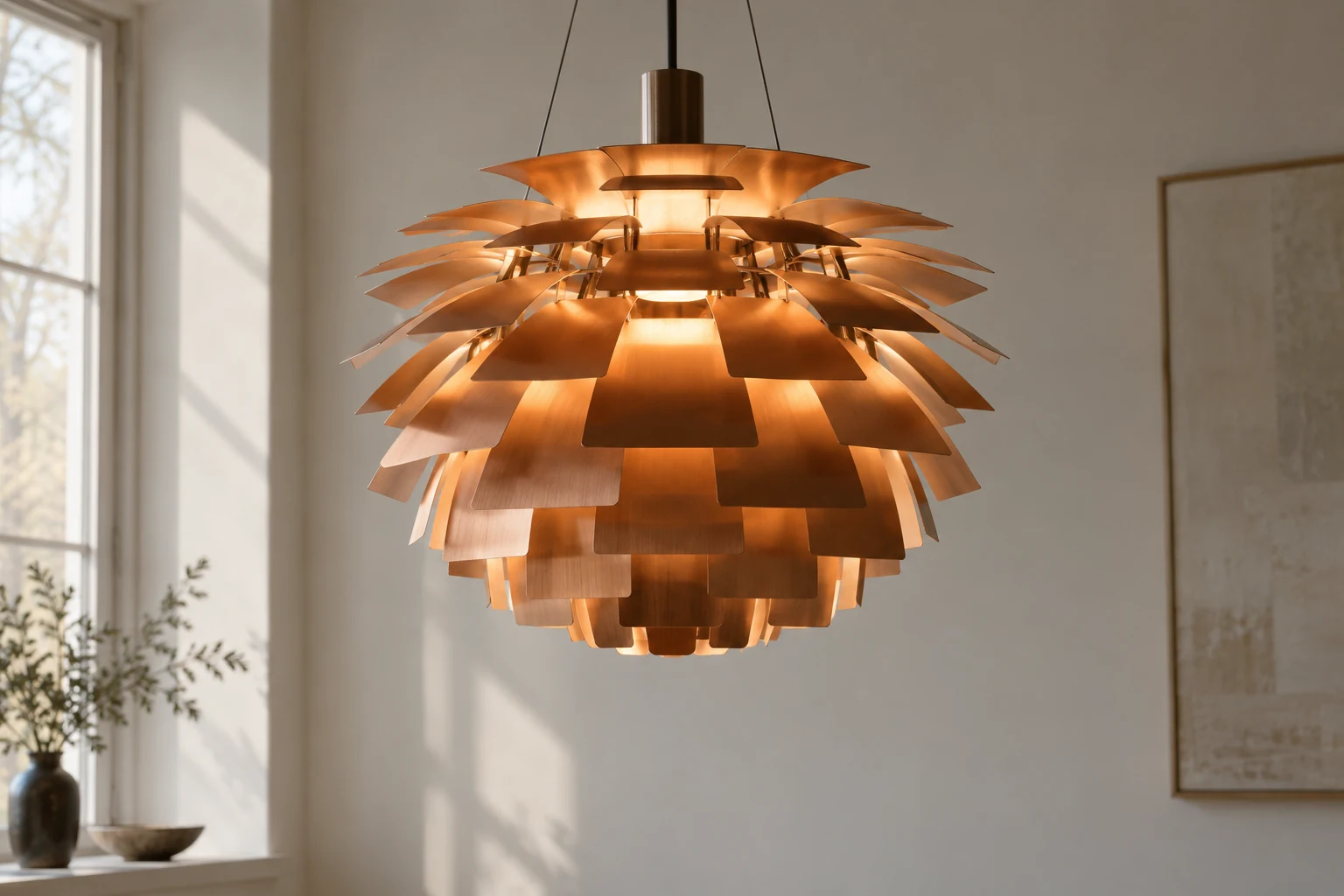
See how Poul Henningsen's PH Artichoke overlaps 72 metal leaves to hide a bright bulb from every viewing angle while making the whole lamp glow.
Design story
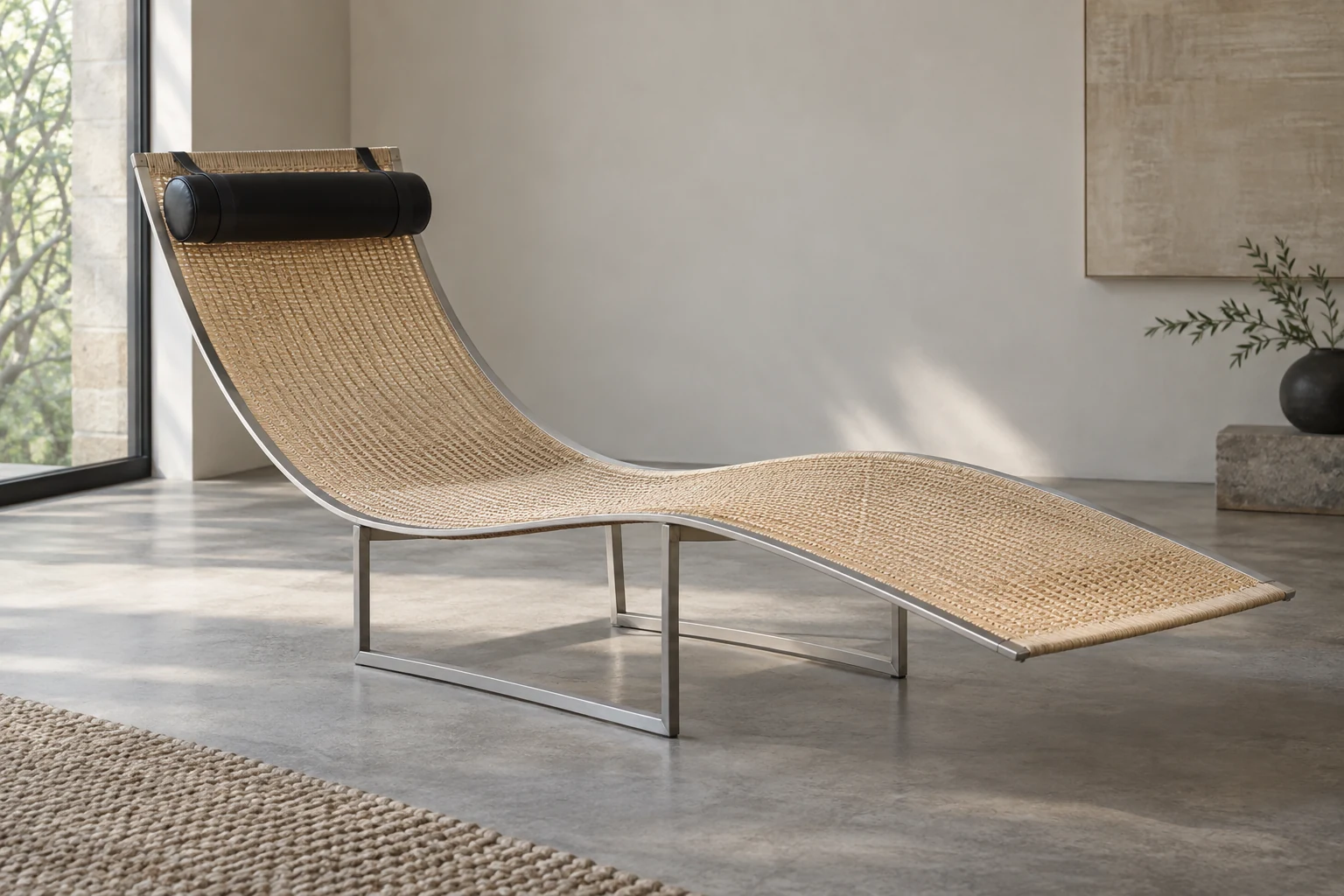
See how Poul Kjærholm's 1965 PK24 balances one long curved surface on a right-angled steel base, making gravity and friction part of the construction.
Design story
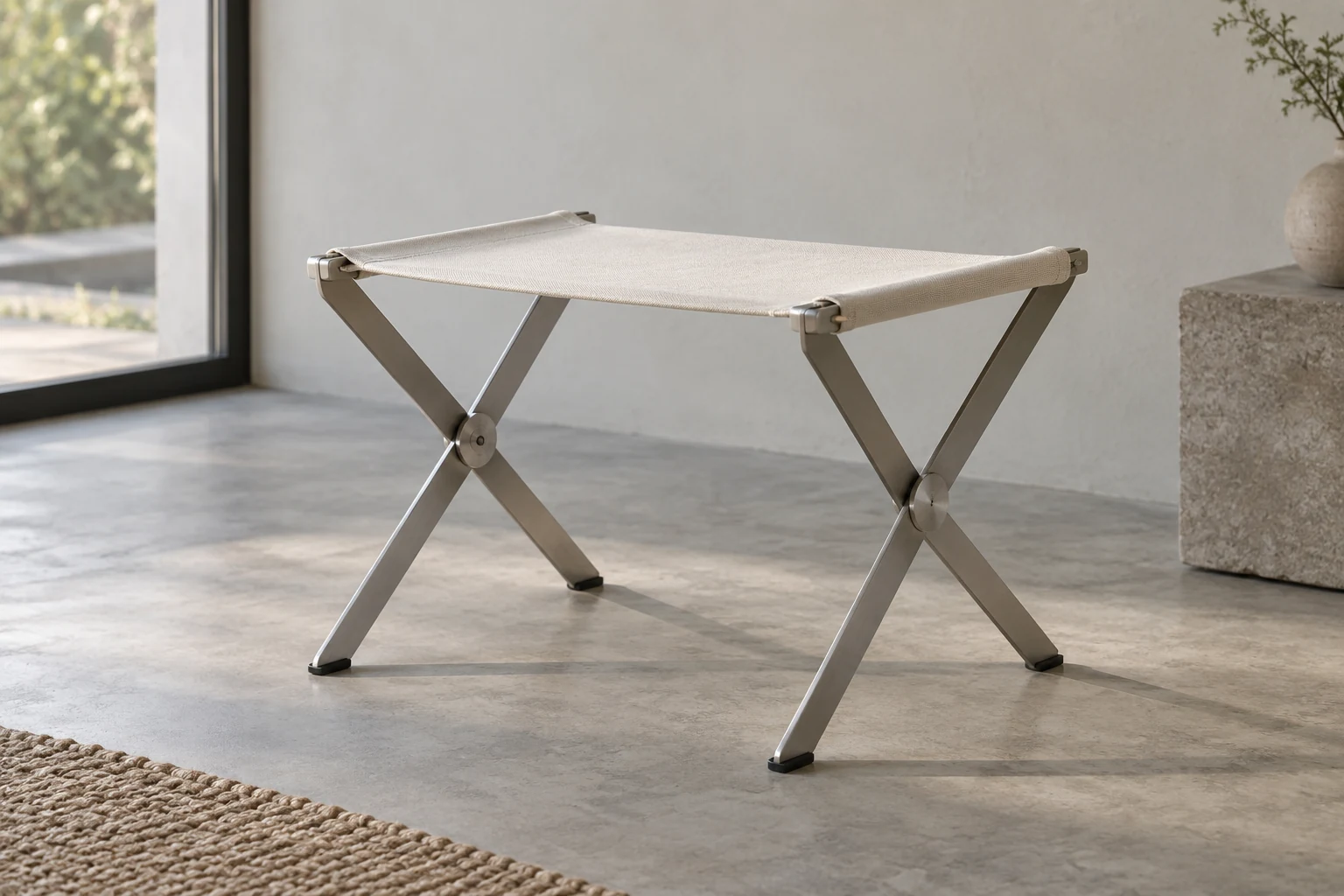
See how Poul Kjærholm's 1961 PK91 uses an ancient X-frame, crossing steel ribbons, canvas and dovetailed corners to make metal behave like cabinetmaking.
Design story
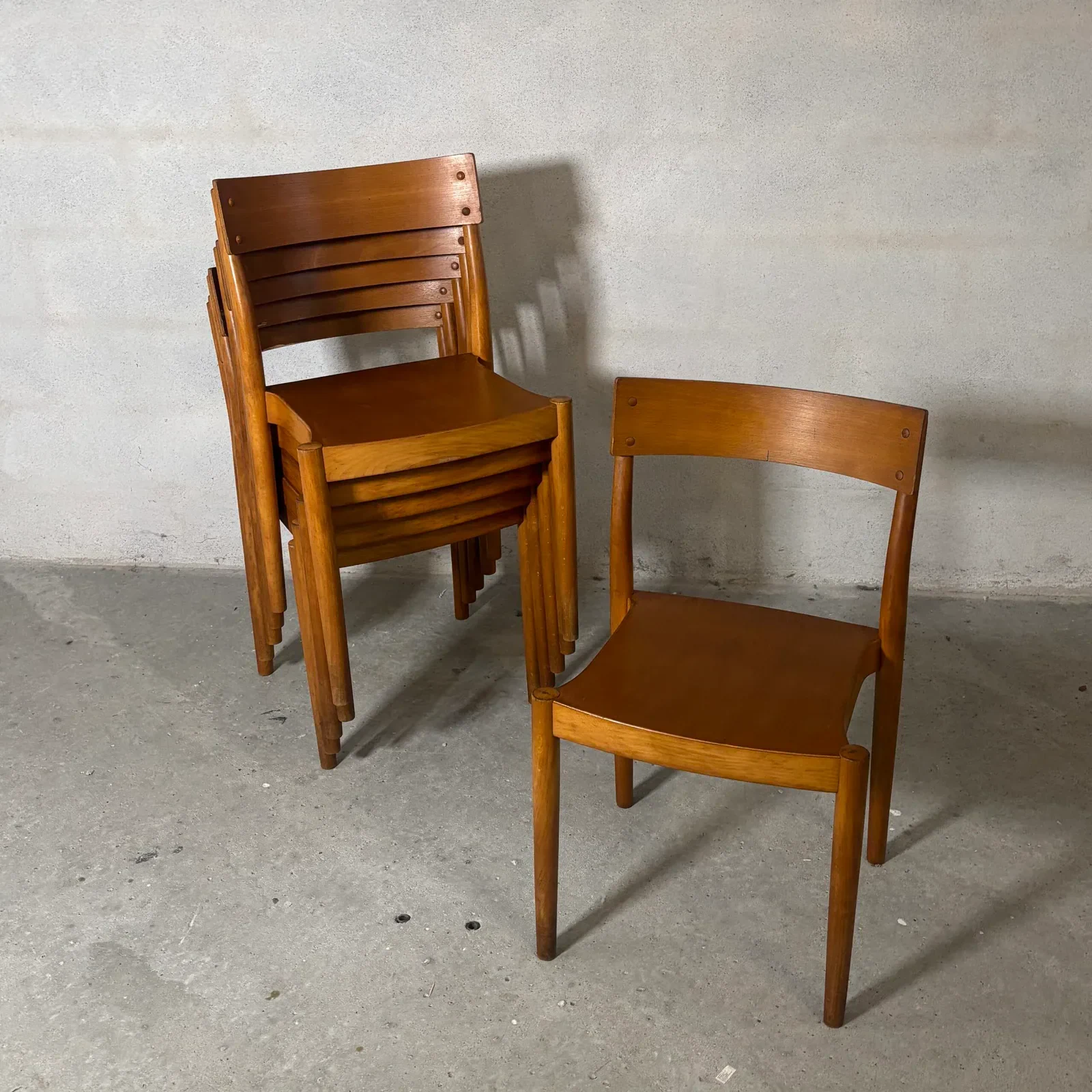
See how Peter Hvidt and Orla Mølgaard-Nielsen turned export and stacking into the quiet geometry of the 1944–45 Portex chair.
Design story
See how Finn Juhl's 1953 Reading Chair uses an open back and one horizontal rail to support two ways of sitting without adding a mechanism.
Design story
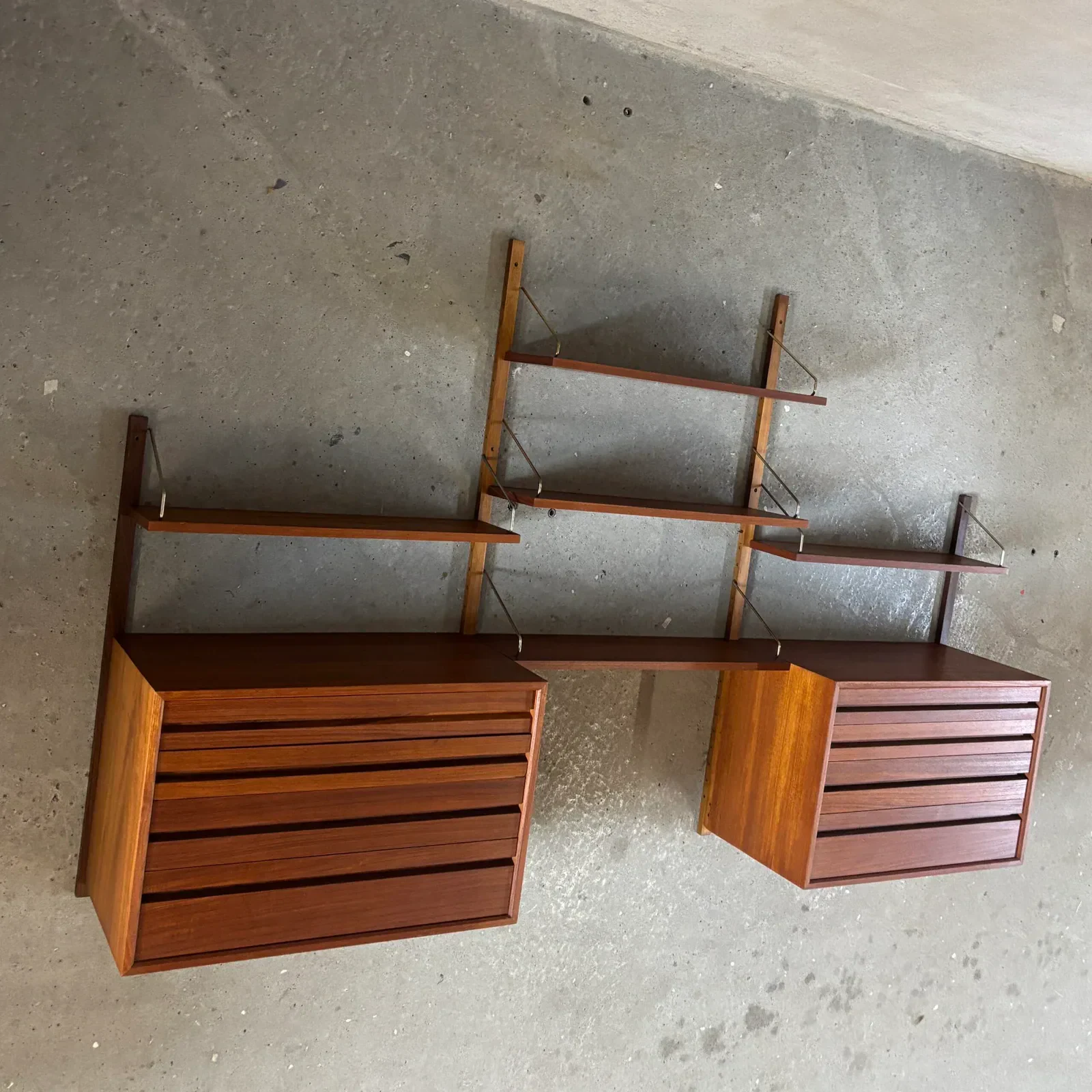
See how Poul Cadovius's 1948 Royal System moved storage off the floor and turned rails, hangers, shelves and cabinets into a revisable wall.
Design story
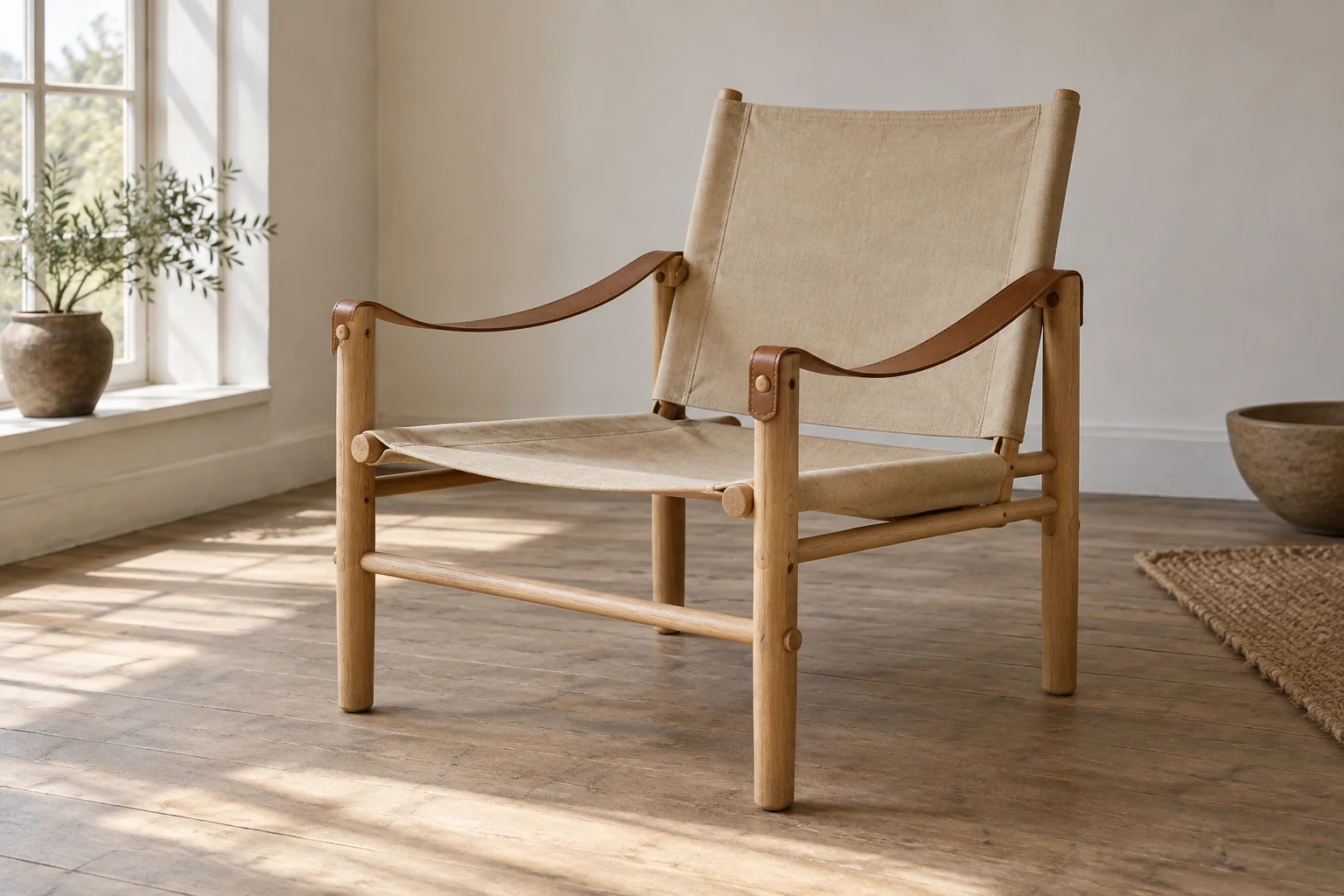
See how Kaare Klint's 1933 KK47000 Safari Chair turns knock-down joints, canvas and leather straps into a complete chair—and how to separate its design, maker and vintage-object histories.
Design story
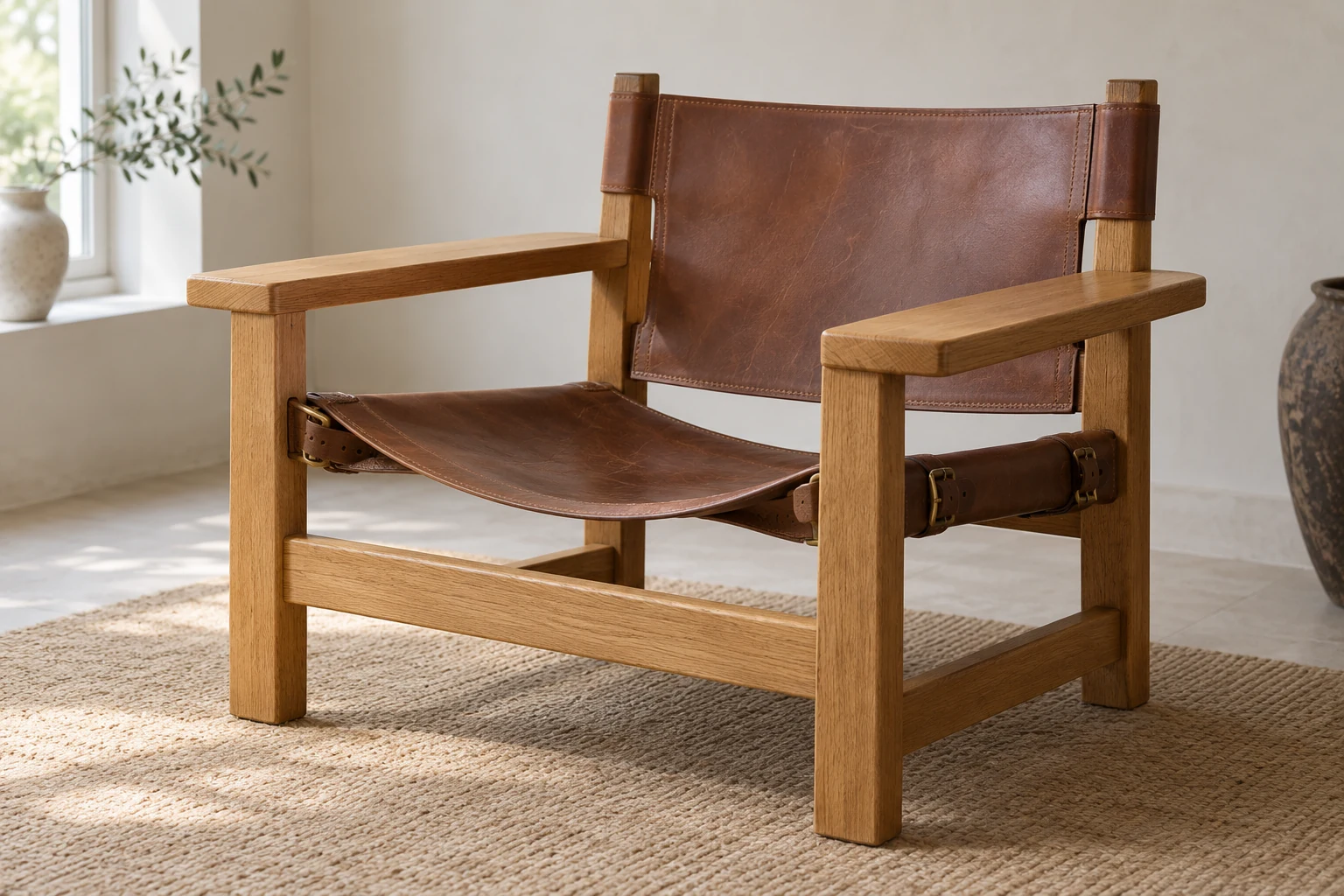
See how Børge Mogensen's 1958 Spanish Chair turns broad oak arms, saddle-leather planes and exposed buckles into one readable structure.
Design story
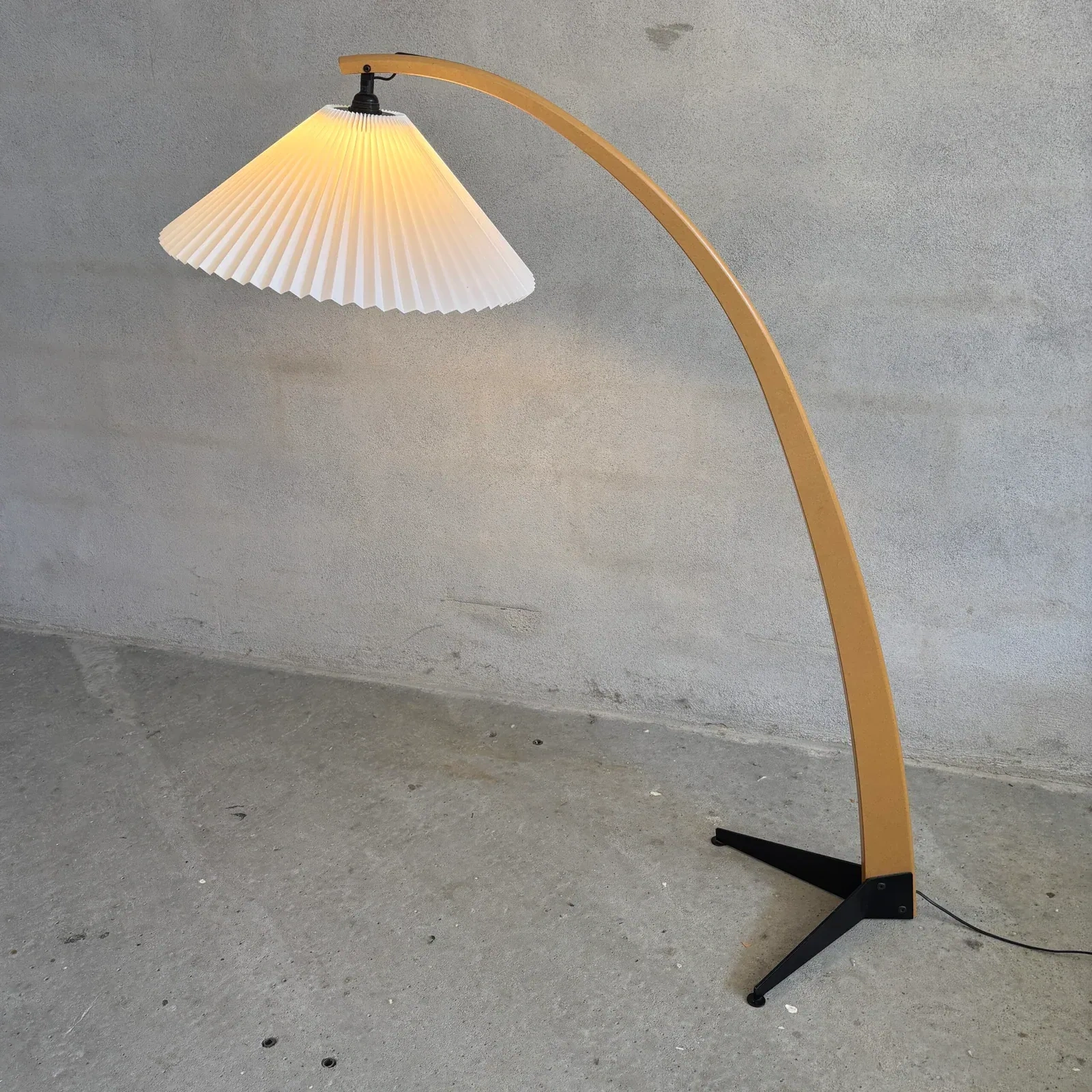
Read Mads Caprani’s Timberline Floor Lamp as a balance problem: a long laminated curve, distant pleated shade, discreet cable and anchoring iron base.
Design story
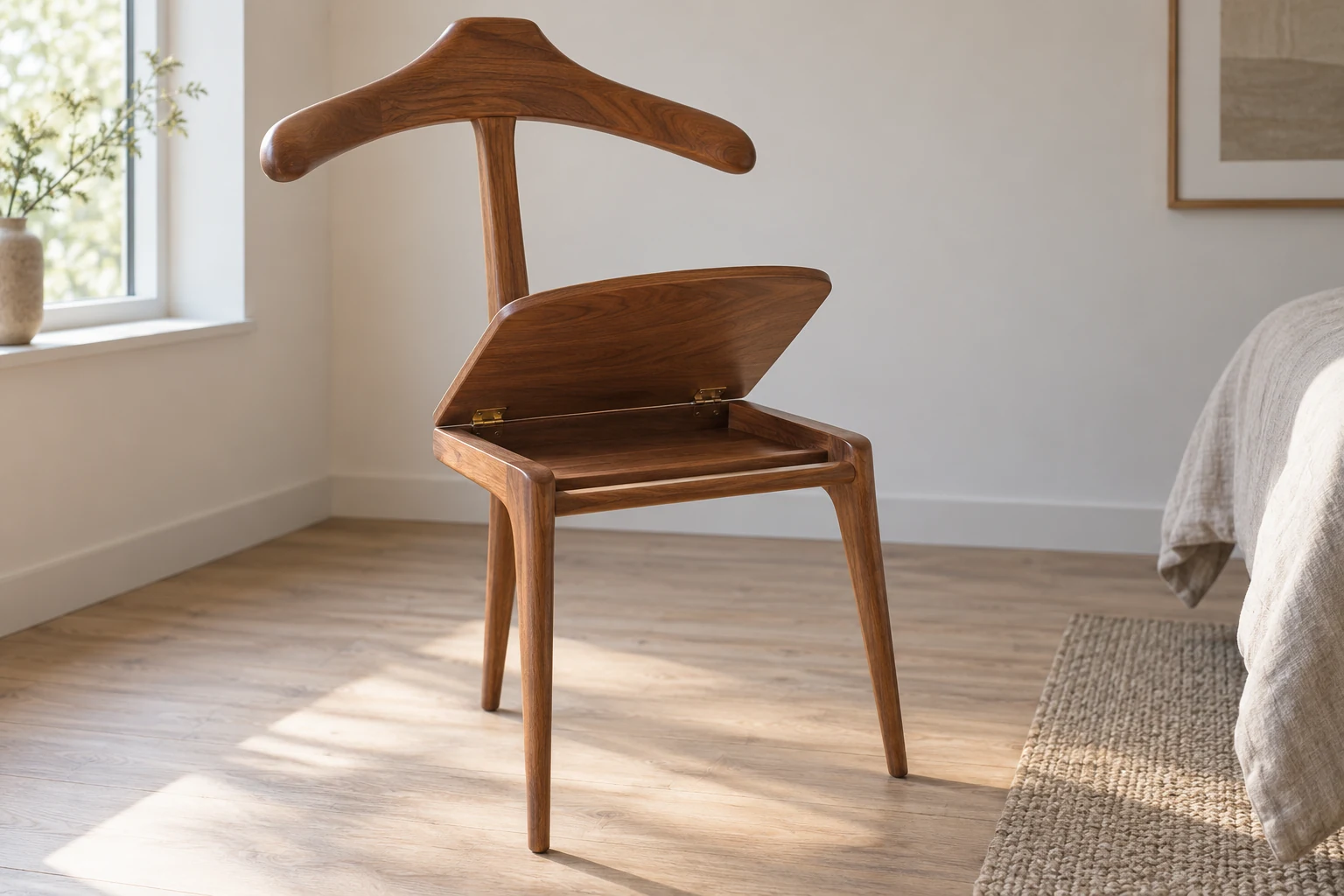
See how Hans J. Wegner’s 1953 Valet Chair turns a hanger, trouser support, seat and pocket-sized compartment into one remarkably composed object.
Design story
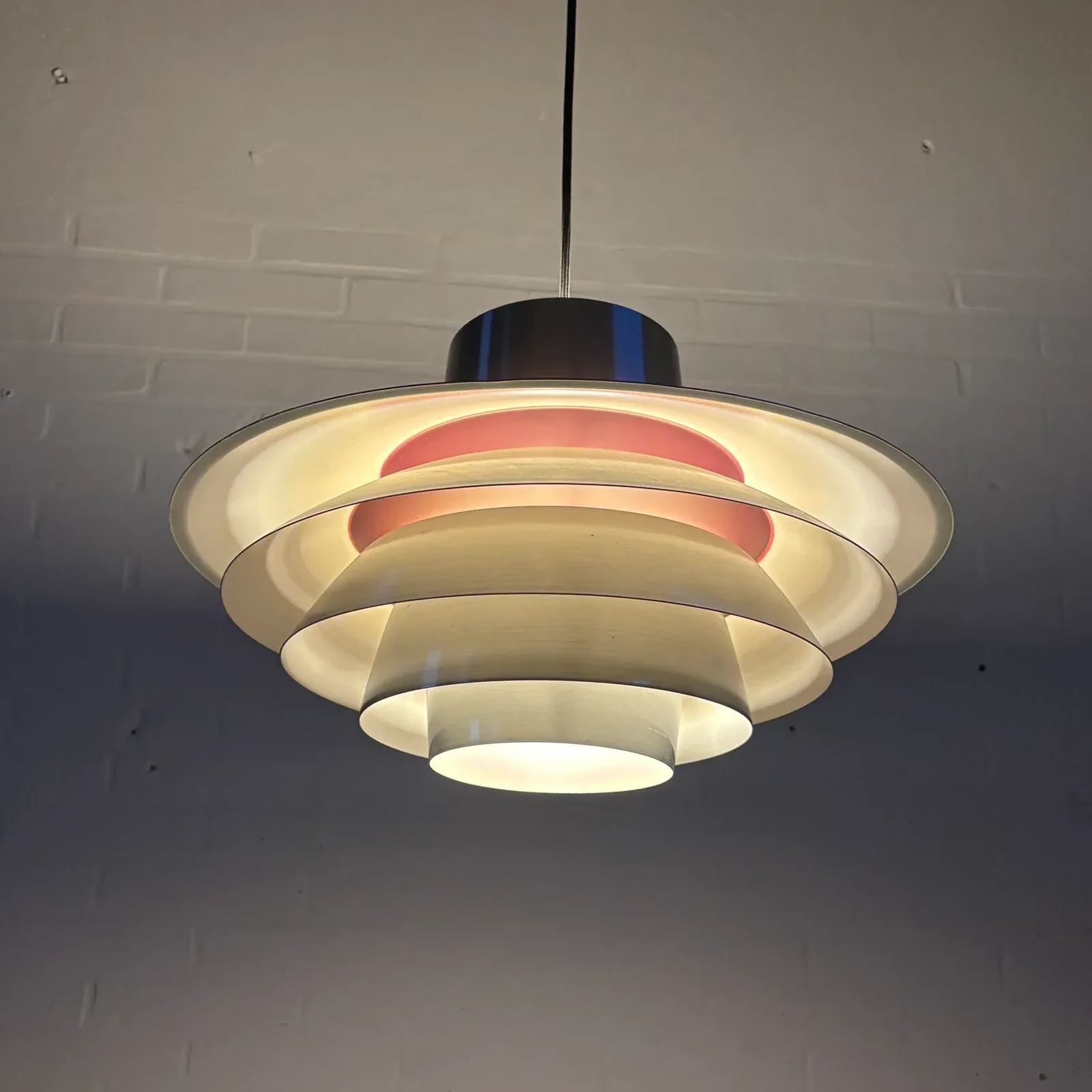
See how Sven Middelboe’s 1968 Verona pendant uses nested aluminium shades to conceal the bulb, soften glare and make the fitting itself glow.
Design story
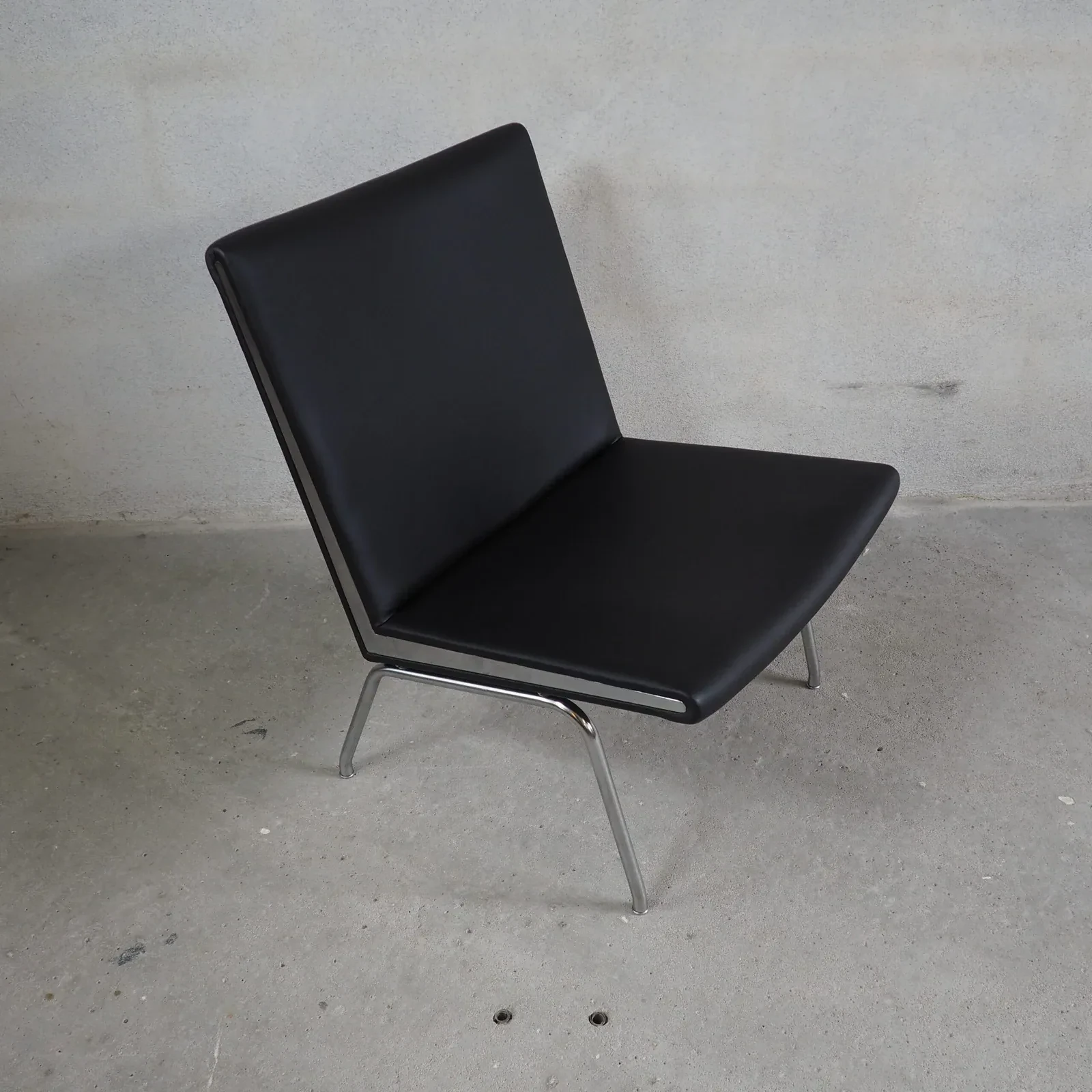
Untangle Hans J. Wegner’s 1958 Airport Chair history: CH401, A.P. Stolen, later makers, Kastrup use and the limits of resemblance.