Begin with three different dates
The Metropolitan Museum of Art records the Wishbone Chair as designed by Hans J. Wegner in 1949 and manufactured by Carl Hansen & Søn. Its particular beech and paper-cord example is dated to about 1950–79. 1
Those facts illustrate an essential distinction:
- 1949 dates the design;
- 1950 begins the production history described by the current maker;
- the date of one chair must be established from evidence for that chair.
A newly made CH24 and a mid-century example can share the same design history without being the same kind of collectible object. The model name opens the research; it does not finish it.
One collaboration produced a family, not just one icon
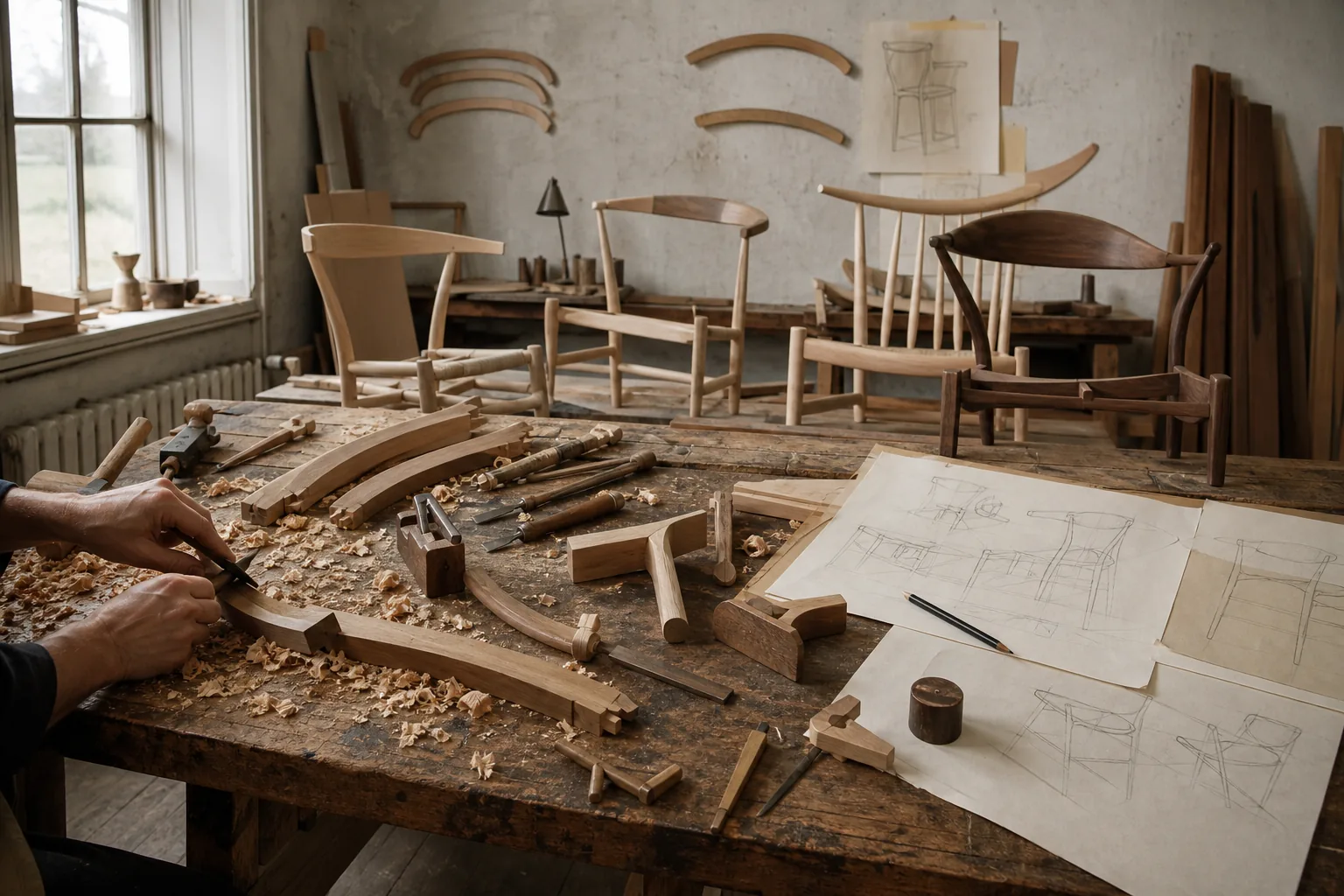
Carl Hansen & Søn's account says that Wegner began working with the company in 1949 and developed four early chairs with its cabinetmakers: CH22, CH23, CH24 and CH25.3
This matters because CH24 was not a graphic symbol drawn in isolation. It was part of an exploration of solid wood, woven seats, repeatable production and the skills available in the workshop. The design had to be distinct and comfortable, but also coherent enough to make again and again.
The current maker describes the chair as continuously produced since 1950. 3 For a collector, that long life creates legitimate variation in timber, finish, cord, labels and manufacturing detail. It also makes the words original and vintage too imprecise when they are not attached to a period and evidence.
Read the silhouette as a structure
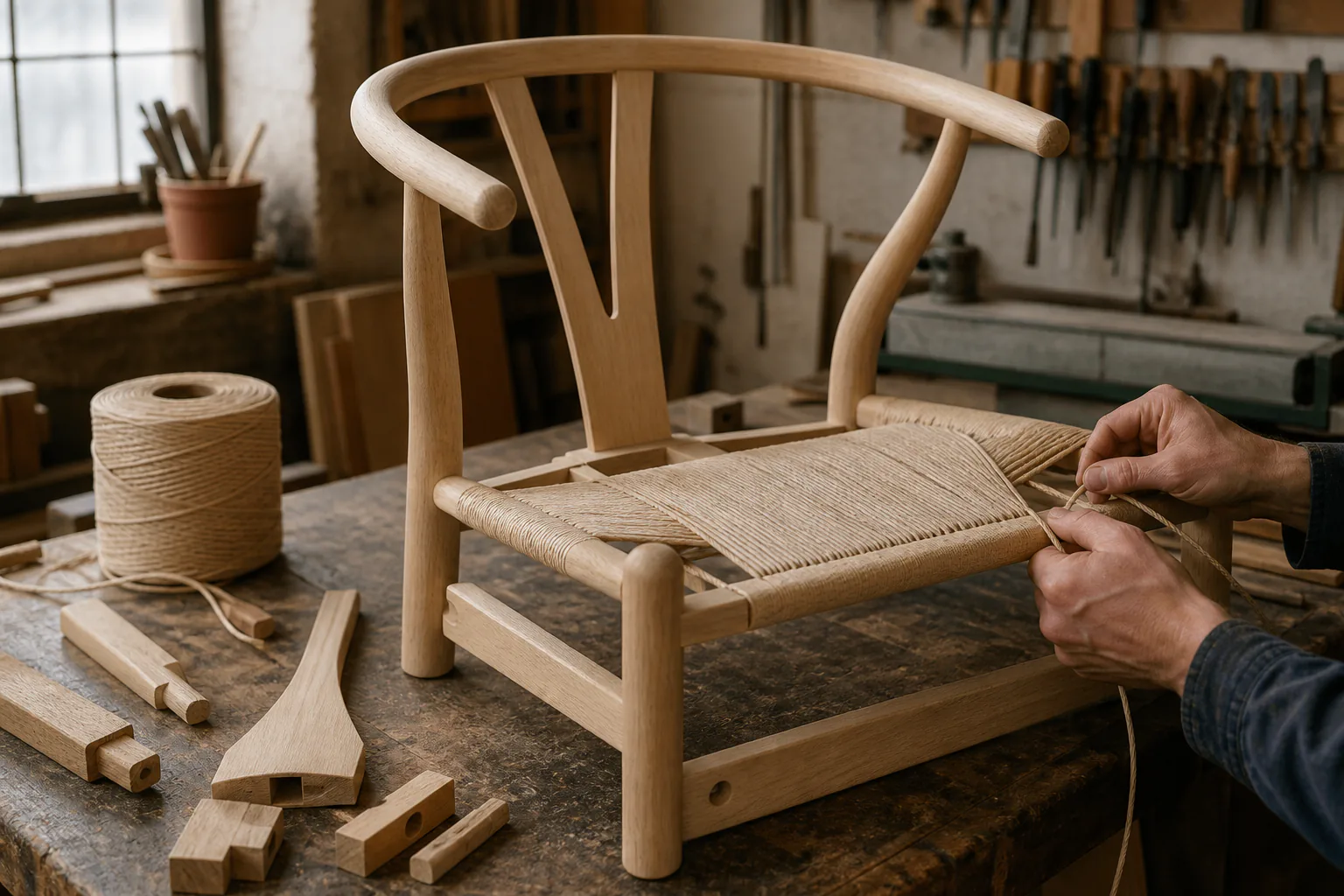
The familiar outline is doing several jobs at once. Carl Hansen & Søn explains that the back and armrest are joined into one continuous relationship around the sitter, while the Y-shaped element supports the curved top and gives the chair its common Wishbone name.2
Break the chair into four visual systems.
The curved top rail
The top rail wraps around the upper body instead of stopping as a flat board between two rear posts. Its curve supplies the chair's broad gesture, but it also has to meet the rear legs accurately and carry pressure from the sitter.
The Y-shaped support
The fork is not a decorative badge added to an ordinary back. It reduces the visual mass of a conventional splat while supporting the centre of the curved rail. Its two upper branches and central stem must read as one stable transition.
The rising rear legs
The rear legs continue upward into the back structure. Their taper and curve make the chair look light, but they also connect seat, back and top rail. A slightly wrong angle changes both comfort and the entire silhouette.
The woven seat
The cord surface closes the frame without a thick upholstered pad. It keeps the visual centre light and introduces flexibility and texture where the body meets the chair.
The result looks simple because the parts cooperate. Remove the structural logic and the outline becomes a costume.
Simple appearance, demanding production
The maker describes CH24 production as more than 100 steps using 14 shaped, turned and sanded wooden components. It also identifies traditional mortise and tenon joinery assembled by hand.3
These figures come from the current manufacturer and describe its present account of making the chair. They are useful because they explain where the labour hides. A clean junction between rail and leg may represent several operations: selecting stable wood, cutting, shaping, sanding, testing the fit, gluing and finishing.
That concealed complexity is central to the design. The chair does not advertise engineering with exposed hardware. Accuracy is absorbed into the continuity of the frame.
Paper cord is a material, a pattern and a record of use
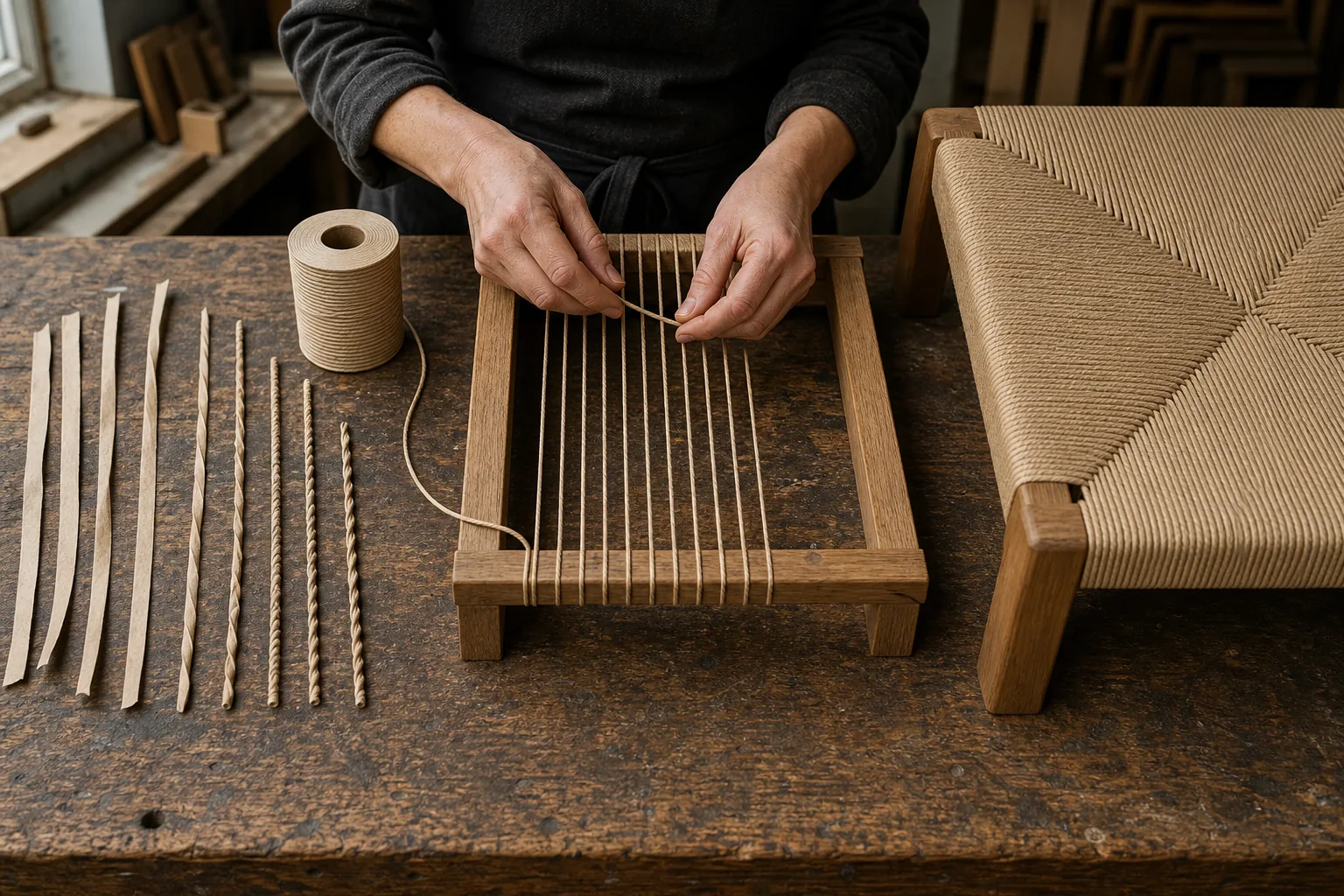
Carl Hansen & Søn describes its paper cord as long, thin strips of paper tightly twisted into a durable and flexible cord for furniture. 4 The material is humble, but the completed seat is not casual stringing.
For CH24, the maker states that a craftsperson uses more than 120 metres of cord and about an hour to weave the envelope-pattern seat by hand. 3 The crossing fields distribute the weave across the frame and create the diagonal pattern visible from above.
On a used chair, the seat carries evidence:
- even tension or local sagging;
- abrasion where clothing repeatedly contacts the edge;
- staining, fading or broken strands;
- a complete professional reweave or a local improvised repair;
- cord colour and pattern consistent with the claimed version.
A replaced seat may make a chair usable for decades more. It should simply be described as a replacement rather than mistaken for untouched originality.
The present CH24 is not one material specification
The current Carl Hansen & Søn catalogue shows the design across several woods, finishes and natural or coloured paper cord. 2 Present variety is not proof that every combination existed in every earlier decade.
When researching a vintage example, ask a period-specific question: was this wood, finish, cord colour and label used together at the date being claimed? A current configurator can show what is sold now. It cannot, by itself, document the production specification of a chair made many years ago.
The Met record makes the same discipline visible at object level. It names beech and paper cord and assigns a manufacture range to its own museum chair. 1 That record is strong evidence for that object and a useful comparison. It is not a certificate for another chair.
A practical inspection sequence
1. Photograph the whole chair squarely
Record front, side, rear, underside and top views before focusing on details. Perspective can make the back angle, seat width and leg splay look different.
2. Record every mark without interpreting it immediately
Photograph labels, stamps, numbers and their exact location. Note whether a label sits over newer finish, torn fibres or another mark. Compare it with documented period examples only after preserving what is present.
3. Check the frame as a continuous system
Look for movement where rear legs meet the seat and top rail, gaps at joints, cracks along curved grain and repairs hidden by finish. Do not test a loose chair aggressively.
4. Examine the Y support
Compare its profile, branch transitions, thickness and connection with the top rail. This central feature is visually memorable and therefore easy to imitate approximately.
5. Read the weave
Check pattern, edge wrapping, tension and material. Ask whether the seat is original, professionally rewoven or locally repaired. Condition affects use; replacement history affects description.
6. Measure and compare
Record overall height, width and depth, seat height and important frame relationships. Compare with a documented version from the relevant period, not a single unsourced web diagram.
7. Build the date from several clues
Maker marks, finish, timber, cord, construction details, invoice and ownership history should support one another. If the evidence only proves that the chair resembles CH24, keep the attribution provisional.
Why the chair belongs in the Danish Modern story
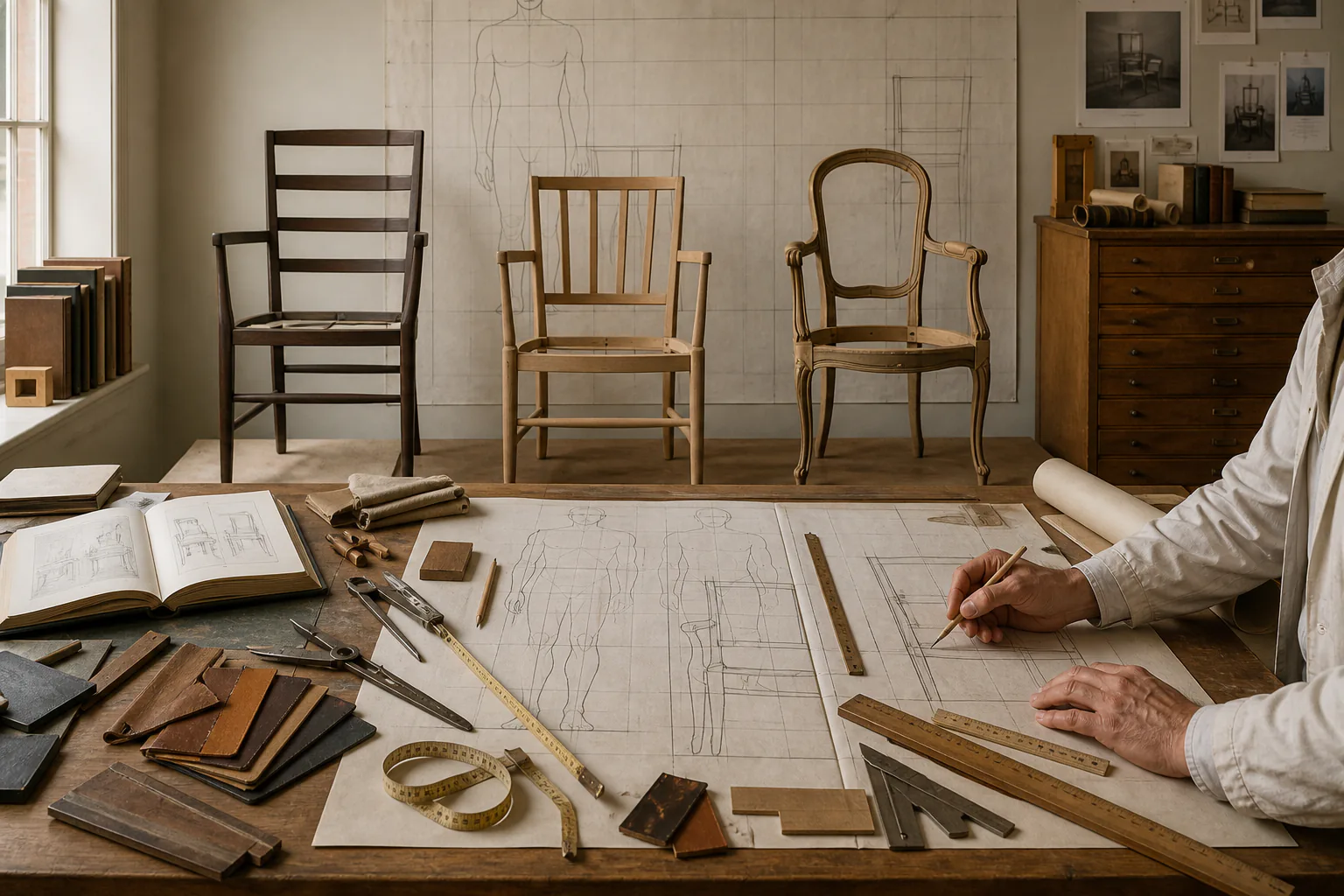
CH24 joins several themes often separated in simplified accounts of Danish Modern: study of an older chair family, a cabinetmaker-designer sensibility, serial manufacture, visible natural materials and comfort without visual weight. The Met connects Wegner's earlier chair studies to the 1949 design and describes the result through craftsmanship, construction, proportion and human use.1
Its longevity does not make every example rare. It makes the design unusually good for studying how one form persists while production dates, editions, materials, wear and value change around it.
Continue from model to method
Read Kaare Klint for the earlier Danish practice of measuring, studying and transforming furniture precedent. Our guide to Danish Modern explains why that method belongs to a much wider history than one famous chair.