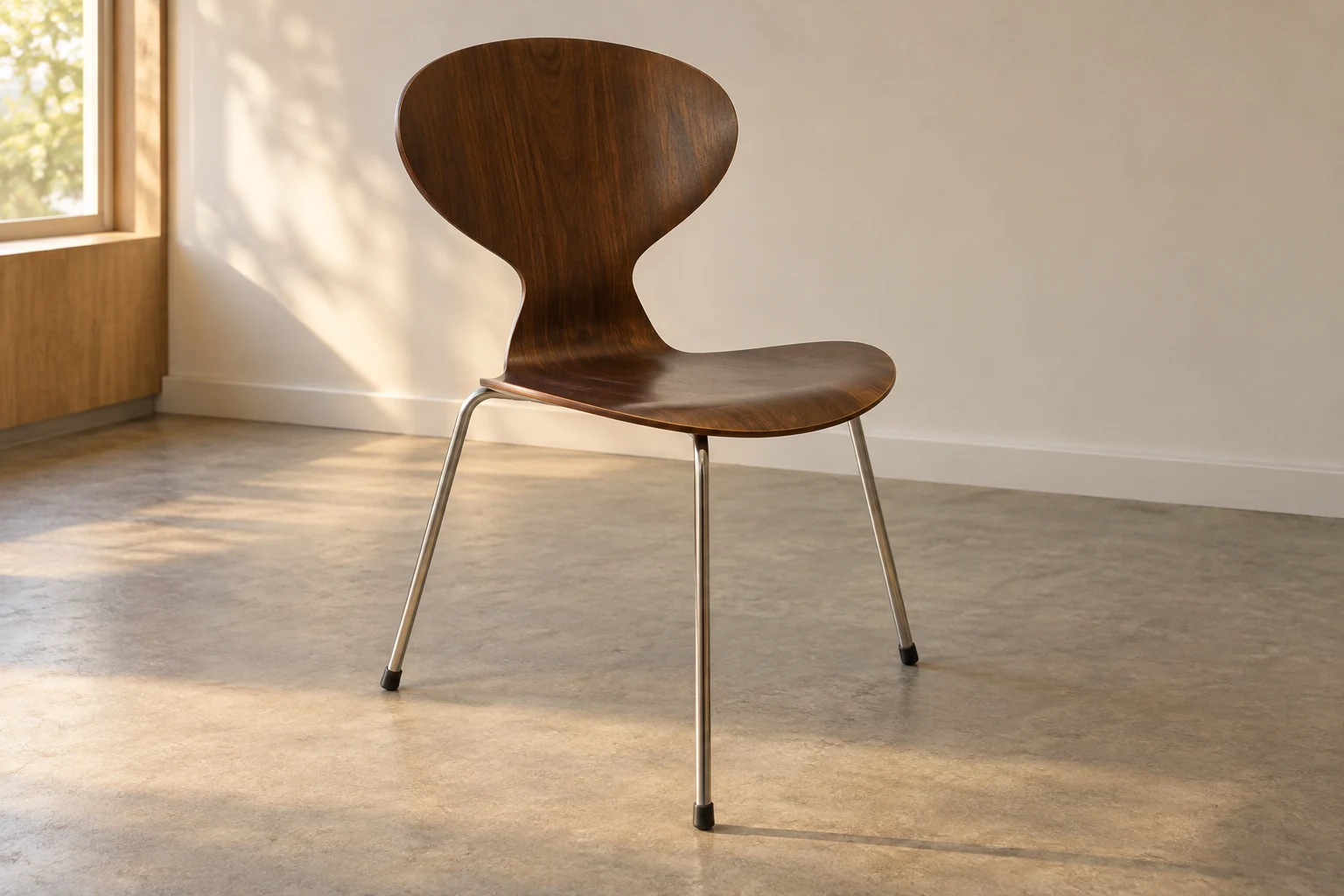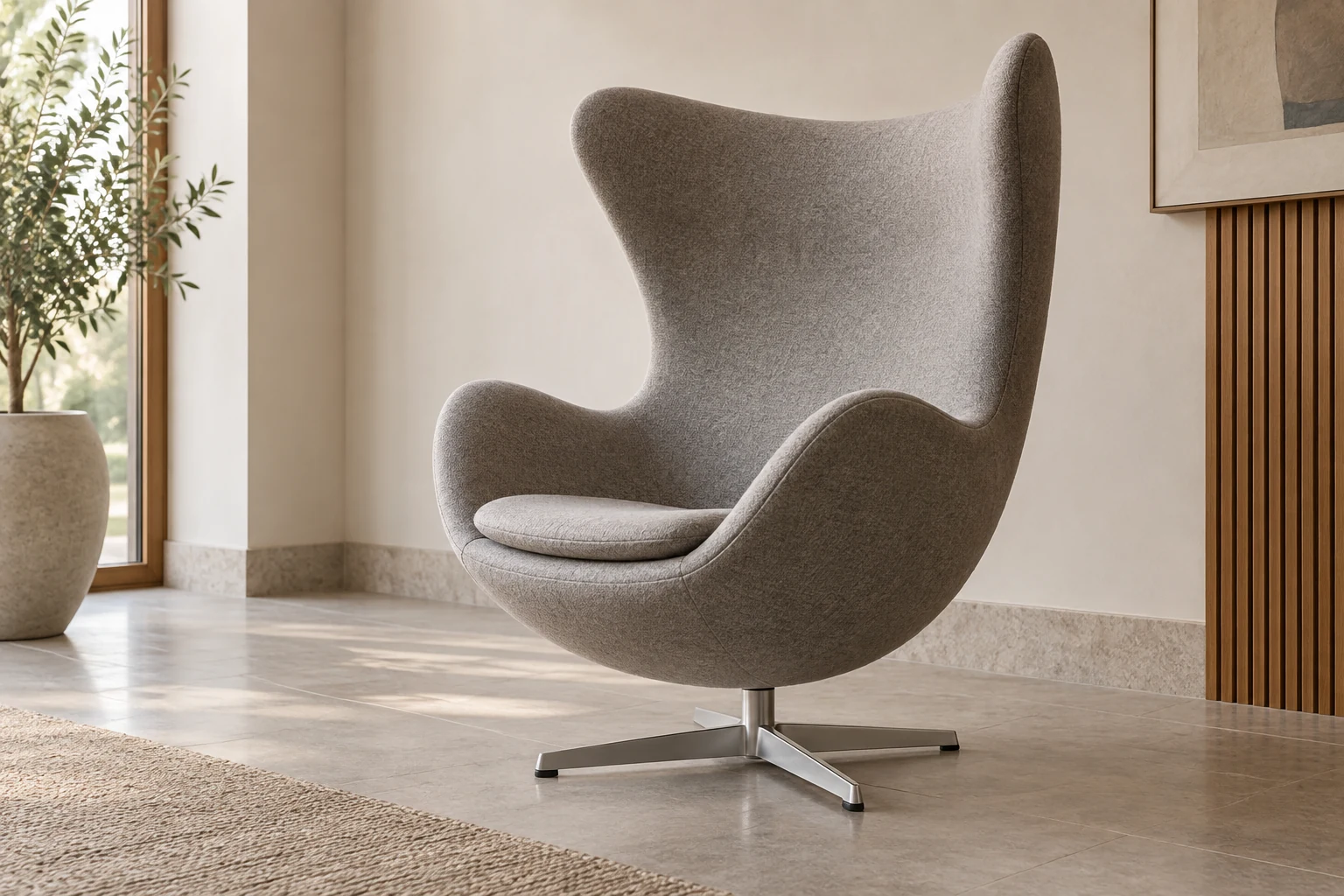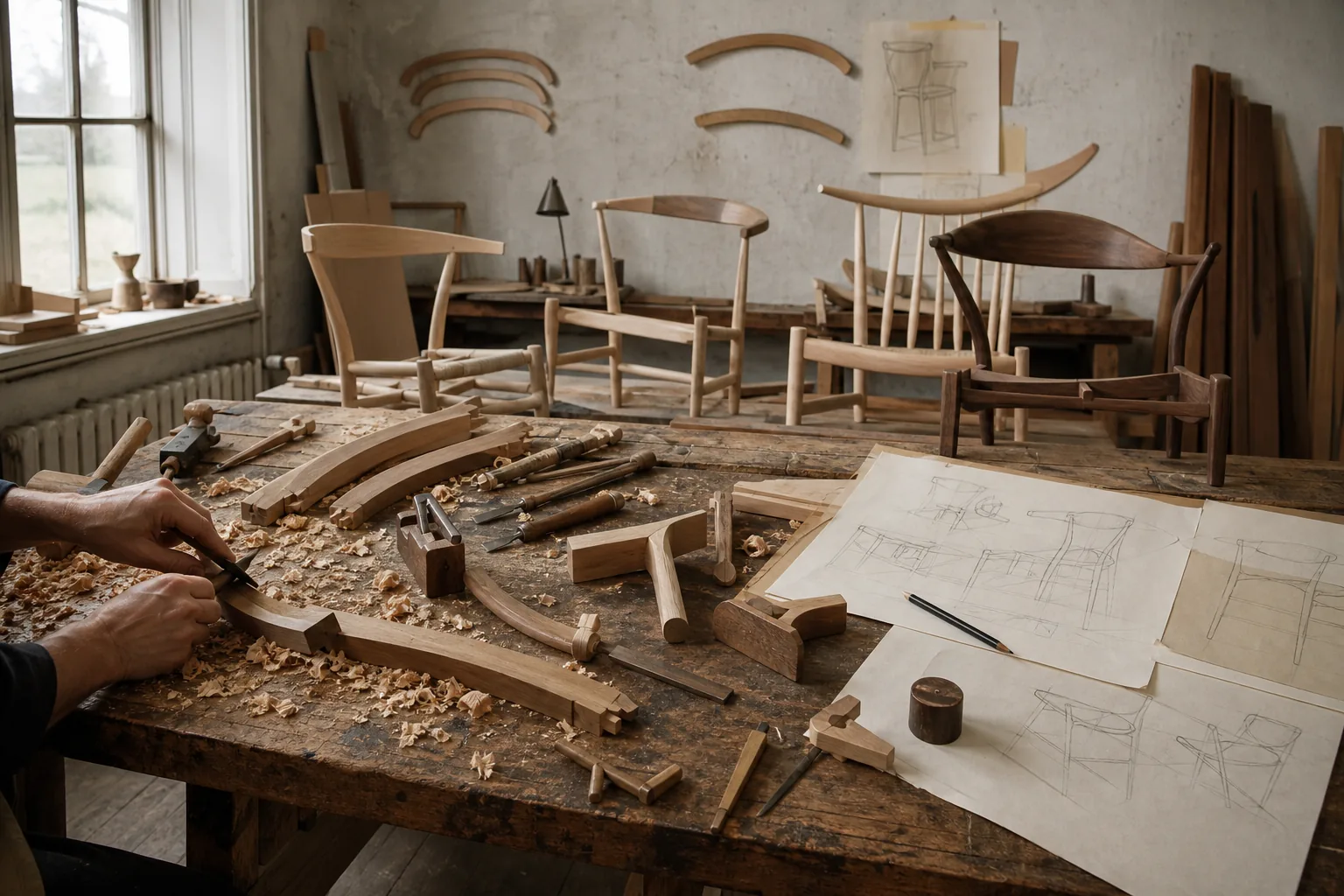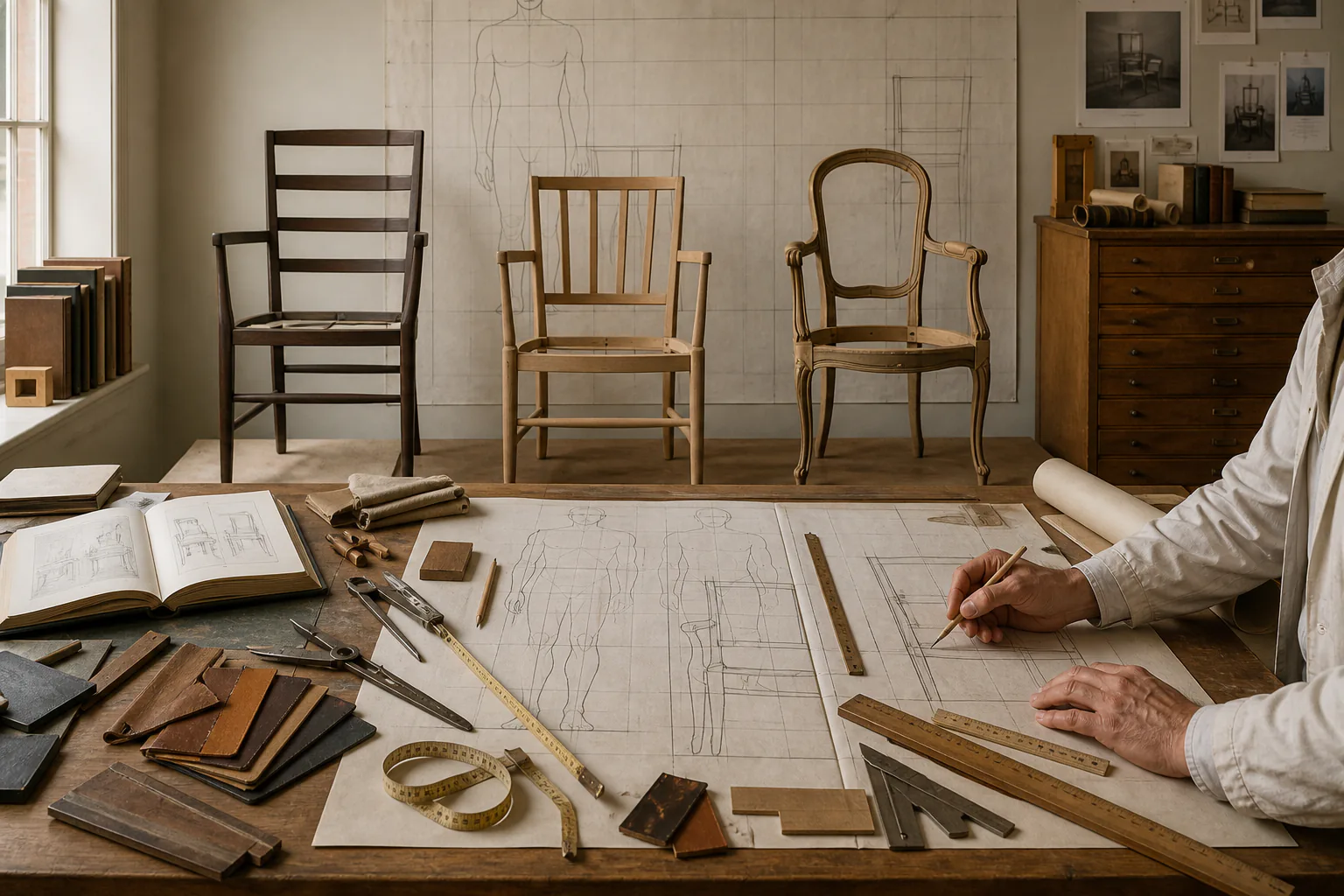
A name for several things at once
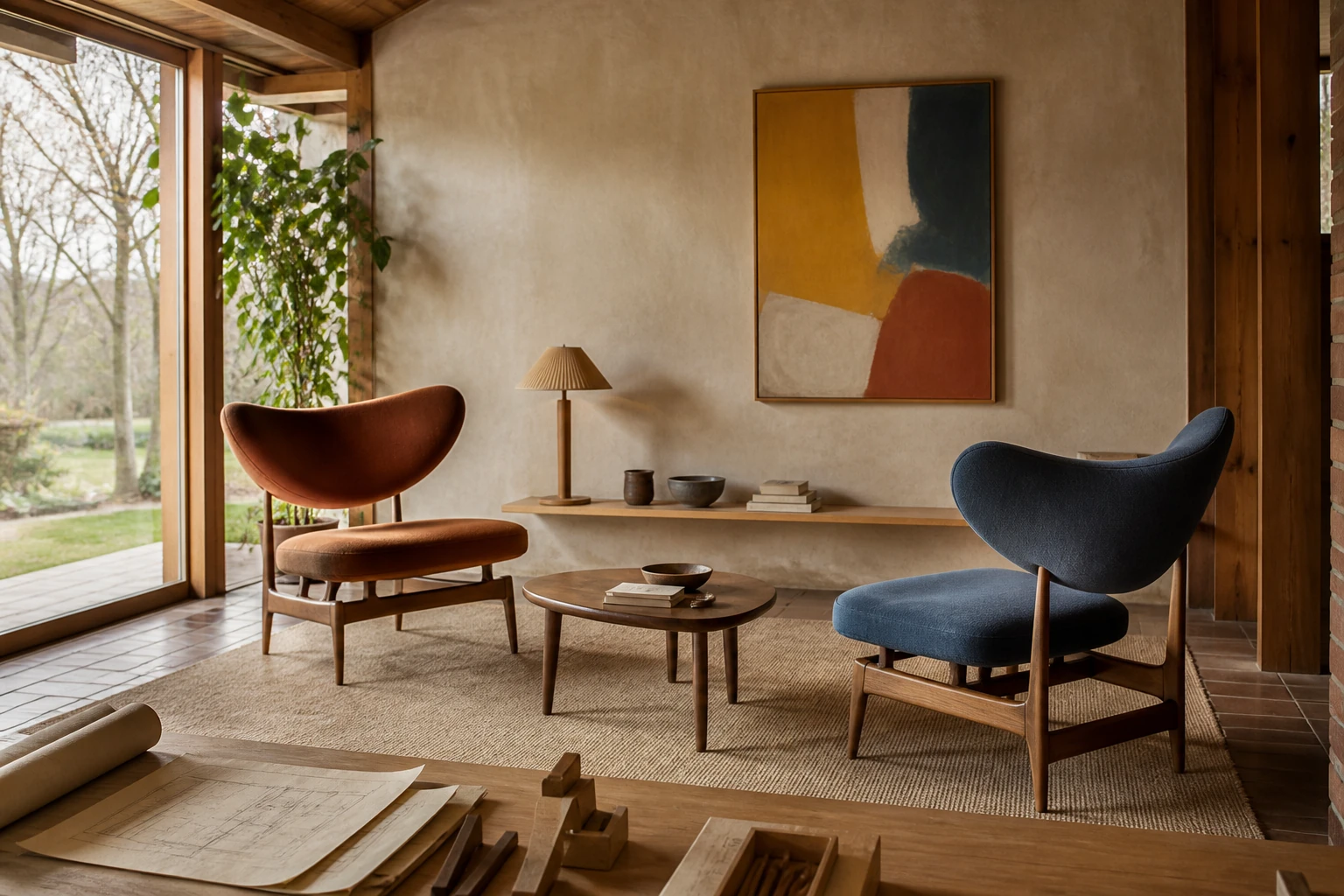
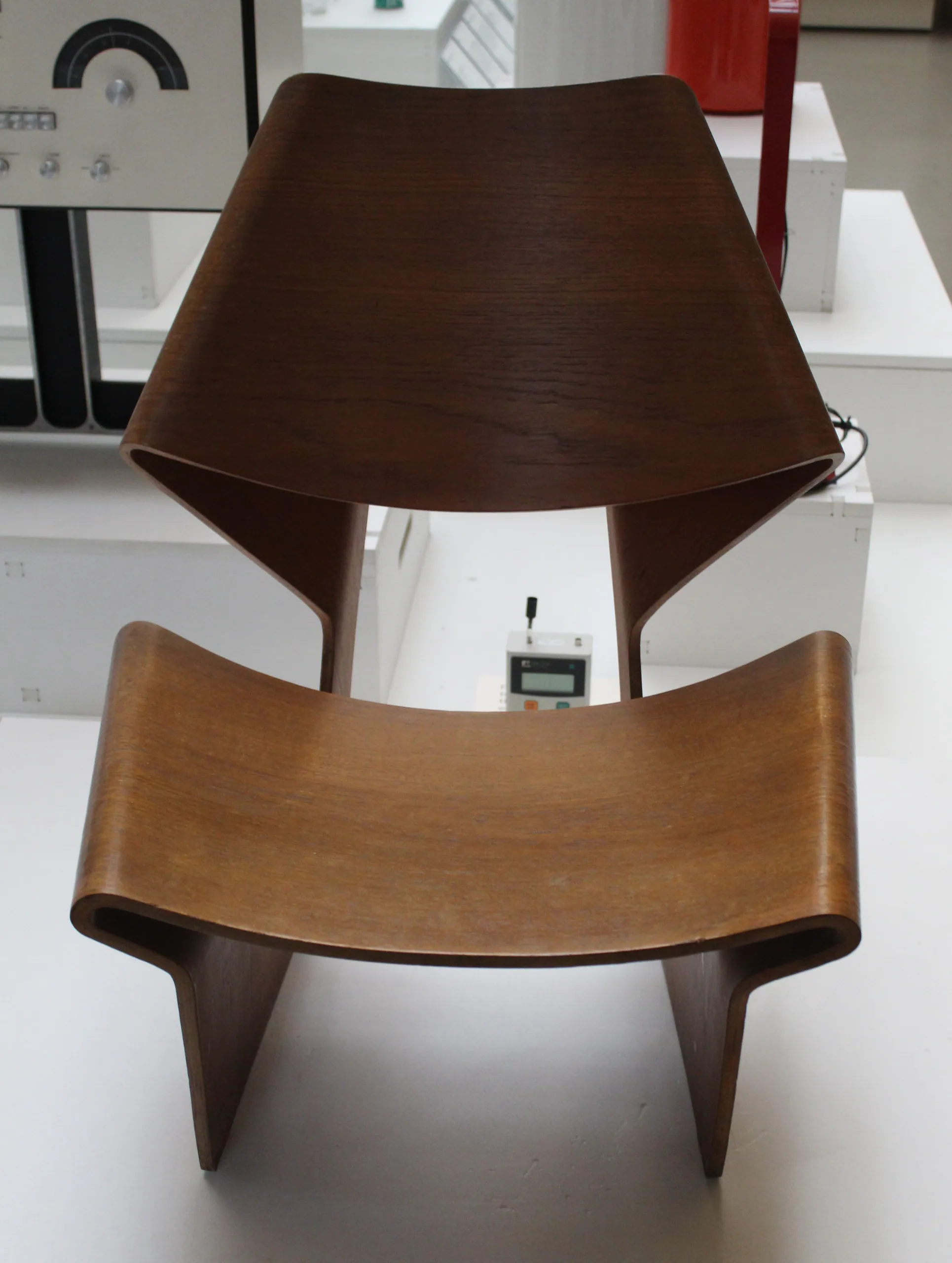
Designmuseum Danmark calls Danish Modern an era, a style and a national brand. Its current exhibition follows Danish design from the 1920s to 2000 rather than treating the phrase as the name of one short decade or one furniture shape.1
That is a useful place to begin. Danish Modern can describe a historical movement, a way of thinking about modern furniture, and the international image under which Danish objects were promoted. Those meanings overlap, but they are not identical.
For a collector, the phrase is therefore context, not authentication. It does not by itself name a designer, manufacturer, date, material or country of manufacture. A chair can belong to the history of Danish Modern and still need object-level evidence for every one of those facts.
It was modern, but it did not begin from zero
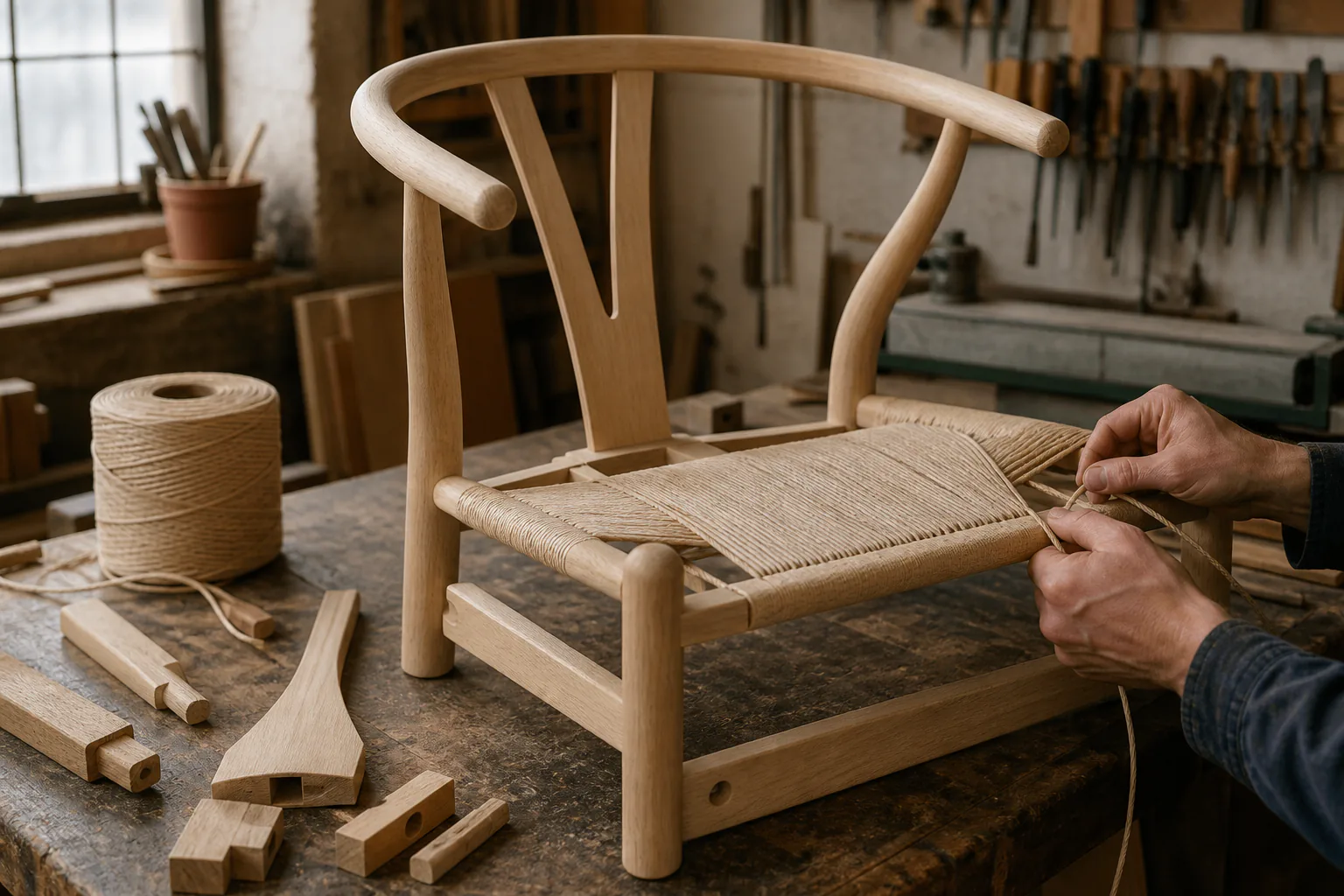
The cleanest myth says that modern designers discarded the past and invented a new language of light wooden furniture. The actual story is more interesting. Designmuseum Danmark presents the Danish chair as a large family with roots in historical furniture from Denmark and abroad. Its chair exhibitions place Chinese chairs, folding chairs, stick chairs, comb-back chairs and other types beside their later Danish relations. 2
The point was not to reproduce an old chair unchanged. Designers studied forms that had already solved a problem: how a back is supported, how a frame carries weight, how a chair moves, how a joint can be repaired, or how little material is needed. They could then adjust proportion, construction and expression for another room and another way of living.
This is why historical reference and modernity are not opposites in Danish furniture. A design can look calm because many decisions have already been resolved through study, refinement and making.
Look at the room before the silhouette
The museum describes early modernism as a reaction against crowded interiors filled with heavy furniture, layered textiles and decorative objects. 1 The change was not simply to replace dark timber with pale timber. It involved asking what a room needed to do and how furniture should occupy it.
Useful questions included:
- Can a chair be moved without becoming fragile?
- Does a cabinet store ordinary possessions in dimensions that make sense?
- Can several pieces share a room without each demanding to be the centre?
- Are construction and material doing visible work, or merely carrying applied decoration?
- Does the object feel considered from the seated body to the surrounding space?
Different Danish designers answered those questions differently. Some work is restrained and rectilinear; some is sculptural, colourful or experimental. The shared history is broader than the beige interior now attached to the word Scandinavian.
Craft and industry belong in the same story
Danish Modern is often reduced either to master cabinetmaking or to democratic mass production. Both mattered, and the tension between them is part of the subject.
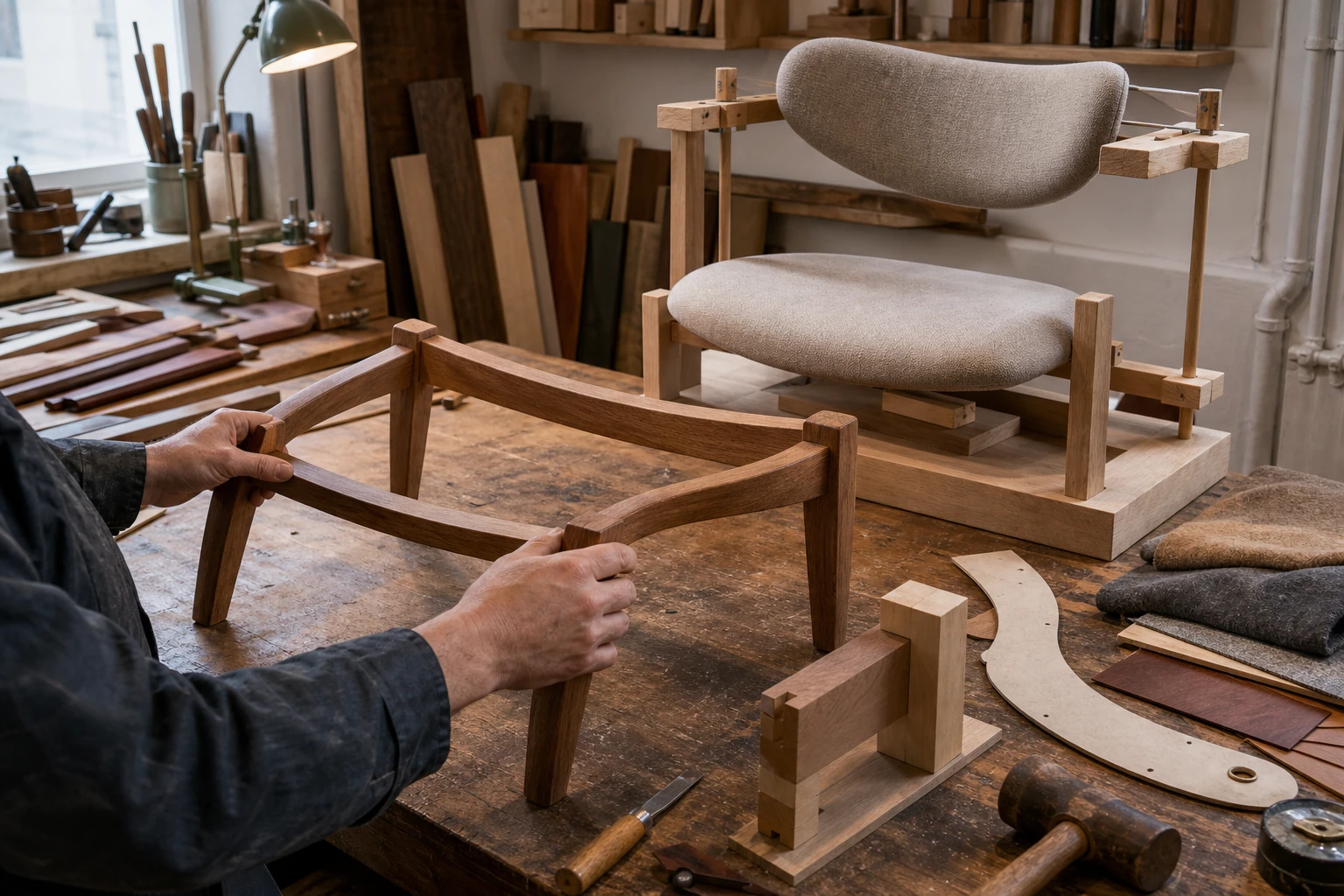
Cabinetmakers and exhibitions gave designers a place to test difficult forms, materials and joints at a high level of craft. Manufacturers then worked out how selected ideas could be produced repeatedly for a wider market. The result was not one fixed recipe. Some documented designs remained cabinetmaker-made, some moved into serial production, and some were produced again later under changed conditions.
That distinction matters when buying. A design date, an exhibition date and a manufacture date may all be correct while describing different stages of one model's life. The words Danish Modern do not collapse those stages into a single period object.
Why 1949 appears so often
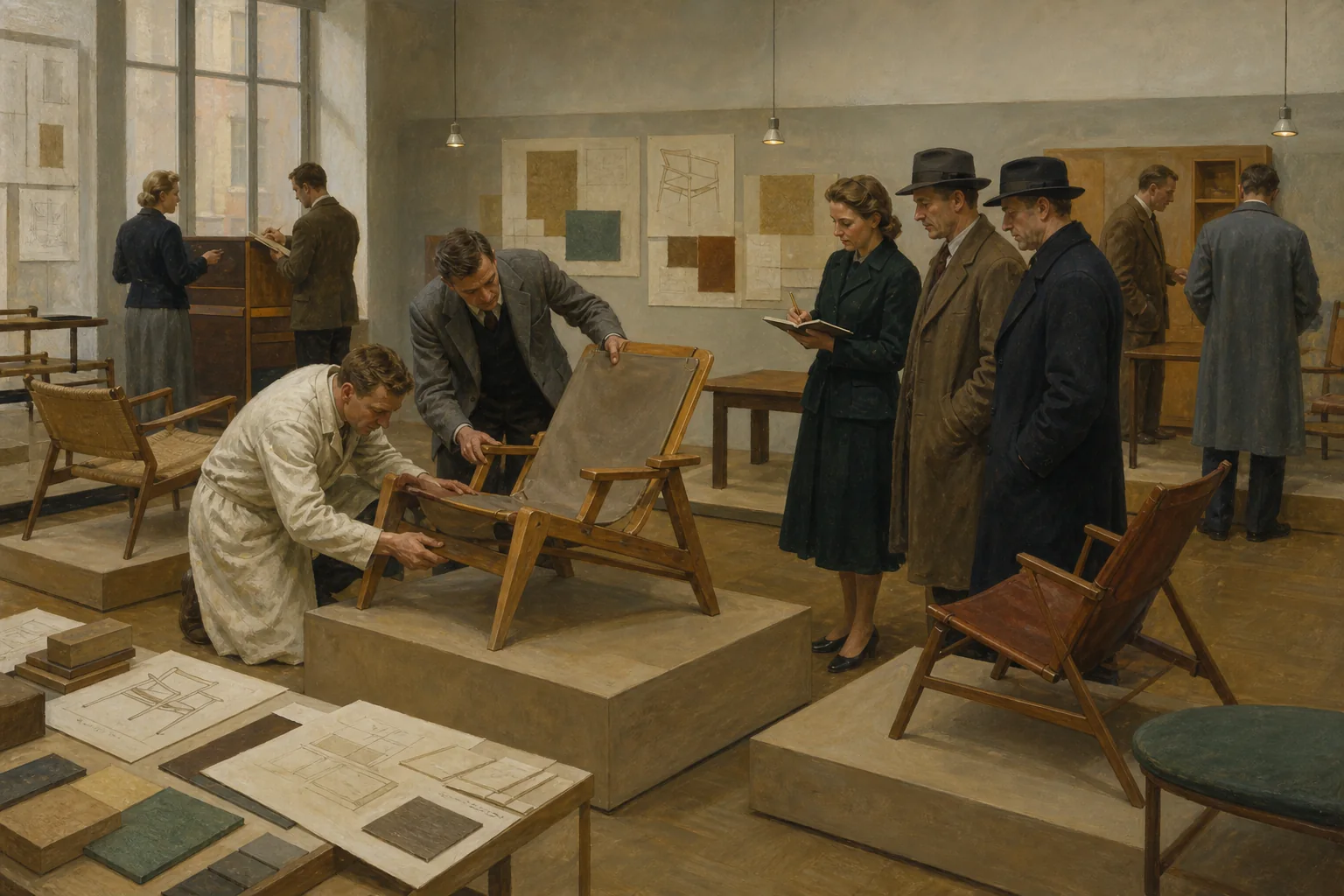
Designmuseum Danmark treats 1949 as an important international turning point. Its account connects the Cabinetmakers' Guild Exhibition held at the museum that year with American journalists encountering Danish furniture, followed by travelling exhibitions that brought Danish design to audiences in North America.3
It is tempting to turn that into an origin date. It is better understood as a moment when established work, institutions, makers, exhibitions and outside attention came together. Designers had been studying and making modern furniture before 1949. The later export story also depended on manufacturers, retailers, exhibitions, publications and buyers who translated a complex design culture into a legible international promise.
The phrase became powerful partly because it allowed many different objects to travel under one recognisable identity. That success also explains why the label can become vague in later sales descriptions.
Five clues are more useful than a style checklist
When a seller calls an object Danish Modern, do not begin by counting tapered legs. Build five separate lines of evidence.
1. Documented design
Is there a drawing, catalogue, museum record, model number or reliable archive that identifies the design? Visual resemblance is a lead, not a conclusion.
2. Documented maker
Who manufactured this version? A designer may have worked with a cabinetmaker, then a serial manufacturer, and later an authorised producer. The maker changes what marks, materials and production details should be expected.
3. Date of this object
Separate the date the model was designed from the period in which the object in front of you was made. A design that entered production in 1950 may have legitimate examples from many later decades.
4. Construction and materials
Compare joinery, dimensions, timber, veneer, upholstery, hardware and finishes with the documented version. Do not assume that every variation is wrong, but do not explain away a contradiction before finding evidence for it.
5. Provenance and condition
Ownership history, invoices, old photographs and labels can connect the present object to its past. Repairs and refinishing may be perfectly reasonable, but they should be described because they can obscure evidence.
Use databases as maps, not verdicts
Designmuseum Danmark's Furnitureindex contains more than 12,000 records of furniture and interiors by Danish designers and architects. 4 It is valuable for names, model relationships and routes into deeper records.
A database match still does not authenticate a chair from a photograph. It helps define the next comparison: exact dimensions, maker, construction, known variants and the source behind the claimed date. Good research becomes more specific as it proceeds.
The most useful definition
Danish Modern was a broad, evolving design culture that joined modern living with historical study, disciplined proportion, material knowledge, craftsmanship, manufacturing and international circulation. It produced objects with very different personalities.
That definition is less convenient than a visual checklist. It is also much more useful. It lets a buyer appreciate why a piece belongs in the story while still asking who designed this model, who made this example, when it was made, and what evidence survives.
Follow the method into an object
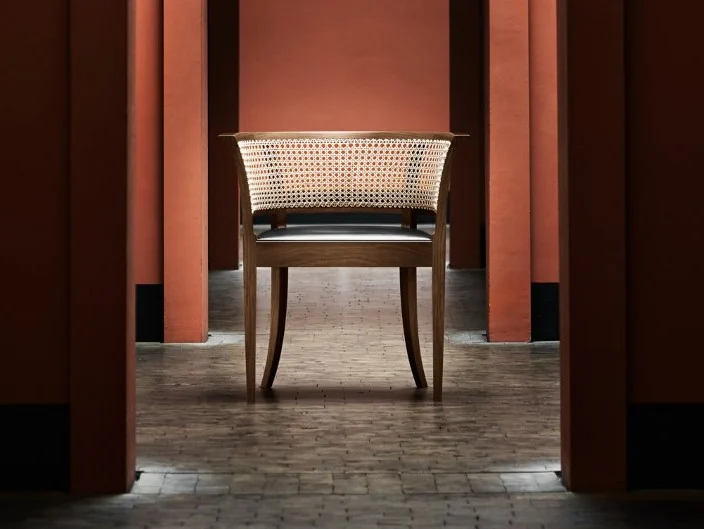
Our profile of Kaare Klint looks at measurement, rooms and historical precedent as working tools. The CH24 Wishbone Chair then shows how one later design combines an inherited chair family with a distinctive structure and repeatable production.