Why these exhibition years keep appearing
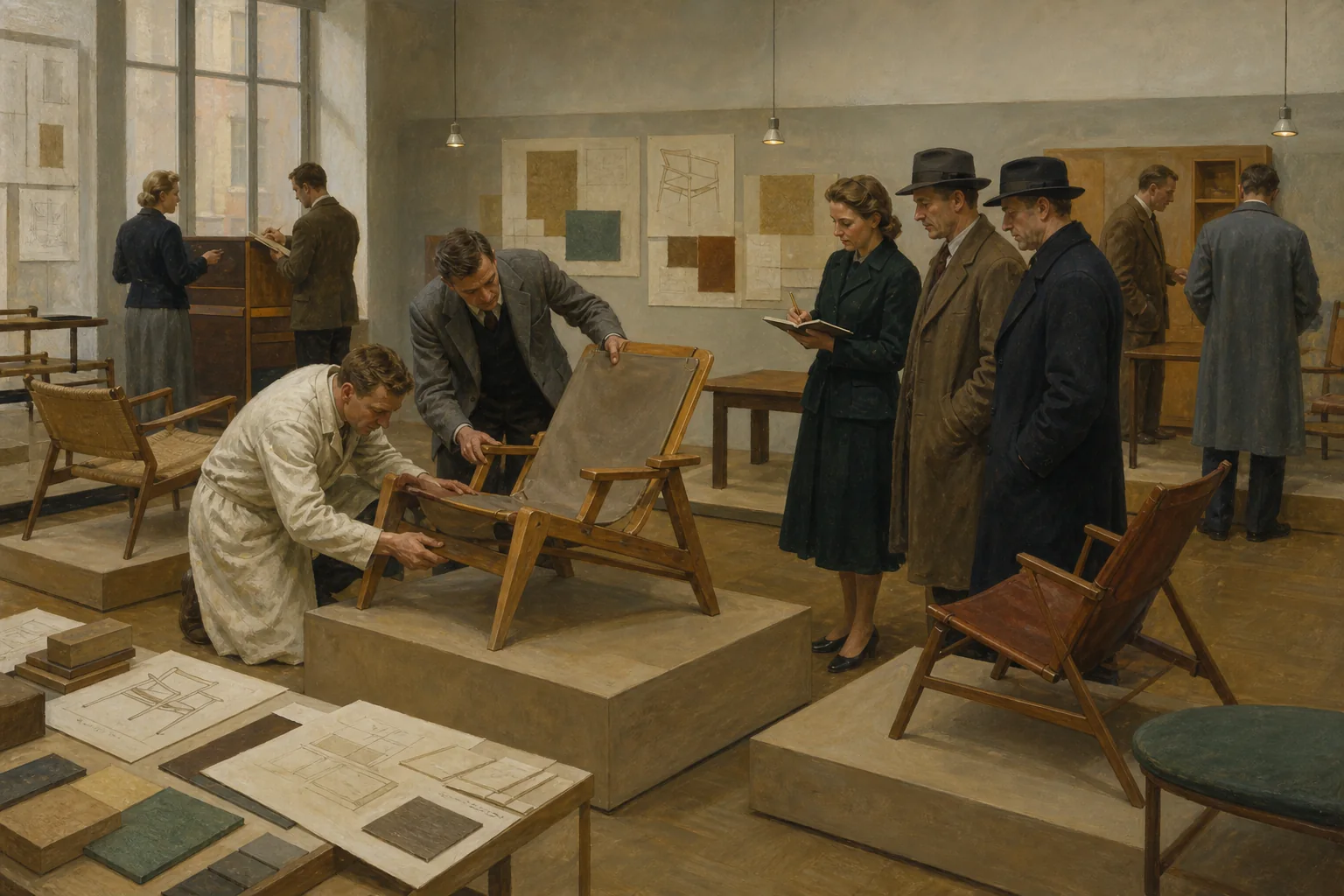
Collectors of Danish furniture repeatedly encounter descriptions such as "shown at the Cabinetmakers' Guild Exhibition in 1949" or "presented at the 1953 Snedkerlaug exhibition." These references matter because the exhibitions brought furniture designers and cabinetmakers together around new work. They also left a paper trail that can connect a design, a maker and a year.
The paper trail is powerful, but the grammar of the claim matters. A catalogue may establish that a design was shown. It does not automatically establish that the object now for sale stood in that exhibition room.
What the historical record contains
Grete Jalk's four-volume reference work, 40 Years of Danish Furniture Design, covers the Copenhagen Cabinet-makers' Guild exhibitions from 1927 to
- The institutional CiNii Books record identifies Jalk as its compiler and
editor, records the original 1987 publication, and divides the set into 1927–1936, 1937–1946, 1947–1956 and 1957–1966. 1
That structure makes the exhibition year a useful research key. It can lead to a period photograph, stand number, designer-cabinetmaker pairing, contemporary caption, drawing, or description of a model. It is much stronger than a later listing that says only "in the style of" a famous designer.
Designmuseum Danmark places the exhibitions inside the wider Danish Modern story. Its current exhibition material identifies the 1949 event at the museum as a turning point: American journalists encountered Danish chairs there, and later travelling exhibitions in North America helped build international recognition for Danish furniture and craftsmanship. 2
Learn the four-part claim
When an exhibition is mentioned, split the description into four separate facts:
- Designer — who developed the design?
- Cabinetmaker — who made the exhibited example?
- Exhibition — in which year and under whose stand was it documented?
- Present object — when, by whom and in what version was the piece in front of you made?
The first three can document the history of a model. The fourth determines how that history applies to the object being bought.
An honest catalogue entry may therefore say: the model was designed in one year, first exhibited in another, and this example was manufactured later. Those dates are not contradictory. They answer different questions.
1949 is important, but it is not a magic date
The 1949 exhibition deserves attention because Designmuseum Danmark connects it to the international emergence of Danish Modern. It is also associated with unusually well-documented collaborations, including Finn Juhl and master cabinetmaker Niels Vodder.2
The museum's account of its 1949 Butterfly coffee-table prototype says that its paper collection holds original watercolours and drawings for Juhl and Vodder's stand, including the Chieftain chair and sofa, the Egyptian chair and the table. That is a useful chain: named designer, named cabinetmaker, dated stand, surviving drawings and a museum object. 4
House of Finn Juhl's timeline likewise records Juhl presenting the Chieftain Chair at the 1949 exhibition.5 Its current product page separates the design year, 1949, from a relaunch in 2002. This is exactly why a collector must not use the exhibition year as the automatic manufacture date of every later example.6
The year can establish historical context. It does not confer exhibition provenance on any chair with a similar silhouette.
Model history is not object provenance
These statements describe different levels of evidence:
Documented exhibition object
The strongest claim identifies the exact object shown and follows it through period records, photographs, invoices, collection history or other specific provenance. This is rare and should be supported with object-level evidence, not merely a catalogue image of the model.
Same model and cabinetmaker
An object may match the exhibited design and carry evidence for the same cabinetmaker, but have been produced after the exhibition. It can still be an important period example. It should not be described as "the exhibition chair" without a chain to that exact chair.
Later authorised production
A design can continue in production or be relaunched by an authorised maker. Its design history remains relevant, while its materials, marks, production methods and date belong to the later edition.
Visual resemblance
An object that merely resembles a documented design has not yet reached an attribution. Similarity is a prompt to research construction, measurements, marks and records—not a conclusion.
A repeatable research method
1. Preserve the seller's exact wording
Save the full listing and record whether it says "exhibited," "designed for," "model presented at," "made by," "attributed to," or "in the style of." These phrases should not be treated as synonyms.
2. Search in Danish and English
Useful forms include:
- `Københavns Snedkerlaugs Møbeludstilling`;
- `Snedkerlaugsudstillingen`;
- `Copenhagen Cabinetmakers' Guild Exhibition`;
- `Cabinet-makers' Guild exhibition`;
- designer name + cabinetmaker name + exhibition year;
- model number + `Grete Jalk` + year.
English sources translate snedker and the guild name in several ways. Search the variants rather than assuming a missing result means a missing record.
3. Locate the year before comparing photographs
Start with the relevant exhibition volume. Use its contents and any index it provides to confirm that the named designer and cabinetmaker appear in the relevant year, then locate the stand or model. This guards against finding a visually similar chair from a different year or maker.
4. Record what the source actually shows
Note whether the source contains a photograph, drawing, caption, model number, materials, dimensions or only a name in an index. Do not silently add details that the source does not provide.
5. Return to the physical object
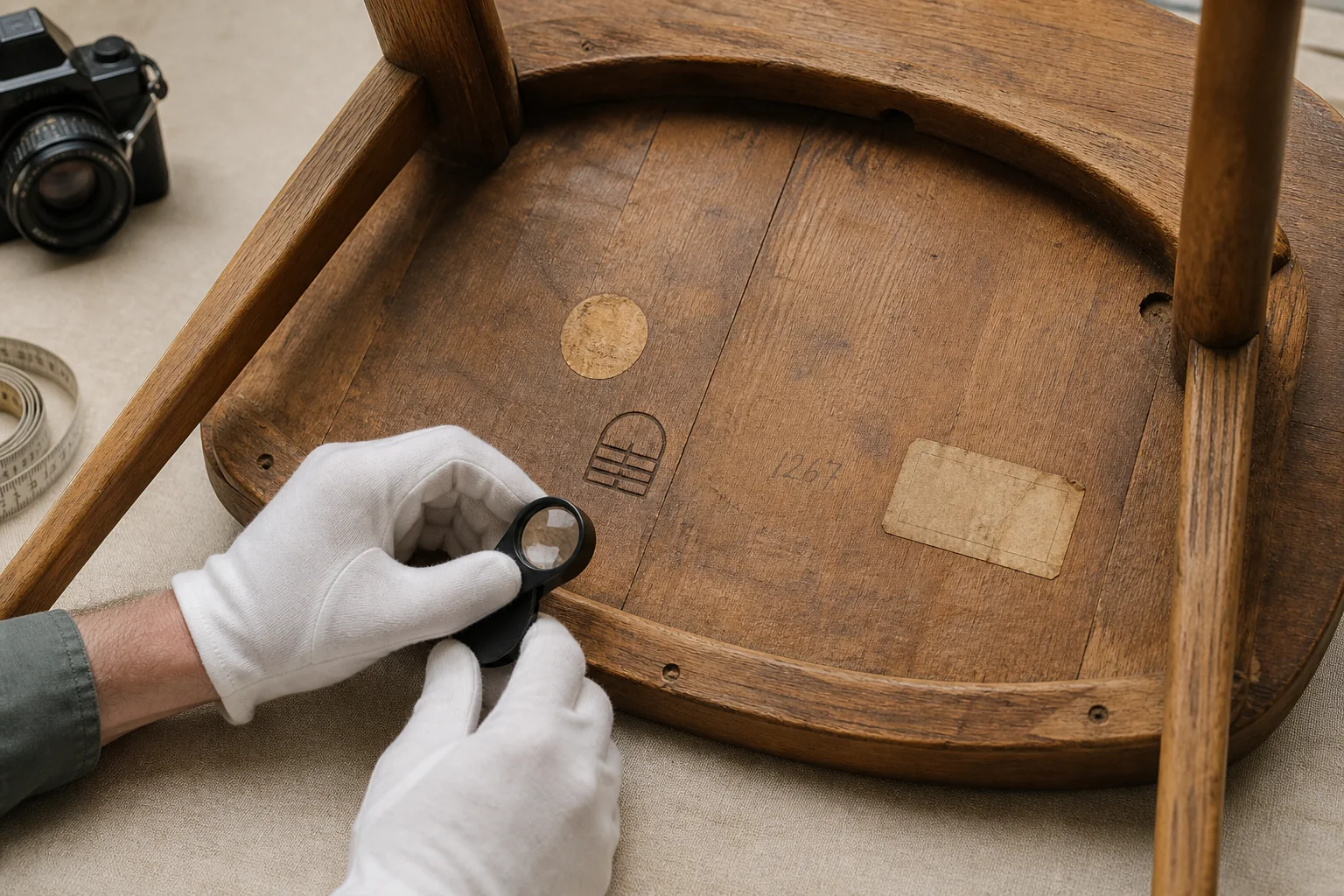
Compare proportions, joinery, hardware, upholstery structure, materials, dimensions and maker's marks. A period photograph may hide the underside or show a prototype that differs from later production.
6. Build provenance separately
Ask how the present owner obtained the object and whether invoices, correspondence, old photographs or collection labels survive. A documented model and a documented ownership chain are complementary evidence, not the same evidence.
Use Furnitureindex as a map, not the finish line
Designmuseum Danmark's Furnitureindex contains more than 12,000 searchable records of furniture and interiors by Danish designers and architects. It is valuable for finding names, variants and possible relationships before moving to catalogues, drawings and object records. 3
For a high-value attribution, keep a note of every step: which record supplied the designer, which supplied the maker, which supplied the exhibition year, and which evidence connects those facts to the present object. If all roads lead back to one modern dealer description, the attribution has not gained independent support.
Questions to ask before paying an exhibition premium
- Is the claim about the design, the production version, or this exact object?
- Which exhibition year, stand and cabinetmaker are documented?
- Can the seller provide the catalogue page rather than a cropped repost?
- Does the present object carry a maker's mark consistent with that account?
- Are its measurements and construction consistent with the documented version?
- Is it a prototype, cabinetmaker-made period example, later production, or authorised relaunch?
- What supports the manufacture date?
- What supports the object's ownership history?
An exhibition reference can make a piece more intelligible and historically important. It should also make the description more precise.
Read the marks as a separate evidence layer
Once the documentary model history is clear, return to the object itself. Our guide to Furnituremakers Danish Control explains why a quality-control label, maker's mark, model code and retailer label answer different attribution questions.