Artefact story
Berlin Secretary Cabinet: the desk that performs
Open one documented David Roentgen cabinet: a 3.59-metre machine of marquetry, clockwork, music, hidden compartments and royal performance.
Objects, people and evidence
Read source-backed stories about furniture, designers, makers and materials, then browse stable design records under Items & Artefacts. For practical buying, inspection and care, use the Guides. Countries remain ways into one connected library—not separate databases.
The first research route
Follow documented histories, designers, workshops, designs and craft. The existing Danish collection remains at its established URLs while the wider Library grows around the same evidence model.
Explore the Danish Furniture LibraryNew Library stories
Follow source-backed pages that keep a design, its maker, its production context, a technique and each documented museum object distinct.

Artefact story
Open one documented David Roentgen cabinet: a 3.59-metre machine of marquetry, clockwork, music, hidden compartments and royal performance.

Artefact story
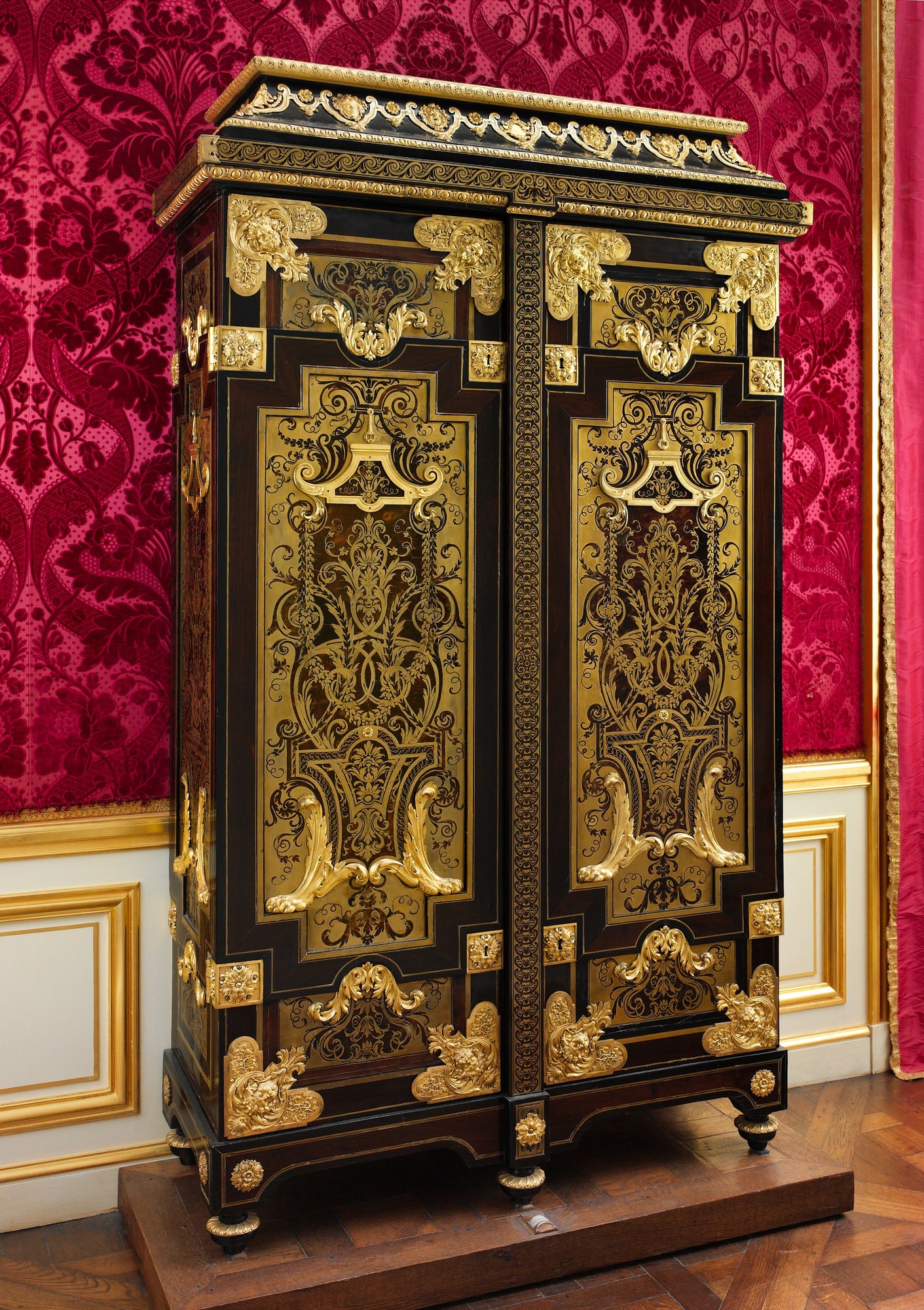
Look closely at Met cabinet 59.108: a towering object from about 1700 whose marquetry, bronze mounts and hidden substitutions reveal how spectacle and workshop economy worked together.

Designer profile
Understand how Charlotte Perriand connected furniture with everyday and collective living through one documented 1952 commission produced with Ateliers Jean Prouvé.

Design story
See how Eileen Gray turned an incomplete circle, two telescopic uprights and a small pin on a chain into a table that approaches a bed instead of waiting beyond reach.

Design story
Understand what museum records establish about Jacques-Émile Ruhlmann’s État cabinet, why its 1922 design date differs from an object date, and what remains unproven.

Artefact story
Read Hatnefer's low Dynasty 18 chair through its original linen cord, pegged mortise-and-tenon joints, protective symbols and exact tomb findspot.

Design story
See how George Jakob Hunzinger’s 1876 patent turned textile-covered steel strips, grooved frames and interchangeable parts into a furniture system.

Designer profile
Meet Jean Prouvé through three scales of work: the unequal legs of the Standard Chair, a wall-mounted lamp and a demountable house.

Artefact story
See how one pull transforms Jean François Leleu's c. 1775–85 cylinder-top desk from a restrained mahogany case into a fitted place for writing.

Technique study
See how marquetry turns thin veneers and other fitted materials into an image, why grain changes the drawing and how one cut can produce two reversed patterns.

Artefact story
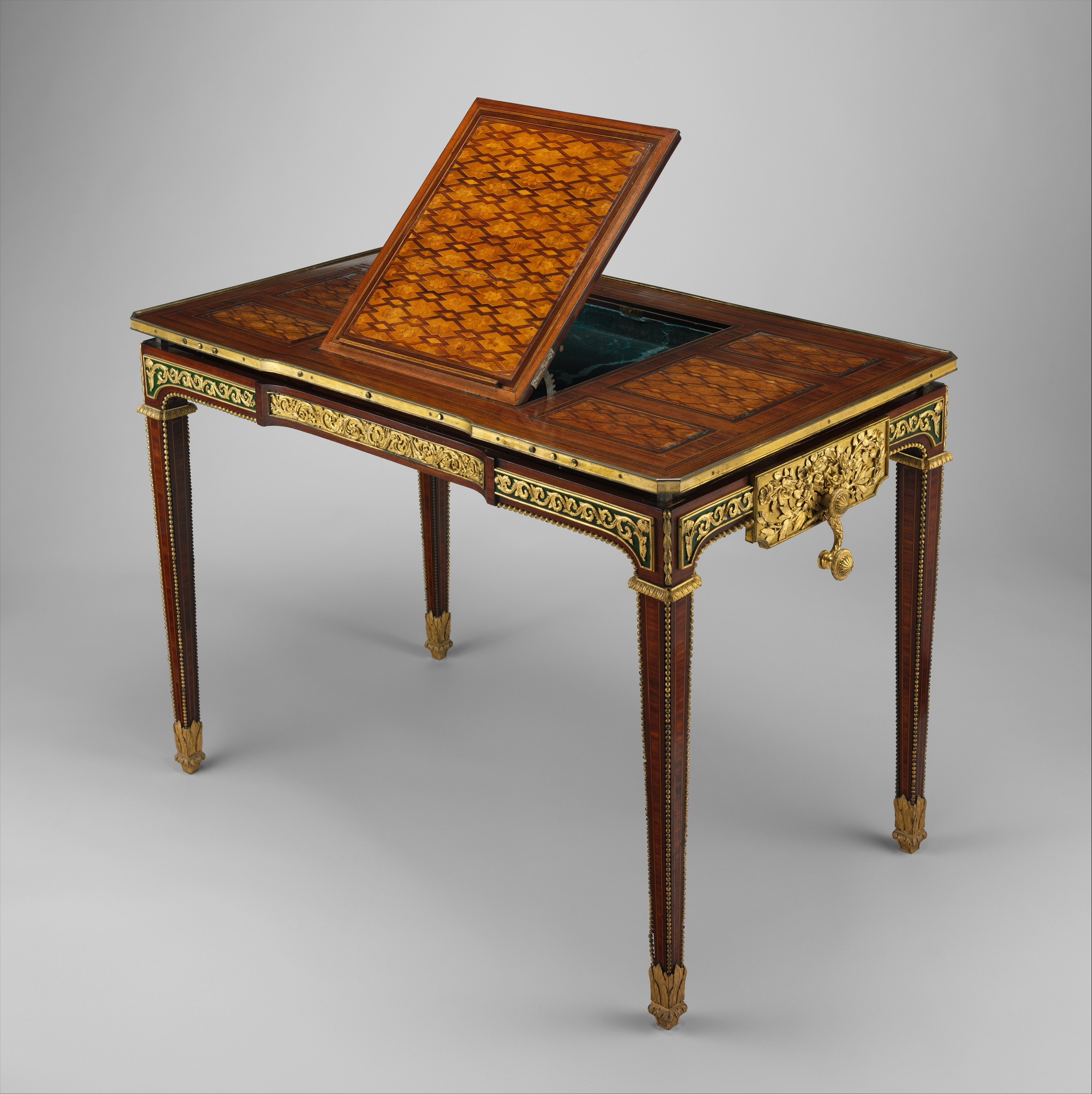
Open Riesener’s 1778 table for Marie Antoinette: a crank raises its marquetry top while panels become a lectern, mirror and six compartments.

Design story
Follow Verner Panton's one-piece cantilever through its 1967 pilot, polyurethane series, thermoplastic failure and 1999 polypropylene return.

Artefact story
Open Petronella Oortman's c. 1686–1710 dolls' house and see why its full-size cabinet, exact materials and ordered rooms made it a collection, not a toy.

Design story
Read Alberto Orlandi's Pompei Armchair through its enclosing steel rail, leather planes, curule-like stance and brass details, then see why later catalogues date it only to circa 1980–85.

Design story
See how Gerrit Rietveld separated wooden lines, a seat and a back into one open chair—and why its famous red, blue and yellow arrived after the form.

Artefact story
See how George A. Schastey's ten-inch upholstered chair turned an adjustable reclining mechanism into a physical argument for US Patent 145,595.

Artefact story
Read one exact 1843 Shaker sewing table from its lipped worktop to its varied drawers and six recorded woods—and see how usefulness creates visual order.

Design story
See how Charlotte Perriand used one shallow, two-sided bookcase to store belongings, screen a washbasin and reorganise a 13-square-metre student room.

Design story
See how Michael Thonet joined steam-bent beech, six wooden parts, simple hardware and compact shipping to turn one 1859 café chair into a global system.

Artefact story
Look across Herter Brothers' monumental Vanderbilt library table: a birthday sky, shell-inlaid globes and imperial references turn furniture into portraiture.

Design story
Open William S. Wooton’s 1874 patent secretary to see how hinged filing wings, a writing leaf, grades and locks compressed a Victorian office into one cabinet.
Designs and documented objects
Each permanent record names either a repeatable furniture design or one particular documented object. The same page can also be read as a story; its label tells you which identity the evidence describes.

Design record
See how Arne Jacobsen's 1952 Ant Chair turned a canteen brief, one double-curved plywood shell and three legs into an economy of space and material.

Design record
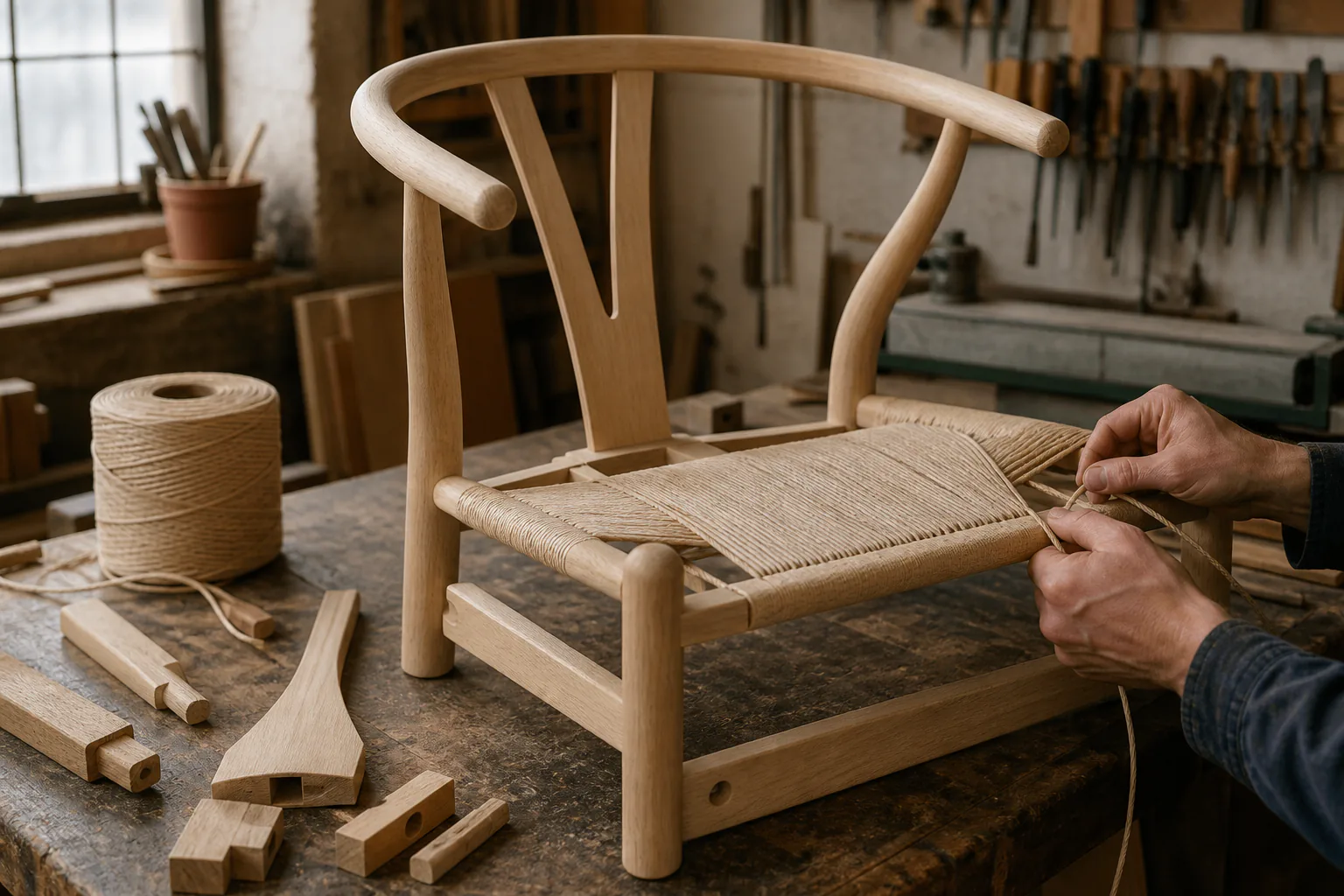
Read the CH24 Wishbone Chair through its dates, curved frame, Y-shaped support, joinery and paper-cord seat—then separate model history from vintage-object evidence.
Design record
Read Finn Juhl's 1949 Chieftain Chair through its commanding scale, exposed timber frame, suspended leather forms, Guild debut and complicated name.

Design record
See how Arne Jacobsen's 1958 Egg Chair used a padded moulded shell to create privacy, focus and small social enclaves inside the SAS Royal Hotel lobby.

Design record
See how Kaare Klint's 1914 Faaborg Chair used mobility, open cane work and visual restraint to help museum visitors look at art rather than at the chair.

Design record
See how Kaare Klint's 1933 KK47000 Safari Chair turns knock-down joints, canvas and leather straps into a complete chair—and how to separate its design, maker and vintage-object histories.

Design record
See how Hans J. Wegner’s 1953 Valet Chair turns a hanger, trouser support, seat and pocket-sized compartment into one remarkably composed object.

Artefact record
Open one documented David Roentgen cabinet: a 3.59-metre machine of marquetry, clockwork, music, hidden compartments and royal performance.

Artefact record
Look closely at Met cabinet 59.108: a towering object from about 1700 whose marquetry, bronze mounts and hidden substitutions reveal how spectacle and workshop economy worked together.

Design record
See how Eileen Gray turned an incomplete circle, two telescopic uprights and a small pin on a chain into a table that approaches a bed instead of waiting beyond reach.

Design record
Understand what museum records establish about Jacques-Émile Ruhlmann’s État cabinet, why its 1922 design date differs from an object date, and what remains unproven.

Artefact record
Read Hatnefer's low Dynasty 18 chair through its original linen cord, pegged mortise-and-tenon joints, protective symbols and exact tomb findspot.

Design record
See how George Jakob Hunzinger’s 1876 patent turned textile-covered steel strips, grooved frames and interchangeable parts into a furniture system.

Artefact record
See how one pull transforms Jean François Leleu's c. 1775–85 cylinder-top desk from a restrained mahogany case into a fitted place for writing.

Artefact record
Open Riesener’s 1778 table for Marie Antoinette: a crank raises its marquetry top while panels become a lectern, mirror and six compartments.
Design record
Follow Verner Panton's one-piece cantilever through its 1967 pilot, polyurethane series, thermoplastic failure and 1999 polypropylene return.

Artefact record
Open Petronella Oortman's c. 1686–1710 dolls' house and see why its full-size cabinet, exact materials and ordered rooms made it a collection, not a toy.

Design record
Read Alberto Orlandi's Pompei Armchair through its enclosing steel rail, leather planes, curule-like stance and brass details, then see why later catalogues date it only to circa 1980–85.

Design record
See how Gerrit Rietveld separated wooden lines, a seat and a back into one open chair—and why its famous red, blue and yellow arrived after the form.

Artefact record
See how George A. Schastey's ten-inch upholstered chair turned an adjustable reclining mechanism into a physical argument for US Patent 145,595.

Artefact record
Read one exact 1843 Shaker sewing table from its lipped worktop to its varied drawers and six recorded woods—and see how usefulness creates visual order.

Design record
See how Charlotte Perriand used one shallow, two-sided bookcase to store belongings, screen a washbasin and reorganise a 13-square-metre student room.

Design record
See how Michael Thonet joined steam-bent beech, six wooden parts, simple hardware and compact shipping to turn one 1859 café chair into a global system.

Artefact record
Look across Herter Brothers' monumental Vanderbilt library table: a birthday sky, shell-inlaid globes and imperial references turn furniture into portraiture.

Design record
Open William S. Wooton’s 1874 patent secretary to see how hinged filing wings, a writing leaf, grades and locks compressed a Victorian office into one cabinet.
One object, several relationships
A design is not the same thing as its designer, manufacturer, material or one chair offered by a seller. PatinaHall keeps those identities separate, then links them only when the relationship has been reviewed.
Browse the released research
History & evidence
Exhibitions, institutions, labels and documentary evidence that help place an object in context.
3 notesDesigners
Source-backed profiles of designers, their working ideas and their collaborators.
3 notesMakers
Cabinetmakers, workshops and manufacturers behind documented furniture.
1 noteDesigns
Individual designs and coherent families examined through reliable records.
7 notesMaterials & craft
Construction, upholstery, joinery and materials explained through useful detail.
1 noteHow PatinaHall publishes research
Documented facts, widely accepted history, attribution and seller-reported information are not interchangeable. Sources, review dates and uncertainty remain visible so that a useful link never becomes an invented authentication claim.