Small above, tall below
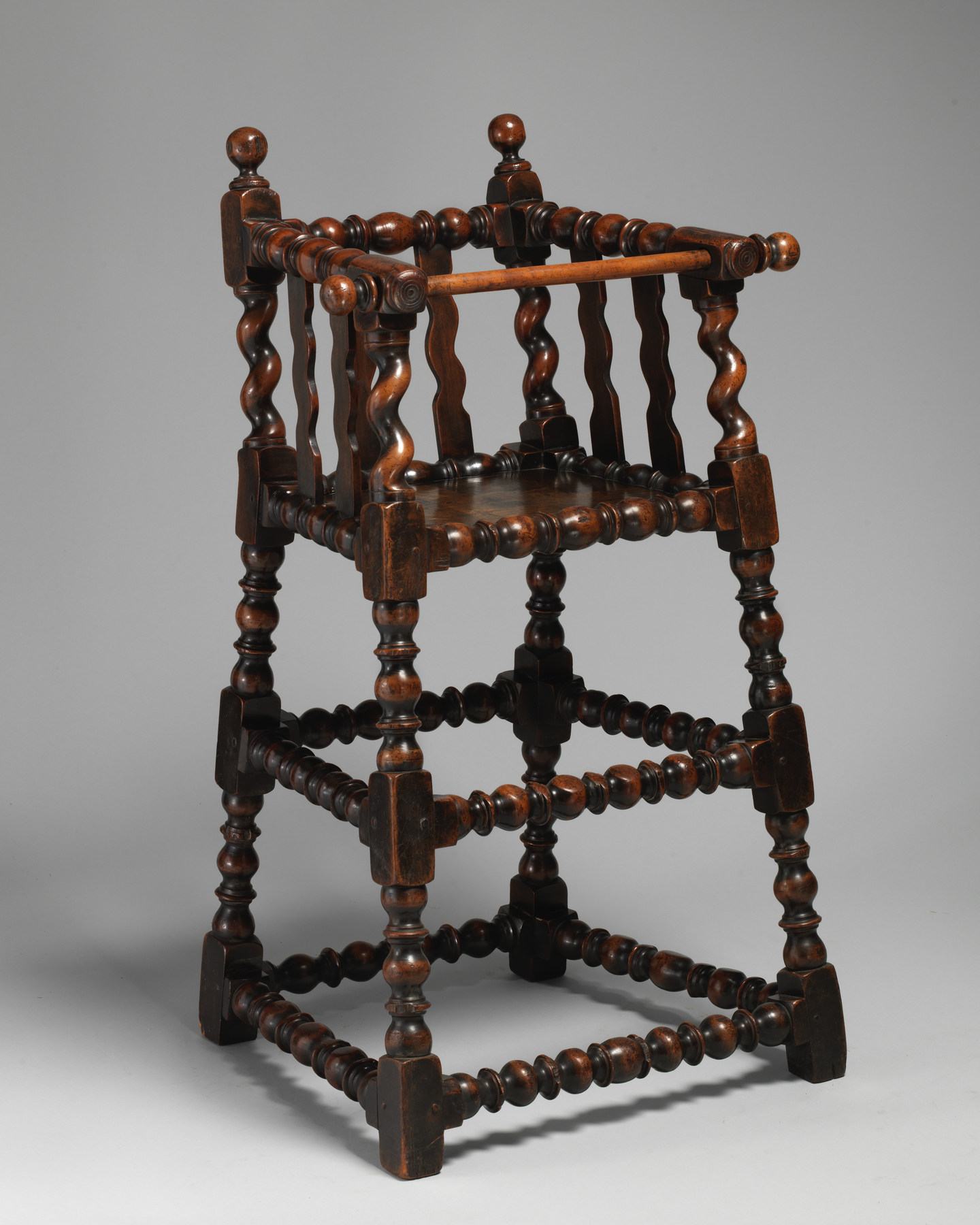
The Met dates this walnut chair to about 1660 and identifies it as British. Its overall height is 87.6 centimetres; that figure measures the whole object, not the height of the seat.1
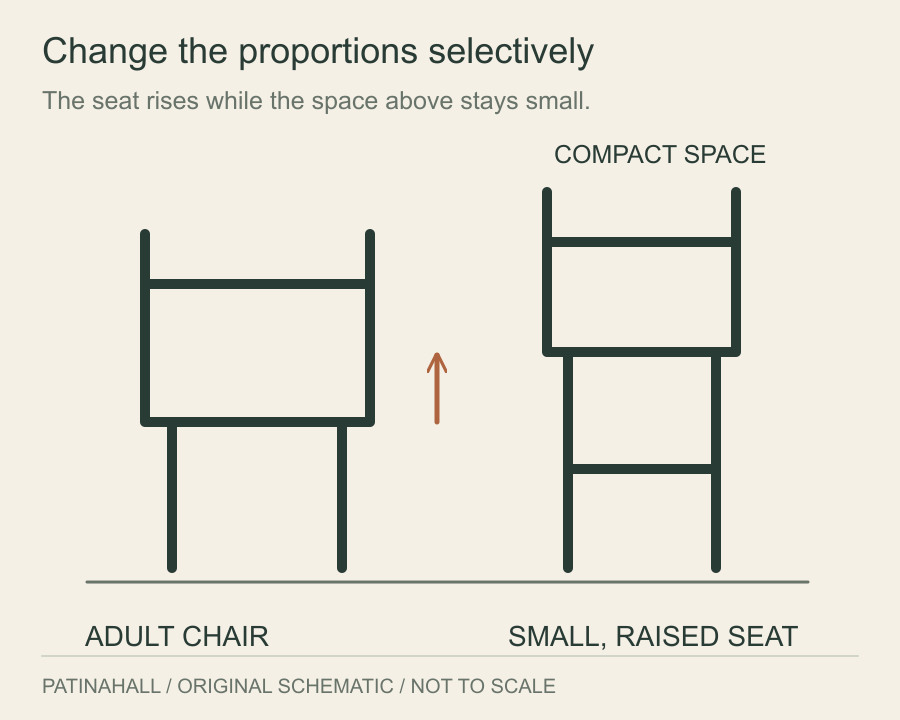
Even without a ruler, the proportions tell a story. A large part of the chair is below the sitting surface. Above it, the arms, back and front rail form a compact boundary. The seat has been lifted without giving its occupant the width or depth of an adult armchair.
Try imagining an ordinary chair reduced evenly in every direction. Its seat would move closer to the floor as it became smaller. This chair does something more selective. Some dimensions contract while another remains conspicuously long.
Repeated turning makes the height visible
The wooden parts are far from plain. Rounded beads, narrow collars and twisting forms interrupt the rails and uprights. Light catches the bulges while the recesses stay dark, breaking a tall object into smaller intervals.
The lower stretchers create horizontal stages between the feet and the seat. Above the seat, the close-set supports define the sitter’s space. Look between those parts as well as at them: the open areas make the difference between the long lower frame and the smaller enclosure easier to see.
The ornament therefore participates in the way the chair’s proportions are read. Its repeated forms give the eye points of comparison as it travels from the floor to the top.
A painting brings a child into the room
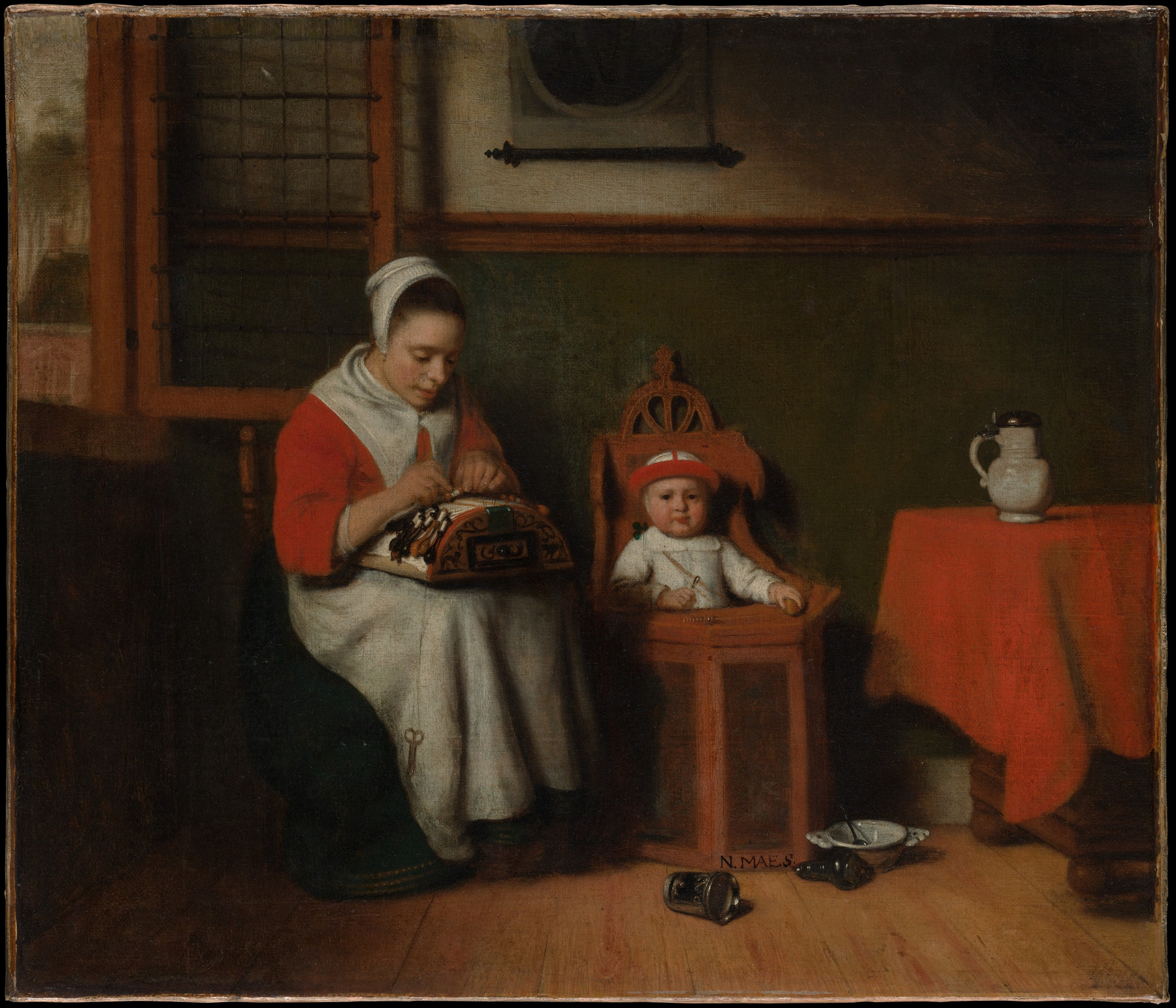
Nicolaes Maes’s The Lacemaker, painted around 1656, offers a different kind of evidence. A woman concentrates on her work while a child in a high chair looks towards the viewer. The red clothing and table covering connect the figures to the surrounding interior.2
The painted chair is not the British walnut object. It has its own form and belongs to an artist’s composed Dutch scene. What the comparison supplies is a human relationship: an adult occupied with detailed work and a child placed nearby.
In the museum photograph, the empty chair lets us examine structure. In the painting, furniture helps organise attention between people. The two images answer different questions.
The absent sitter still sets the scale
An empty piece of furniture can preserve a surprisingly clear idea of a body. The distance between arms, the size of a seat and the amount of structure underneath suggest whom the object was made to accommodate.
Here, the small upper space and long legs remain readable centuries after the original household has disappeared. The chair’s proportions keep the child in the story, even when nobody is sitting there.