
The spare chair gets a point of view
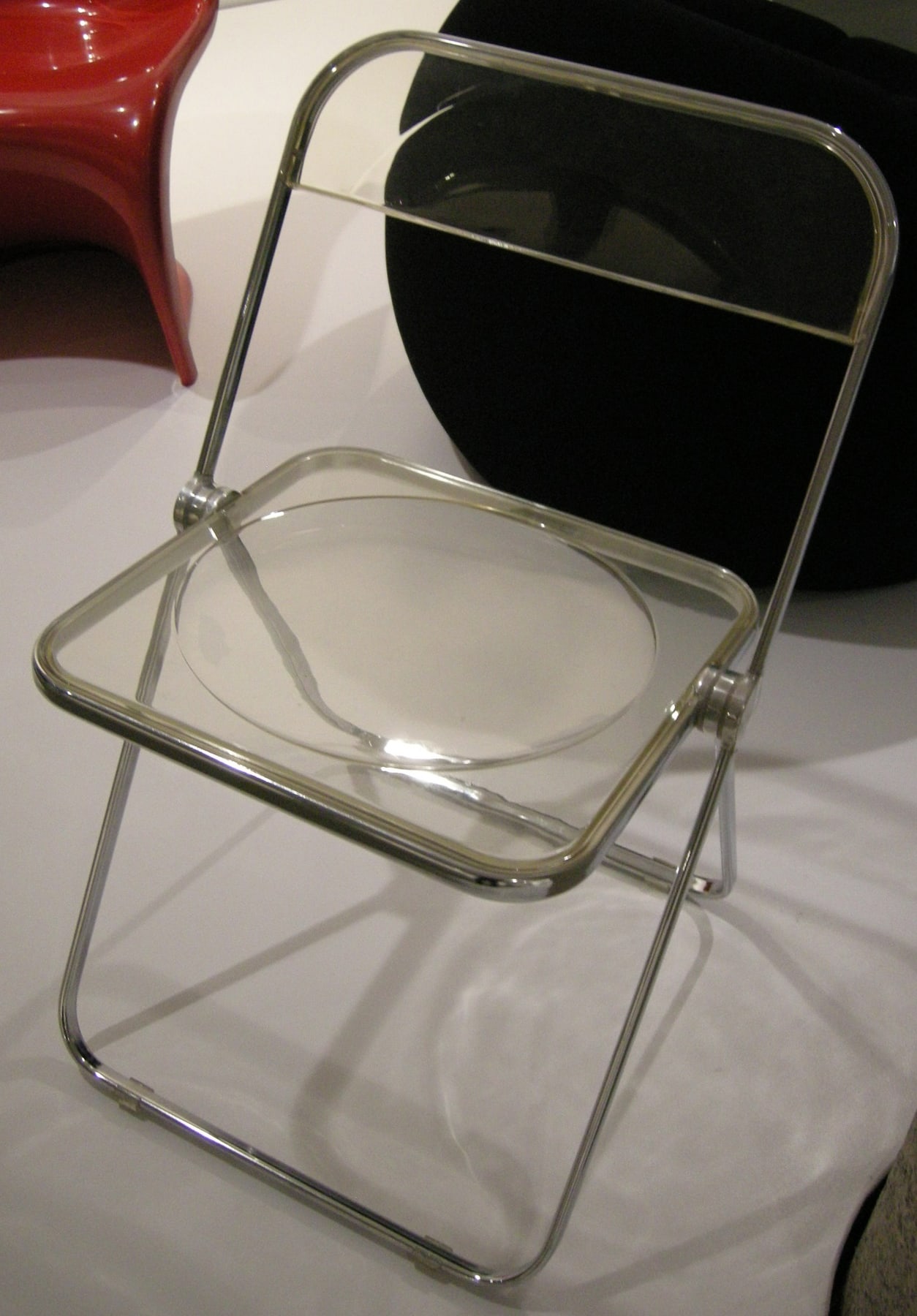
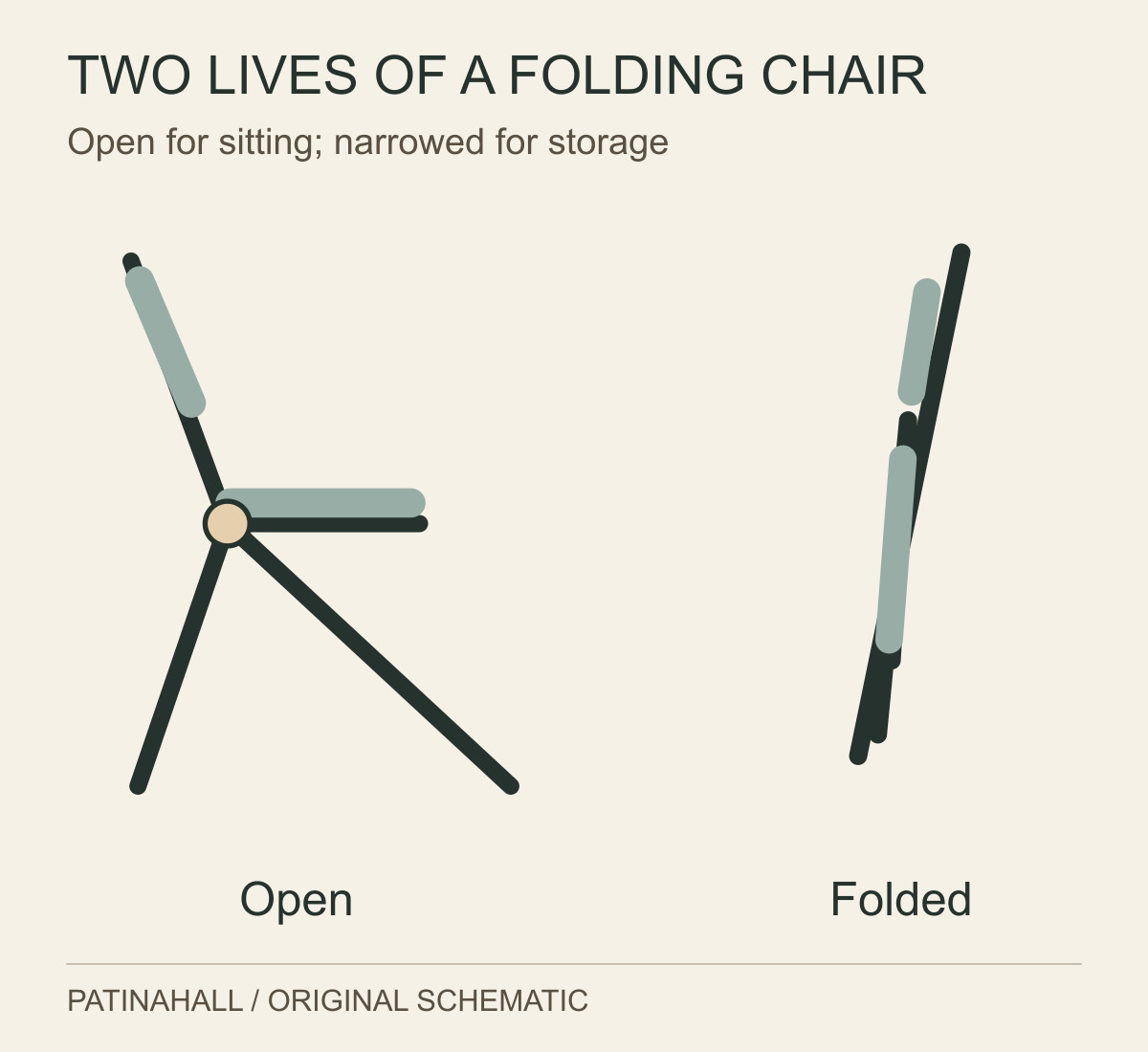
A folding chair has two lives. Open, it must make a convincing place to sit. Closed, it must occupy much less of the room. Plia makes the relationship between those states visible: the frame members and seat meet at a concentrated joint rather than appearing as a collection of unrelated hinges.
Giancarlo Piretti’s design is recorded by MoMA in 1967, with Anonima Castelli of Bologna as manufacturer. The museum calls it both a folding and a stacking chair. Storage was therefore part of the object’s identity, not an afterthought added to an ordinary fixed chair.1
Three movements at the same meeting point
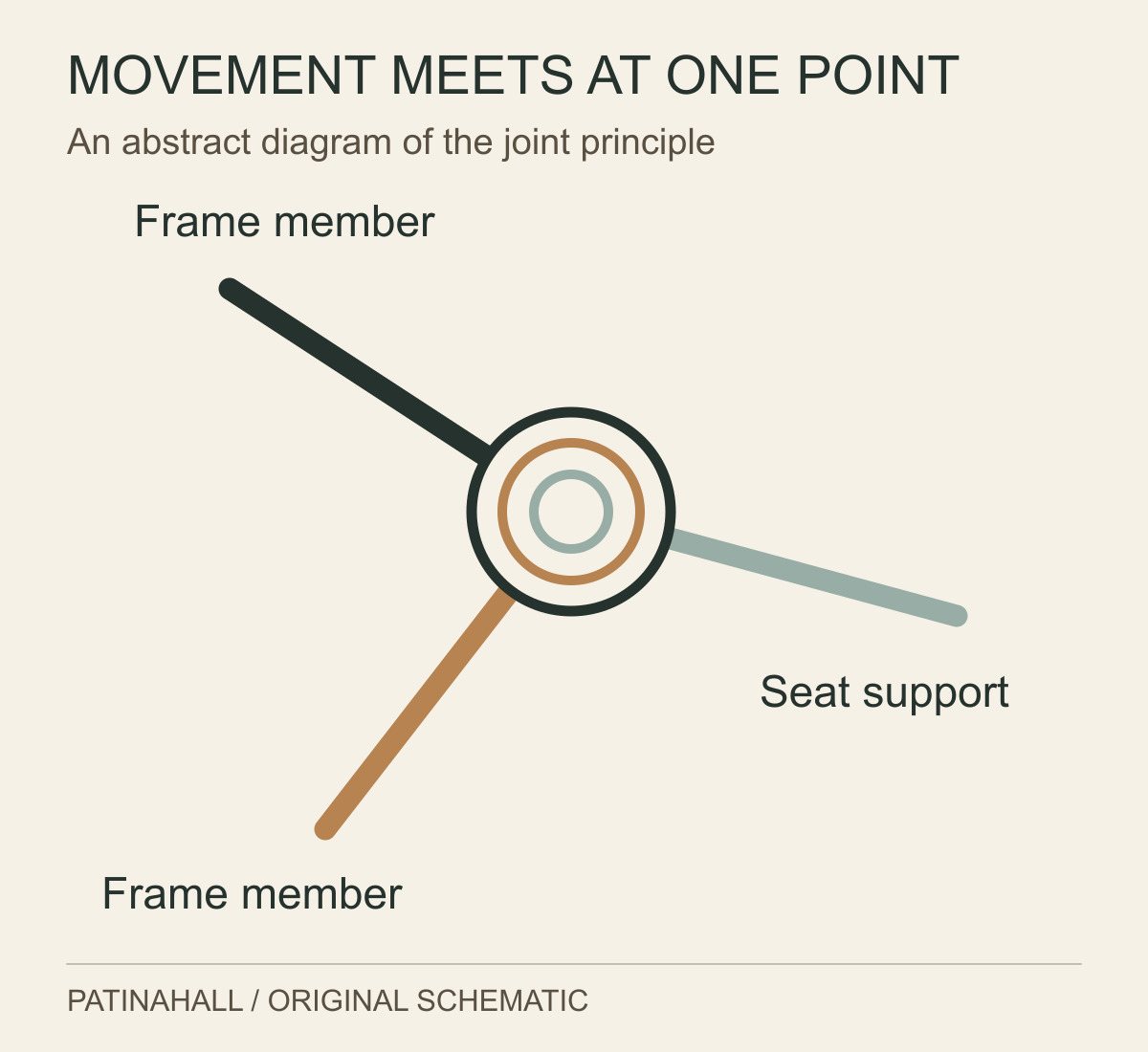
Castelli’s account singles out the three-disc hinge. In the open chair, separate members spread into a supporting arrangement. As the chair closes, their relationships change around that same small area. The compactness of the joint makes a complicated movement look unusually legible.2
The National Gallery of Victoria describes its Plia through the seat and back panels in a framework whose members swivel from bosses. It is a terse collection description, but it directs attention to exactly the useful place: the junction beside the seat.3
Think of that junction as an agreement between moving parts. A seat cannot simply tip out of the way while the legs continue to occupy their full open footprint. Each part needs a route towards the stored state that accommodates the others. Plia brings the problem together, both mechanically and visually.
A chair with less visual weight
The clear-panel version makes the framework particularly easy to read. You can see through the seat and back instead of encountering two opaque surfaces. The metal outline becomes prominent, while the sitting surface appears to interrupt less of the room behind it.
MoMA identifies chrome-plated steel, cast aluminium and ABS plastic in its particular example. That precise record is more informative than describing every translucent vintage chair as the same material. The design combines different materials because the thin frame, local joint and broad panels have different jobs.1
Transparency does not remove the object’s physical footprint. It changes its visual presence. A row of these chairs can allow the floor and surrounding furniture to remain visible through the seats, which is a different effect from a row of solid upholstered backs.
Making room after people leave
Castelli still presents Plia within its product history and directs readers to Anonima Castelli’s shop. The chair continues to make sense as furniture for rooms whose uses change.2
The useful final view is from the side, with the chair closed. The spread of the open frame has narrowed, and the seat has joined it. An object that was asking for a place at the table now asks for a much smaller place to wait. The little joint has organised both lives.