A city needs more than chairs
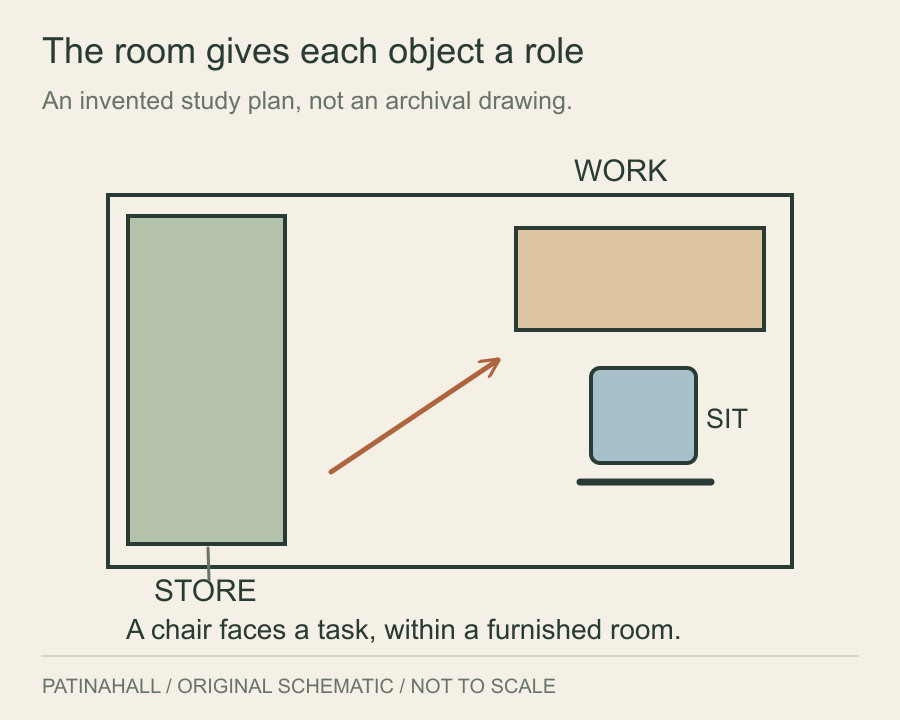
Working, storing, eating and resting make different demands on furniture. A useful city must accommodate all of them. Seen together, a desk, a cupboard and a seat describe a set of activities rather than a collection of silhouettes.
The Canadian Centre for Architecture’s account of Chandigarh brings the furnishings back into houses and workplaces. It describes fitted cupboards, alcoves and lighting as part of interiors, alongside freestanding wooden furniture. Pierre Jeanneret’s engagement with local materials and craft belonged to this broader architectural effort.2
That relationship changes what is worth looking at. The depth of a cupboard and the placement of a light may tell as much about a room as its most photogenic chair. Furniture completes decisions that the walls alone cannot make.
The drawing has somebody’s name on it
One file in the CCA’s Pierre Jeanneret fonds is explicitly devoted to furniture and fixtures by Jeanneret and other architects. Its contents include a dressing-table drawing dated March 1953 and signed E. Chowdhury: the architect Eulie Chowdhury.
The table incorporates a hinged element. That is a small enough detail to be overlooked in a general account of Chandigarh, yet it records a practical intention and a named contribution. The archive also contains a chair timber-cutting list and a bamboo-armchair drawing, reminders that a finished object had to pass through dimensions, materials and workshop operations.1
A style label can group objects by appearance. A drawing can tell a different story: what was requested, how a part might move and whose name was attached to that decision.
Photographs restore the surroundings
A photograph by Jeet Malhotra in the same collection records furniture within the Chandigarh project. Its archival identity matters because a historical photograph gives us a situated view, while a later display or sales photograph may remove the surrounding evidence.3
This does not make every image a complete explanation. The camera still chooses a frame. It does, however, invite us to look beyond the object’s contour towards neighbouring furniture, wall surfaces and the space left for use.
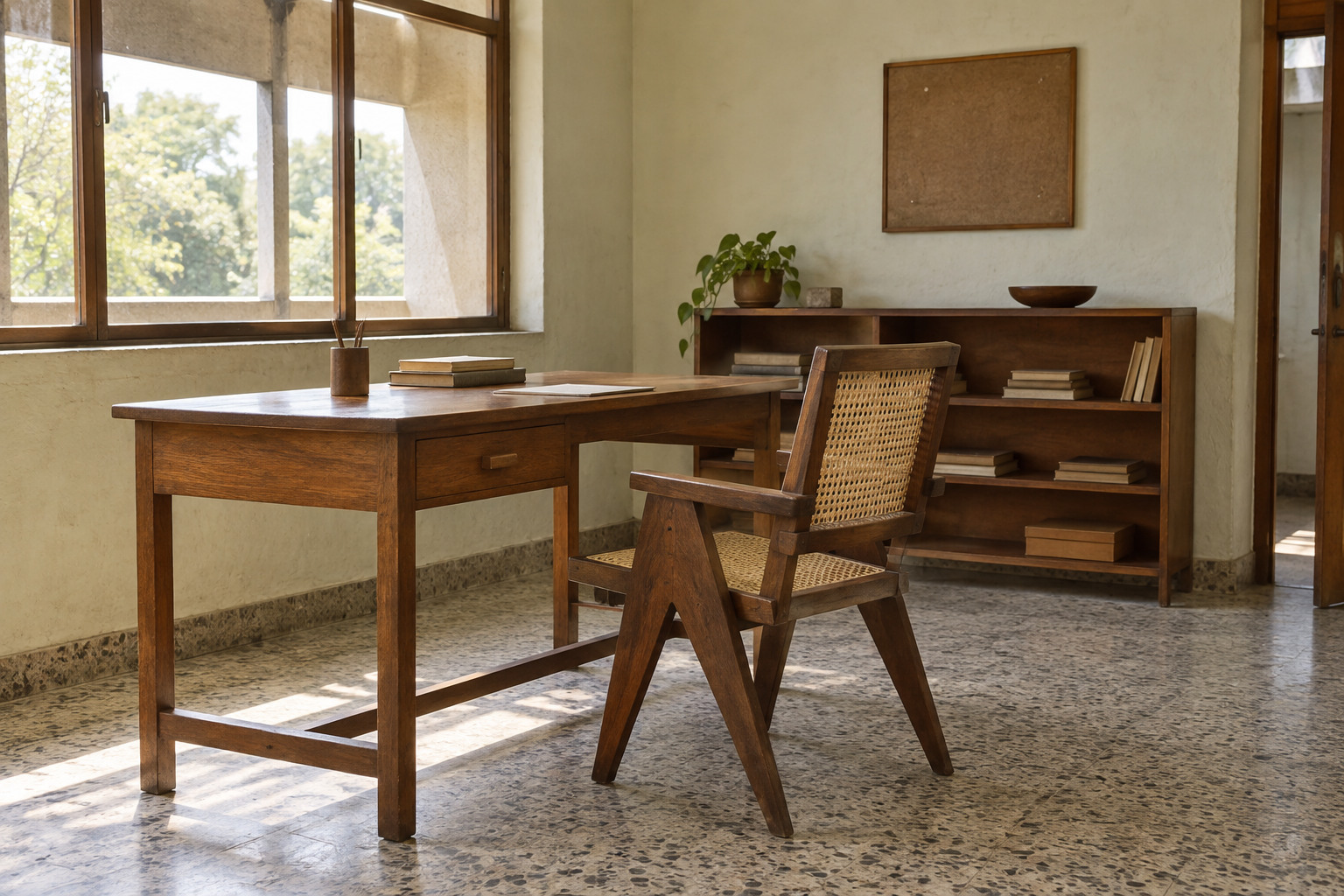
In an interior, a chair faces something. A desk leaves room for knees and a person behind it. A cupboard needs an approach. These relationships disappear when each object is shown alone.
Put the chair back to work
The most rewarding way to look at Chandigarh furniture is to imagine the ordinary task around it. Where would a paper be set down? What could be reached from the seat? Which object stores the things that would otherwise occupy the working surface?
Those questions return the furniture to the scale of a day. A city is remembered through its buildings, but it also depends on thousands of smaller decisions that let somebody sit down and get on with life.