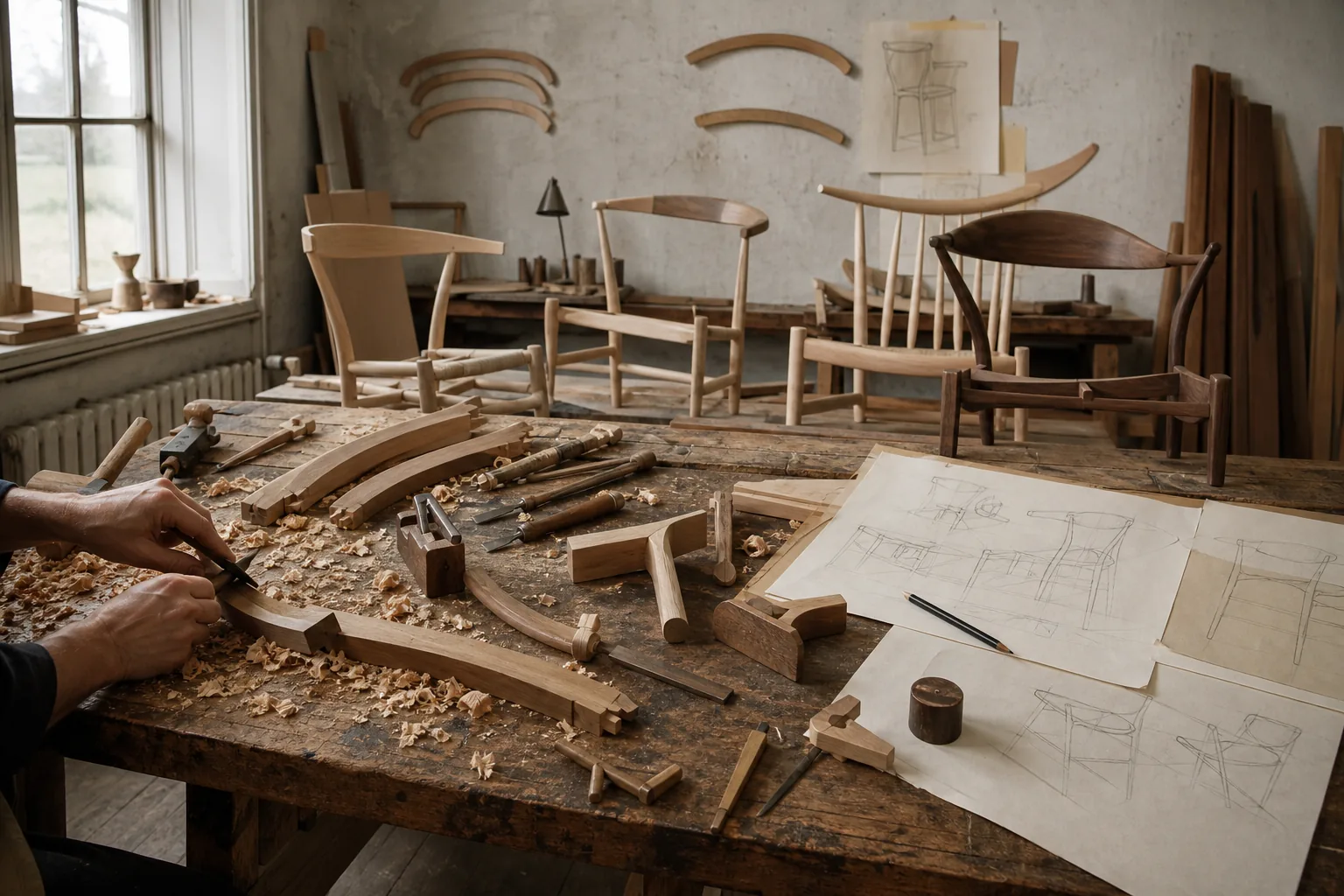
In Tønder, the story ends with people sitting down
At the museum in Tønder, Hans J. Wegner's chairs are not arranged only as distant silhouettes. The permanent exhibition in the town's old water tower invites visitors to experience a group of works that Wegner himself selected. He gave the collection to the museum in 1995, returning a lifetime of chairs to the place where he had first learned to make furniture. 1
The circular tower is an unusually fitting home for them. A visitor moves upward from chair to chair rather than meeting one masterpiece isolated on a plinth. Different answers accumulate: a back becomes an arm, timber bends or is carved, a seat is woven, a joint is exposed, a familiar type is reduced and then reconsidered.
Wegner was born in Tønder in 1914, when the region was still part of Germany. His father was a shoemaker, and the museum places his childhood within the strong craft traditions of the border region. In 1928, at fourteen, he began an apprenticeship as a cabinetmaker. That date matters because he entered the trade just as industrial production was changing what a furniture workshop could be.1
It is tempting to read the rest of his career as the escape of a gifted young man from a small workshop into international design. The chairs suggest something more interesting. He travelled far from the apprenticeship, but he never stopped designing as someone who knew that a line on paper would eventually have to become a joint, a curve, a surface and a place for another person's weight.
He learned to draw without forgetting the bench
By eighteen, Wegner had completed four years of cabinetmaking training with H. F. Stahlberg. He later moved to Copenhagen and studied at the School of Arts and Crafts from 1936 to 1938. Carl Hansen & Søn's account of his early career says that his first chair experiments already joined form, function and comfort, and that he first appeared at the Copenhagen Cabinetmakers' Guild Exhibition in 1938.2
That education gave him two languages. Drawing made it possible to compare proportions, revisit historical furniture and develop families of ideas. Cabinetmaking made every elegant gesture answer to grain direction, tools, labour and the stubborn fact that timber is not an abstract line.
In 1938 he began working with Arne Jacobsen and Erik Møller in Aarhus, where he was asked to design furniture for the new city hall. The commission moved him into architecture and public interiors, but it did not turn furniture into decoration. A city-hall chair still had to survive waiting, meetings, movement and repeated use.2
This is one reason Wegner's work can look calm without feeling thin. The visible form is often simple because many practical decisions have already been absorbed into it. Simplicity is the end of the conversation, not the absence of one.
No important chair was made alone
The familiar phrase designer chair can hide almost everyone required to make a chair real. Wegner's career is difficult to tell honestly without the cabinetmakers and manufacturers who interpreted drawings, challenged construction and found ways to repeat demanding work.
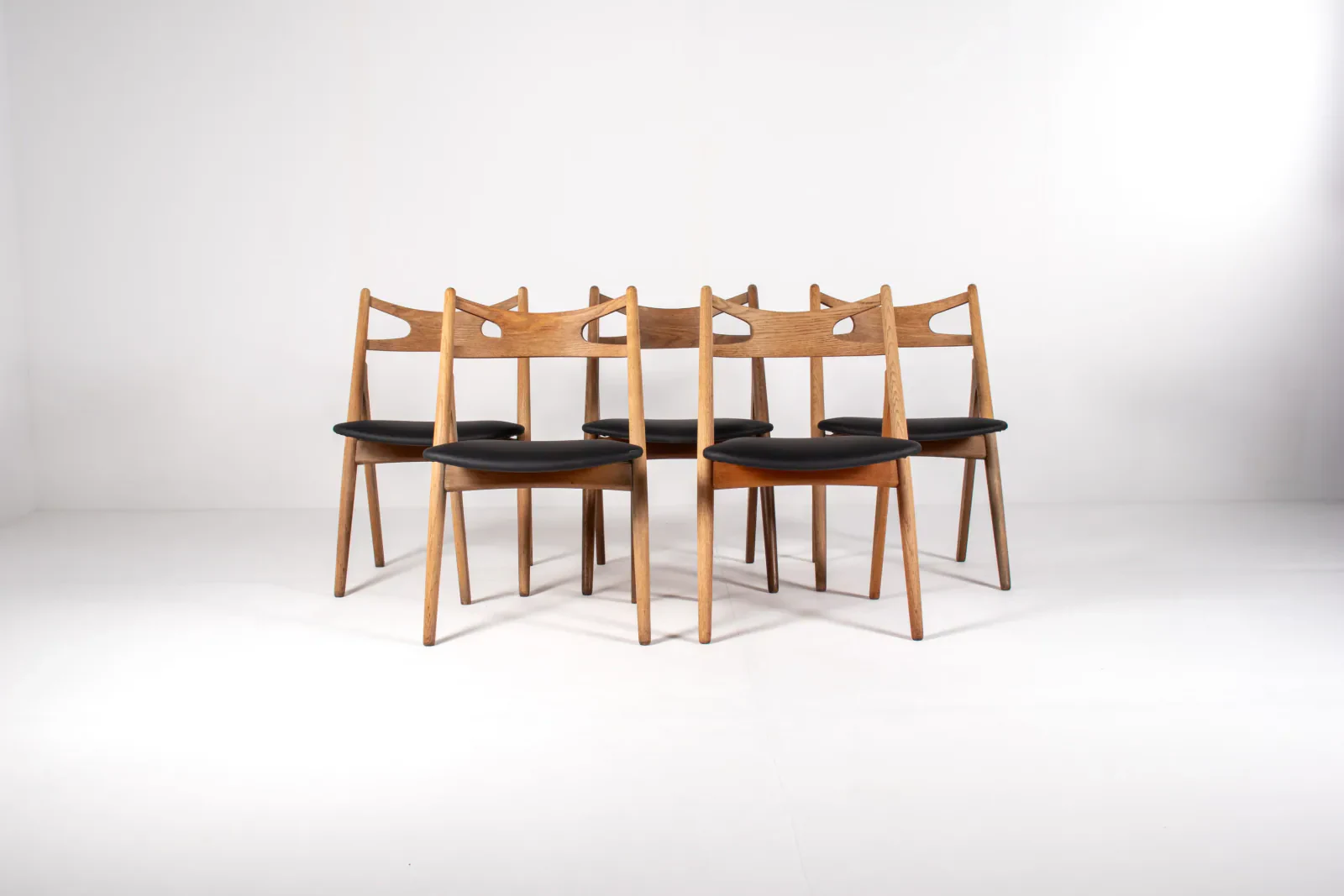
His relationship with master cabinetmaker Johannes Hansen began around the same early period. The current Carl Hansen & Søn profile credits Hansen with helping modern furniture reach a wider Danish public and describes long collaborations as essential to the conditions in which Wegner worked. 2 Their Guild Exhibition furniture belonged to a culture in which a designer and an executing workshop could develop an object together. The maker was not a footnote added after the creative act.
Wegner established his own studio in 1943, but independence did not mean isolation. Different workshops and manufacturers offered different tools, skills, production scales and routes into people's homes. The fruitful question is therefore not only Who designed this? It is also Who worked out how this version could be made?
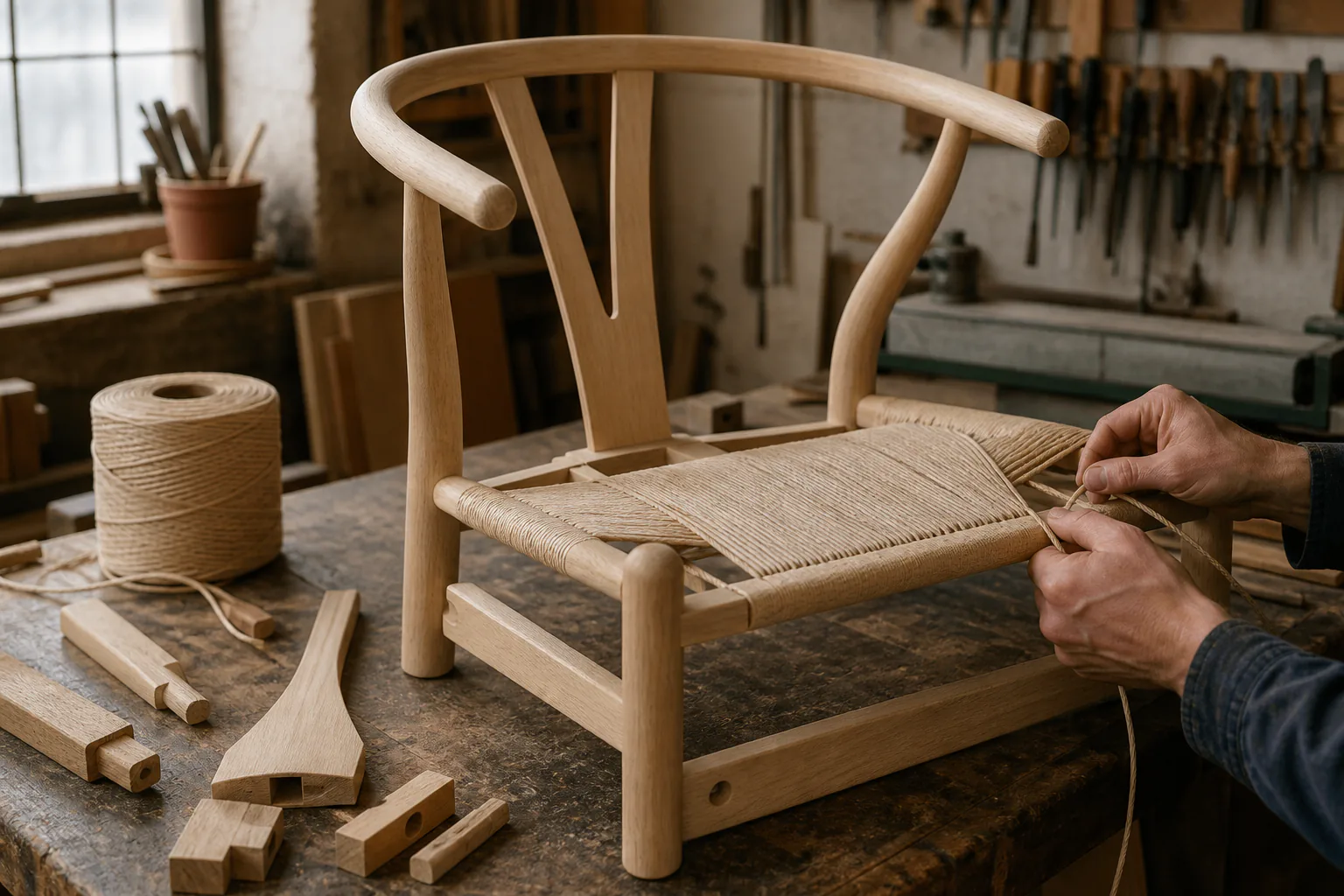
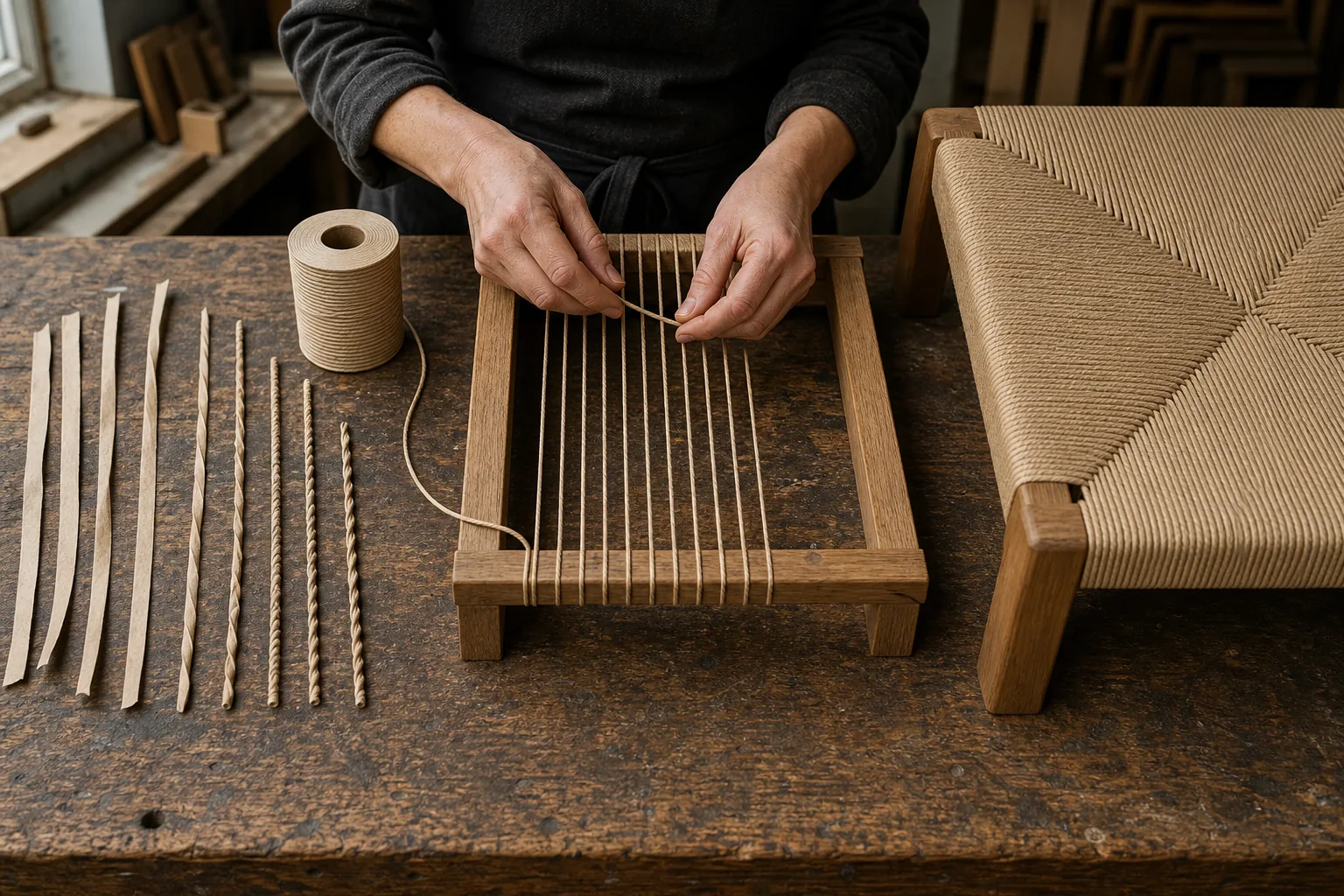
The CH24 makes that partnership visible at industrial scale. The Metropolitan Museum of Art records the design in 1949, the start of Wegner's partnership with Carl Hansen & Søn in 1950, and beech with paper cord in the museum's own example.7 The chair did not become enduring because a sketch was magically timeless. A manufacturer had to organise curved components, joined parts, surface finishing and a hand- woven seat into repeatable production.
That does not make every Wegner collaboration interchangeable. Johannes Hansen, Carl Hansen & Søn, Getama, PP Møbler and other makers belong to different objects and periods. Preserving those distinctions gives the designer a richer history, not a smaller one.
Repetition was a form of curiosity
For its 2014 centenary exhibition, Designmuseum Danmark described an archive of roughly 1,200 pieces of furniture and 3,000 drawings connected through recurring themes and sources of inspiration. The exhibition could show only about 150 pieces. The museum presented the career as one long design process, not a procession of unrelated icons.3
The scale is less interesting as a record than as a clue. Wegner kept asking what could happen when one part of a chair took over the work of another. Could the back flow into the arm? Could a structural joint become the most beautiful detail? Could a seat remain visually light while accepting the body? Could an inherited chair type be made more direct without losing what had made it useful?
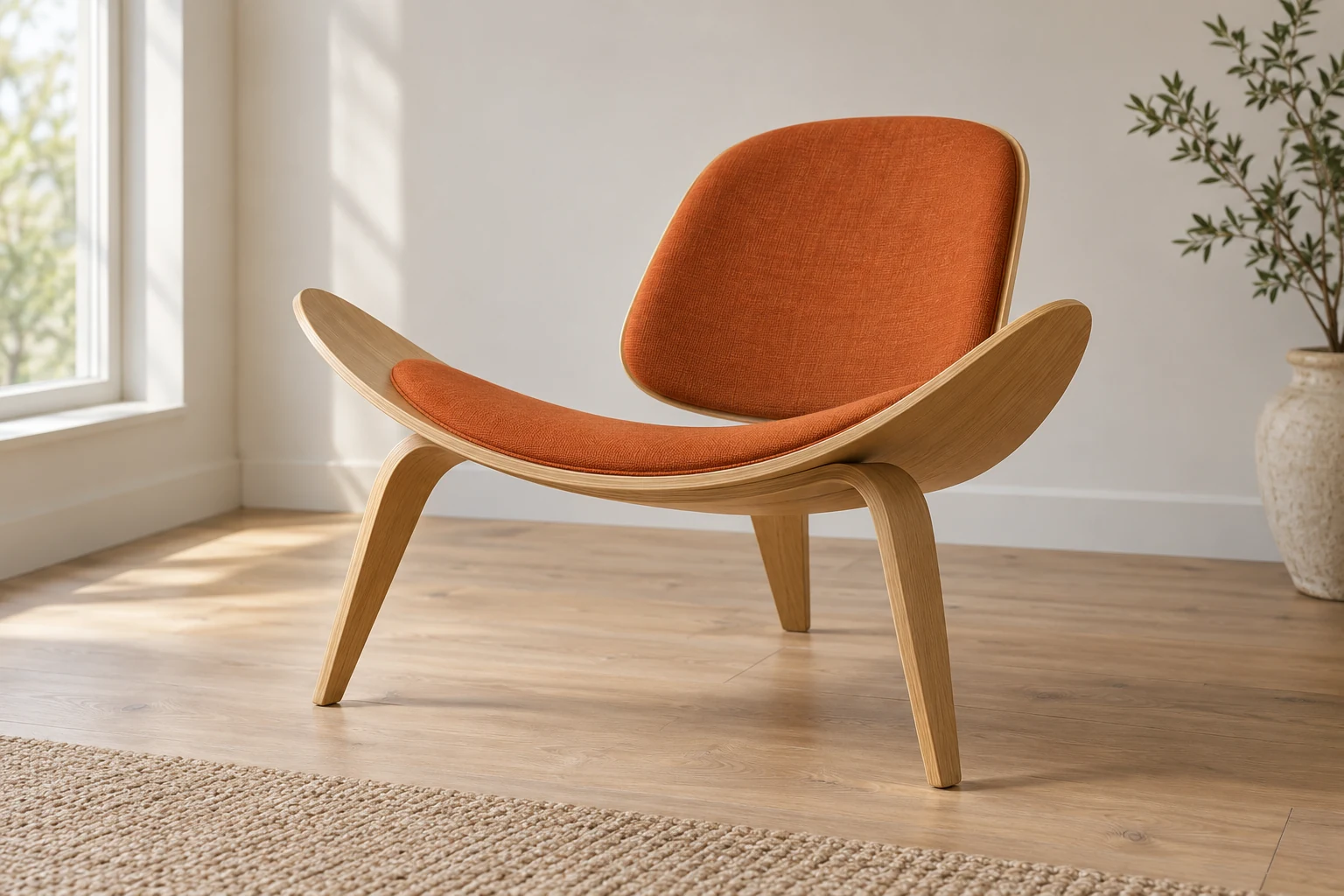
The answers were not confined to one material or silhouette. Designmuseum Danmark describes the Round Chair through the organic transition of its upright back into the horizontal arm, and records how American journalists singled it out in 1949 before it later appeared in the 1960 Kennedy-Nixon televised debate.4 MoMA's 1949 armchair record draws attention to the zigzag joints that visibly secure sections of its continuous curved back and arm.5
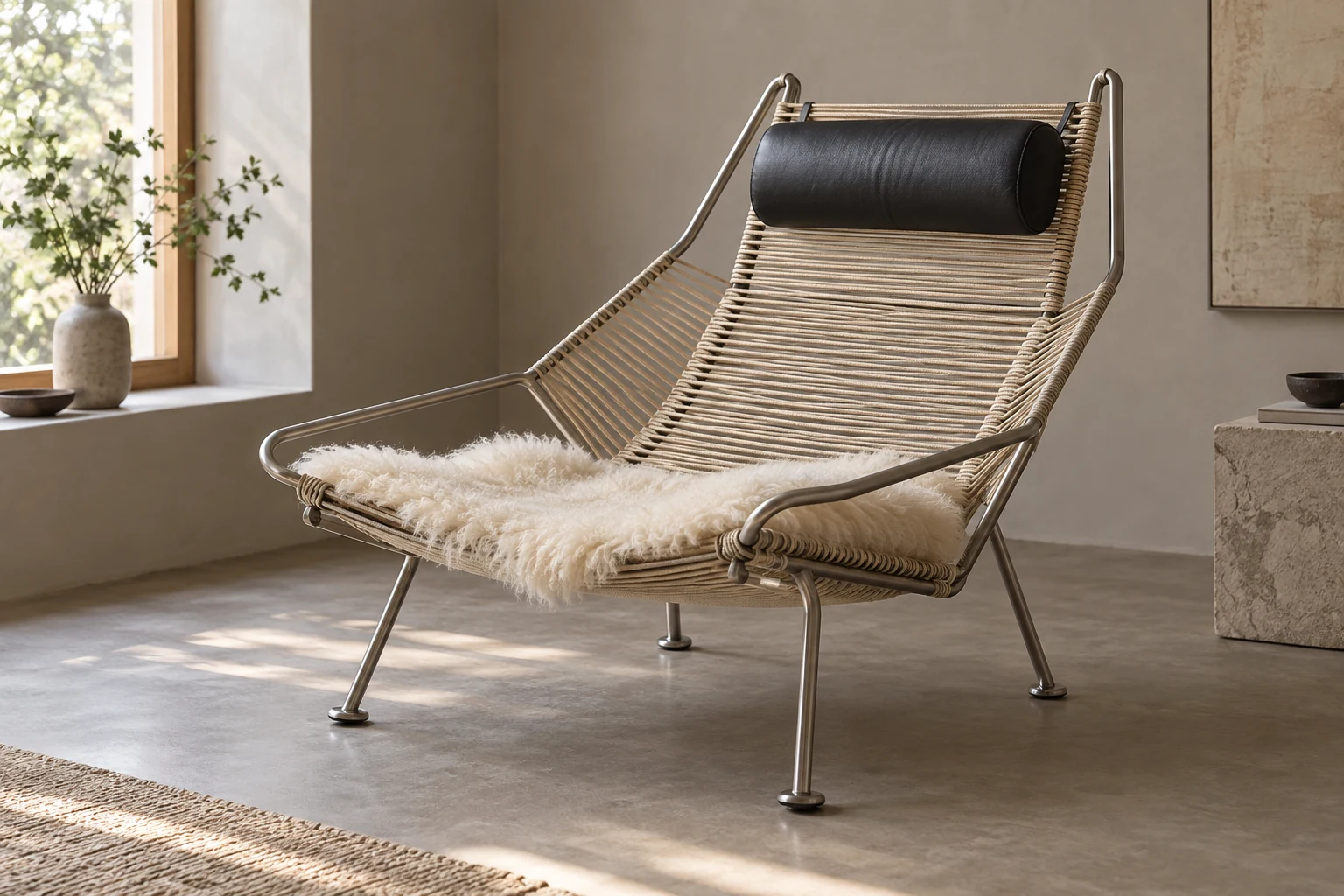
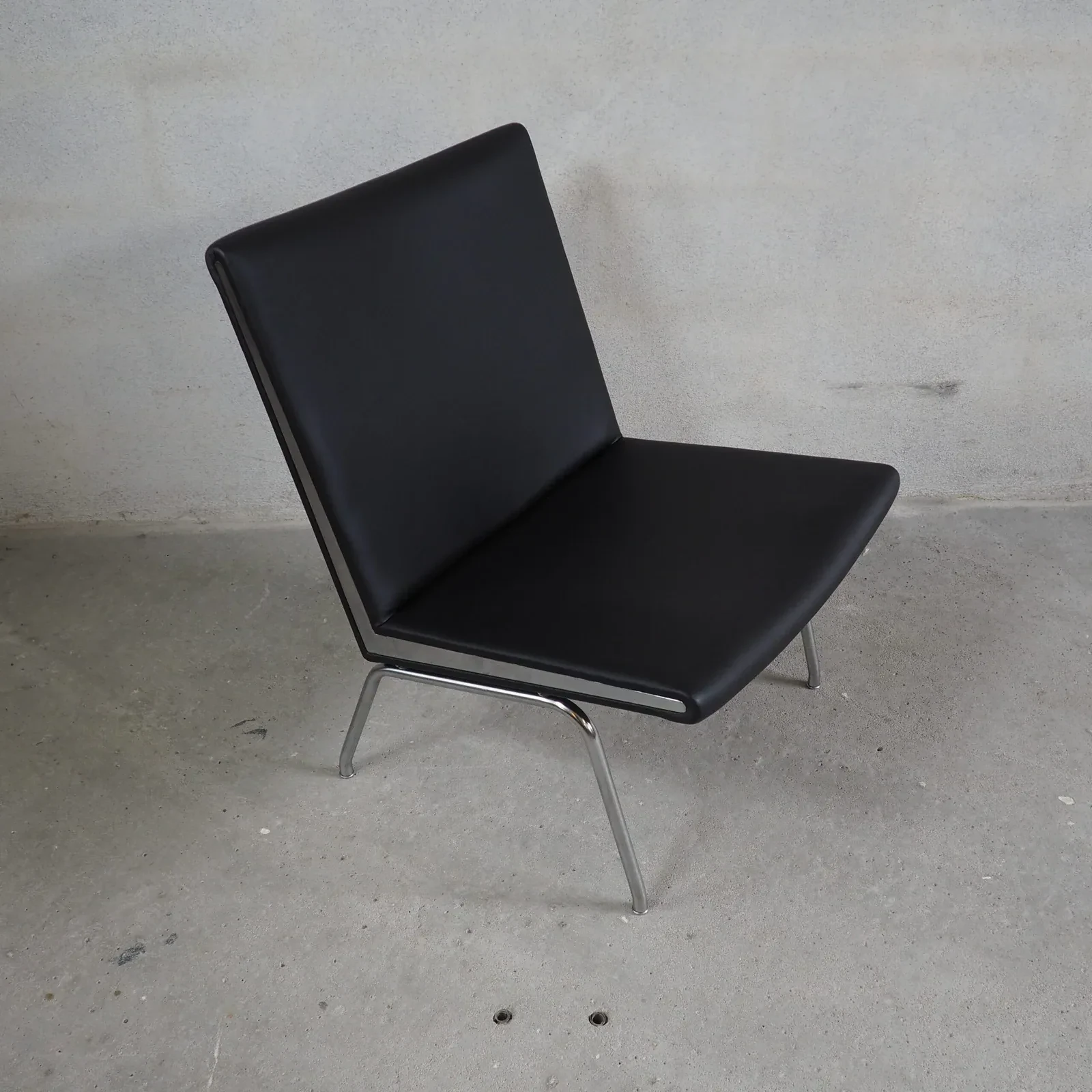
Then consider the 1950 Halyard armchair. MoMA records steel, cork, leather and plaited flag halyard rather than a conventional all-wood cabinetmaker's chair. 6 The material vocabulary changes radically, yet the same concern remains: how can a frame support a relaxed body with as little unnecessary obstruction as possible?
Seen together, these chairs make the usual description of Wegner as a master of wood feel incomplete. Wood was his deepest language, but curiosity was the larger method.
A chair becomes complete in use
Wegner's reputation now rests on objects that museums catalogue, collectors study and manufacturers continue to sell. That afterlife can make the chairs seem inevitable. In the workshop they were proposals: parts being shaped, joints tested, proportions corrected and materials pulled into tension.
This changes how we look at them. The tactile rounding of an arm is not merely a visual signature. It anticipates a hand. A woven seat is not rustic decoration. It is a flexible surface carrying a body between rigid rails. A beautiful joint may also be the place where two difficult pieces of timber finally agree to act as one.
The story therefore returns naturally to Tønder. Wegner gave the museum a selection of chairs he considered among his best, and the exhibition lets visitors encounter them through sitting as well as looking. 1 After international exhibitions, production numbers and famous interiors, the chair meets a person again.
Continue with the CH24 Wishbone Chair to see how one Wegner design brings curved wood, joined components and a woven seat into a single production object. The craft study Paper cord: how paper becomes a chair seat follows the apparently humble material that carries much of that object's weight.