The room comes first
Most famous chairs are photographed as if the rest of the world has been evicted for the afternoon. The Faaborg Chair makes more sense when the room is allowed back in.
Faaborg Museum says that Kaare Klint designed the chair in 1914 while assisting the building's architect, Carl Petersen, with its furniture. This was Klint's first formal furniture project. The museum did not ask for a portable sculpture to rival its collection. It needed a chair that helped a visitor stop, sit and look.1
That reverses the usual hierarchy of an icon. The object is memorable because it knows when not to be the main event.
Eighteen chairs for changing points of view
The museum records an original group of 18 chairs and seven related stools. They were intended for the principal galleries and the small bays around them, and visitors needed to be able to move them. At the same time, the furniture should not distract from the paintings or the patterned mosaic floors. 1
Mobility here is more than low weight. A movable chair turns looking into a small act of composition. The visitor chooses a picture, carries a seat towards it and establishes a temporary viewing distance. A different visitor can alter the arrangement without asking the whole gallery to reorganise itself.
The chair therefore serves two positions at once:
- it must feel definite enough to support a seated person;
- it must feel provisional enough to surrender its place in the room.
That is a difficult balance. Furniture that is too anonymous can feel merely institutional. Furniture that insists too loudly on its own importance can make every painting look like part of the chair's showroom.
Lightness is built from openings
The photographed chair is not visually light because every member is thin. Its lightness comes from the amount of room that remains visible around and through it.
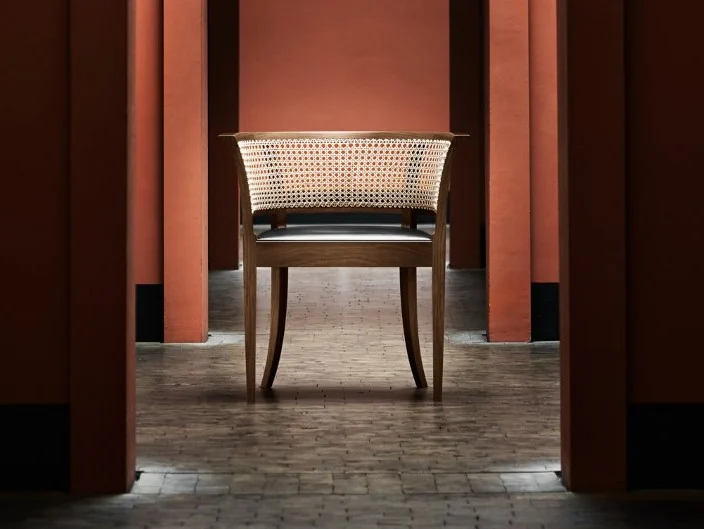
The cane back and sides form a shallow enclosure, but not an opaque shell. The straight seat rail gives the body a clear base while the upper rail draws a quiet curve around it. Slender legs take the load to the floor without closing the space beneath the seat. None of those choices makes the chair disappear; they control how much of the museum it interrupts.
The current manufacturer describes the design through the unity of structure, material and function, and lists rattan alongside its present timber and upholstery options.3 Those current specifications are useful for understanding what is made now. They are not a substitute for evidence about the materials or date of an individual earlier chair.
The photograph contains the argument
BM.'s 2017 photograph places a Faaborg Chair within the museum rather than isolating it on white. The red walls repeat as planes on either side; the floor runs beneath the chair and on through the opening; the cane catches light but still reveals the space behind it.4
The camera's symmetry makes the chair briefly command attention. Yet the frame also behaves like a threshold. Your eye passes through the weave, beneath the seat and along the floor. The chair holds the centre without plugging the route.
This is a later documentary photograph, not proof that the visible chair is one of the original 18. Its value is different: it lets the design be read in the kind of architectural sequence for which it was made.
Restraint can still have a character
Klint did not solve the brief by producing a generic utility chair. The curved upper line, woven enclosure, dark seat and fine legs create a distinct silhouette. Quietness is not the absence of design; it is the careful control of contrast.
That distinction helps explain why the Faaborg Chair can be placed near the beginning of a modern Danish furniture story without becoming a simplistic origin myth. Designmuseum Danmark includes the 1914 chair in its broader genealogy of Danish chairs, a history shaped by older furniture types and international exchange rather than by one sudden national invention. 2
The chair is modern in a practical sense. Its form is answerable to a specific room, a moving visitor and a hierarchy of attention. Historical reference, craft and expression remain present, but none is allowed to overrule the use.
What the chair teaches beyond a museum
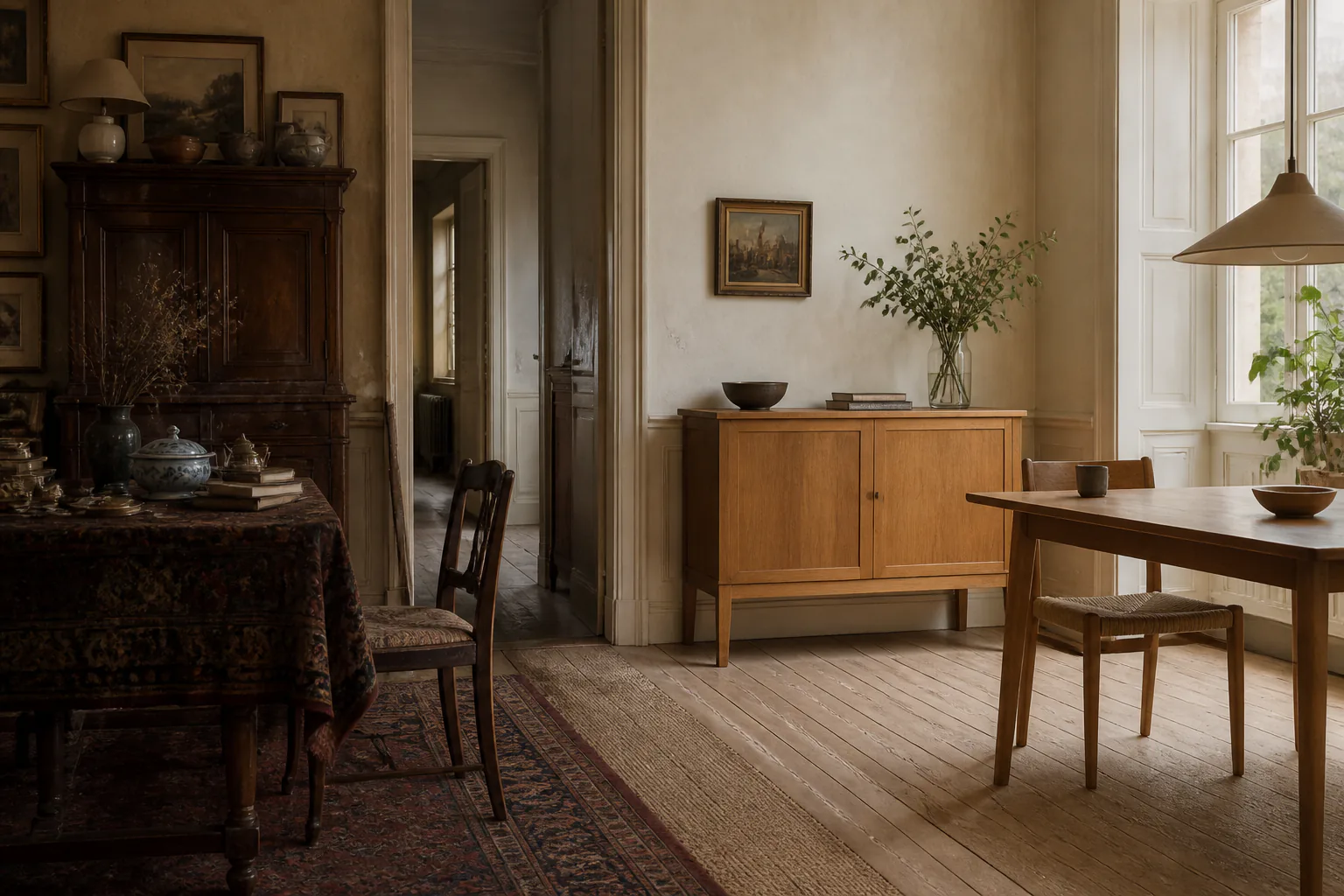
The Faaborg commission suggests a generous way to judge furniture in any visually active room. Ask not only whether an object is beautiful by itself, but what it permits everything else to do.
- Can sightlines continue through or around it?
- Can a person adjust the arrangement without staging a small removal job?
- Does the object create a useful pause while preserving the larger rhythm of the room?
- Does its character reward attention without demanding it continuously?
Those are design questions, not an authentication method. A chair that shares the Faaborg silhouette still needs its own maker, date and provenance evidence.
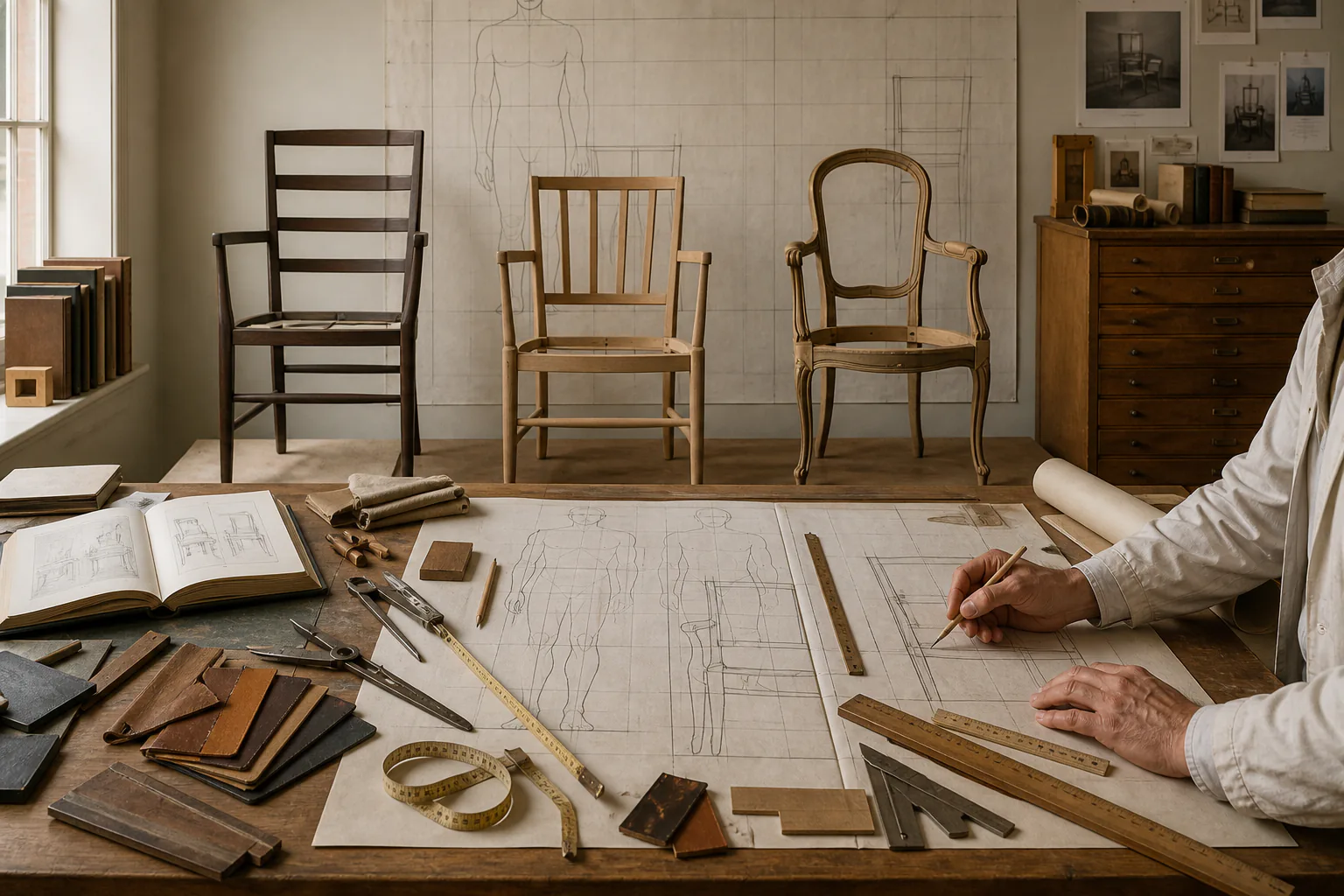
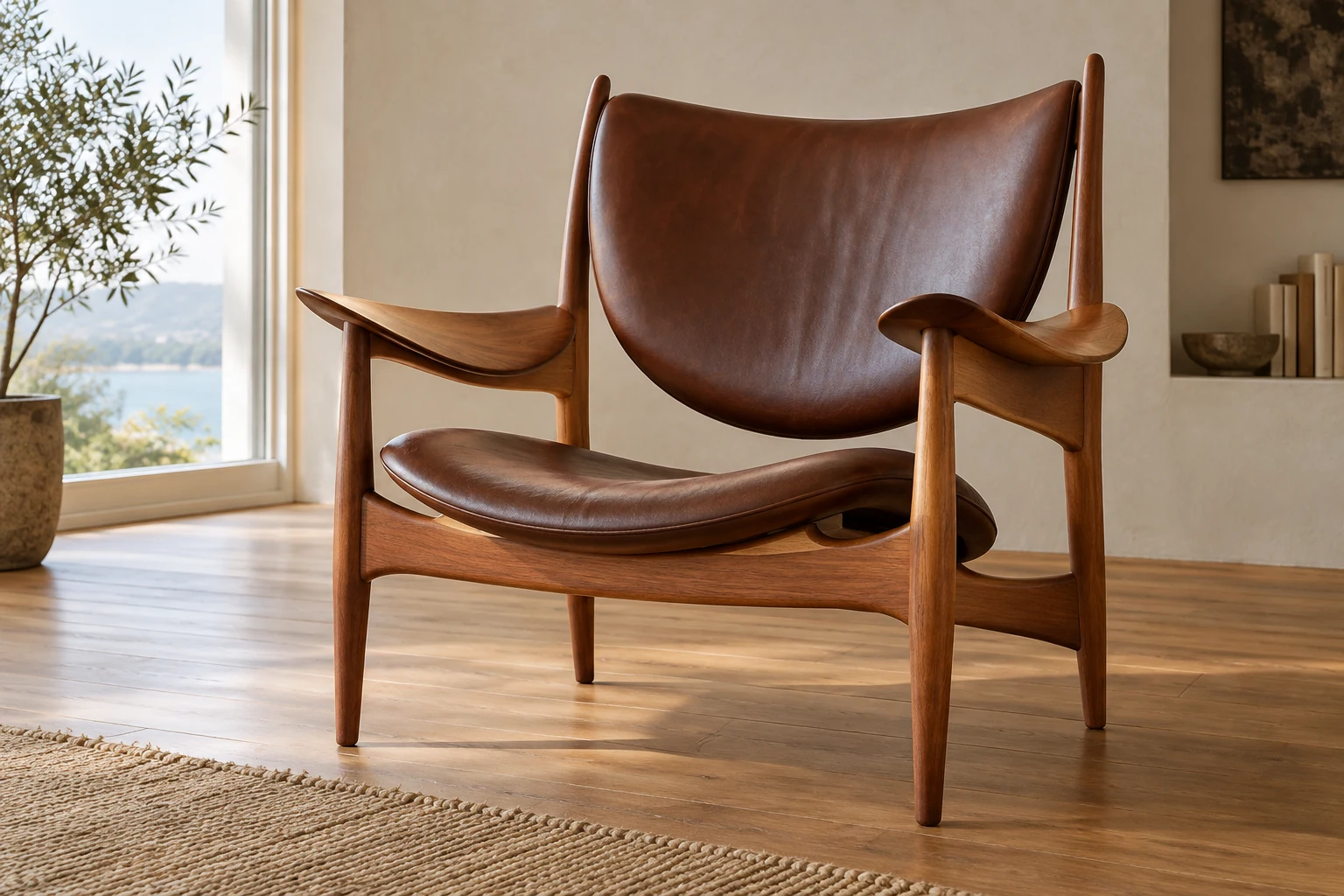
Read Kaare Klint for the wider method of measurement, precedent and room planning behind the commission. For the opposite way a chair can organise attention, continue to Finn Juhl's Chieftain Chair, whose scale makes the room acknowledge it before anyone sits down.
_01,_1913-15.jpg)