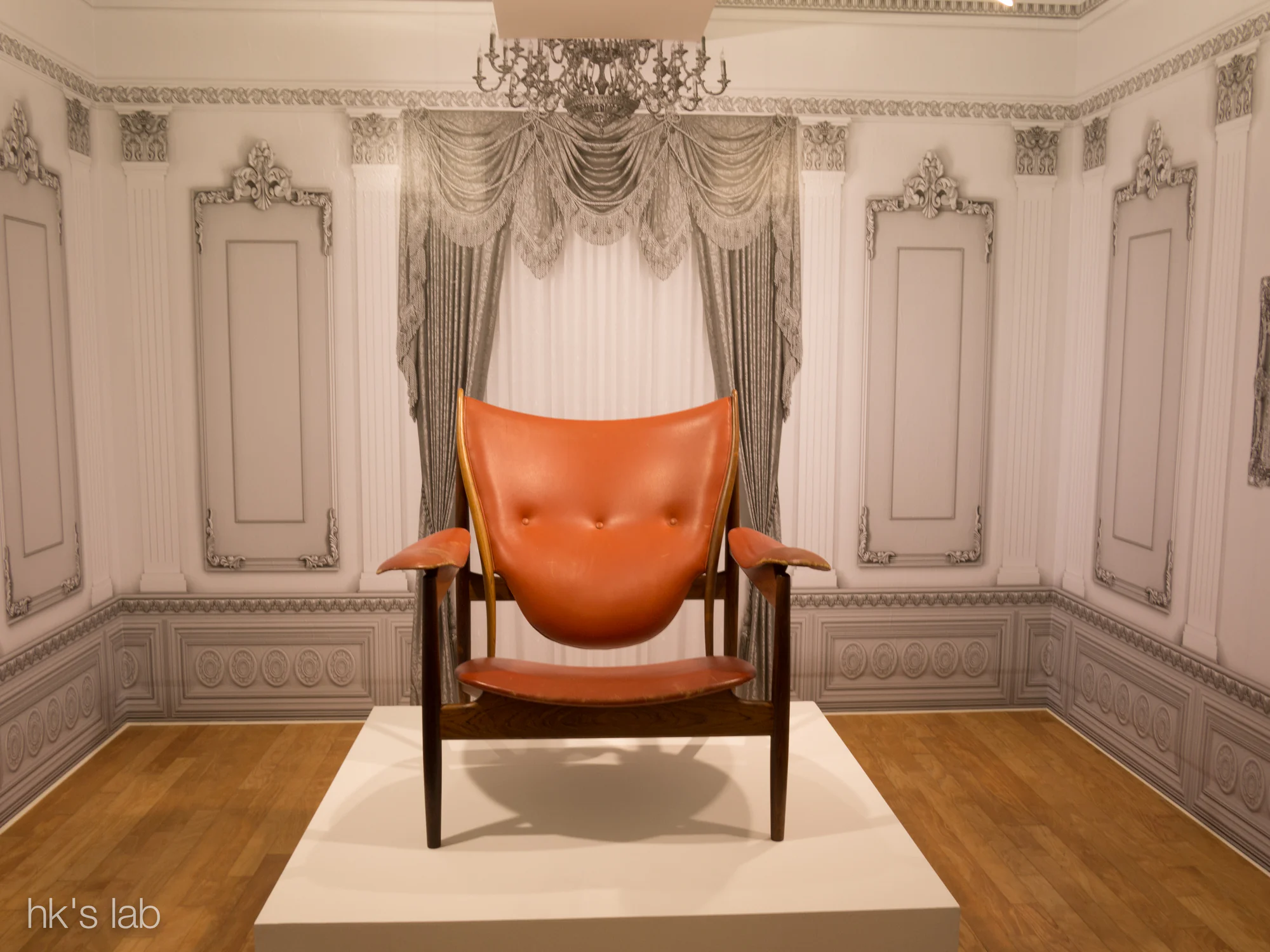
Design
Chieftain Chair
Read Finn Juhl's 1949 Chieftain Chair through its commanding scale, exposed timber frame, suspended leather forms, Guild debut and complicated name.
Objects · people · ideas
Furniture models and individual historic pieces.
Read Finn Juhl's 1949 Chieftain Chair through its commanding scale, exposed timber frame, suspended leather forms, Guild debut and complicated name.
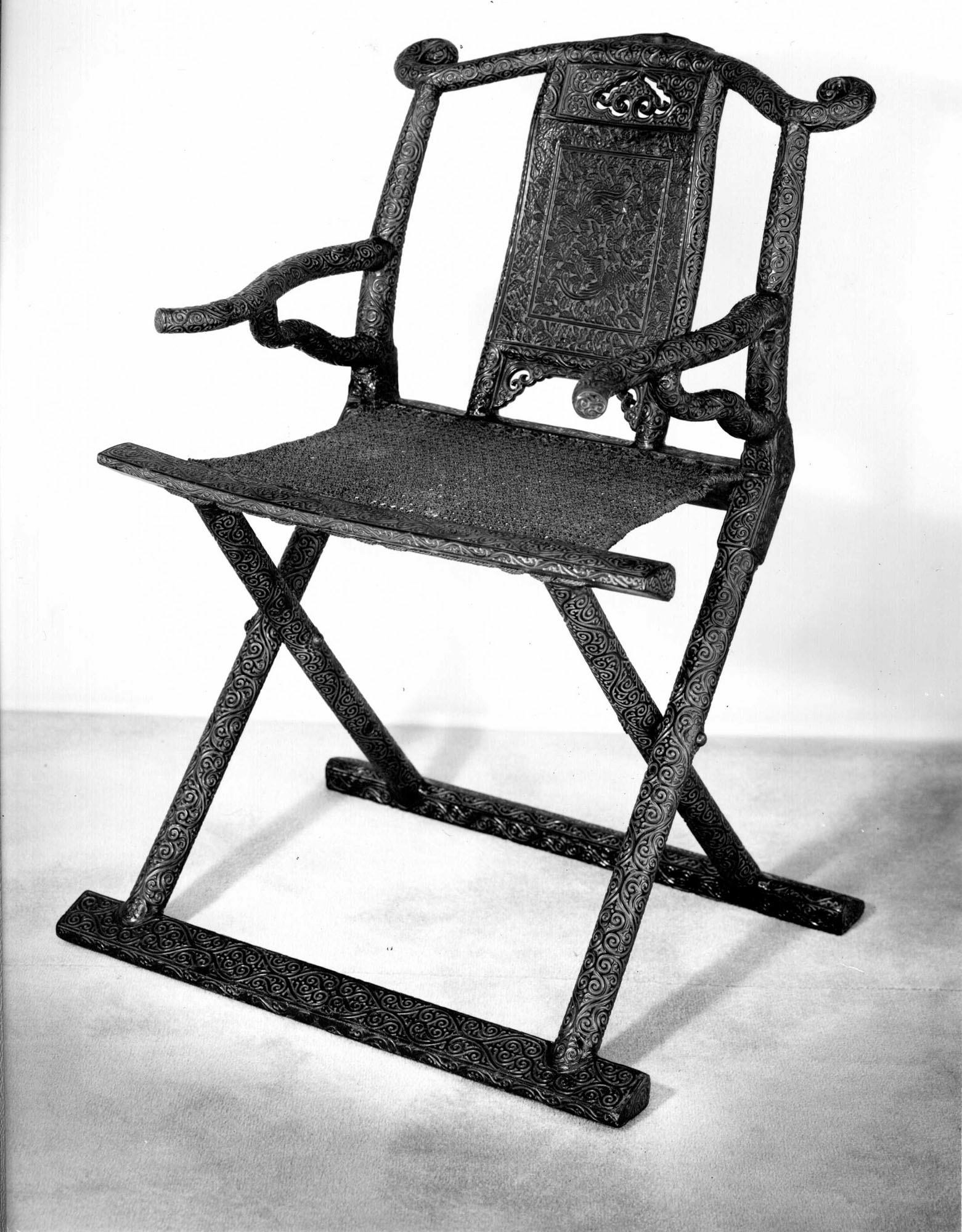
Read Chinese Folding Chair 69.217 from its crossed legs to its carved flycatchers, and discover how a mobile frame became a dense surface of craft and good wishes.
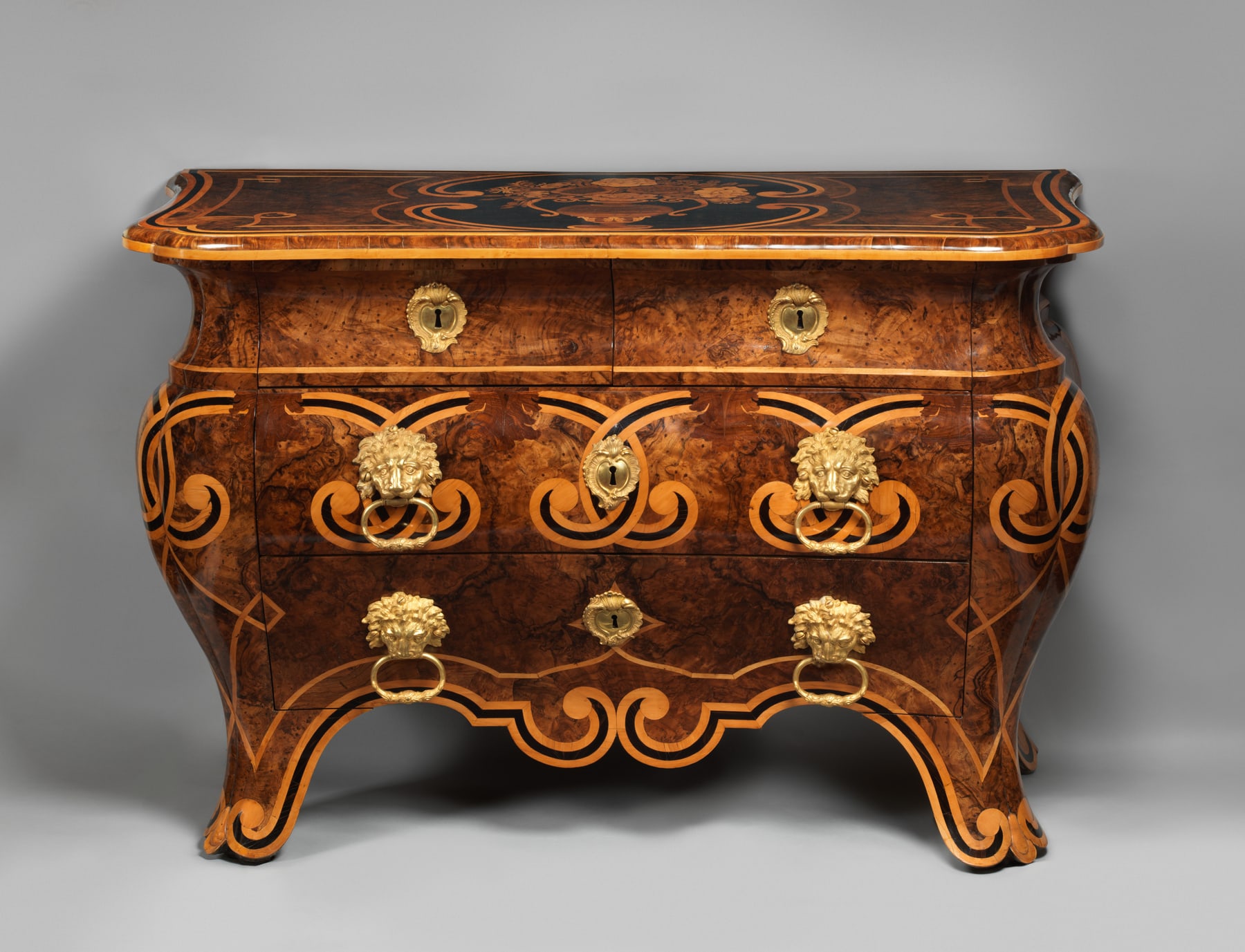
Tiny wooden nails explain the sweeping curves of Pietro Piffetti’s Turin commode: a close look at veneer, fastening and the cabinetmaker’s own furniture.
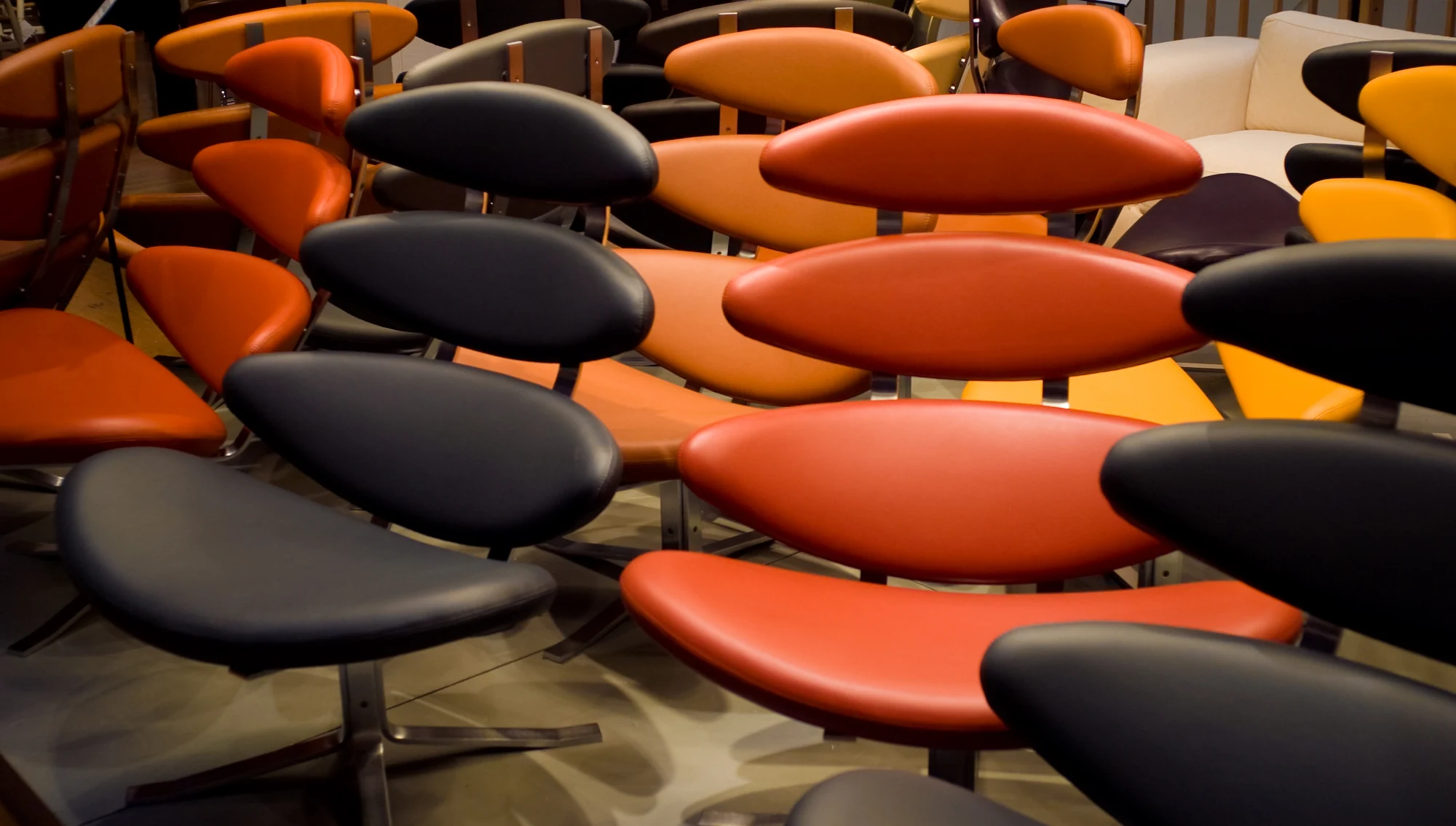
See how Poul M. Volther's Corona Chair divides one reclining body into four elliptical support zones, turning gaps and a spring-steel spine into the design.
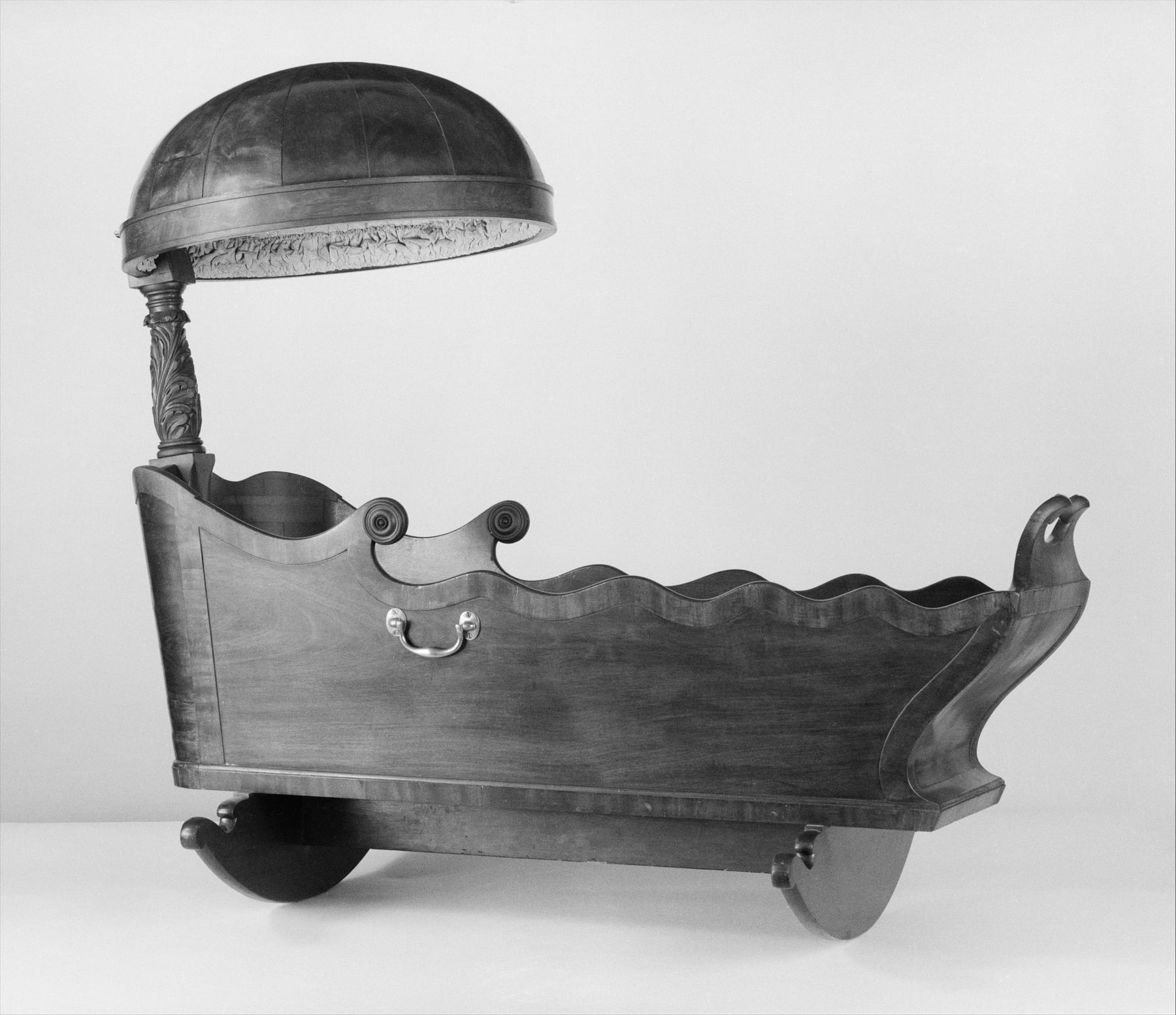
A New York cradle of 1815–20 brings late Federal taste into the nursery through a broad hood, rounded wooden enclosure and curved rockers.
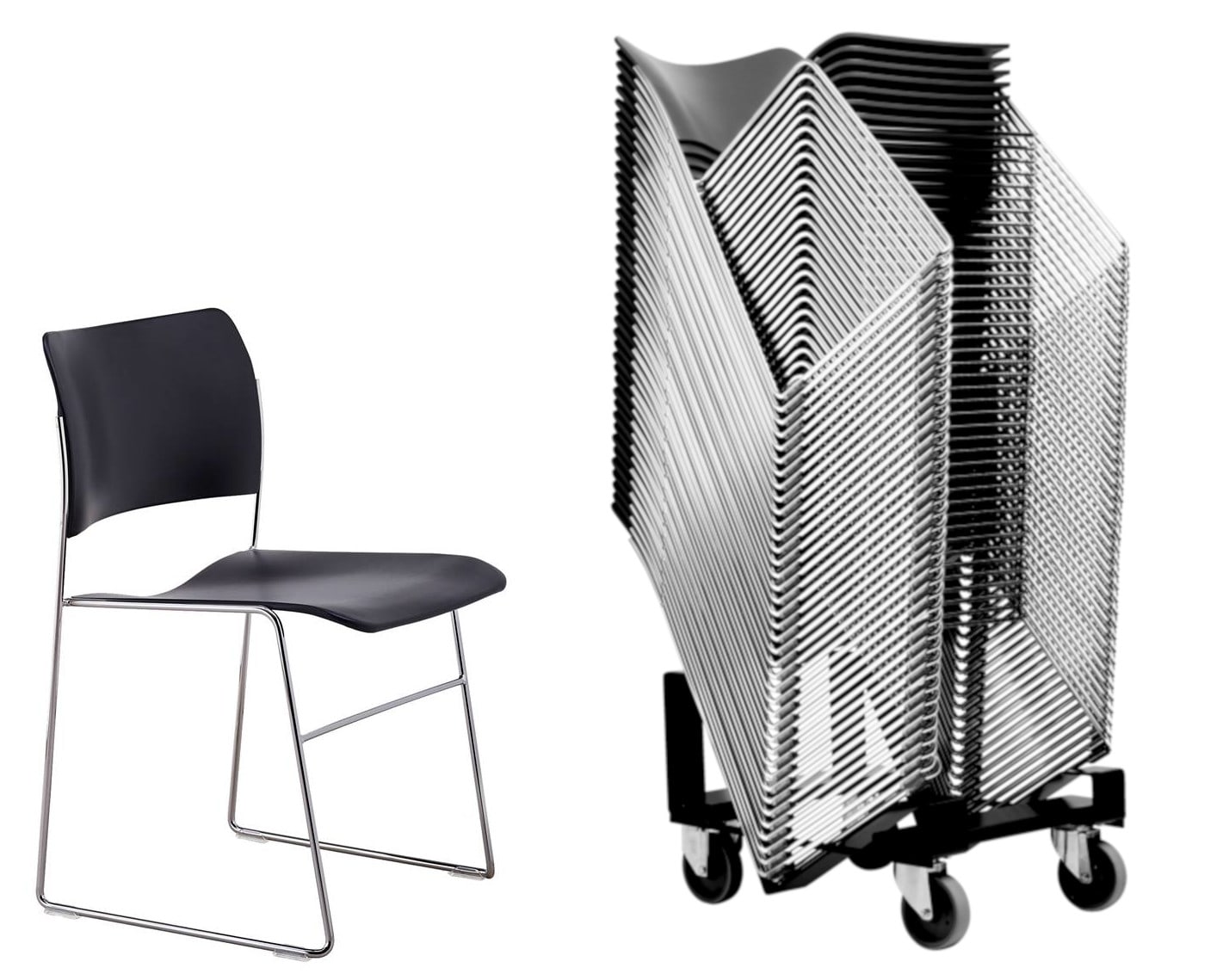
Why David Rowland’s 40/4 chair is named after a stack, how small gaps return space to a room, and what separates the 1964 steel example from later variants.
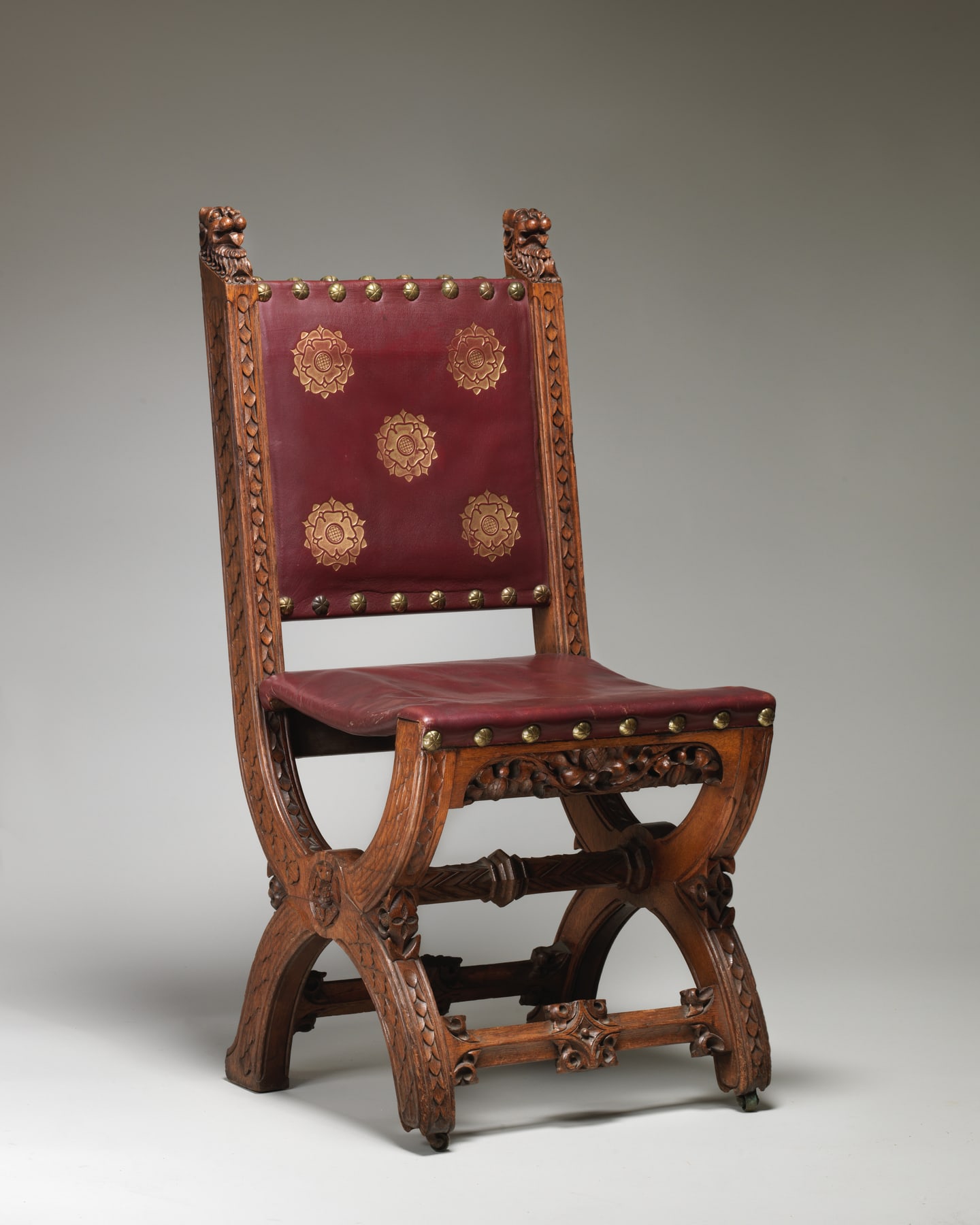
Made in 1859 after Pugin’s death, a Speaker’s House chair separates design from manufacture. Its oak X-frame helps explain the afterlife of a Gothic interior.
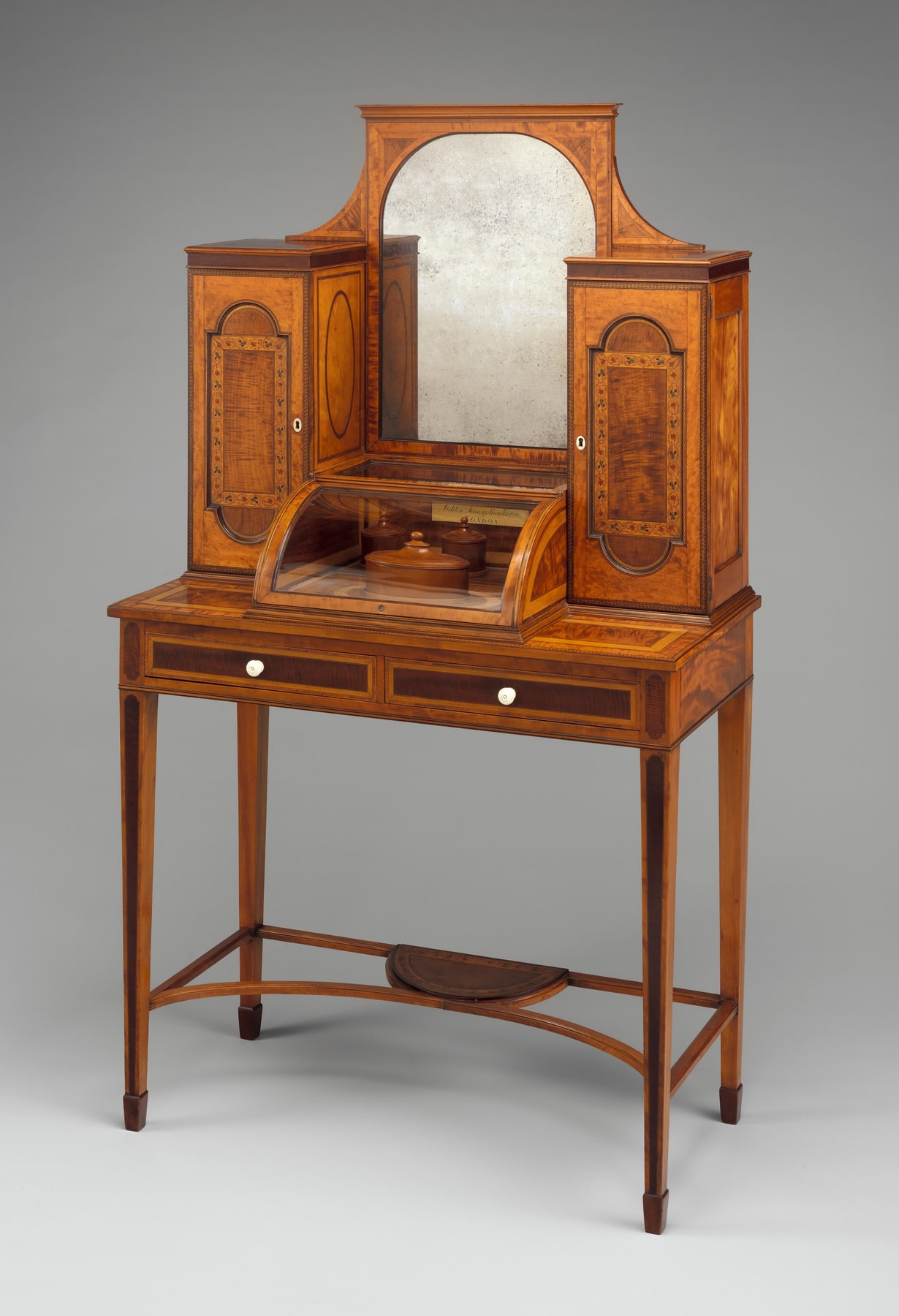
A compact London dressing table by Seddon, Sons and Shackleton organises a mirror, cupboards, containers and legroom around the person sitting before it.
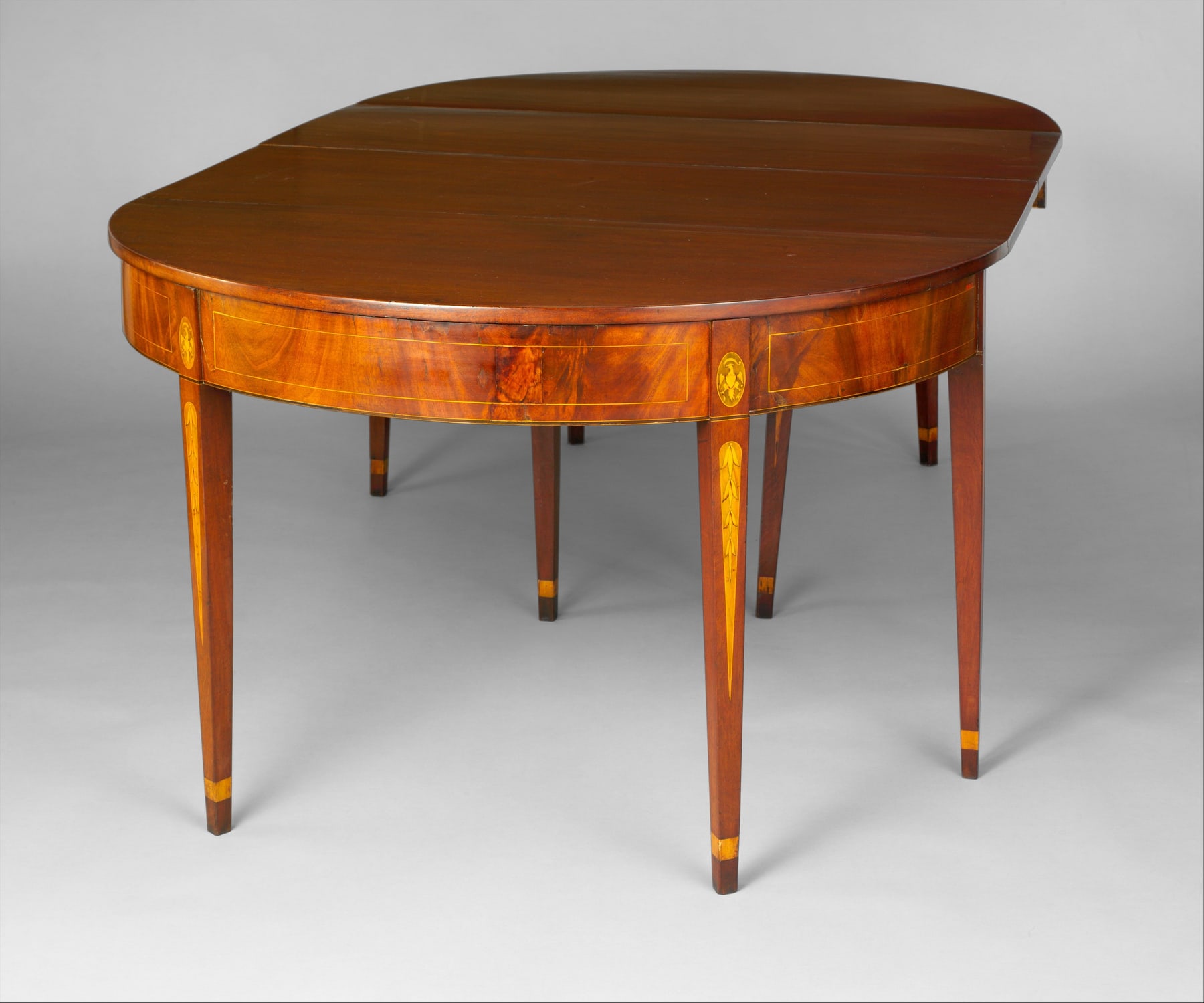
A Baltimore dining table divides into two demilune sections. See how hinged leaves let one piece of dining furniture occupy a room in several different ways.
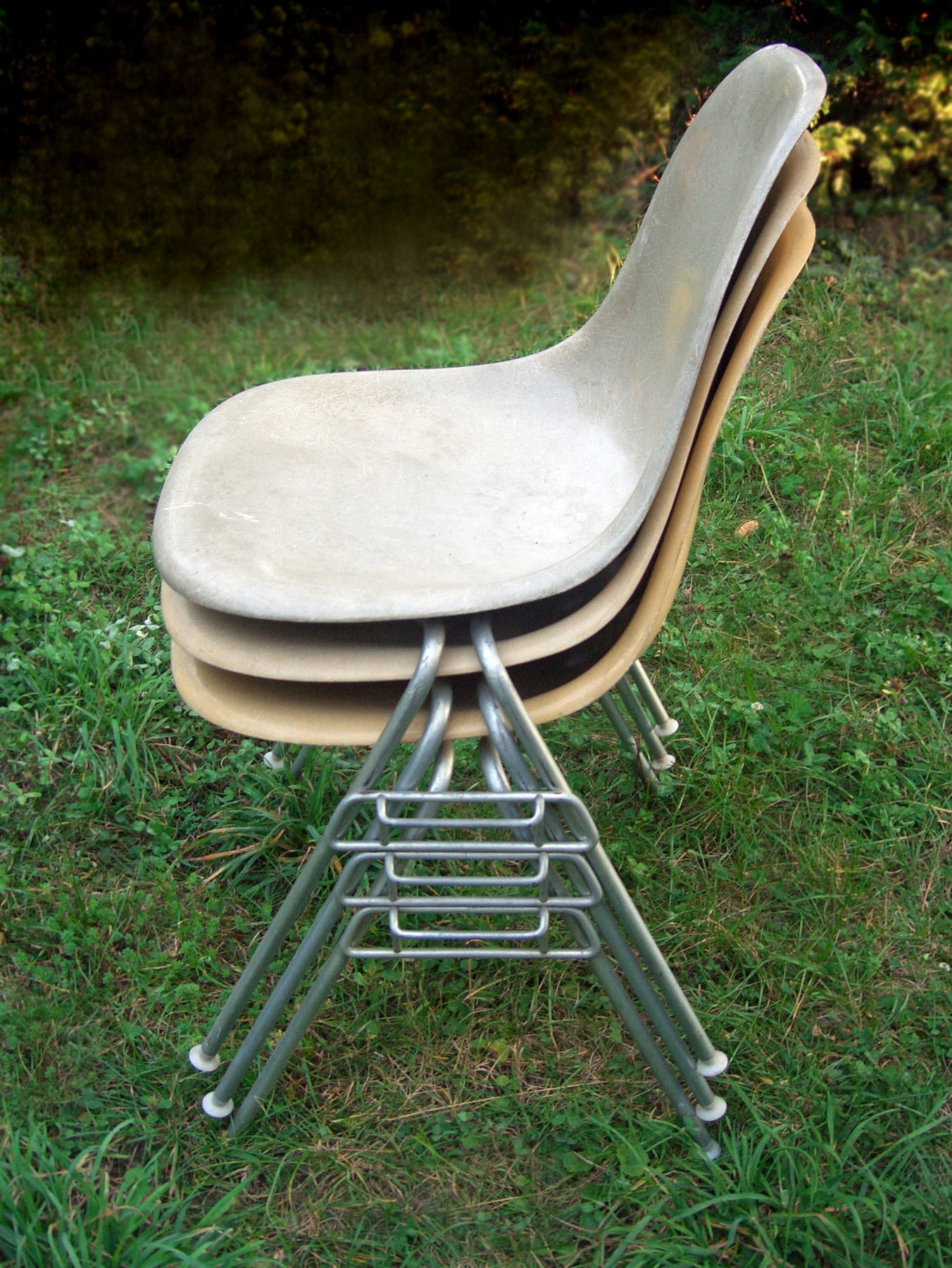
How Charles and Ray Eames developed a family of moulded shell chairs, why one seat can use different bases, and how early fibreglass differs from later plastics.
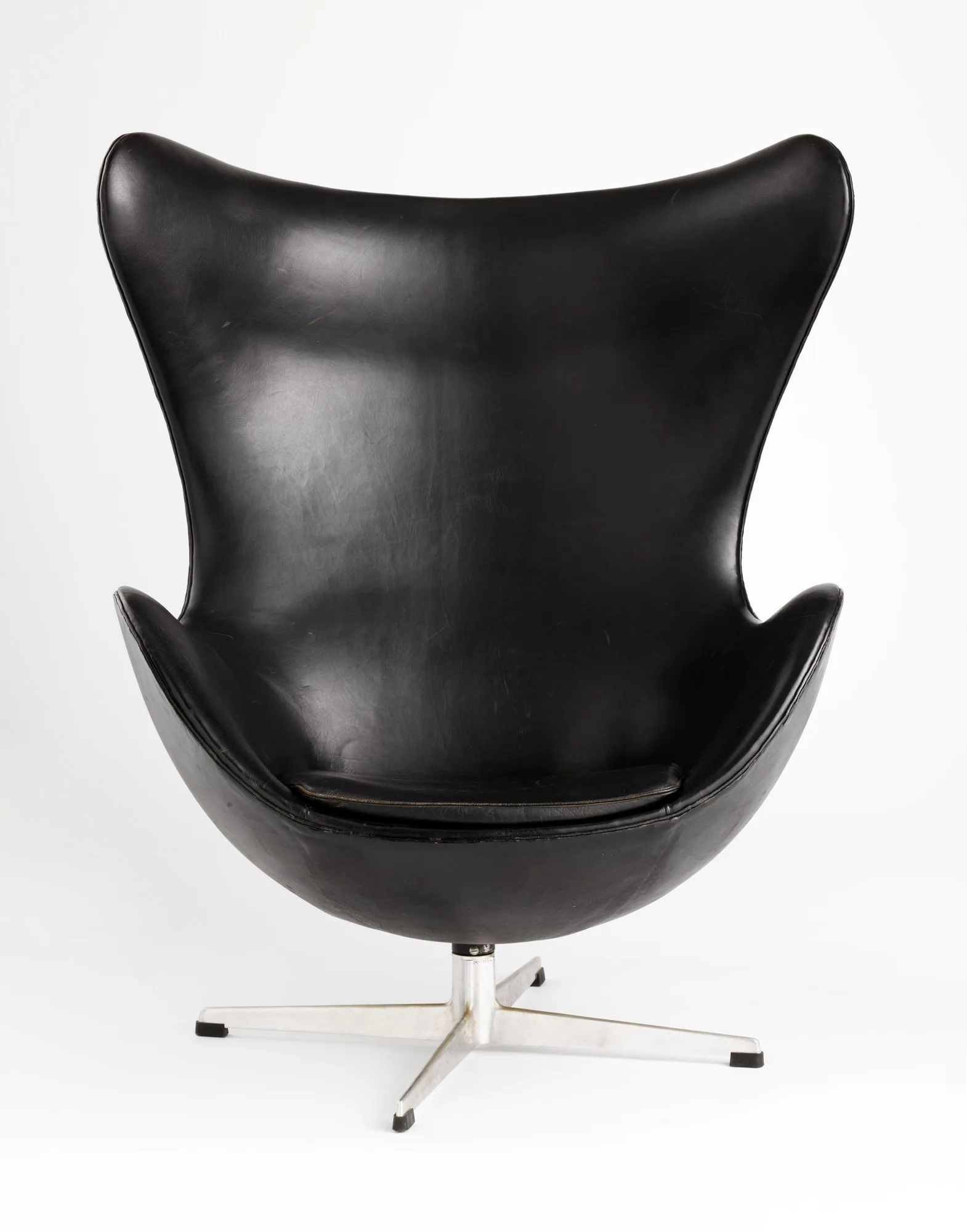
See how Arne Jacobsen's 1958 Egg Chair used a padded moulded shell to create privacy, focus and small social enclaves inside the SAS Royal Hotel lobby.
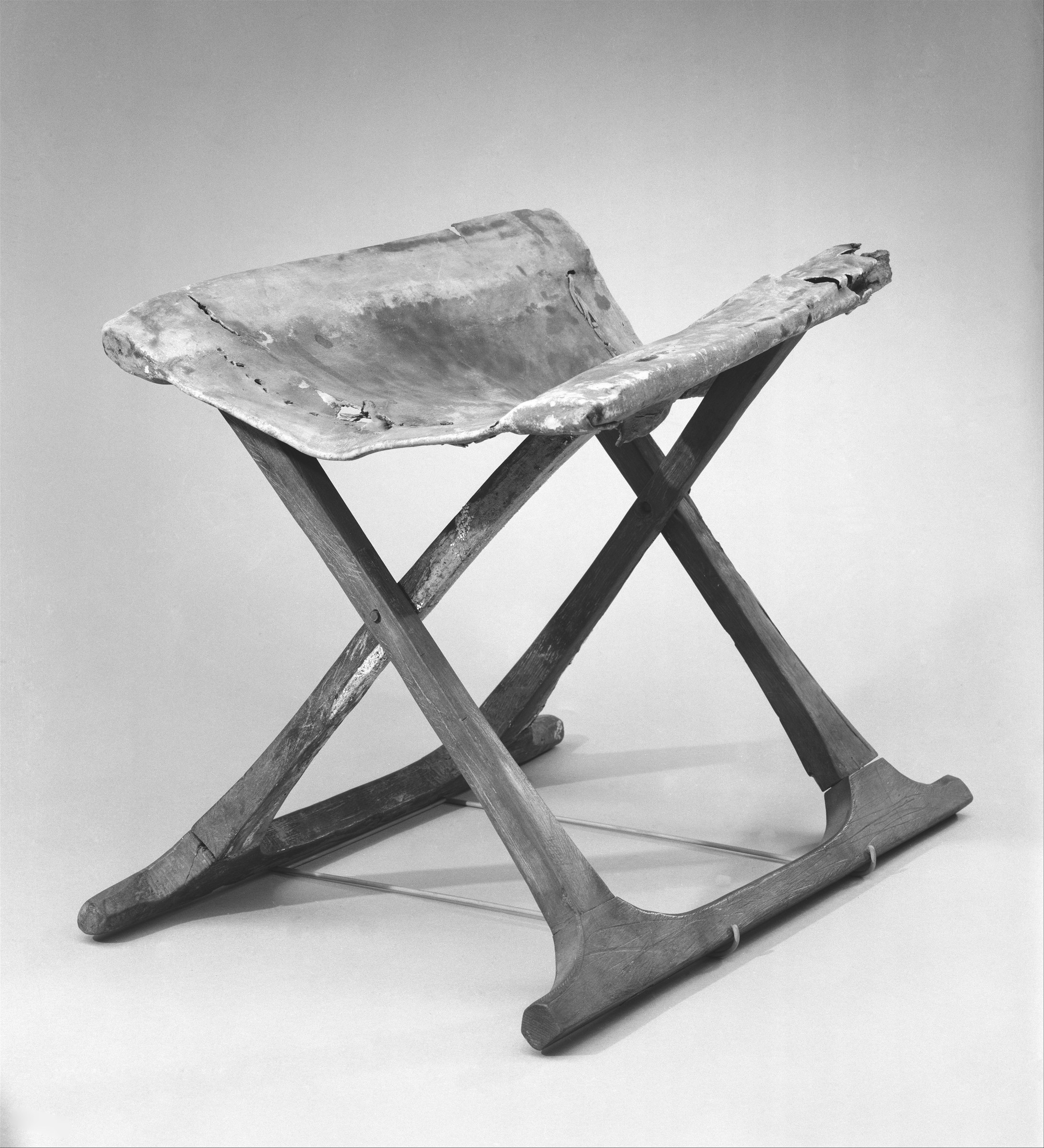
Look through the leather and crossed frame of Egyptian Folding Stool 12.182.58 to see how portable geometry could also become a visible language of dignity and office.
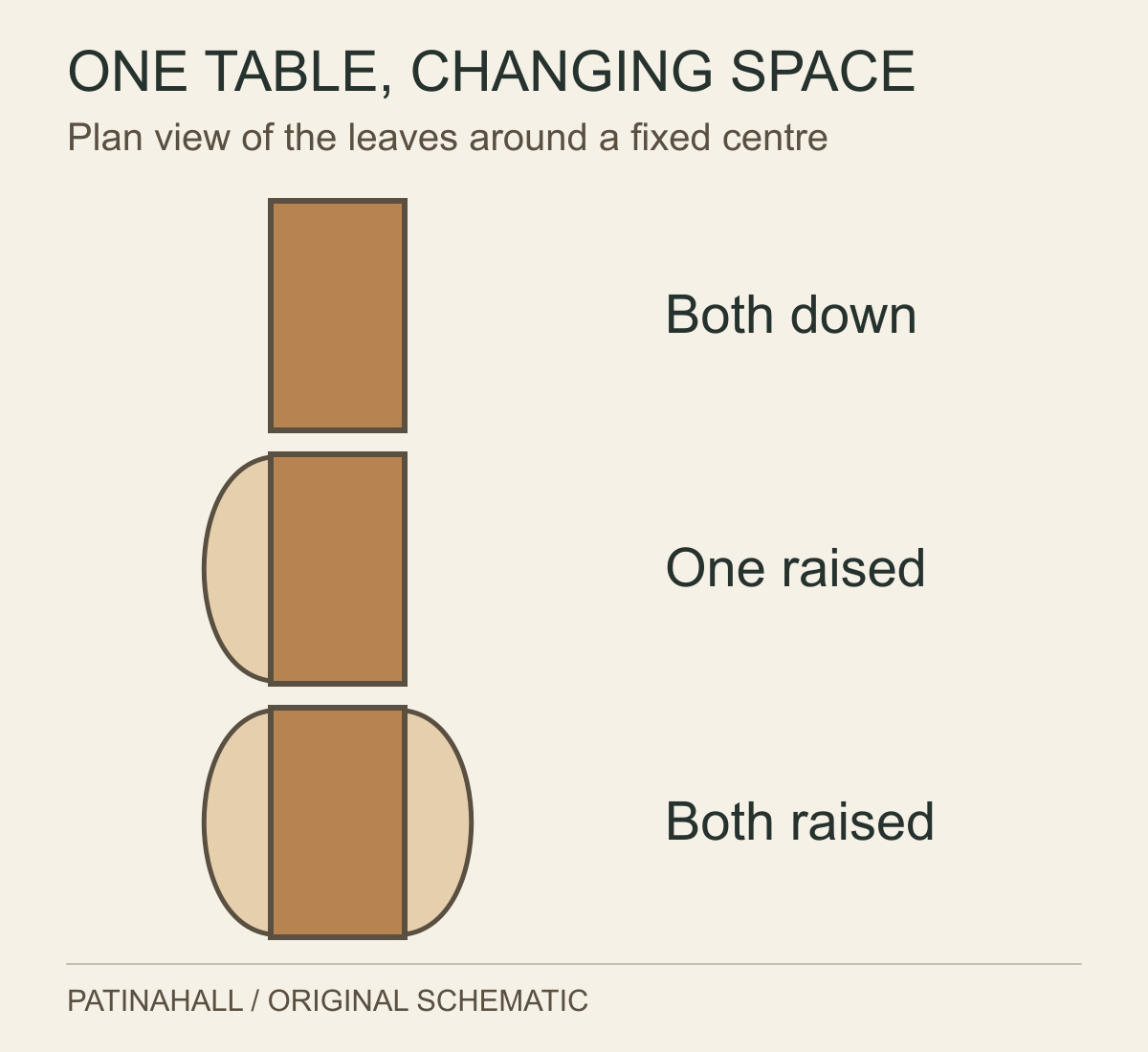
How Ercol's drop-leaf dining table changes its footprint, what supported the vintage 384 leaves, and how its catalogue dimensions differ from today's 7384.
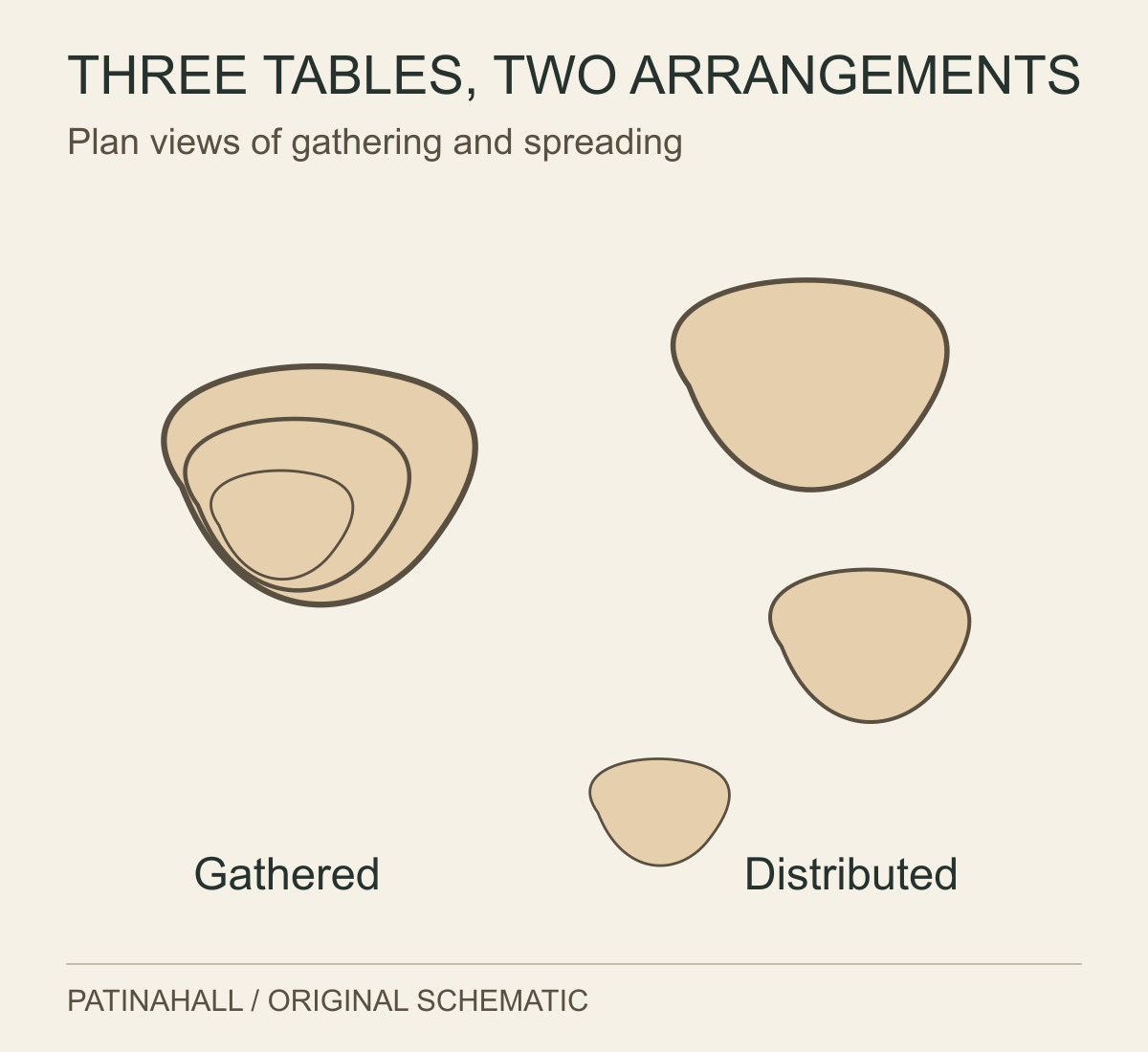
How Ercol Pebble nesting tables save space through graduated tops and heights, where the mid-1950s family began, and how today’s three-table and coffee-table nests differ.
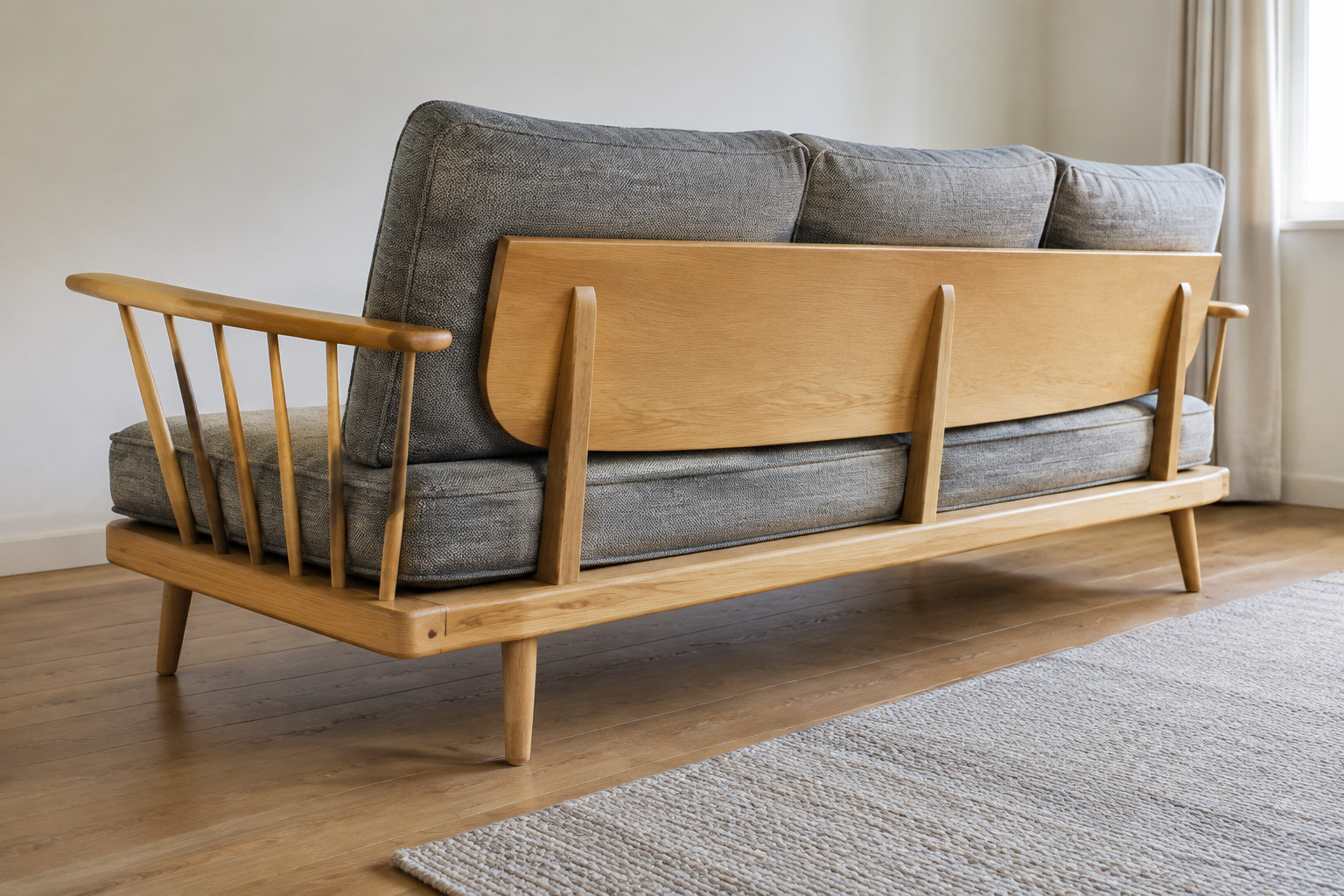
The Studio Couch shows its wooden frame instead of hiding it inside upholstery. Its original catalogue reveals another surprise: the back could be taken off, turning the long settee into a single bed.
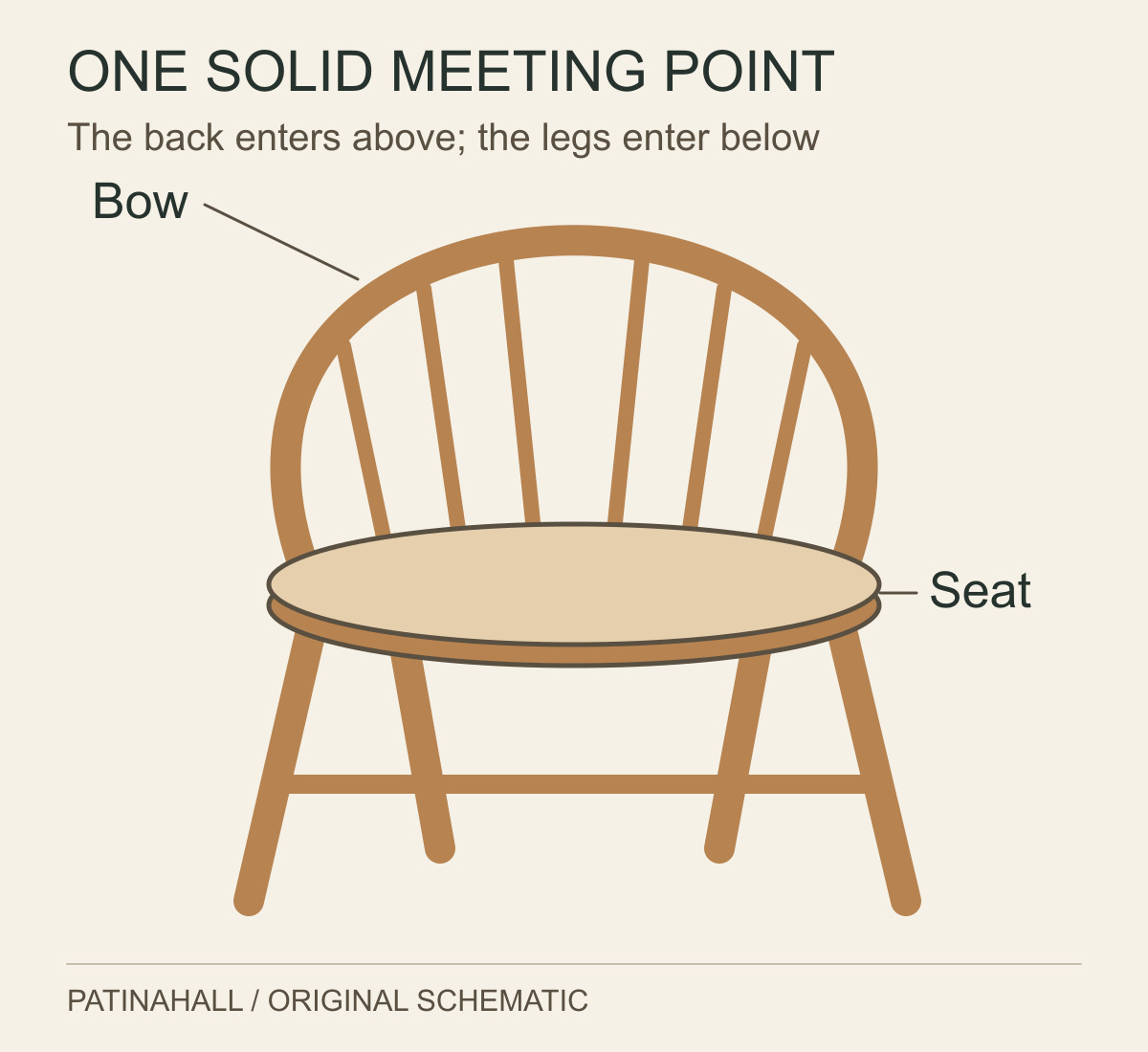
How Ercol Windsor dining chairs work: a solid seat joins the bow, spindles and legs, connecting traditional construction with everyday factory production.
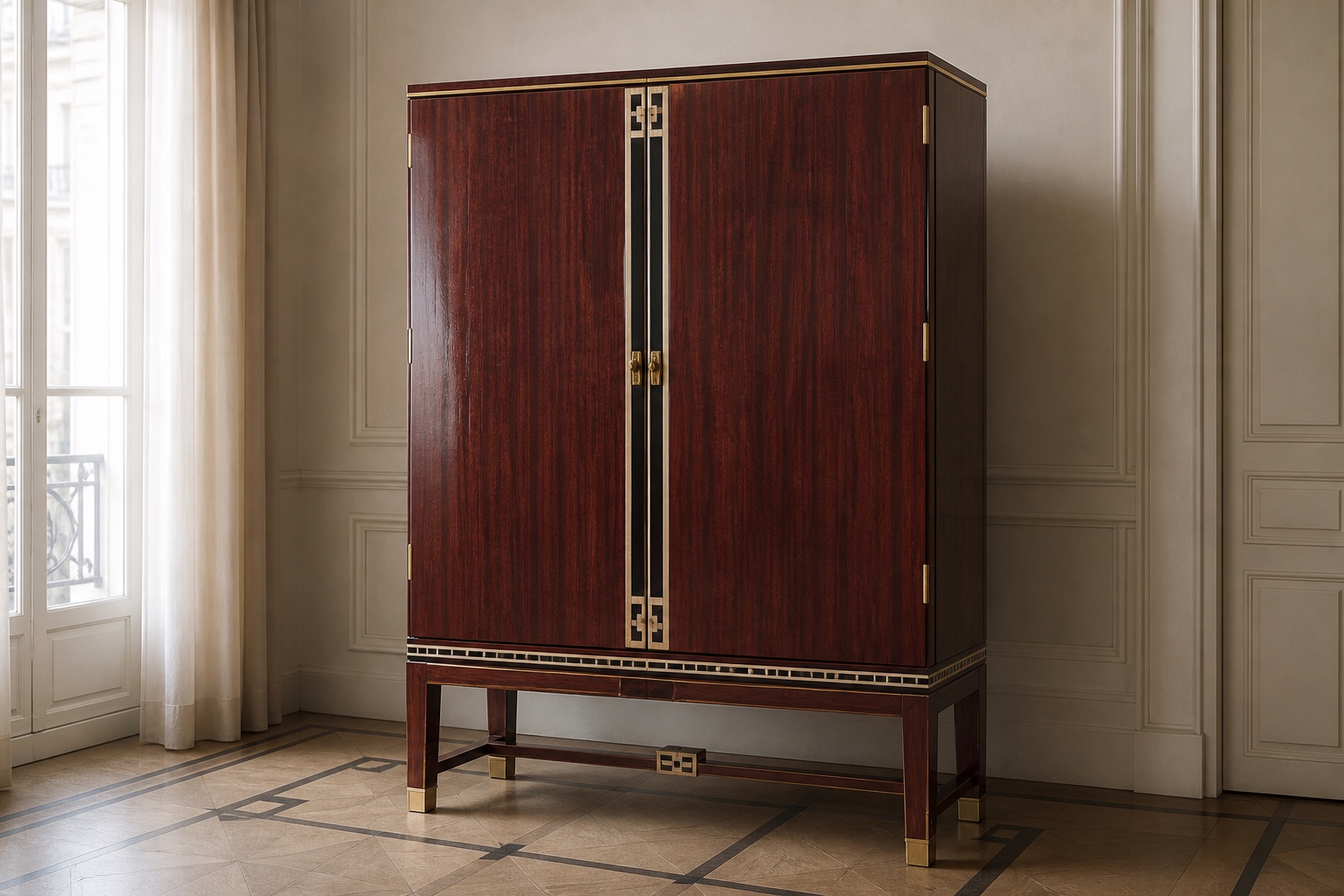
Understand what museum records establish about Jacques-Émile Ruhlmann’s État cabinet, why its 1922 design date differs from an object date, and what remains unproven.
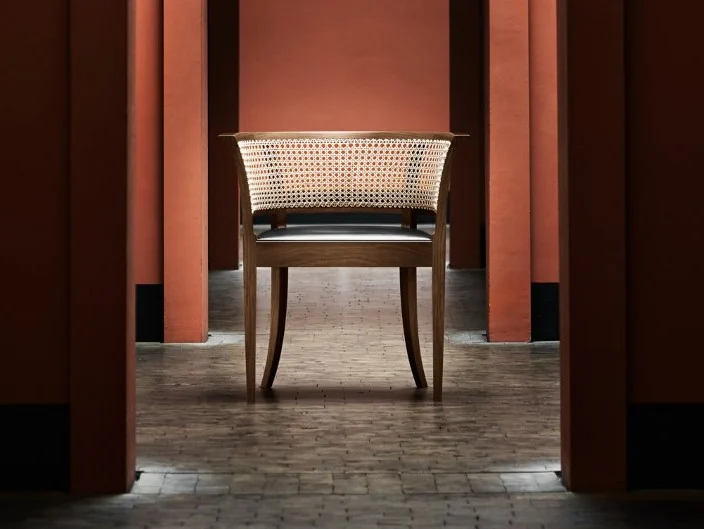
See how Kaare Klint's 1914 Faaborg Chair used mobility, open cane work and visual restraint to help museum visitors look at art rather than at the chair.
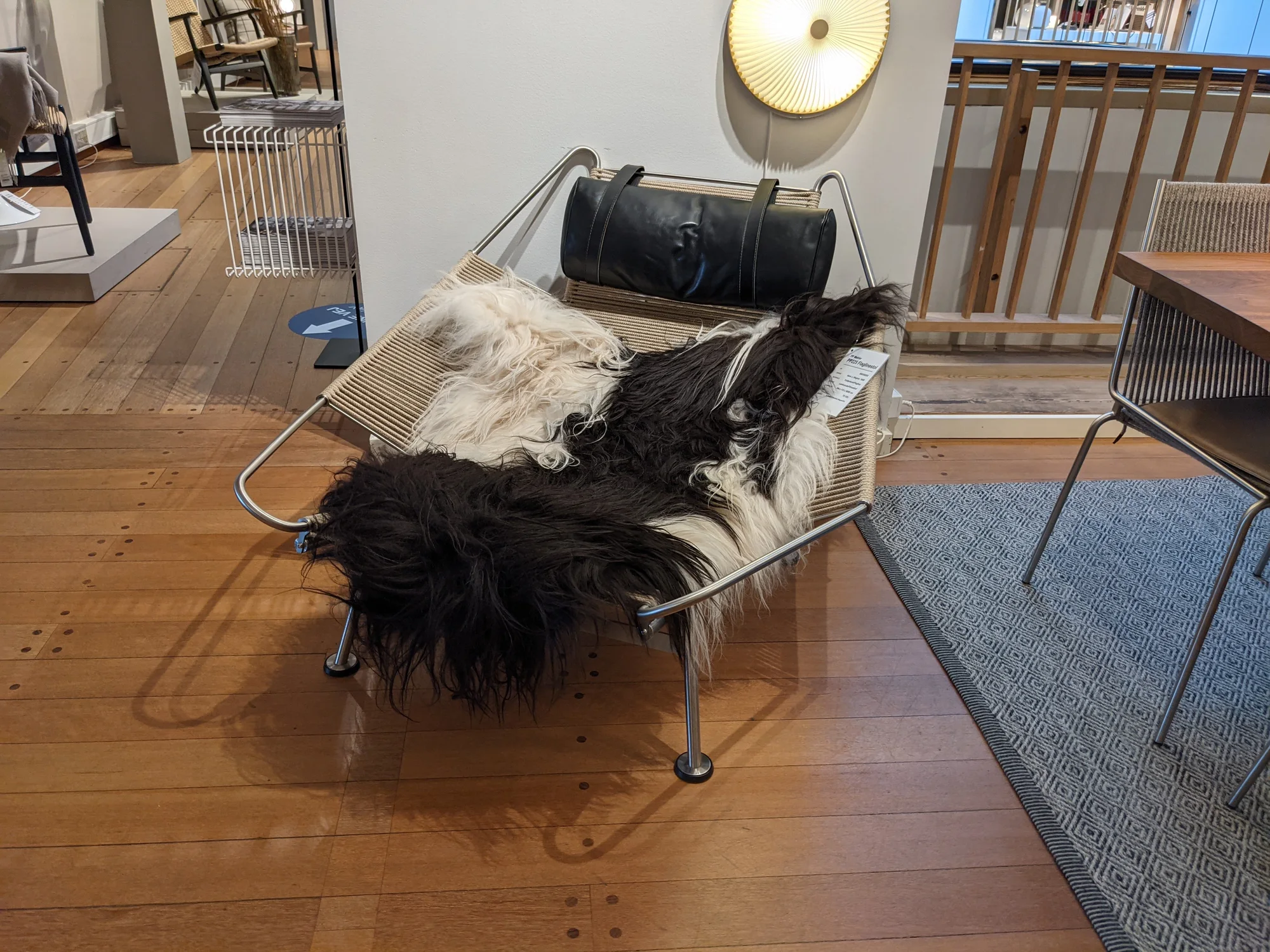
Read Hans J. Wegner's 1950 Flag Halyard Chair through its steel outline, repeated cord, selective softness and unusually exposed structure.
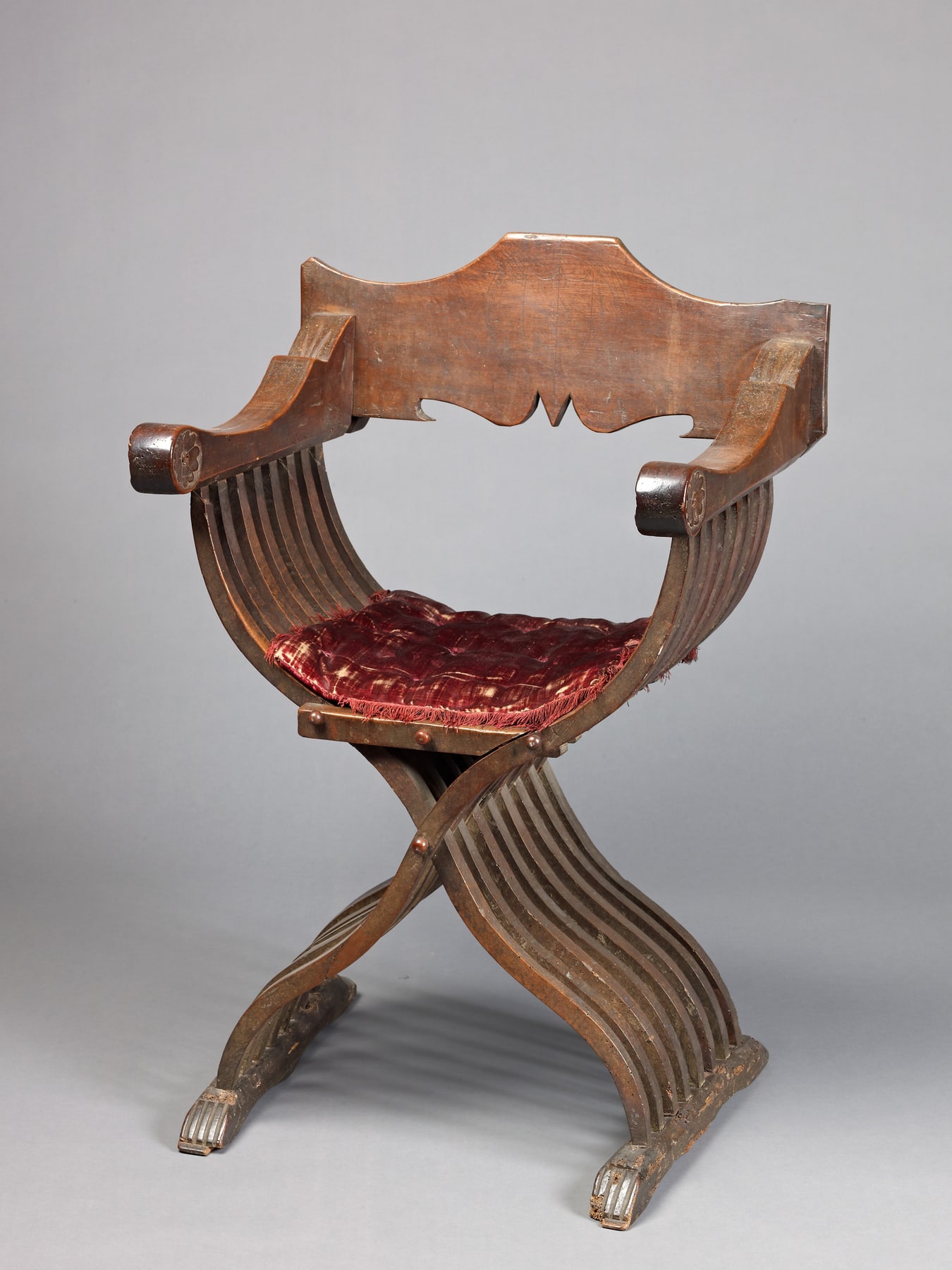
A Savonarola chair at the Met combines a nineteenth-century assembly with earlier parts and fifteenth-century velvet. Its appearance holds several dates.
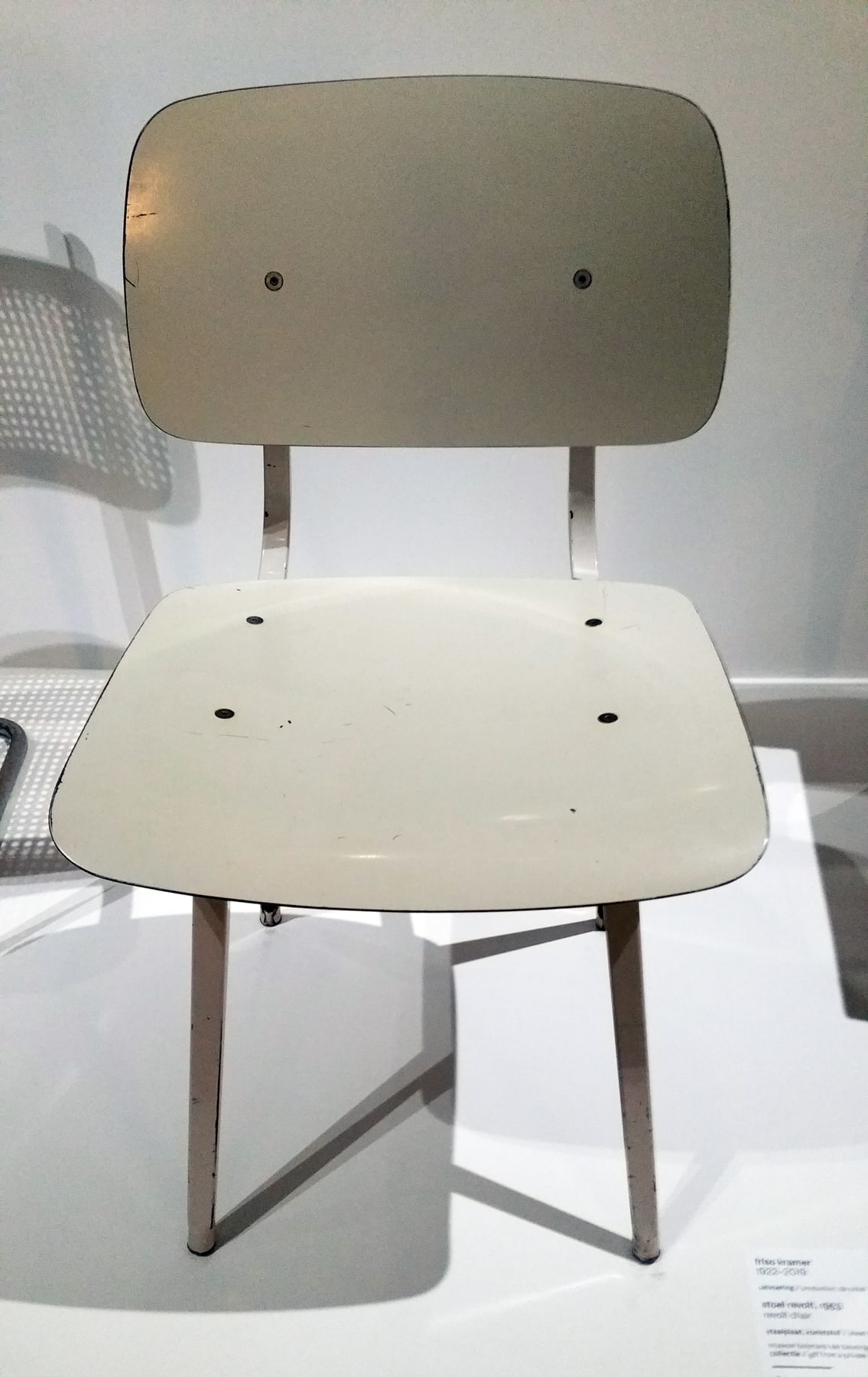
Revolt’s seat and back look reassuringly ordinary. Its more surprising idea sits underneath: Friso Kramer shaped the metal frame from sheet steel, giving a daily-use chair a different way to stand.
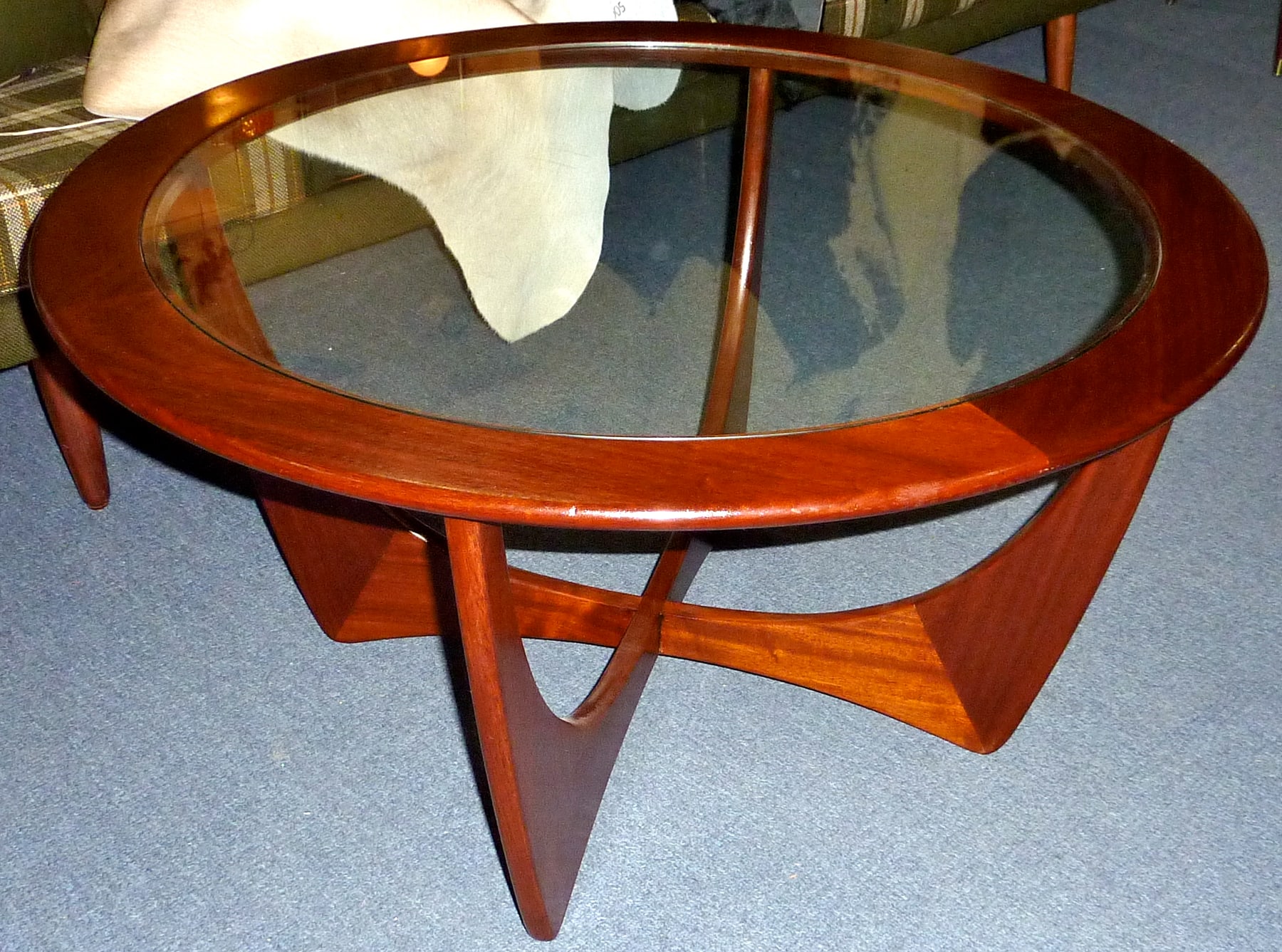
A glass-topped G Plan coffee table lets you see the furniture underneath the furniture. The curved base supplies much of its character, while the familiar “Astro” name hides a surprisingly untidy model history.
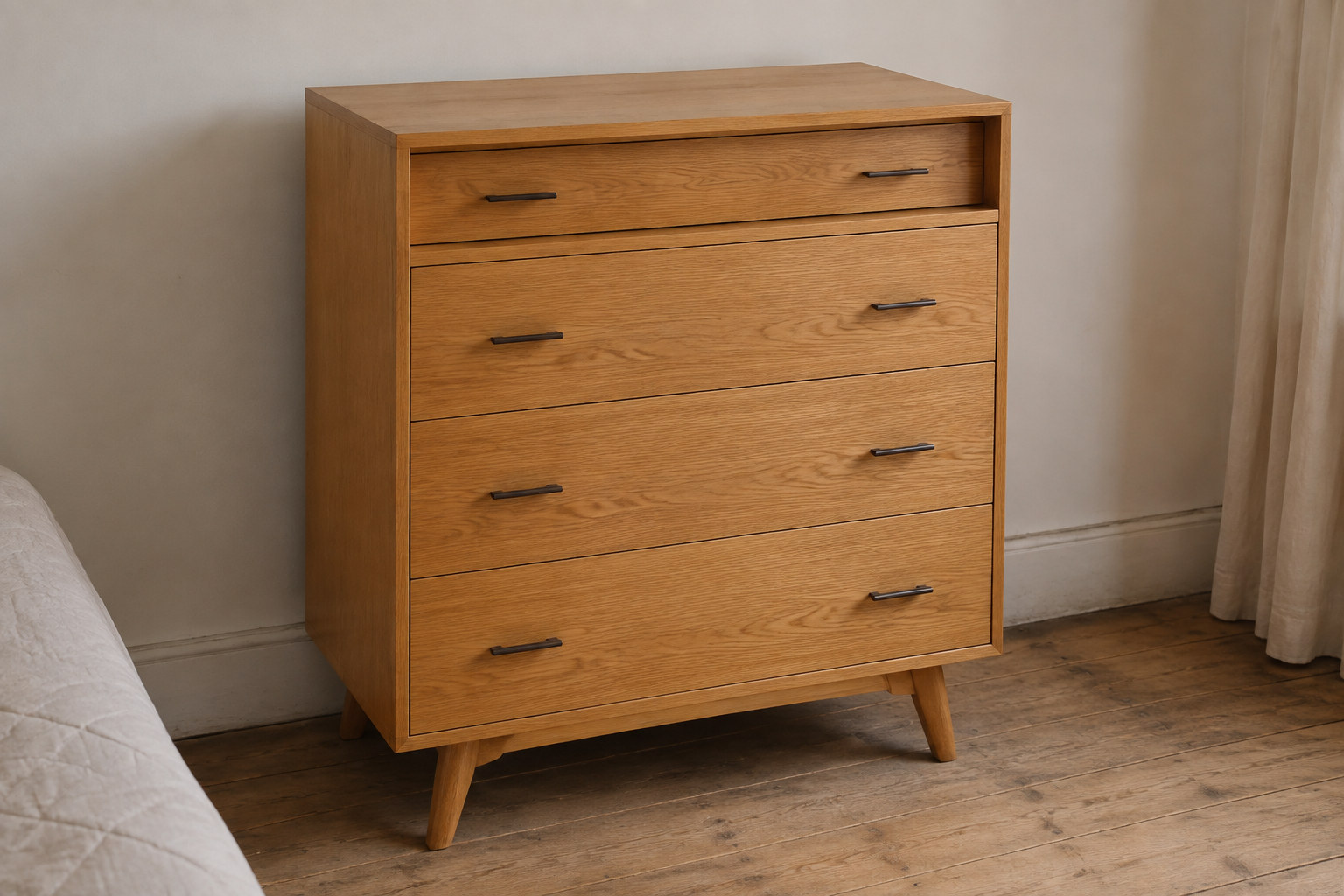
G Plan did not begin with the long teak sideboards that dominate many vintage searches. Brandon opens an earlier chapter: light oak, compact storage and carefully fitted drawers for the routines of a 1950s home.
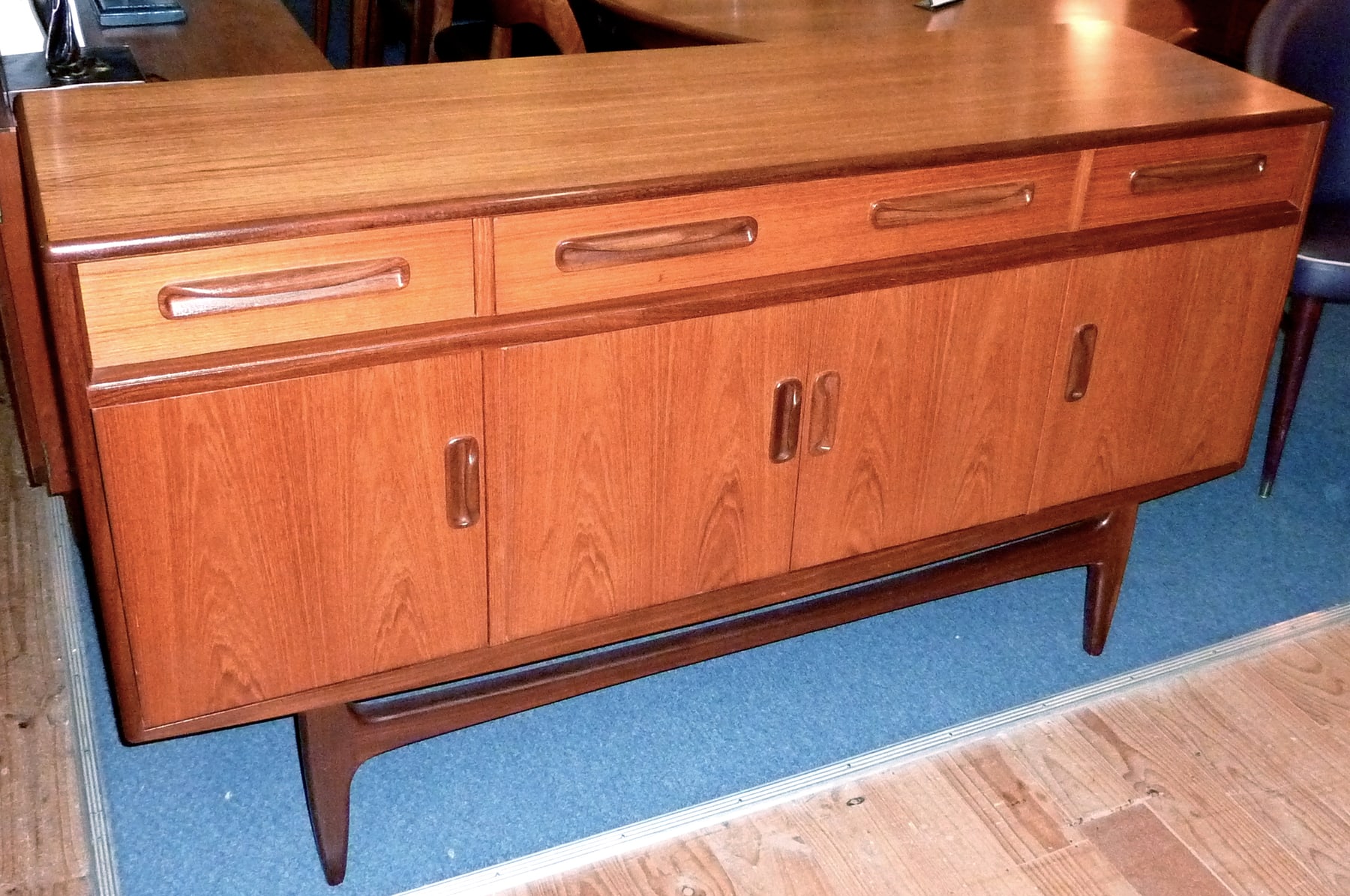
Why G Plan Fresco sideboards look familiar: shaped handles, different cabinet fronts and the history behind the long 4070 and shorter 4072 models.