A single action at the end of the day
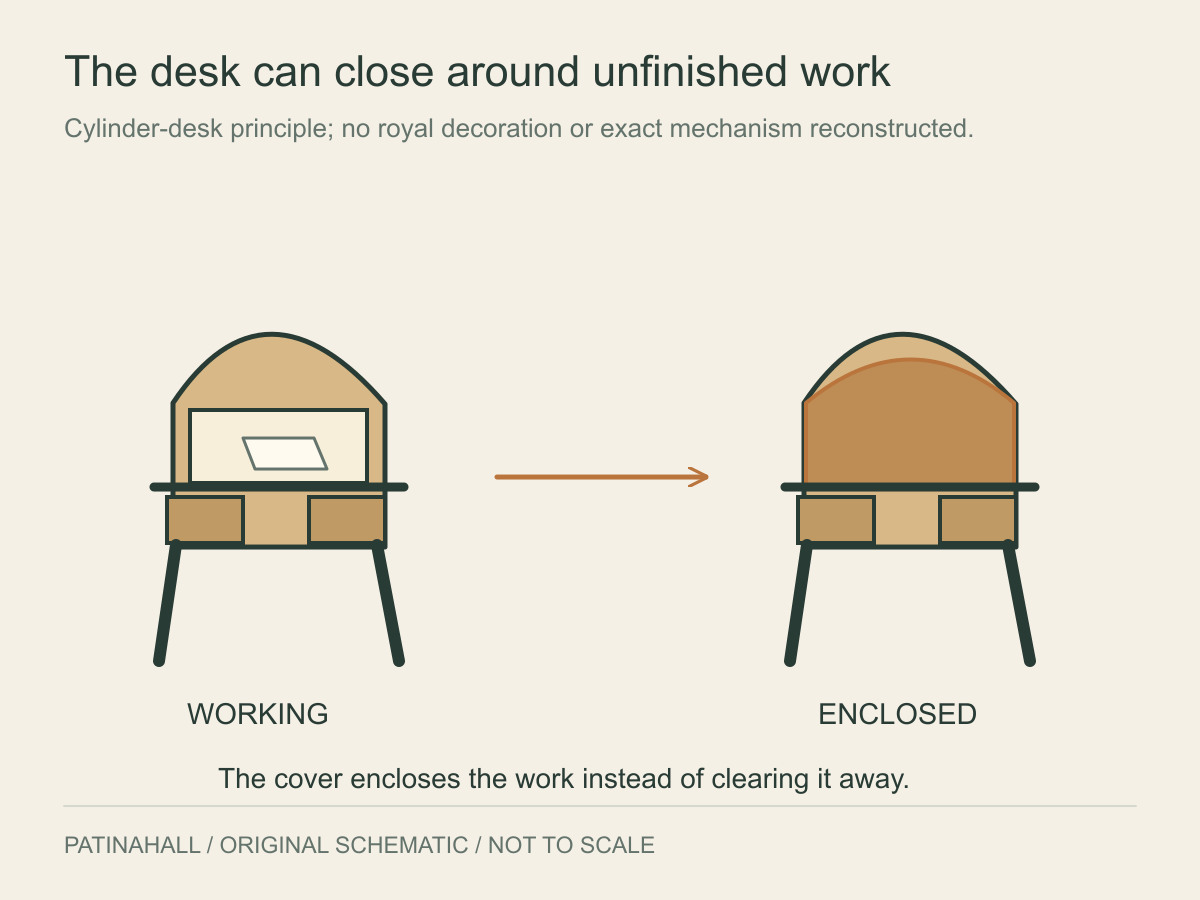
A writing desk presents two competing needs. Its papers and implements must be within reach while work is happening, then protected when the occupant leaves. Clearing the surface solves the second problem by disrupting the first.
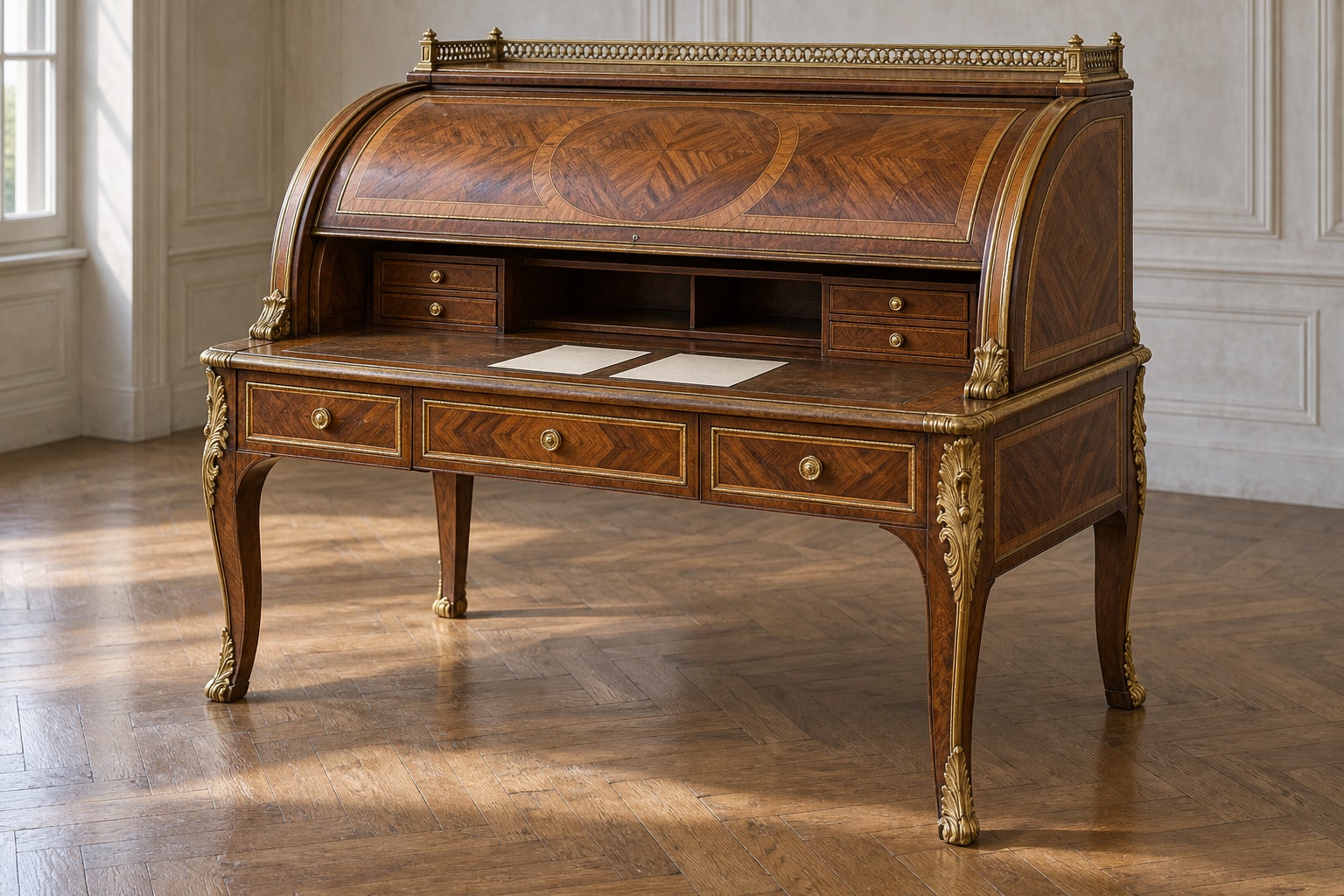
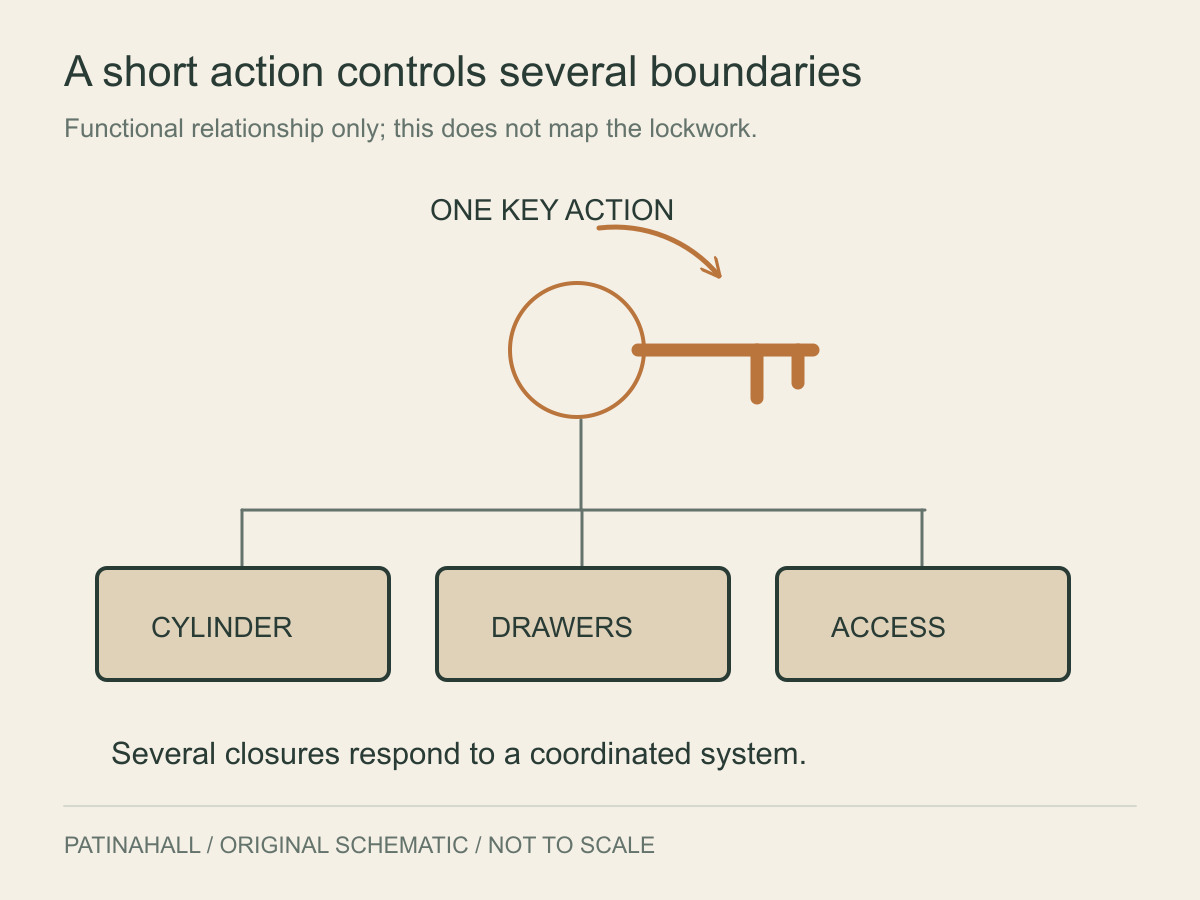
The Bureau du Roi offers another arrangement. Its cylinder closes over the working area, and the system described by Versailles coordinates the cover and drawers through a quarter-turn of a key. The desk can preserve an unfinished task behind a closed exterior.2
That is the useful idea beneath the spectacular surface. Privacy is built into the furniture as an action. The transition between working and leaving becomes shorter because several compartments respond together.
A commission that outlived its first maker
Jean-François Oeben began the desk in 1760 and died in 1763. Jean-Henri Riesener brought the commission to completion, signing the finished piece in 1769. It was delivered that May. The Louvre’s record also identifies the specialists associated with its bronzes, engraving and other work.1
A cylinder this ambitious sits at the meeting point of several crafts. The curved wooden body has to move; its marquetry has to read as a continuous decorative surface; metal fittings have to meet the wood convincingly. The viewer encounters one object where the workshop had many separate problems to solve.
This is why the change of maker matters beyond the signatures. A long commission can carry knowledge from one person’s work into another’s. The completed desk is also a record of continuity across an interruption.
A royal object survives a change of regime
After the Revolution, the desk’s royal symbolism became a problem. Versailles records replacements to monarchical emblems, including scientific imagery and blue-and-white Sèvres plaques. Riesener participated in changes to the very object that had helped establish his reputation.3
Decoration here has a date and a political circumstance. A missing emblem is not simply damage, and a replacement panel is not necessarily a modern repair. The surface can preserve evidence of an effort to keep using an object while changing what it publicly represented.
That gives the desk a second kind of adaptability. Its mechanism manages a working day; its altered decoration helped it travel through a much larger historical change.
Even the copies need a closer look
Arthur Hayden’s 1905 book includes Walter Eassie’s drawing of a copy in the Wallace Collection, identified with Henry Dasson. The illustration is useful evidence of the desk’s later reputation, but it is not a picture of the original commission.4
The distinction helps us slow down. A famous outline can migrate into replicas, books and familiar mental images until several objects seem to become one.
Return to the original desk’s simplest action: a person closes the cylinder and turns a key. Beneath the bronzes and royal associations lies an ordinary wish to leave some work in place and keep it private until tomorrow.