The drawer that refuses to become a pile
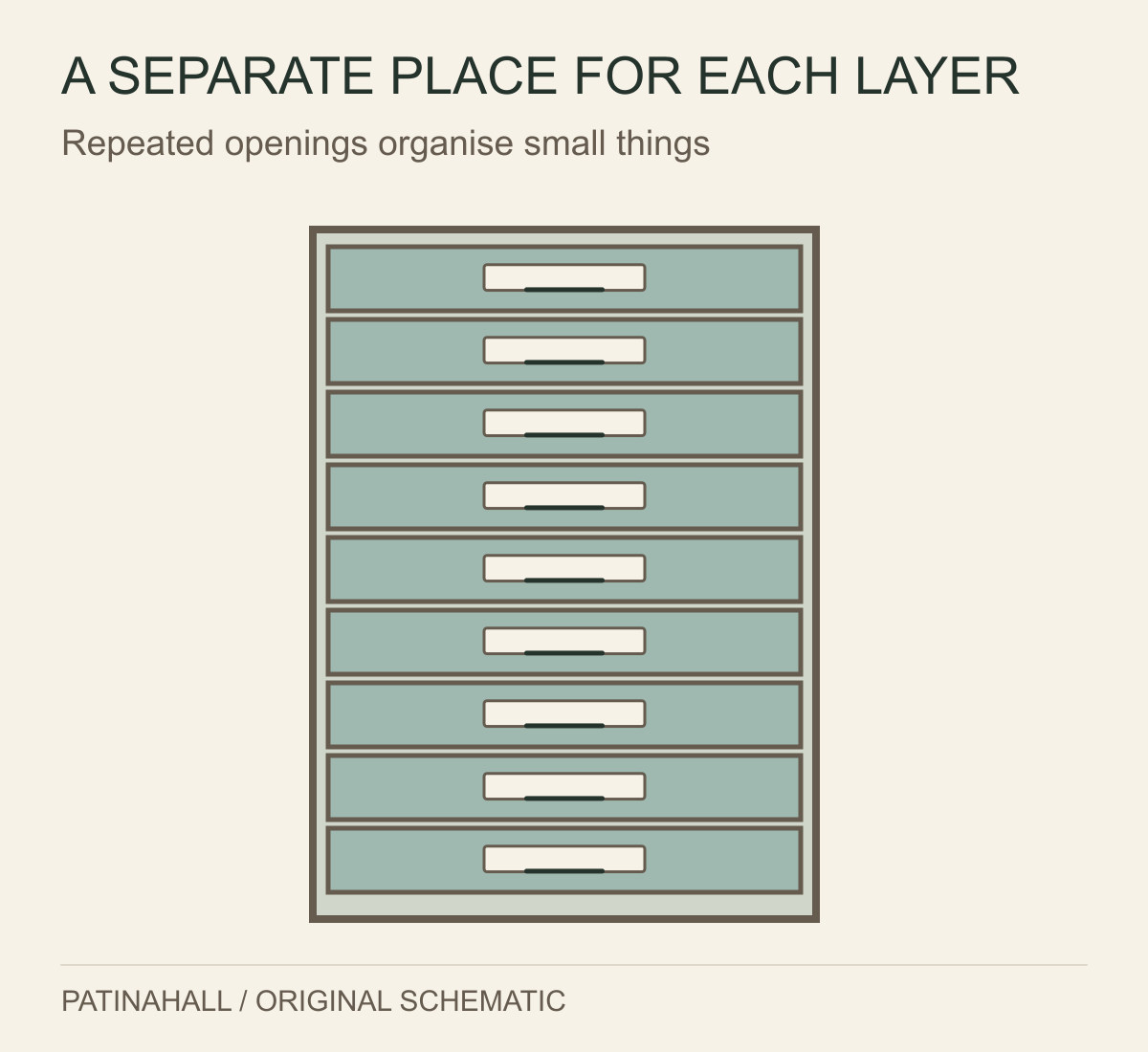
A deep drawer offers plenty of space and then asks you to remember what is buried in it. The Bisley MultiDrawer breaks that space into shallow layers. Each layer opens independently, giving small things a chance to remain visible and findable.
Bisley traces the design to its founder, Freddy Brown, in 1958, with letter trays as the starting point. The idea is still easy to read in the front of the cabinet: one slim drawer above another, each with its own handle and place for a label.1
Its appeal is wonderfully unheroic. It helps prevent a small domestic task from beginning with a search through a large mixed collection.
From car panels to office furniture
Brown’s working background was in repairing car bodies. Bisley’s company history begins with his 1931 business in Surrey, then describes wartime manufacturing and a post-war move into office products. An early opportunity involved an order for steel wastepaper bins.1
The route into furniture passed through metalworking and useful containers. That makes the MultiDrawer’s plainness easier to appreciate. The cabinet’s character comes from repeated openings, thin edges and a compact outer case. It does not need the surface of a traditional wooden chest to announce what it is for.
The repetition supplies its own rhythm. Close the drawers and separate categories of things become a regular grid on the outside.
A small drawer changes the search
Bisley’s current A3 fifteen-drawer model has fully removable drawers. The manufacturer describes uses ranging from paperwork and stationery to tools and craft materials.2
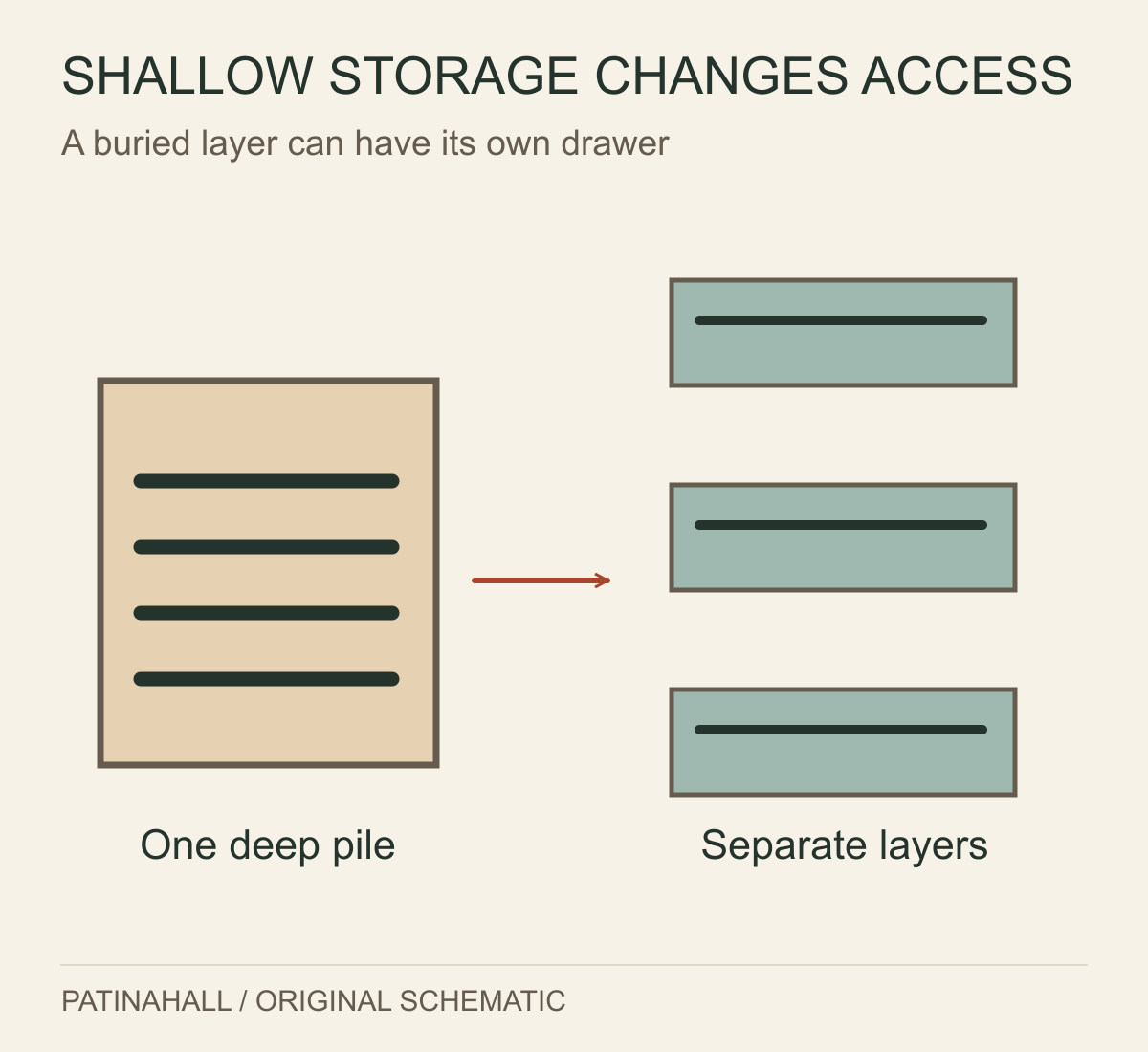
Imagine a drawer of sewing supplies. With a shallow layer, the useful question becomes where to place each item across the available surface. A deeper box invites another question: what can go on top? Neither arrangement is right for every object, but they create different habits of storage.
A removable drawer also lets its contents come to the work. The cabinet can remain in place while one organised category travels to a desk or table. The original relationship with a letter tray is still doing useful work.
One family, several kinds of order
MultiDrawer covers more than one size. Bisley’s range includes A4 and A3 formats, several drawer heights and compartment inserts for smaller objects. Some units suit a desktop; others sit below a work surface.3
These variations explain why two cabinets with the same familiar face may organise quite different things. Paper size, drawer depth and internal divisions determine the useful space.
The history survives in that principle rather than a single paint colour or drawer count. An office invention remains relevant at home because paperclips, pencils and bits of making are still small, numerous and surprisingly good at disappearing. The MultiDrawer gives them separate places to wait.