Give a simple shape something to reveal
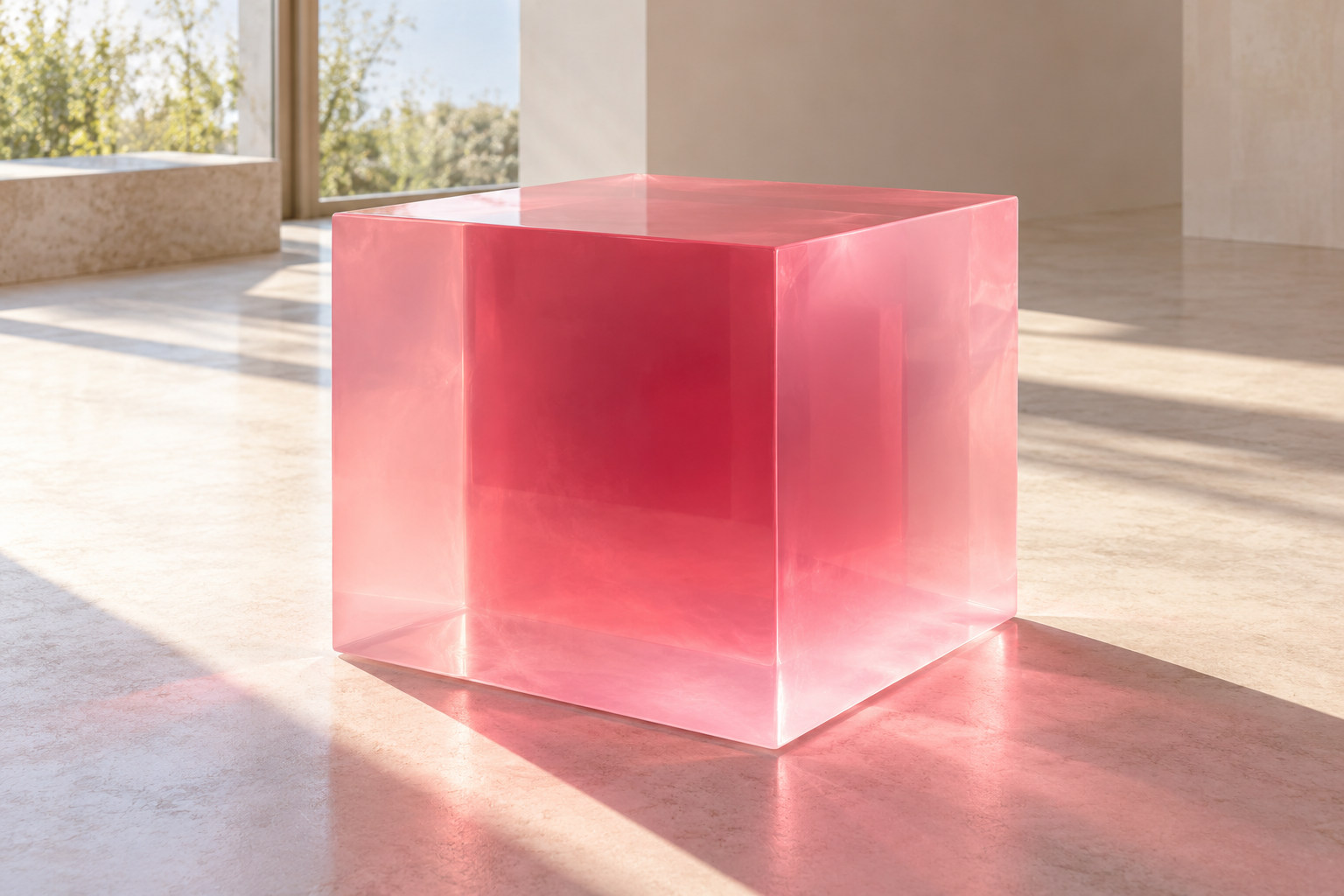
A cube offers few distractions. There is no elaborate support or decorative outline to explain first. In Candy Cube, that simplicity makes the material’s response to light unusually easy to notice.
MoMA describes the pink resin as darker towards its centre and lighter around its edges.1 The effect makes volume perceptible through colour. The viewer sees a solid object and, at the same time, light travelling within it.
Finish changes the encounter
Casting and polishing matter because the surface is also an optical boundary. Etage’s account describes that making process for its polyester-resin offering.2 The polished exterior lets the eye move from reflected light on the surface to transmitted colour inside.
Place such a volume near changing daylight and its surroundings enter the composition. Shadows, neighbouring colours and the viewer’s position can become part of the encounter. This is an invitation to look at material behaviour, rather than a claim that every resin object will perform identically.
Leave the use open enough
MoMA dates Candy Cube to 2014 and discusses it as a possible side table, podium or prop.1 Its openness is useful: a familiar geometric volume can organise a small part of a room without announcing one elaborate furniture identity.
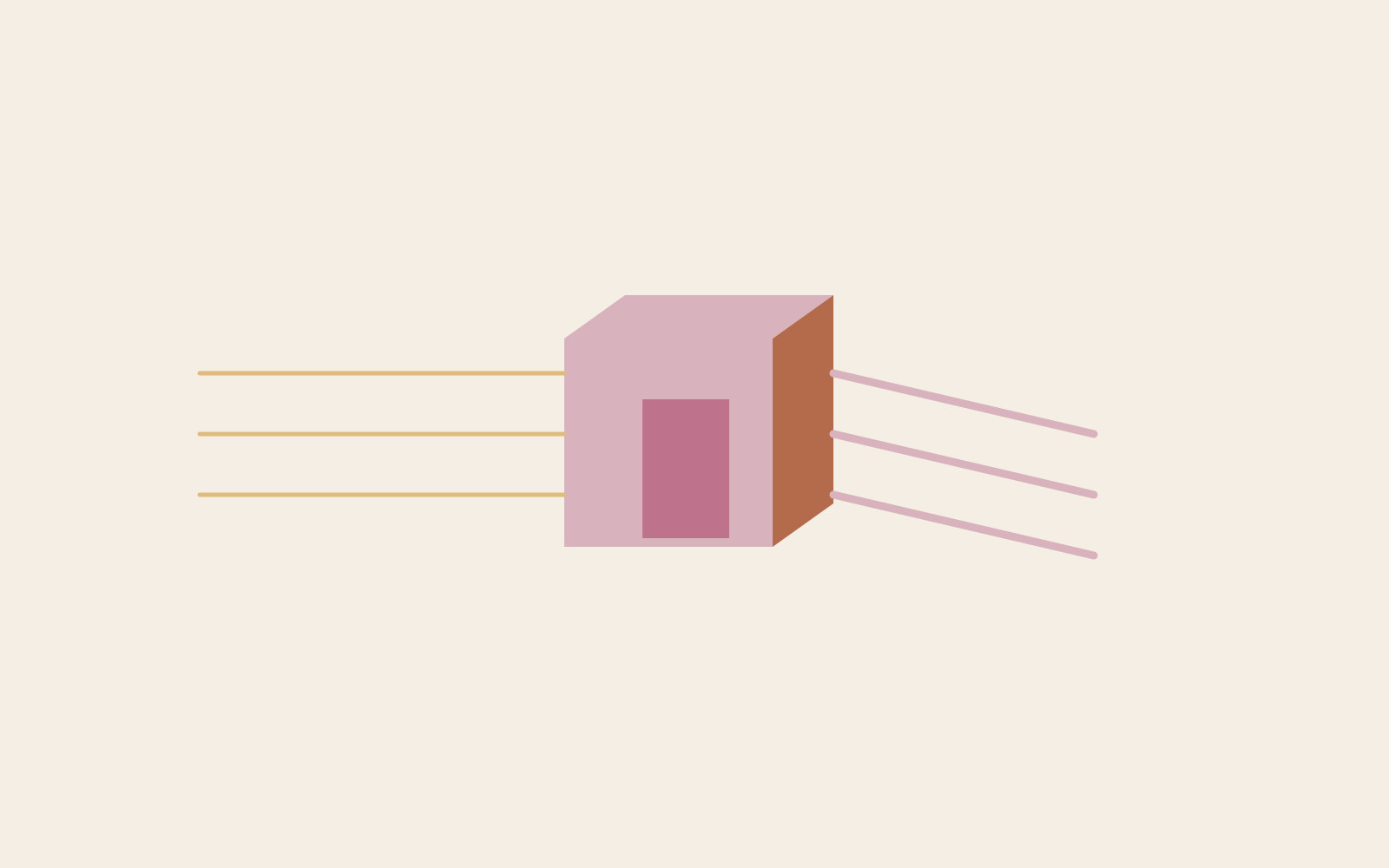
The cube makes an appealing argument for restraint. When the material can provide depth, variation and atmosphere, the outline can remain simple. Marcelis gives light enough room to become part of what the object is.