Blue gives the plain form weight
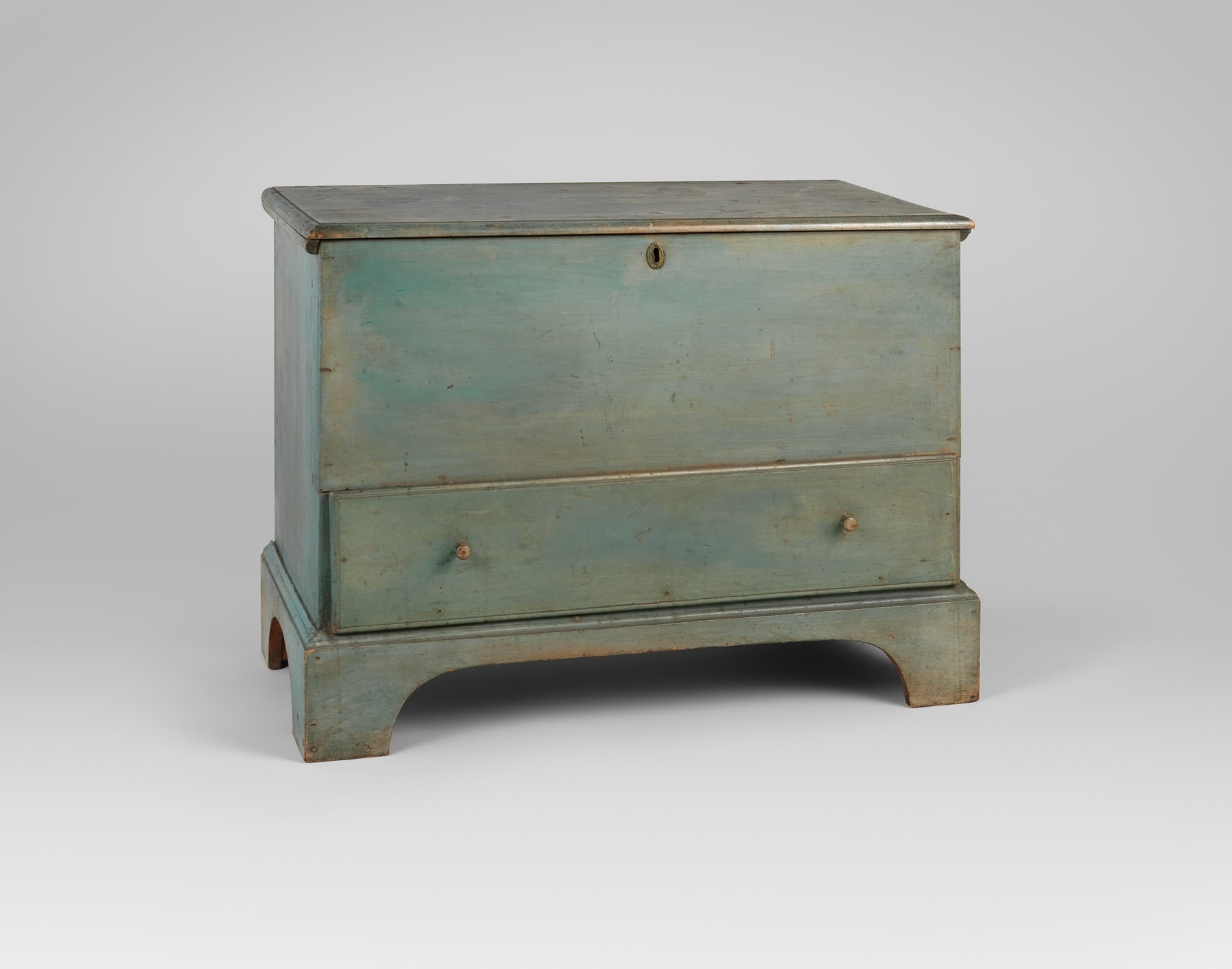
The chest is a broad blue rectangle set on short feet. Its decoration does not depend on a carved picture or a complicated veneer pattern. Colour carries across large planes, interrupted by the dark line of the lid and the outline of the lower drawer.
The Met identifies pine and dates the chest to 1835–75. It notes several coats of paint in slightly different shades of blue, making the surface a record of attention over time rather than a single pristine finish.1
Two ways into the same chest
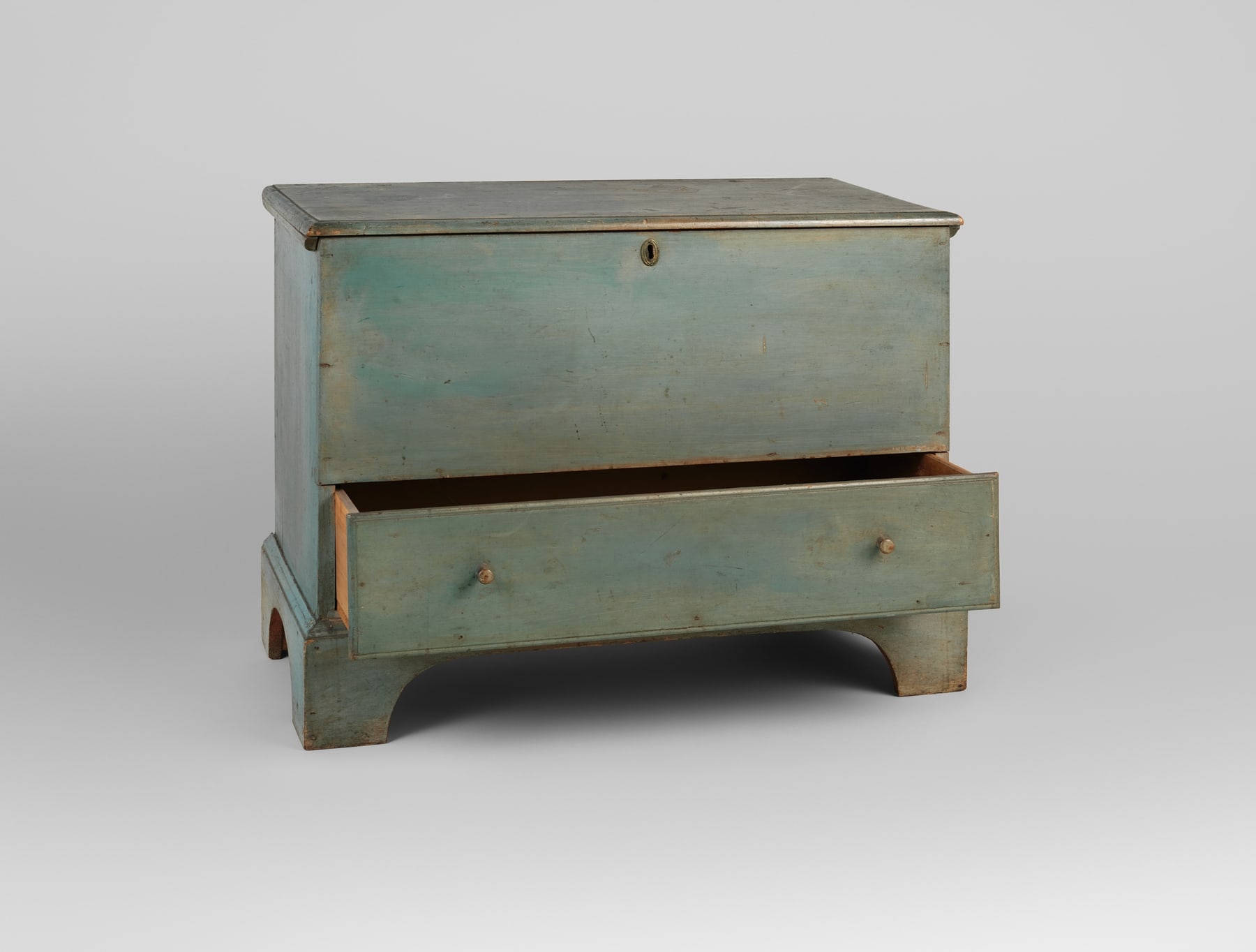
A lift-top chest asks someone to approach storage from above. This example adds a deep drawer below. In the second photograph that drawer is partly open, revealing just how much of the lower body belongs to it.
The two openings offer different routes into one compact volume. A person could reach the lower compartment without lifting the lid. That observation does not tell us what was stored where, but it explains why the drawer matters to the form: its depth is functional space, not a decorative line across the front.
Familiar furniture could be adapted
According to the Met, the blanket-chest form came from colonial New England furniture. The Shaker example therefore belongs to a conversation with existing domestic objects, rather than appearing as a completely isolated invention.1
Its visual discipline comes from the way those elements are handled. A wide front, an economical base and a few clearly placed openings are enough. Look at the drawer in the open photograph: even when the silhouette changes, the piece remains easy to understand.
Bare wood can tell a later story
The museum’s broader essay on Shaker furniture describes blue, green, red and yellow painted surfaces, and explains that later refinishing has affected what survives. It also challenges the idea that Shaker making necessarily rejected machinery.2
Those points help separate historical furniture from the image later viewers bring to it. Plainness does not require an absence of colour, and careful making does not tell us that every operation was performed with hand tools.
The blue chest is especially useful because the correction is visible before any label is read. Its surface gives the room a strong colour; its storage remains direct and legible. Neither quality needs to cancel the other.