A whole facade, only half a metre wide
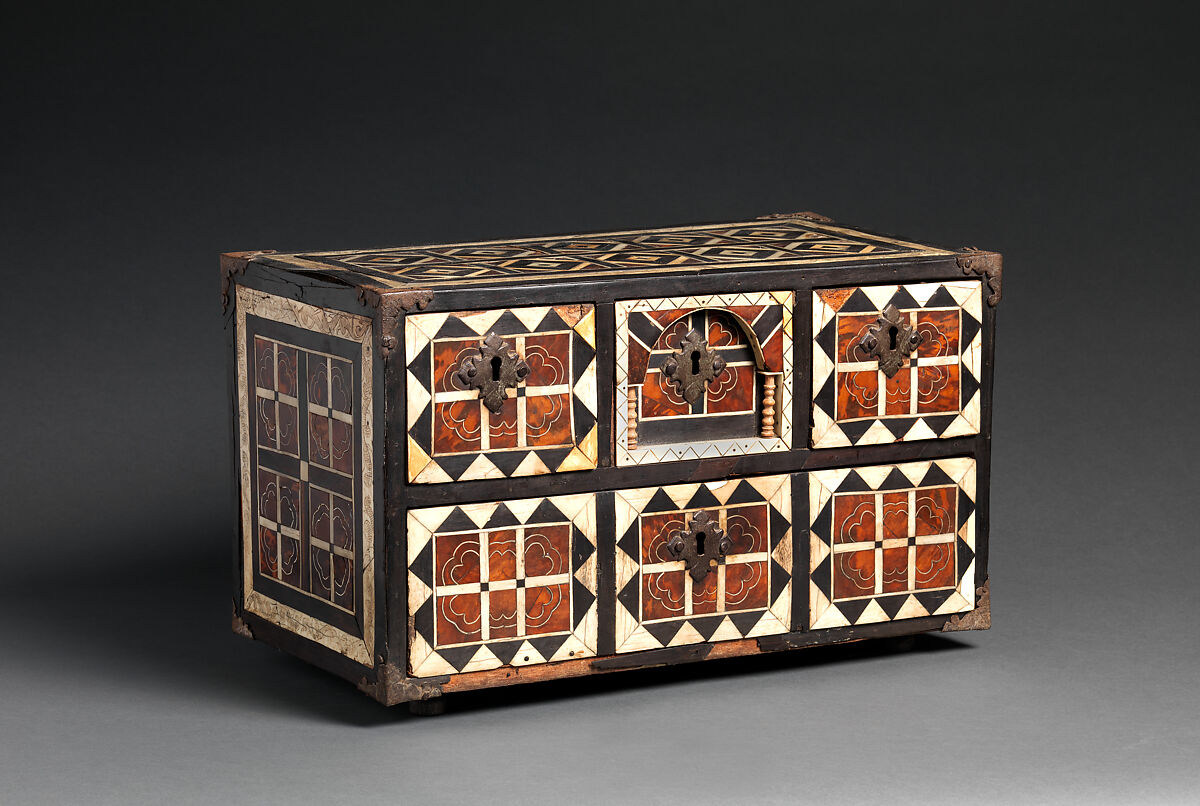
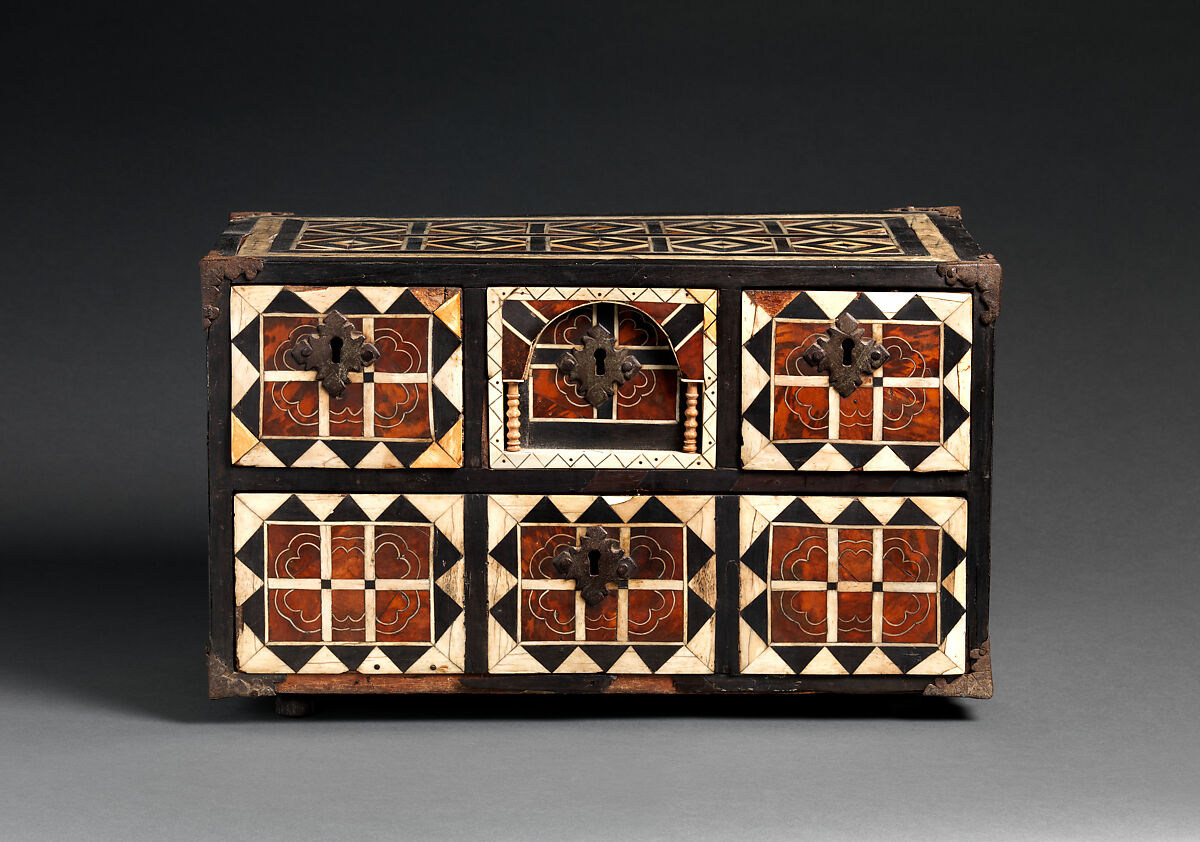
The centre looks like a doorway. Turned columns flank a small arch, while geometric panels spread across the front in neat horizontal bands. Below them, a long strip repeats the pattern. The result has the composure of a much larger piece of furniture, compressed into a box.
The Met dates this writing box to 1650–1700 and places its making in Campeche, Mexico. It is 51 centimetres wide and 31 centimetres high. Its maker is unknown. Wood, bone, tortoise shell and ebony create the patterned surfaces; iron supplies the hardware.1
Scale is part of its appeal. At first the facade seems elaborate enough to furnish a room by itself. Then the side view reveals the compact depth of the object. A photograph without dimensions could easily encourage the wrong mental picture.
Four keyholes interrupt the pattern
Look at the front again and the decoration becomes less continuous. Four keyholes are visible among the pale borders and dark panels. Whatever the pattern asks the eye to do, the locks introduce another activity: deciding who can open what.
That is a useful way into a writing box. Paperwork is associated with a flat surface and an open sheet, yet writing also produces things that need to be put away. The distinction between display and access is built into the front. A visitor could admire the object without being invited to inspect its contents.
Neither photograph shows the compartments open. The lines and keyholes help us read the facade, but they do not establish the complete arrangement behind it. There is no need to invent a secret drawer to make the visible locks interesting.
The desk was also a possession on show
The Spanish term escritorio covers a history of writing furniture whose storage and social roles overlap. In her study of a different Mexican escritorio, made in Oaxaca in 1671 and now in Boston, Nadia Mechboukh draws attention to the combination of administrative use, elaborate production and social position. That comparison concerns another object, with different woods and a named maker.2
The Campeche box belongs to the same broad question: what does a place for private documents communicate in public? The Met describes such furnishings in the principal sitting rooms of wealthy colonial households, holding papers and writing or sealing equipment while signalling education and status.1
Its little architectural centre sharpens the effect. The eye is led towards an entrance, but a keyhole meets it there. That is an observation about this facade, rather than evidence of what a particular owner kept inside. The owner’s identity and papers have not come down to us with the box.
A portable object with an incomplete journey
Campeche was a port involved in the trade in hardwoods and luxury furnishings. The museum records that this box was collected in Venezuela. Those two facts suggest a wider geography around it, but do not supply its original shipping route or the date when it travelled.1
The second photograph gives us a smaller, firmer journey to follow: from the front around the side. The busy facade continues into broad patterned surfaces on the case. The object was composed in three dimensions, even if its front delivered the most elaborate introduction.
It keeps a compelling balance. Small enough to be portable, elaborate enough to command attention, and fitted with locks that preserve a boundary between looking and knowing. The decoration welcomes the eye; the contents were somebody else’s business.