The thing above the bed
Maurer recalled finding the idea in Venice. After a meal and wine, he returned to his room and noticed the bare bulb hanging there. In the Vitra Design Museum interview, he described sketching the thought and taking it to Murano, where a glass form was made. Back home, he developed the metal base.3
It is a personal account of noticing, rather than a technical patent history. Its appeal lies in the modest starting point. The room did not need an exotic object to trigger a new design. An everyday component, seen with renewed attention, was enough.
The result arrived in 1966. Instead of concealing the bulb inside a conventional shade, Maurer gave its outline the whole stage.
A bulb that contains another bulb
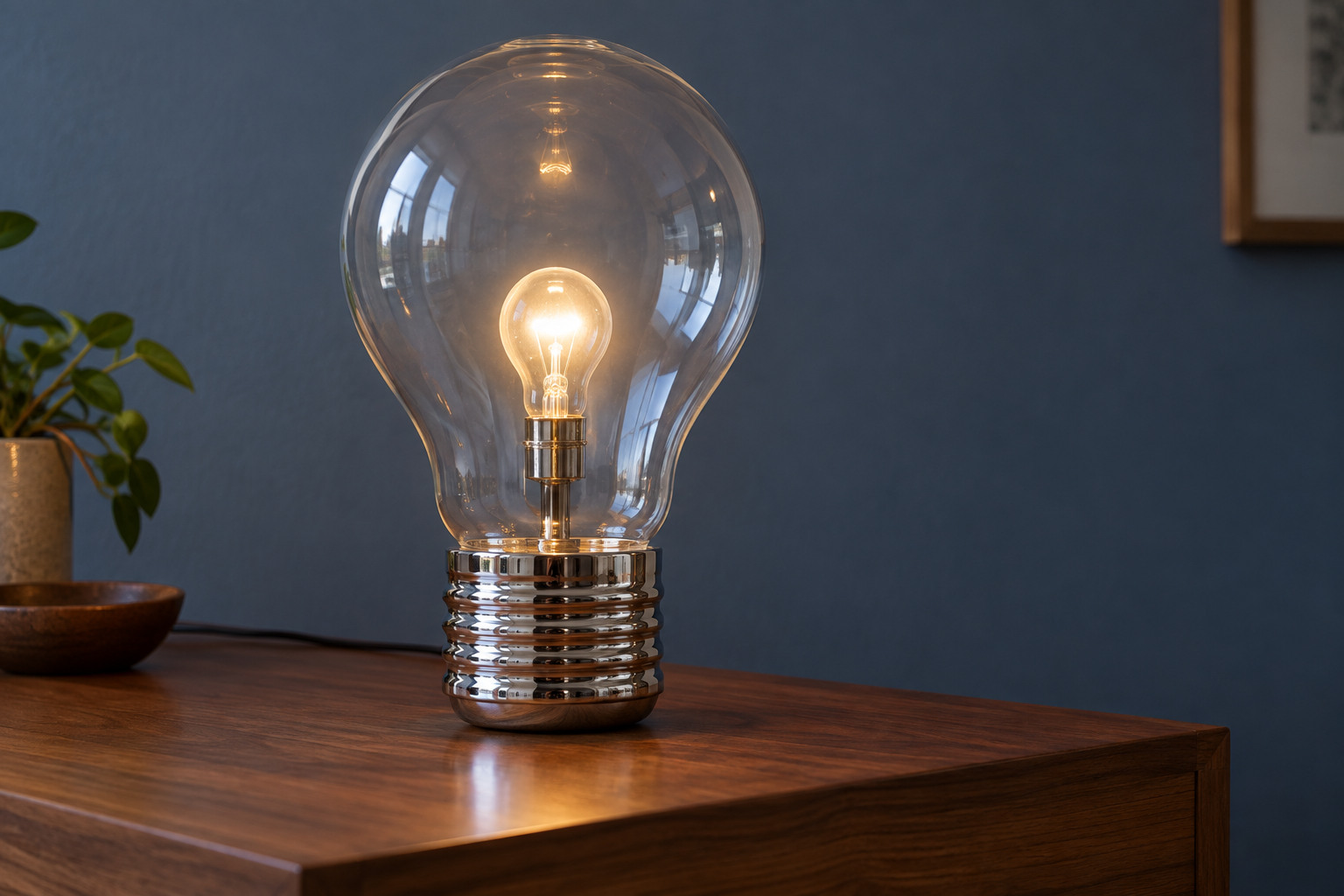
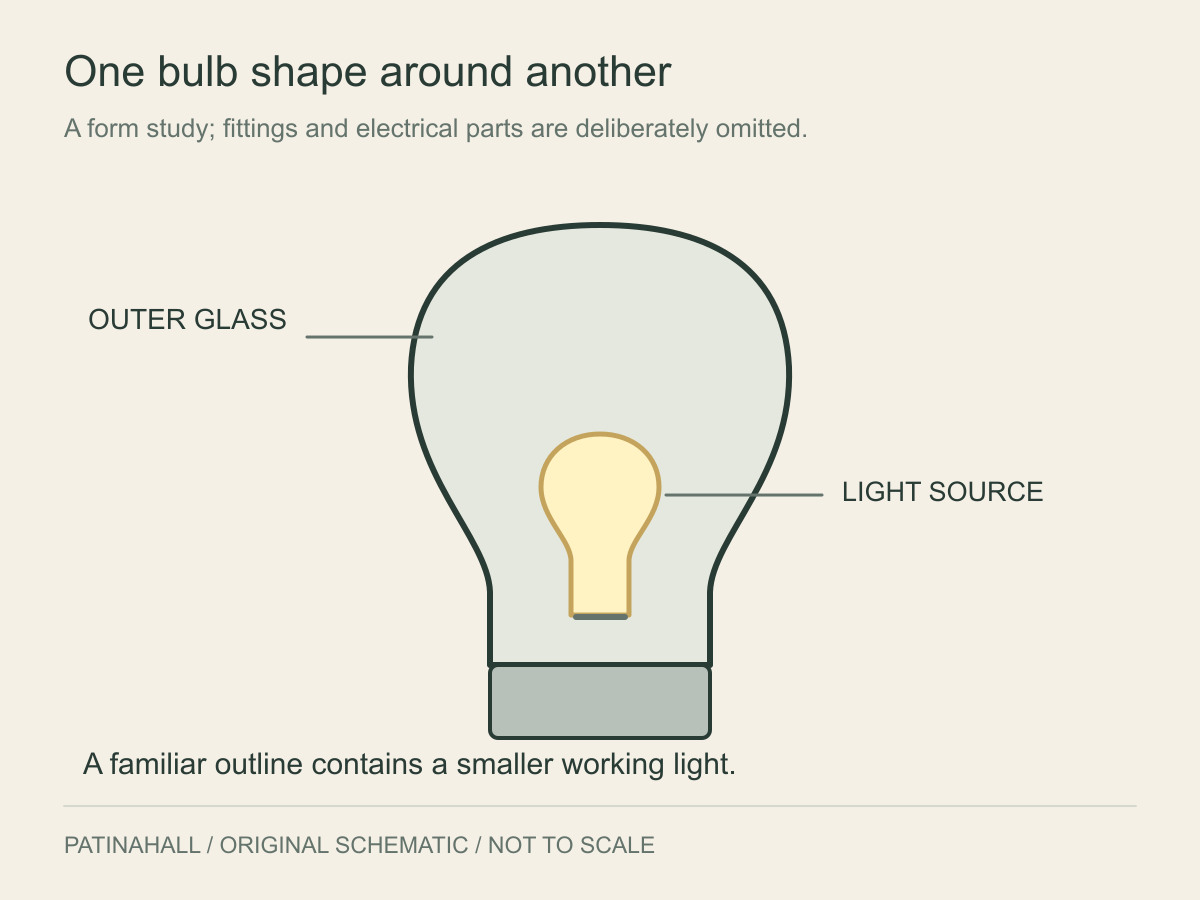
Two scales operate at once. The actual source of light sits within the larger transparent envelope. Around it, the familiar pear-like outline becomes an object with enough volume to occupy a table. Below, the shining metal base recalls the screw cap of the smaller electrical component.1
The construction creates a moment of visual hesitation. From a distance, the eye recognises one large bulb. Closer up, it discovers the smaller working light and the glass around it. The object contains its own explanation, but makes the viewer look twice to find it.
Industrial familiarity, handmade glass
The manufacturer describes the outer body as hand-blown crystal glass made in Murano, paired with polished chromium-plated metal. The ordinary industrial silhouette therefore depends on another kind of production skill when it is enlarged.2
Glass and chrome handle their surroundings differently. The glass admits the view through the object while catching reflections at its edges. The metal gathers darker and brighter patches into its curved surface. Even with the light off, the lamp remains active as something to look through and something that reflects the room.
Those material effects keep the design from being only a visual pun. The enlarged outline gives them space to become noticeable. A component normally handled for a moment during replacement becomes a permanent presence on the table.
The idea survives the first smile
In the same interview, Maurer said that the quality of light became more important to him than form. That later emphasis helps us look back at Bulb without reducing his career to the enlargement of a familiar object.3
A lamp is encountered in changing conditions: daylight on its surface, dusk around its outline, the source glowing within. Bulb makes that ordinary sequence unusually visible.
The outer glass supplies the familiar shape. The small light inside gives it another life. Once the first joke has been understood, the two continue to work together.