An outline with material presence
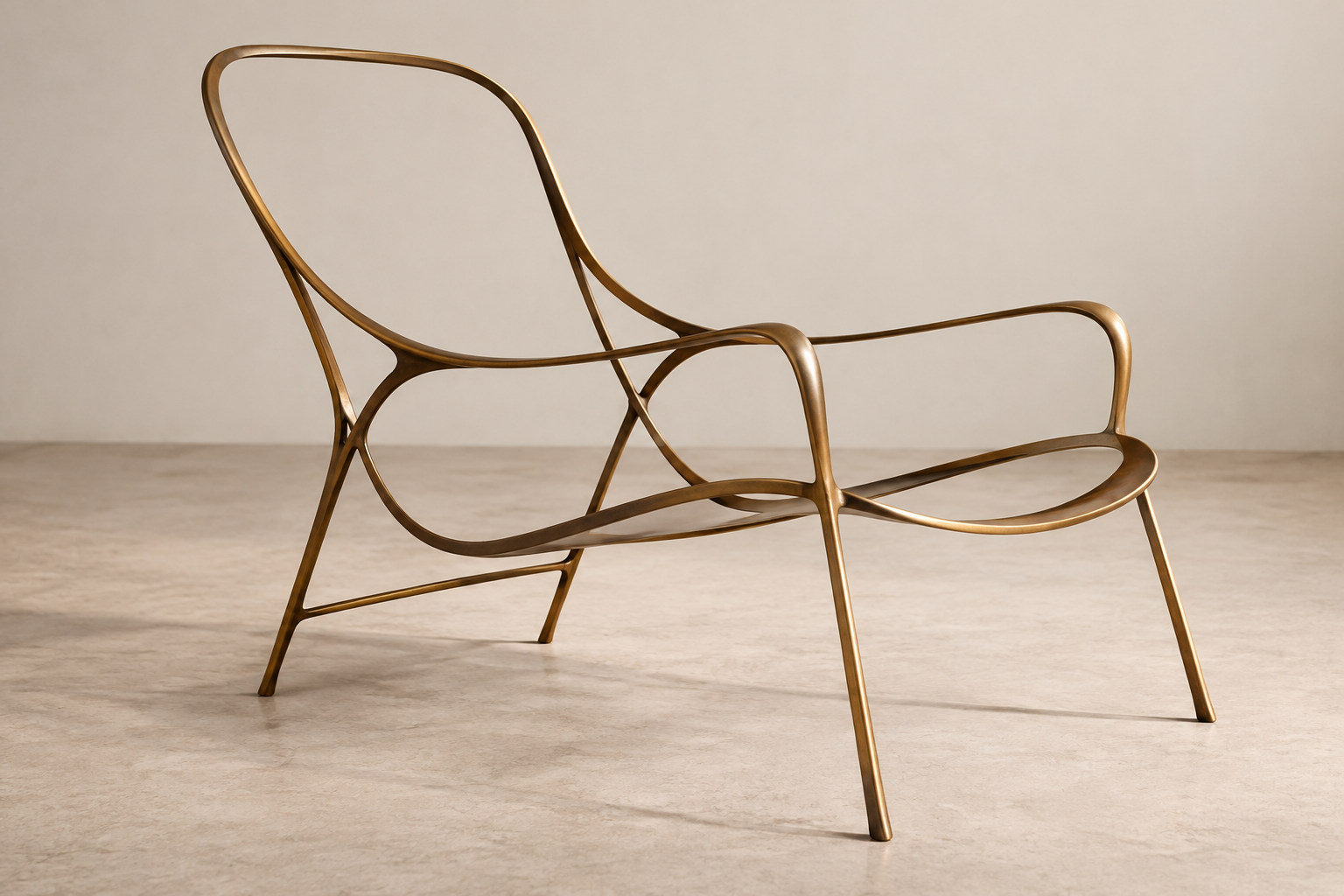
Bronze Age Lounge Chair plays with an expectation before a visitor needs to know its title. Slender-looking elements outline a place to sit, leaving enough open space for the chair to be read almost as a drawing in the room.
Both Centraal Museum and Van Abbemuseum identify the work as Frank Tjepkema’s 2014 chair. Their material records anchor that visual impression in bronze; the Dutch Van Abbe entry specifies cast bronze.12
The material gives the outline another kind of presence. What appears delicate is also a physical object with a surface and mass. The interest lies in holding those readings together while looking at the same chair.
The spaces help draw the chair
An open structure makes the surrounding room part of the view. Background appears between the chair’s lines, so the eye repeatedly moves between the object and what can be seen through it.
That relationship helps explain the apparent lightness. A viewer can follow a line, cross an opening and find the next part of the outline, without encountering one large uninterrupted volume.
Centraal Museum describes handwork in relation to rapid processes such as 3D printing. The comparison makes different ways of shaping an object part of the museum’s interpretation.1
The interpretation stays attached to this work. Its most immediate visual fact is already sufficient to sustain attention: bronze has been given a form that lets empty space remain prominent.
One chair, two collection records
The museums jointly acquired the chair in 2023. Centraal Museum records it as 35822; Van Abbemuseum records the same jointly held artefact as 3852.12
Two numbers can look like two objects when encountered separately. Here they describe a shared collection history, adding an institutional relationship to the material one visible in the chair.
The dates also keep different events apart: 2014 identifies the work, while 2023 identifies its acquisition by the museums. The chair remains one physical point where those histories meet.
Return to its outline after reading the records. The lines still appear delicate, but the knowledge of bronze gives every opening around them a little more presence.