A small museum record opens a large question
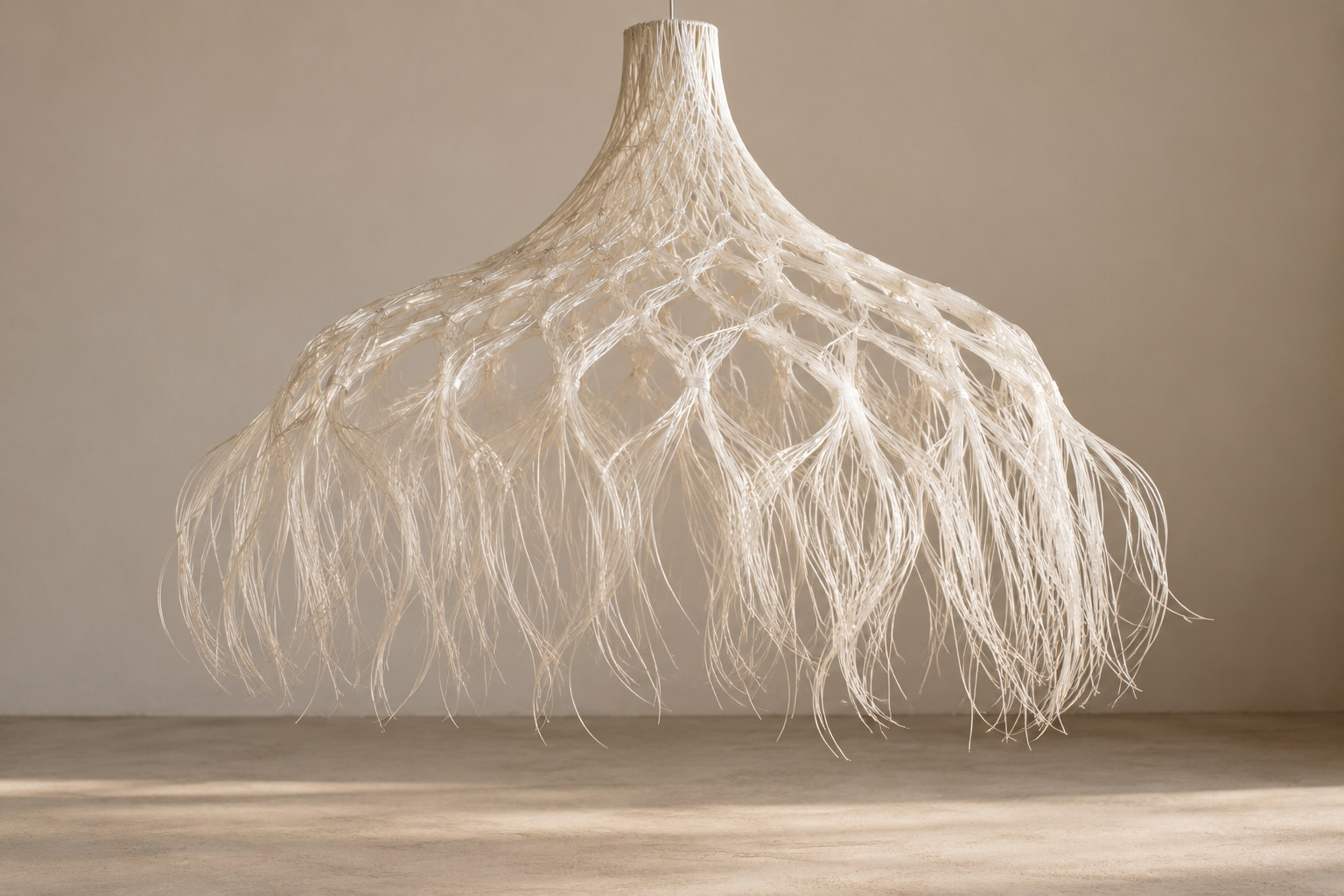
Boijmans identifies Bobbin Lace Lamp V 2350(KN&V) as a 2002 work by Niels van Eijk. It records fibreglass, a diameter of 38.5 centimetres and acquisition in the same year.1
Those compact facts introduce an unusual meeting of categories. The title names a textile-making technique, while the material entry names glass fibre. The object invites a reader to ask how a line associated with textile work might help organise something encountered as a lamp.
That question is more specific than simply applying a lace-like ornament to an existing shade. It concerns the relationship between the arrangement of strands and the spatial form they can describe.
Lace becomes a way to draw in space
A V&A/Wellcome exhibition-label entry dated 2003 offers a related account. It names Niels van Eijk and Quasar Holland and describes optical glass fibres woven using bobbin-lace techniques, with the shade acting as a light source.2
In that account, the textile technique and the material’s behaviour belong to the same idea. An arrangement of lines defines a form while the chosen fibres give that arrangement another role in lighting.
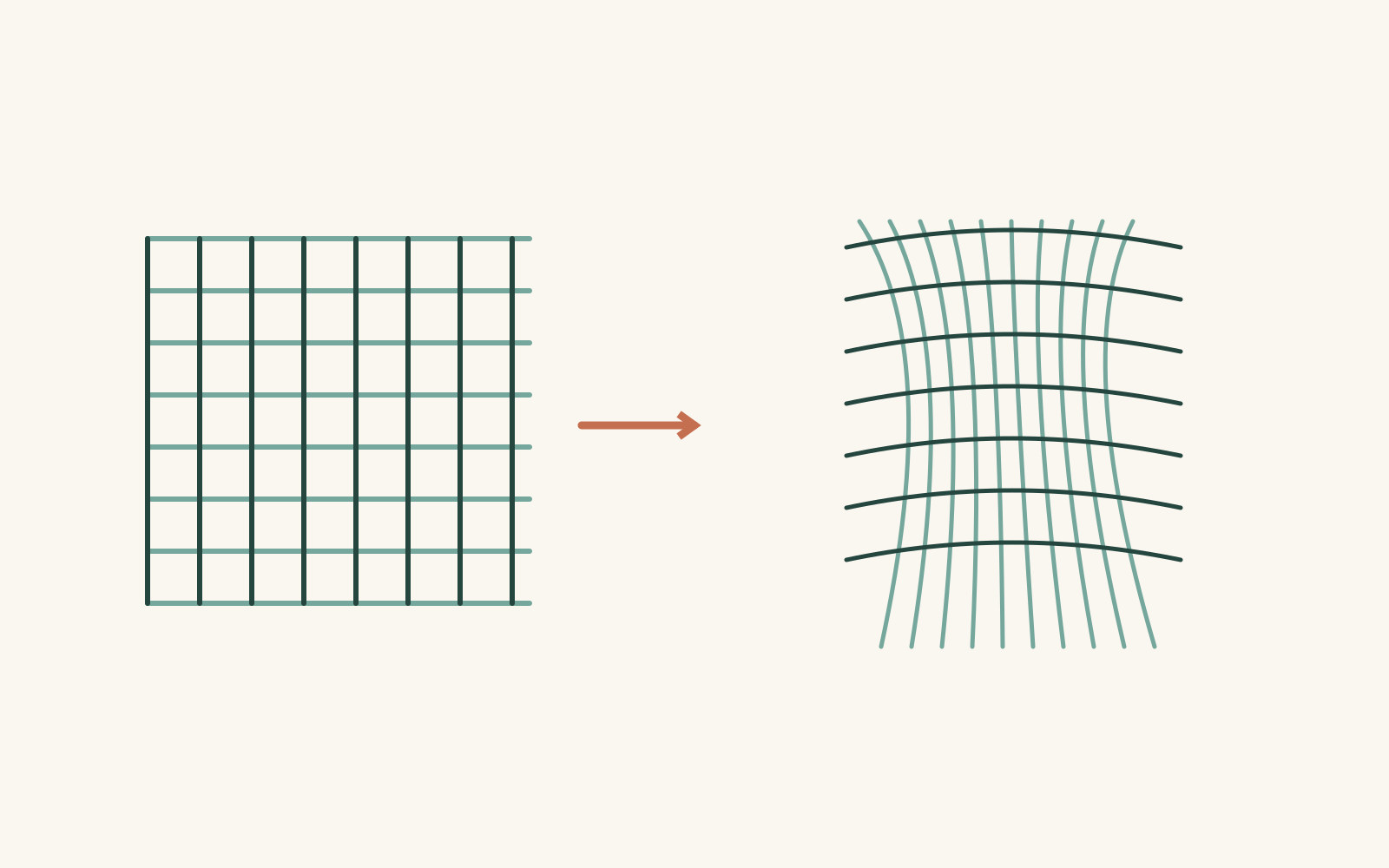
The pattern therefore has a spatial consequence. Crossings and openings let a viewer read a volume without treating its surface as an uninterrupted solid sheet. Attention can move between a strand, a crossing and the larger form that the network describes.
The 2003 entry supplies that explanation on its own stated terms. The 2002 museum record remains the anchor for the particular object’s identity and recorded material.
Looking at what a technique can carry
The two records give different kinds of access to the subject. One establishes a particular collection object. The other explains a related technical proposition through a named craft and a chosen material.12
Read together with their dates and roles intact, they offer a useful way to look at experimental design. A technique can travel because its way of organising material suggests a new kind of object.
For this story, the memorable connection is between line and volume. A textile idea supplies a vocabulary for a lamp, and glass fibre gives that vocabulary a different material presence.