The material gets another responsibility
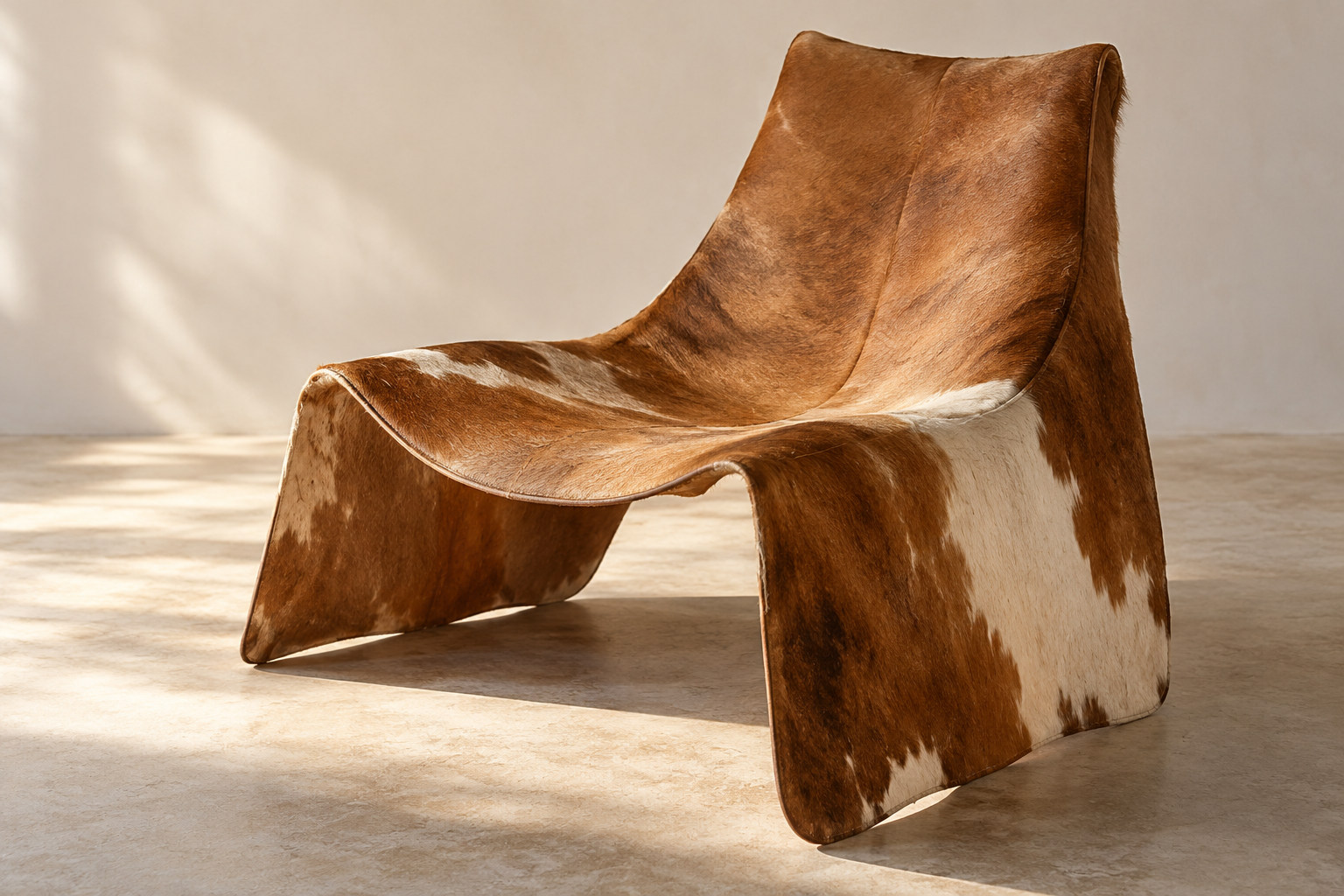
Cow Chair makes a clear point of entry into van Eijk’s work. Centraal Museum describes its 1997 unicum through untreated hide shaped over a mould, with the hide retaining the chair’s form without a separate frame.1
The material is familiar enough for the change in role to be understood. Something associated with covering furniture is asked to become the chair’s shape-holding material.
A technique can travel with a different material
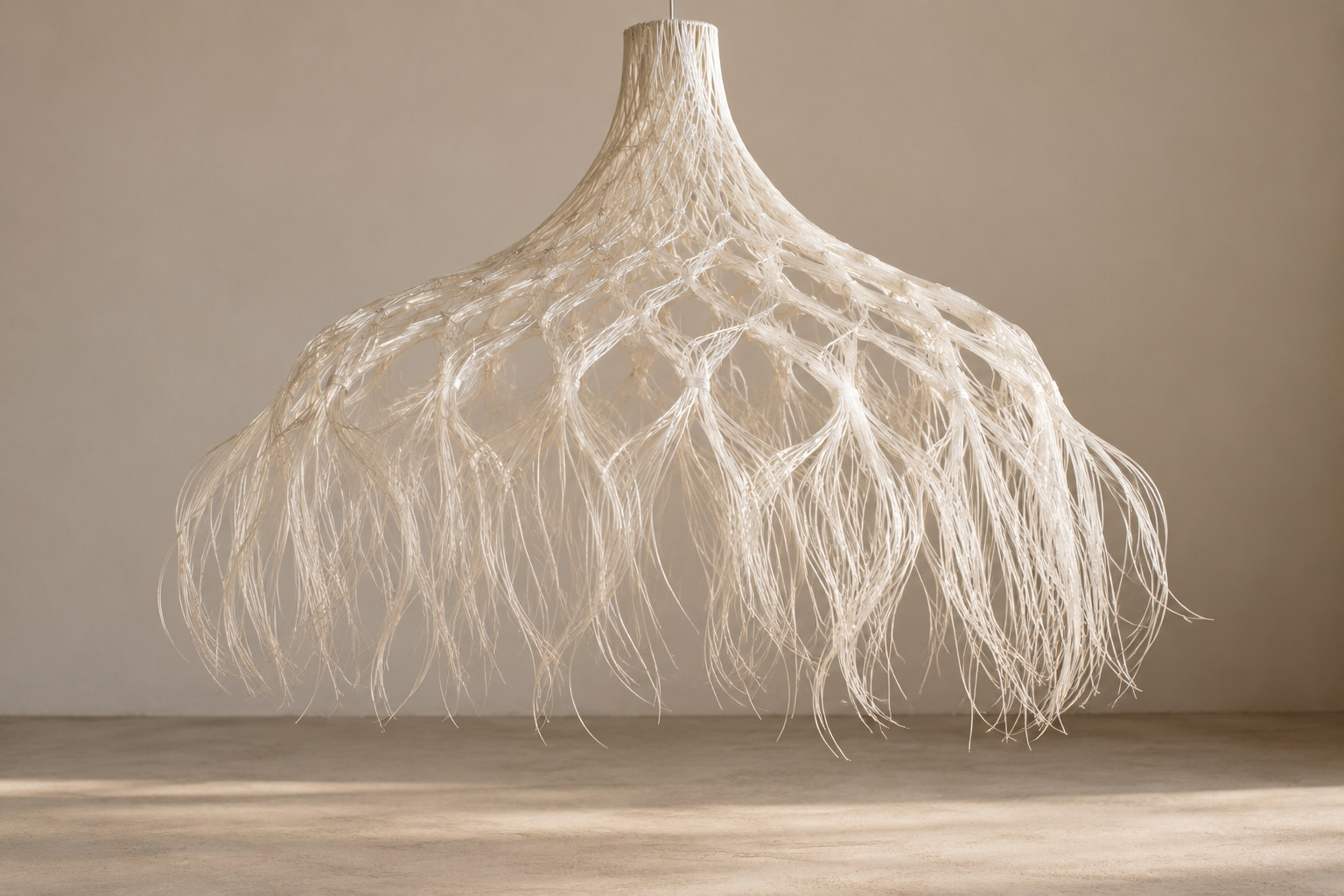
Boijmans’s Bobbin Lace Lamp V 2350(KN&V), created and acquired in 2002, introduces another meeting of categories. The museum records fibreglass and individually credits van Eijk.2
A V&A/Wellcome label dated 2003 describes optical glass fibres worked with bobbin-lace techniques and names Niels van Eijk and Quasar Holland.3
The connection between the works is a way of asking questions. A material or a technique arrives with existing associations, then takes on another role within an object. Hide can make the viewer reconsider a covering; a textile technique can make the viewer reconsider how a lamp’s lines are organised.
That gives the work a recognisable source of curiosity without requiring the objects to share one outline or one fabrication method.
Material knowledge in a shared studio
The studio shared with Miriam van der Lubbe gives this material curiosity a working context. Its own account describes van Eijk’s mechanical-engineering training and his contribution through material knowledge and craft.4
That account also places making among partners, producers and other makers. Material knowledge can enter a conversation between people who bring different ways of developing an idea.4
The early objects remain memorable within that wider setting. Hide or a textile technique is given another responsibility, and the resulting question can continue into the shared work of making.