Artefact story

Cow Chair: when the covering becomes the chair

Hide is easy to associate with a chair’s covering. Cow Chair asks it to do a different job: retain the chair’s form without a separate frame underneath. Niels van Eijk makes the familiar material interesting by changing the responsibility it carries.

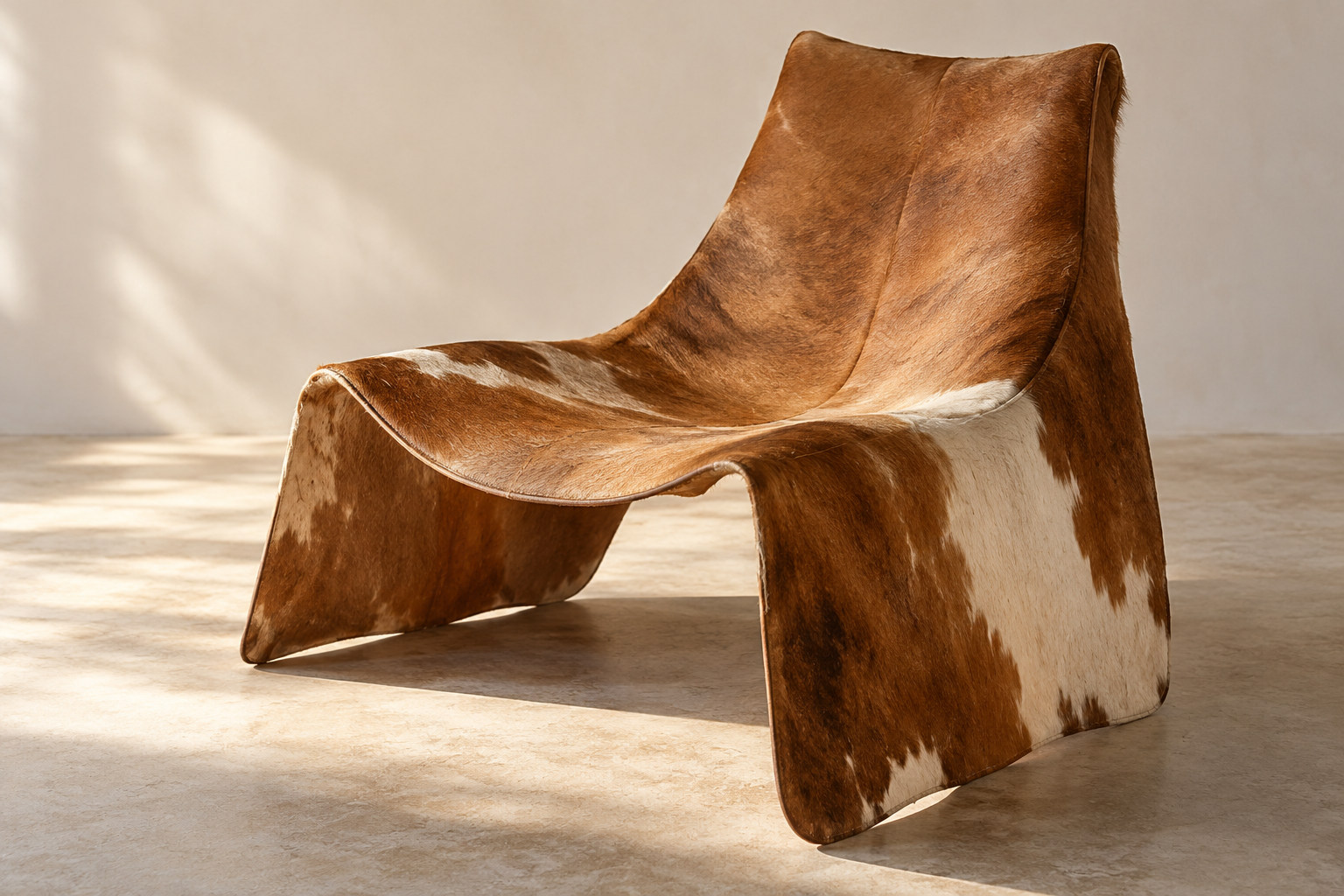
A brown-and-white hide-like shell curves into seat, back and descending supports without a separate visible frame.
PatinaHall editorial reconstruction. It is not a documentary photograph. This interpretation of Cow Chair lets the covering appear to describe the chair’s form itself. The image illustrates that material role rather than the condition, exact mould or construction of Centraal Museum’s unicum.
On this page
Key facts & takeaways

At a glance

Subject
Cow Chair unicum, Centraal Museum 28635
Entry
Artefact story
Last reviewed
26 October 2026
Object dated
1997documented

Three things to remember

  1. The hide takes on a shape-holding role in the museum’s account.
  2. Centraal Museum 28635 and Boijmans V 1977 are different recorded objects.
  3. The early work is individually credited to Niels van Eijk.

The covering has to keep its shape

Cow Chair puts a familiar material into an unfamiliar structural role. Instead of placing hide over a separately visible frame, the object makes the shaped hide itself the central furniture proposition.

Centraal Museum explains its unicum 28635 through untreated hide formed over a mould and dried into shape. The account explicitly describes the absence of a separate frame, epoxy and preservative.1

That description changes how the chair is read. A surface associated with covering becomes the material asked to retain the outline of a seat. The ordinary distinction between what is covered and what does the covering becomes a useful question to bring to the object.

A familiar material changes responsibility

The material keeps enough of its identity to make the change understandable. A reader can recognise hide as hide while imagining a role usually assigned to a supporting structure.

This is where the design’s surprise lives. The chair’s interest does not depend only on an unusual silhouette. It also depends on knowing what the visible material is being asked to do.

The museum credits Niels van Eijk individually and dates this particular object to 1997, with acquisition in 2000. Those facts keep the material experiment attached to a precise early work.1

An object like this can alter a wider way of looking. A covering, a support and a shape are roles that furniture gives to materials. Here two of those roles approach one another closely enough to make their usual separation noticeable.
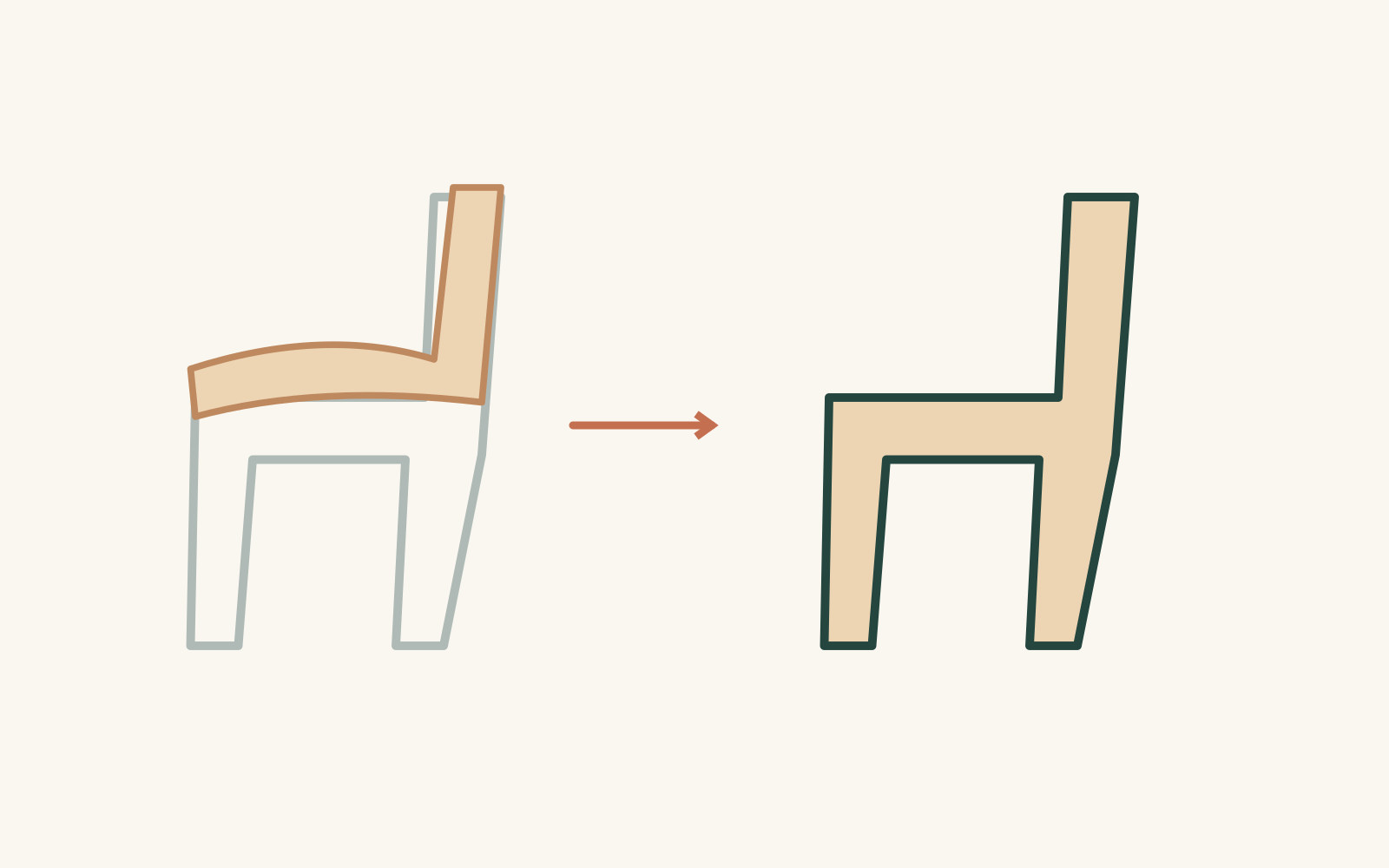
A grey frame and warm covering are shown beside a chair-like shape made entirely warm.
The comparison changes the visible role assigned to a covering. The single-colour form explains an idea of shape-holding hide; it is not a manufacturing sequence or a reconstruction of a museum mould. Original PatinaHall schematic, not to scale.

Two museum records, two object histories

Boijmans records another Cow Chair as V 1977(KN&V), created in 1996 and acquired in 1997. It credits van Eijk and identifies Droog as distributor.2

Keeping the records separate lets each chair retain its own chronology. The earlier date in one collection does not rewrite the identity of the other object, and a distributor’s role does not become a physical maker credit.

The distinction also preserves what makes the Centraal Museum unicum useful to look at: a specific piece of hide has been given a chair’s shape and a new material responsibility. The covering has become the thing the eye must consider as furniture.

Research notesEvidence, connections and limits

The mould-and-drying account belongs to Centraal Museum’s 1997 unicum 28635. Its dates, dimensions and provenance remain separate from Boijmans V 1977, created 1996. The description supplies no home-making, preservation or tested durability claim.

Evidence map

Connected subjects and evidence

Reviewed facts

  • Object dated 1997documented

    Centraal Museum dates unicum 28635 to 1997 and records acquisition 2000; BoijmansV 1977 is dated 1996/acquired 1997.

    Reviewed 26 October 2026 by PatinaHall editorial.
    • Source 12023 explanatory text; Maker, Dating 1997, Object number and acquisition 2000
    • Source 2Specifications 84–101: creation 1996, acquisition 1997, designer/distributor

Reviewed connections

  • Cow Chair unicum, Centraal Museum 28635attributed toNiels van Eijkattributed

    Centraal Museum individually credits Niels van Eijk for unicum 28635. The separate Boijmans 1996 specimen is not the same physical chair.

    Reviewed 26 October 2026 by PatinaHall editorial.
    • Source 12023 explanatory text; Maker, Dating 1997, Object number and acquisition 2000
    • Source 2Specifications 84–101: creation 1996, acquisition 1997, designer/distributor
  • Cow Chair unicum, Centraal Museum 28635uses materialShaped untreated hide in Cow Chair 28635documented

    Centraal Museum describes untreated hide shaped over a mould without a separate frame, epoxy or preservative. This exact account is not a DIY or durability claim.

    Reviewed 26 October 2026 by PatinaHall editorial.
    • Source 12023 explanatory text; Maker, Dating 1997, Object number and acquisition 2000

Research trail

Sources and further reading

  1. Cow chair(unicum), object 28635Centraal Museum UtrechtAccessed 26 October 2026
  2. Cow Chair, V 1977(KN&V)Museum Boijmans Van BeuningenAccessed 26 October 2026

Last reviewed 26 October 2026. Found an error or a stronger primary source? Contact PatinaHall.