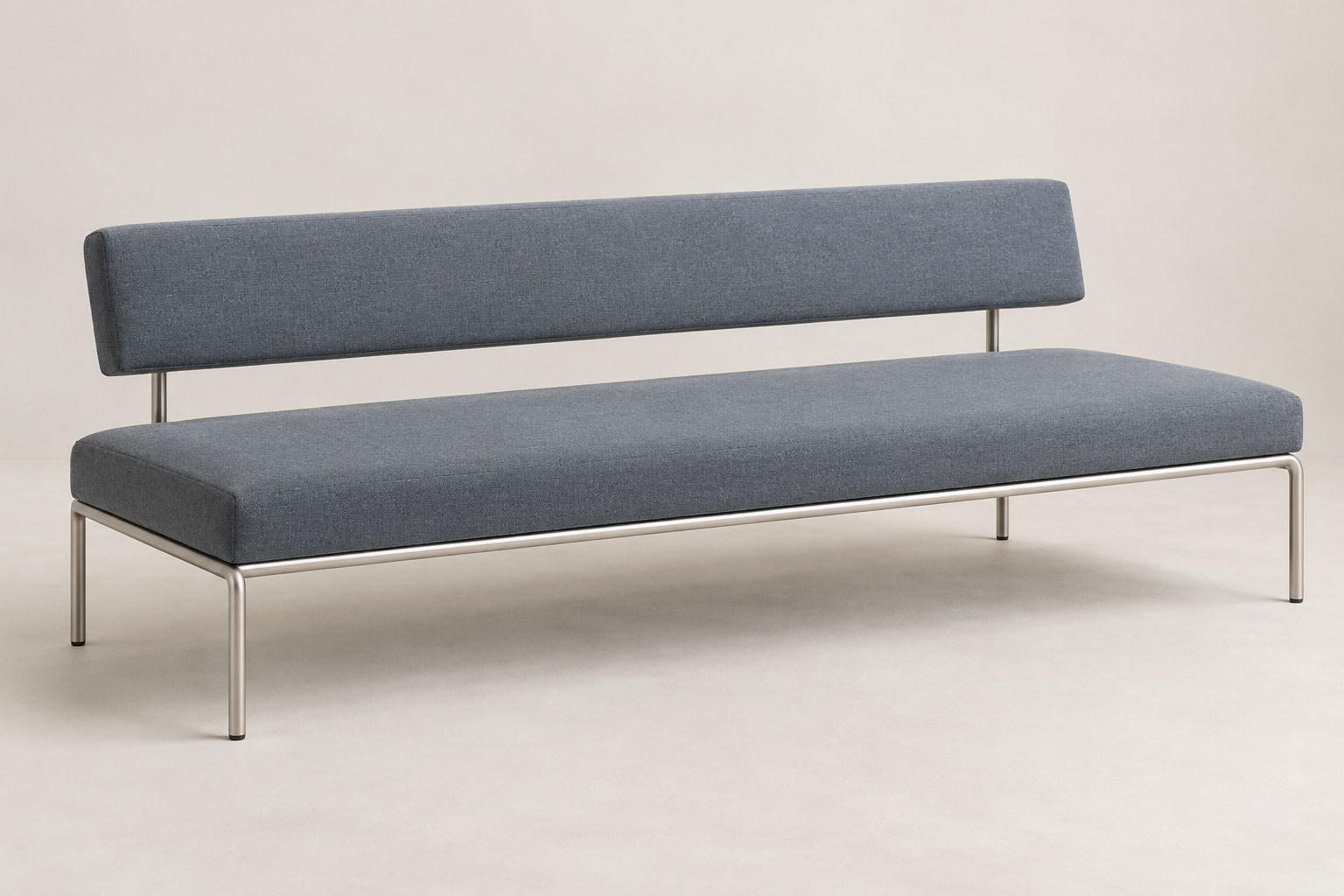
A sofa with another position
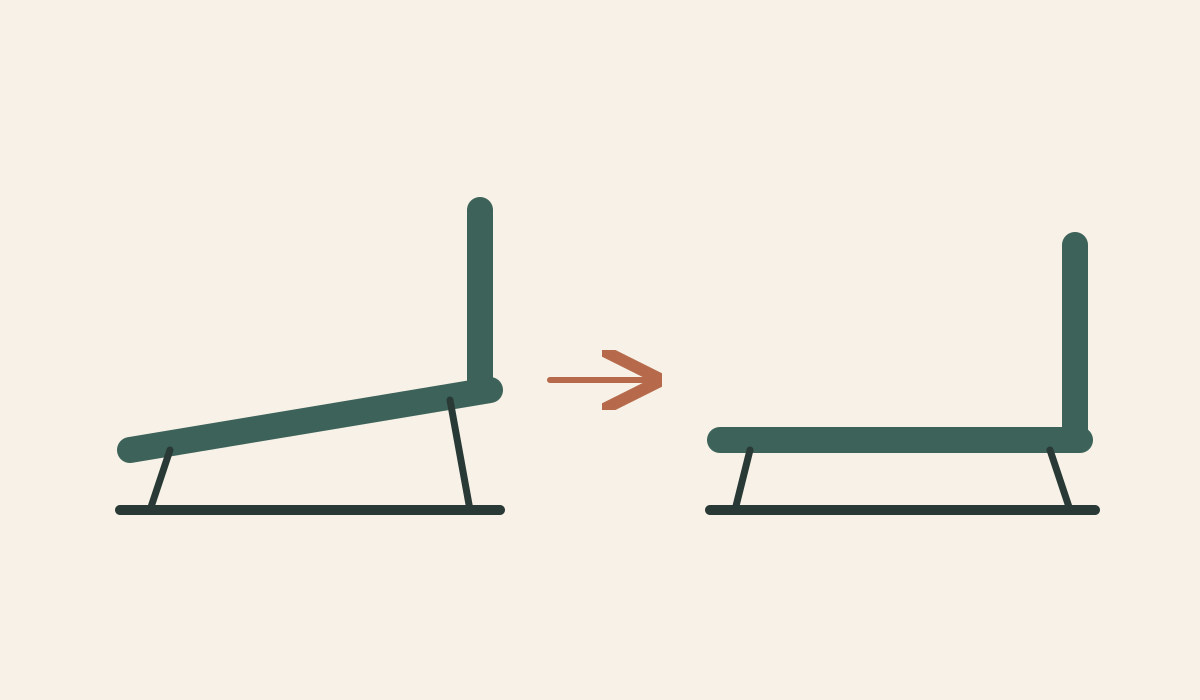
BR 02 keeps its second purpose inside an unusually clear outline. A long seat, a separate back and a slender metal support are enough to describe the sofa. A simple operation changes it into a single bed. Spectrum dates Martin Visser's design to 1960 and still explains the furniture through this change of use.1
The empty space matters. You can see beneath the seat and distinguish the back from the surface carrying the sitter. The sofa occupies the room without presenting a solid upholstered block. Its alternate use belongs to those recognisable parts, rather than to the visual suggestion of a hidden bedroom suite.
The frame and the covering
Spectrum describes a round tubular frame, offered in different finishes, and separately upholstered elements. It also explains why the covering is an active choice: an elastic fabric can recover differently from leather. The same outline does not make every upholstery material behave alike. 1
Look along the seat's front edge, then at the narrower back. These are two different surfaces meeting two different parts of the body. Their separation helps the eye follow the arrangement before anyone moves the furniture. The design's apparent ease comes partly from making those relationships readable.
An old sofa can contain a newer part
Centraal Museum records its BR02 with an armrest separately dated to the 1990s. The sofa itself is dated 1958–1960. One museum object therefore contains more than one moment in the design's life.2
This is a useful way to understand furniture that stays in use. The identity of a model can persist while a covering, accessory or component changes. The museum's record preserves that layered history instead of making every part share one convenient date. It also keeps the particular sofa distinct from the general model introduced in a manufacturer’s catalogue.
Making room for another life
In 2020 Centraal Museum marked the design's anniversary with an exhibition about Visser and responses by other designers. Its account describes the sofa's uninterrupted production up to that point and places it within his long relationship with Spectrum.3
The capacity for renewal is also physical. Spectrum explains that the separate elements can be reupholstered, with the interior and suspension renewed when necessary. That does not promise an effortless repair for every old example. It does show why the organisation of a sofa matters beyond the day it is bought.1
BR 02 offers two useful kinds of room: a place for a sleeper and a place for future work on the furniture itself.