The network does the work
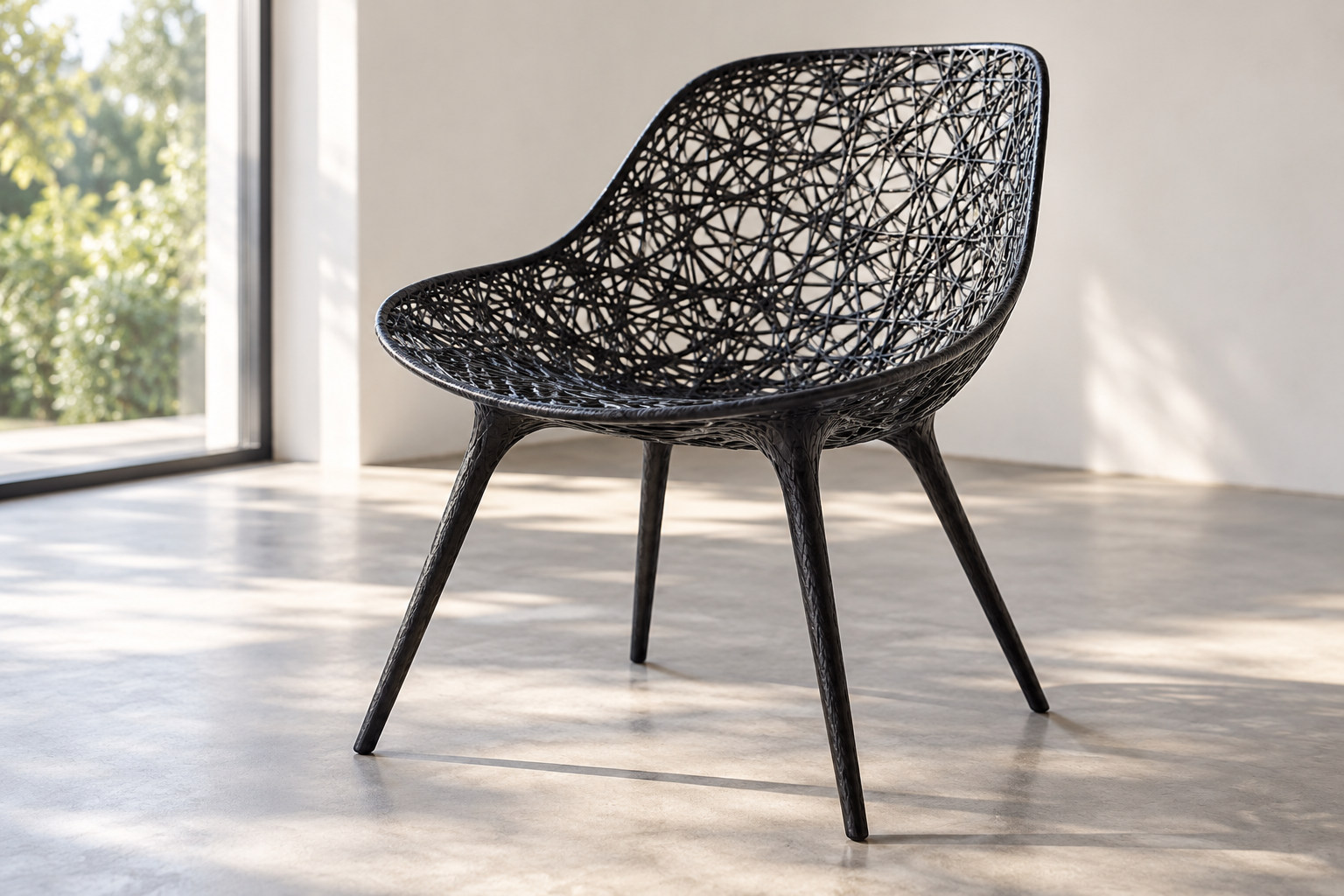
At a distance, Carbon Chair can resemble an outline filled with loose scribbles. Move closer and the scribbles become the point. MoMA credits Marcel Wanders and Bertjan Pot jointly for the 2004 design and identifies carbon fibre and epoxy as its materials.1 The visible network belongs to the supporting structure, rather than being decoration stretched over a hidden metal chair.
That changes how the empty spaces read. The openings reveal the arrangement of the fibres around them. You can see through the object while still following the surface that makes a seat and back.
Apparent randomness has an arrangement
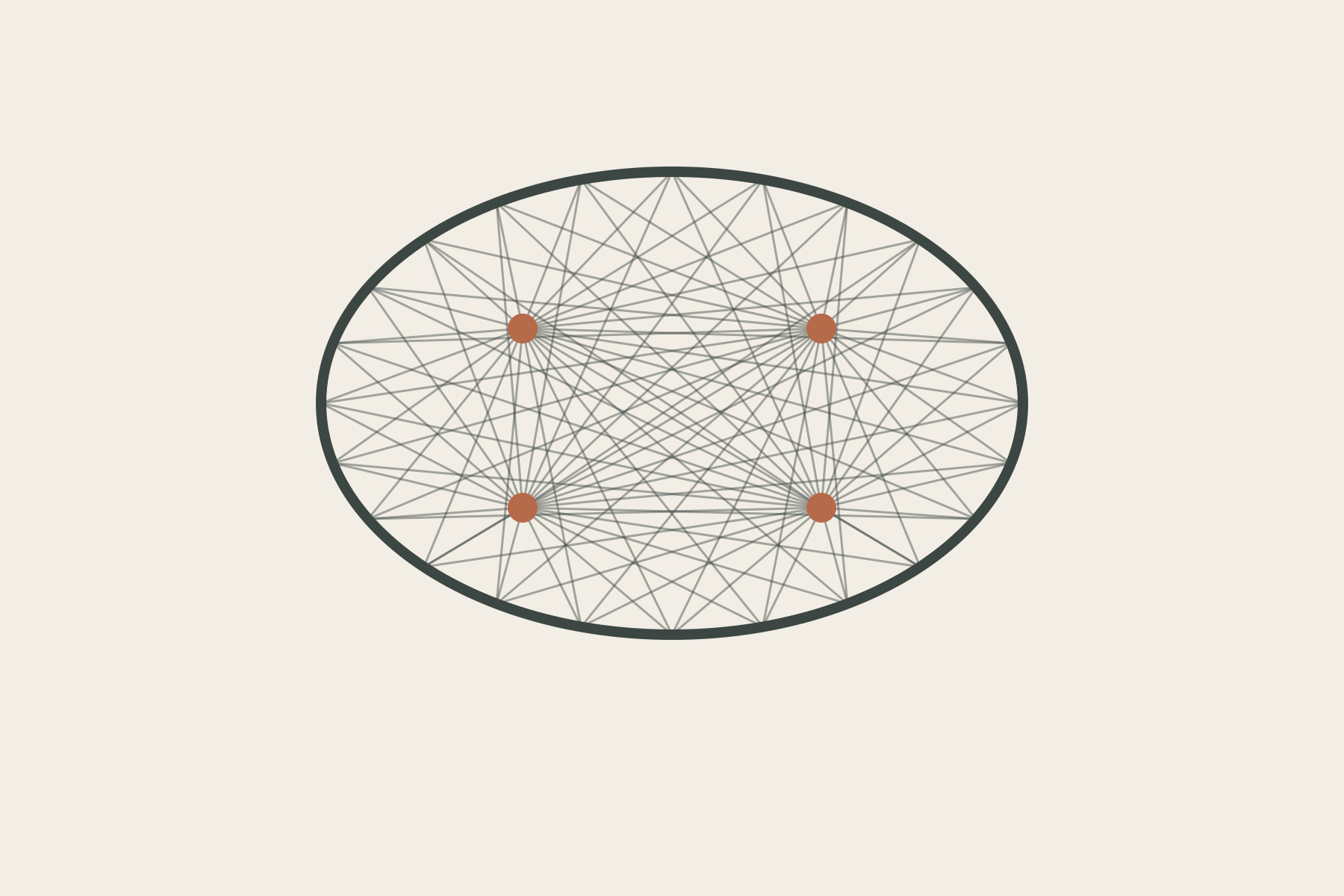
Pot’s studio account describes hand-coiling and explicitly says there is no metal frame. It also explains that the apparently random seat pattern connects points on the rim with the junctions between seat and base.2 What looks casual therefore has a deliberate organisation.
This is the detail worth carrying away. A pattern can appear lively without being arbitrary. The fibres need not form the regular squares of a familiar woven seat to have a structural role. Looking along the rim and towards the base lets the eye find relationships within the tangle. The chair makes an unfamiliar material easier to approach by leaving its arrangement visible.
An experiment becomes furniture
Moooi’s product record supplies the manufacturing connection that takes the design beyond the studio.3 The collaboration matters at both ends: two designers share the authorship, and production gives the experiment a repeatable furniture form.
The story does not require a claim that every chair should become carbon fibre. It offers another way of seeing a surface. Lines can do the job that a solid panel usually seems to do, and the spaces between those lines can become part of the object’s character. Carbon Chair leaves the room visible through the idea that carries it.