Design story

Beugel: two hoops make room for a sitter

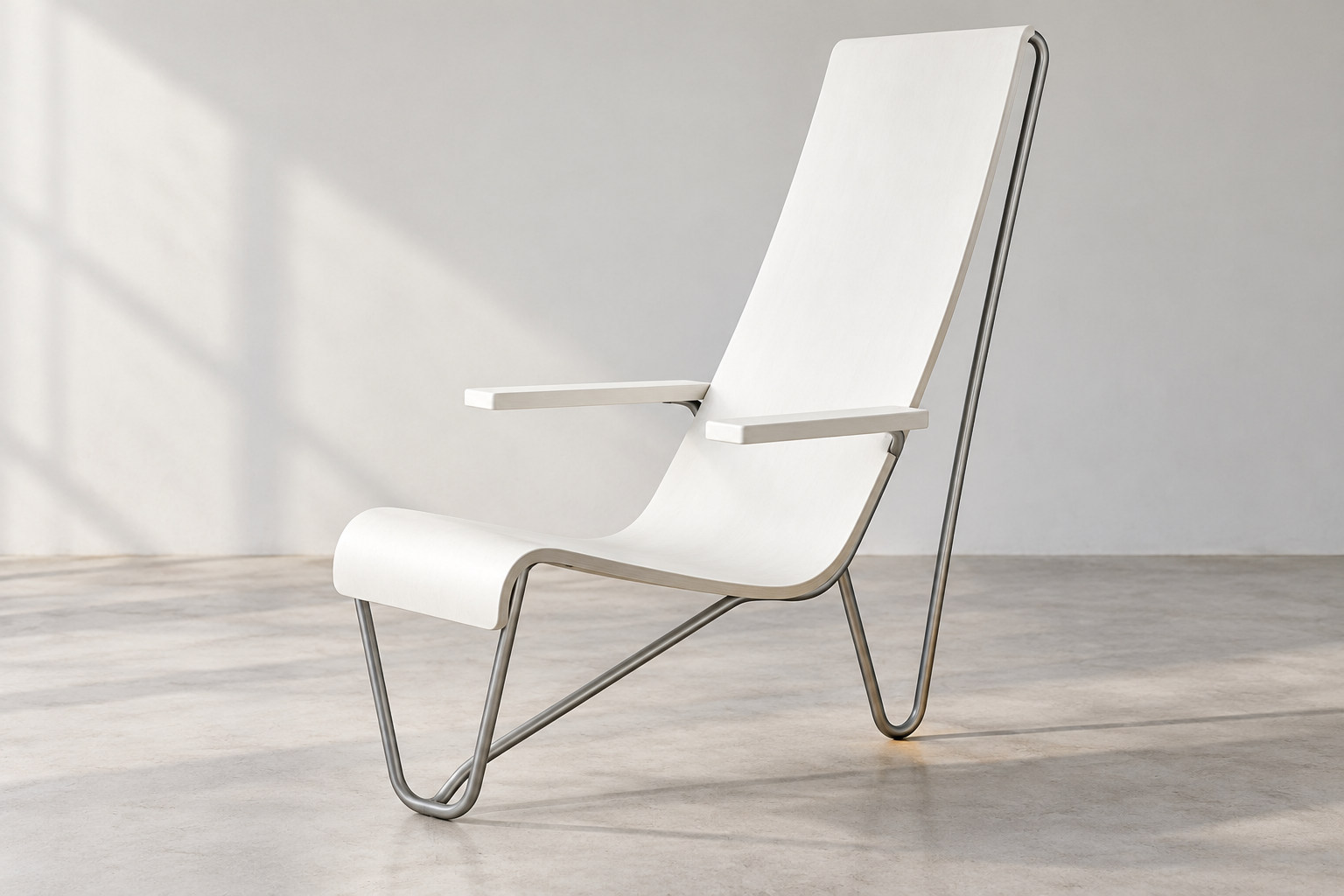
Beugel makes the support worth following. Curved steel and a thin seating surface enclose a place for the sitter while leaving much of the surrounding room visible.

An open armchair with paired curved tubular supports and a thin shaped wooden seat and back.
PatinaHall editorial reconstruction. It is not a documentary photograph. The image explains the contrast between hoop-like supports and a shaped seating surface. It is an interpretation of the Beugel family, not the exact Pompidou or Centraal Museum object.
On this page
Key facts & takeaways

At a glance

Subject
Beugel chair
Entry
Design story
Last reviewed
23 October 2026
Designed
1927documented

Three things to remember

  1. Museum records identify a Beugel design from 1927.
  2. Bent steel and shaped plywood do different jobs.
  3. Beugel includes different versions, not one universal size.

A support that comes back round

The name Beugel directs attention to the chair’s hoops. Instead of disappearing into the background, curved steel supports give Gerrit Rietveld’s seating an open outline. Centraal Museum records the Beugel design in 1927.1 The pleasure of looking at it comes from following a support around the sitter and back towards the floor.

The frame encloses space without filling it. Gaps remain useful parts of the appearance: light passes between the supports, and the seating surface reads as a comparatively thin layer held within them. The chair has a body, but it gives much of the room back.

Two materials, different sorts of curve

Centre Pompidou’s armchair record lists curved steel, moulded plywood and wooden armrests, and credits Gerard van de Groenekan as maker.2 These materials describe different tasks. Steel traces the supporting route; the plywood provides a broader surface for contact; the arms mark another place where the sitter meets the object.

A hoop and a shaped sheet need not follow the same curve. Their differences make the construction readable. Look first at the edge of the seat, then at the space beside it: one defines where the body goes, while the other allows the support to remain visible. Thinness becomes a relationship between parts, rather than an absence of material everywhere.
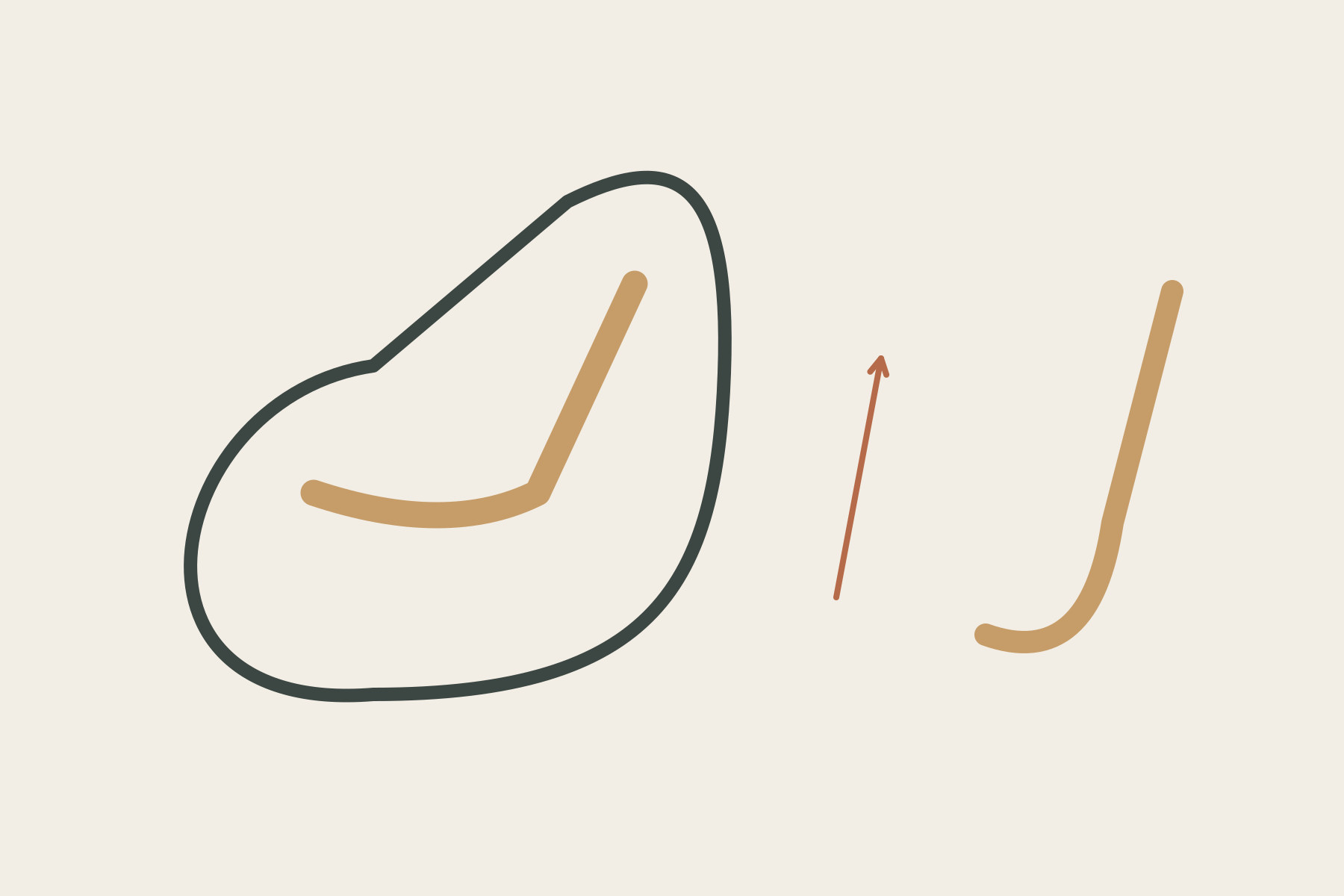
A large support loop surrounds a separate bent seating line, with a second isolated curve for comparison.
Original PatinaHall schematic, not to scale. A loop and a shaped seating line are separated conceptually to show their different jobs. Curves are simplified, and this is not the outline, size or construction of a specific museum chair.

A family worth looking at closely

The two museums document different Beugel examples. Their dimensions and detailed material descriptions belong to those records, rather than to every chair carrying the name. That variety makes the family more interesting: an organising idea can survive changes of version.

Once the hoops are noticed, a familiar question changes. Instead of asking why the chair has so little in it, ask how clearly it distributes what is there. A continuous outline, a shaped surface and open air each get a useful role.
Research notesEvidence, connections and limits

Centraal Museum and Pompidou document different Beugel examples. The Pompidou armchair credits Gerard van de Groenekan and its own materials and dimensions; these details are not assigned to every version.

Evidence map

Connected subjects and evidence

Reviewed facts

  • Designed 1927documented

    Centraal Museum and Pompidou document different Beugel examples. The Pompidou armchair credits Gerard van de Groenekan and its own materials and dimensions; these details are not assigned to every version.

    Reviewed 23 October 2026 by PatinaHall editorial.

Reviewed connections

  • Beugel chairdesigned byGerrit Rietvelddocumented

    The cited record explicitly identifies this designer for the repeatable design or coherent project family.

    Reviewed 23 October 2026 by PatinaHall editorial.
  • Beugel chairmanufactured byGerard van de Groenekandocumented

    This production relationship is scoped to the source record. Later manufacture, current specifications and the date of the original design remain distinct.

    Reviewed 23 October 2026 by PatinaHall editorial.

Research trail

Sources and further reading

  1. Beugelstoel, object 26632Centraal Museum UtrechtAccessed 23 October 2026
  2. Fauteuil Beugel, AM 1993-1-599Centre PompidouAccessed 23 October 2026

Last reviewed 23 October 2026. Found an error or a stronger primary source? Contact PatinaHall.