A familiar shape with unfamiliar substance
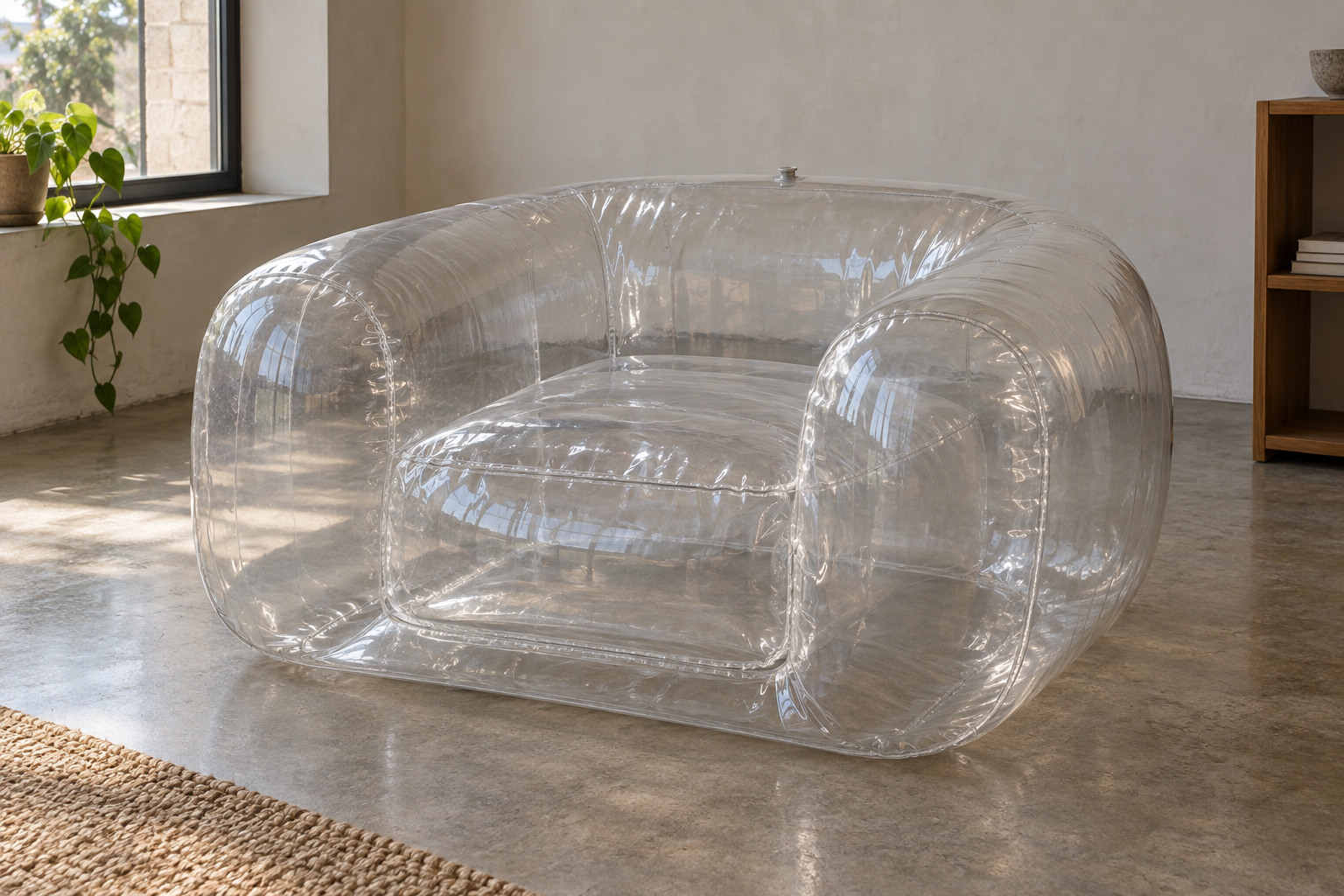
Blow remains recognisable as an armchair. It has a back, two arms and a place to sit. What changes is the material doing the work between those boundaries.
MoMA records the design as PVC, made by Zanotta in 1967. Without air, the material is pliant; inflated, it takes on a much more substantial form. The familiar outline helps make that transformation easy to understand.1
Transparency adds another surprise. We can see the room through the chair, yet the swollen surfaces occupy real space. The object appears both present and temporary, like something that might be packed away when the gathering is over.
The seams draw the chair
The envelope cannot simply become any shape it likes. Joined edges define the chambers and constrain their expansion. A seam is therefore part of the structure as well as a visible line.
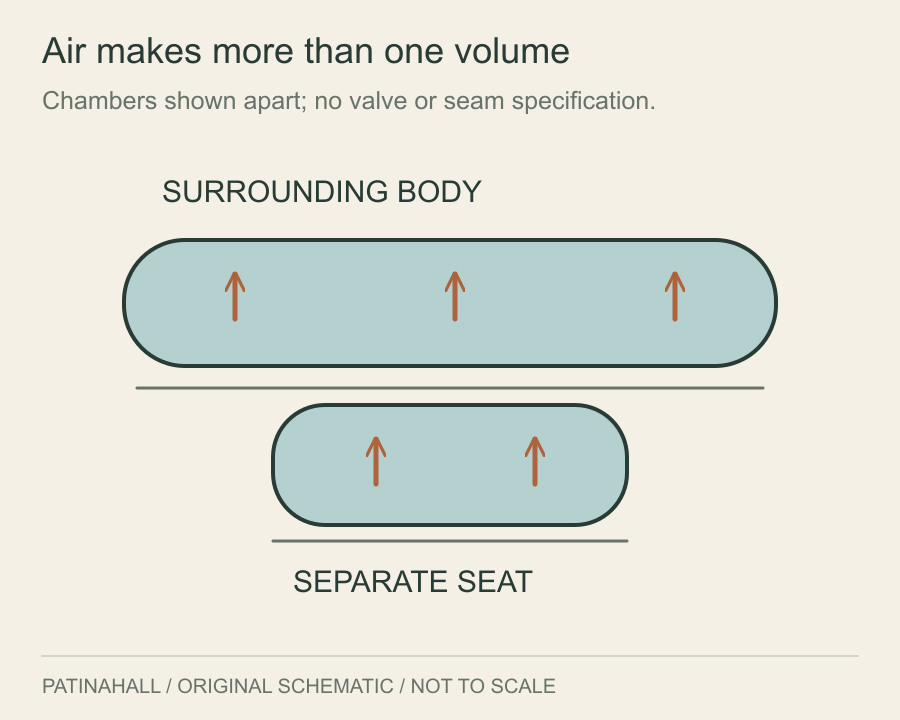
The V&A’s 1996 conservation study describes a valve in the surrounding body and a separate valve for the seat cushion. It also records supporting membranes around the seat arrangement. These details make the apparent simplicity more convincing: the chair contains distinct parts with distinct jobs.4
In a transparent object, such features are difficult to hide. They become part of its appearance. Instead of looking for a concealed timber frame, the eye follows the places where the flexible skin is joined and held.
Put the whole team back in the picture
Blow is associated with the studio of Jonathan De Pas, Donato D’Urbino and Paolo Lomazzi. Some familiar collection credits stop at those three names. LACMA’s record also identifies Carla Scolari; Zanotta’s own history credits the trio with Scolari.3
Keeping her name in the story is a simple improvement to the usual shorthand. A compact object label can make a collaborative design look more settled and complete than the record actually is.
Zanotta’s account also places Blow among further pneumatic experiments following its success at the 1968 furniture fair, including a transparent inflatable pavilion. The chair belonged to a larger curiosity about light, temporary structures.2
Air carries a different expectation
A heavy wooden armchair promises permanence before anyone sits in it. Blow begins a different conversation. Its valves and swollen transparent surfaces make the dependence on air obvious.
That does not make it immaterial. The PVC, seams and supporting membranes remain essential. They are the parts that allow pressure to become furniture rather than just an inflated bag.
Look at Blow with the air in mind and its playful appearance becomes technically interesting. The empty space inside is doing a job normally entrusted to solid material. The chair’s most abundant ingredient is also the one we cannot see.