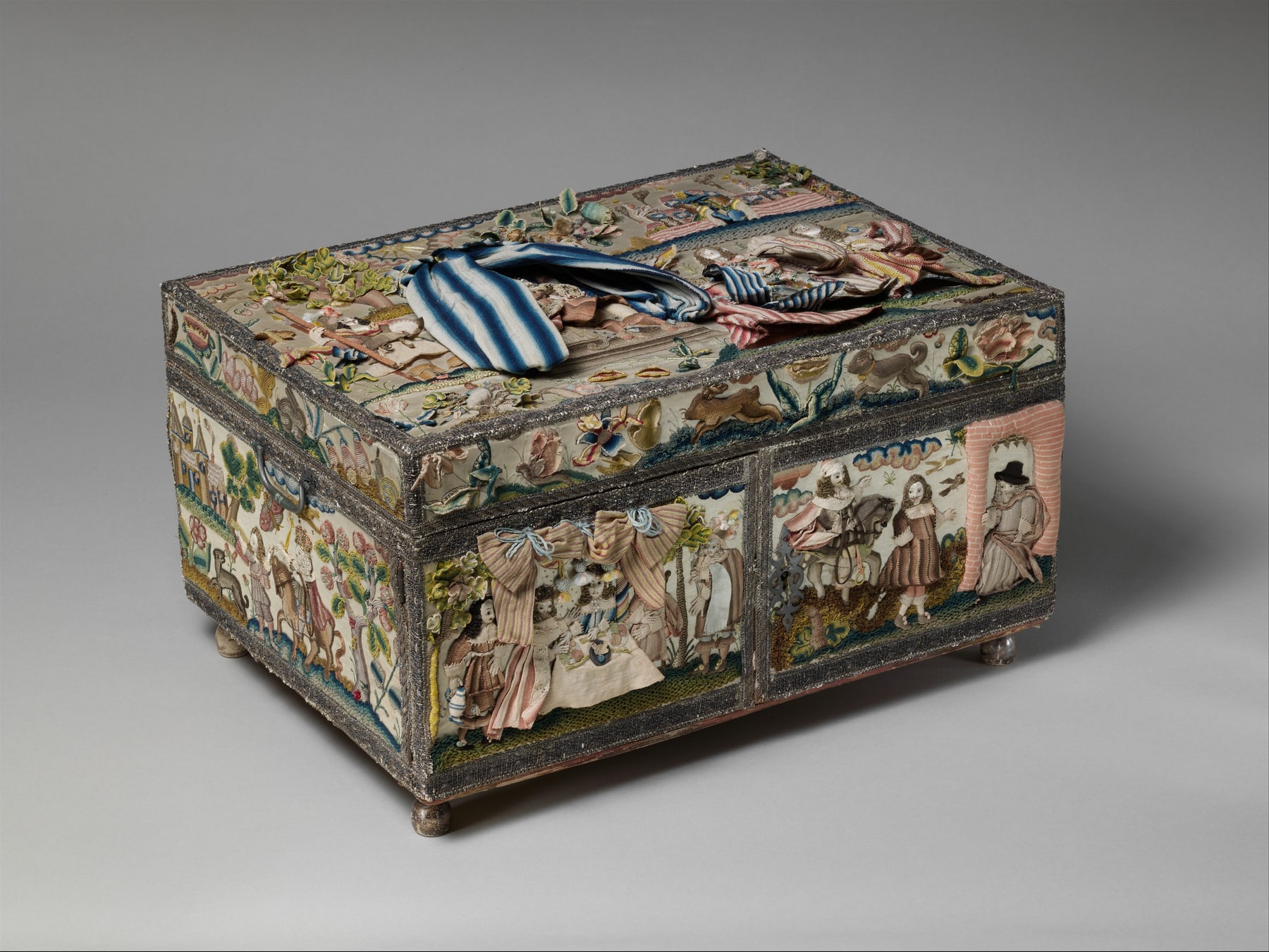
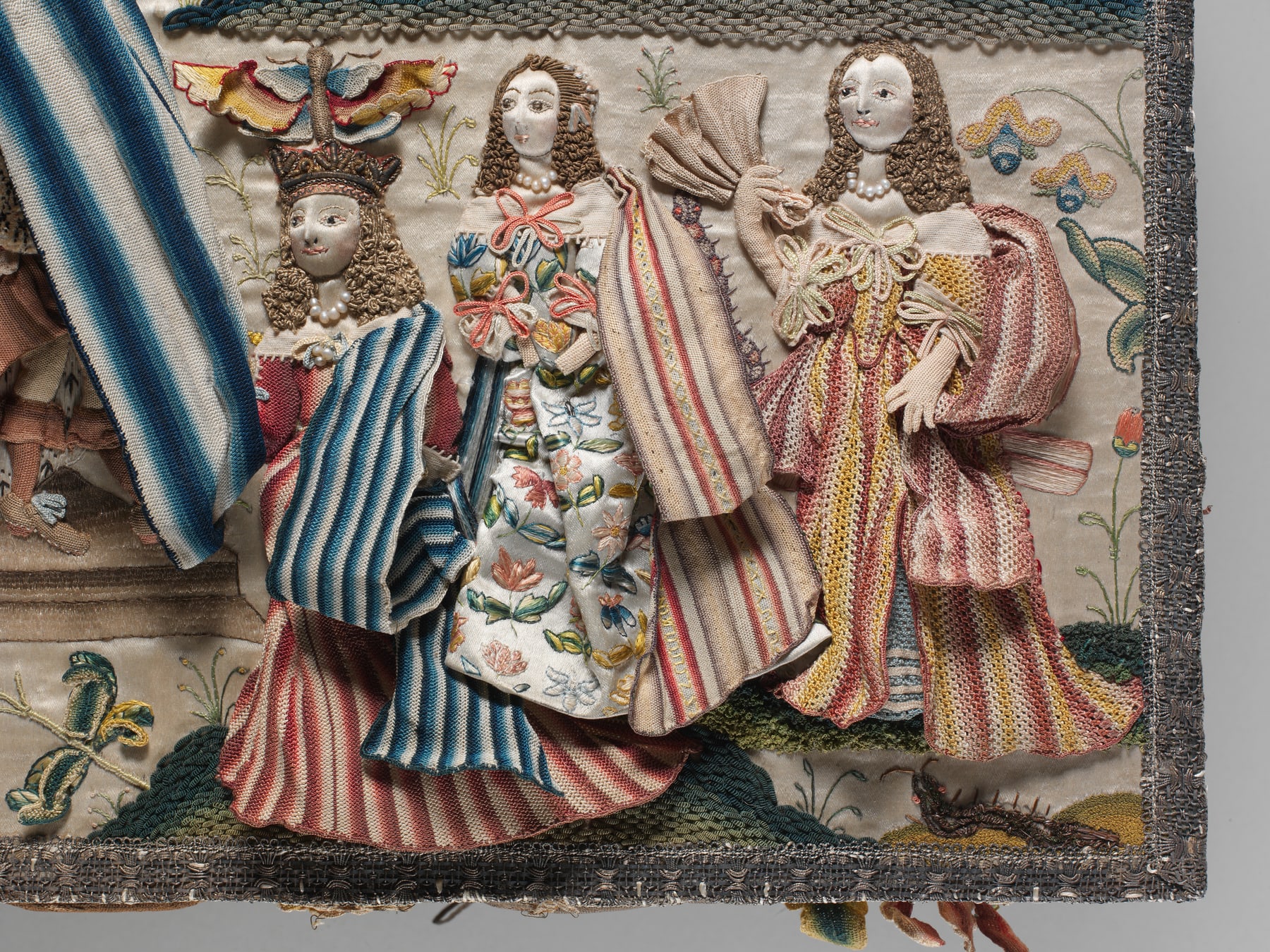
The lid presents a scene in relief
The figures do not simply lie flat on the lid. Raised textile work gives their clothing and surroundings a small physical presence, somewhere between a stitched picture and a shallow stage. The close photograph helps separate these built-up forms from the flatter ground behind them.
The Met identifies the scene as Esther before Ahasuerus and dates the cabinet to after 1665. Its material list extends beyond silk and wood to metal, pearls, mica, feathers and other components.1
Small materials make a crowded world
A cabinet this size asks for close attention. A distant view establishes a decorated box, but the lid contains changes of scale and texture that only emerge nearby. Figures, foliage and architectural details compete for a limited field.
The variety of materials gives the maker several ways to distinguish them. A raised passage can cast a shadow; a reflective element can catch the light; a flat stitched area can recede. The scene is assembled through differences in surface as well as through colour and outline.
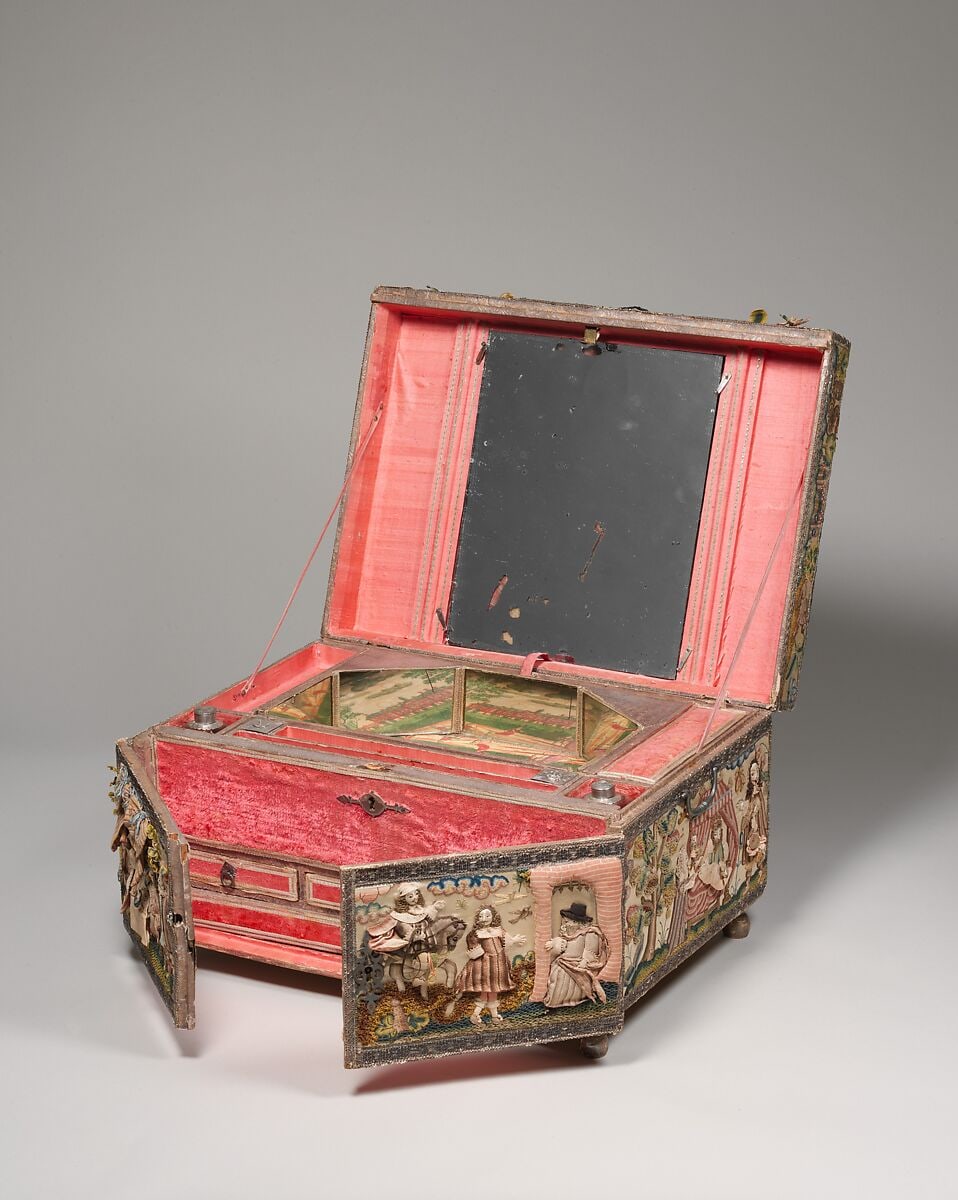
The inside has its own performance
The museum describes a writing tray, small drawers and an interior landscape reflected in angled mirrors. That arrangement gives the cabinet another visual effect after its decorated exterior has been opened.1
The distinction between the two kinds of looking is appealing. Outside, the stitches invite the eye to move across a surface. Inside, mirrors can make a small space appear to continue beyond its actual boundaries. The case gathers storage and an optical diversion within the same compact object.
Our photographs show the exterior work. The interior description comes from the museum record, so the lid detail should be read as evidence of embroidery, not as a view into the mirrored compartment.
An unnamed maker is still a maker
In a discussion of European decorative arts, curator Daniëlle Kisluk-Grosheide uses objects including this cabinet to address the work of women whose names are not preserved. The account asks readers to take such making seriously even when it falls outside a familiar professional workshop biography.2
That approach suits the object. We can recognise the coordination of materials, the planning of a scene and the relationship between case and interior without inventing a named young embroiderer.
The cabinet’s surviving richness makes the absence of a name conspicuous. Its many small decisions remain available to view, even when the person who made them cannot be introduced to us.