Design story

Birza Chair: thinking in one continuous sheet

Imagine beginning a chair with a sheet rather than a pile of wooden rails. The difficult question moves: instead of joining many members, the designer must make one surface turn into a place to sit and a way to reach the floor.

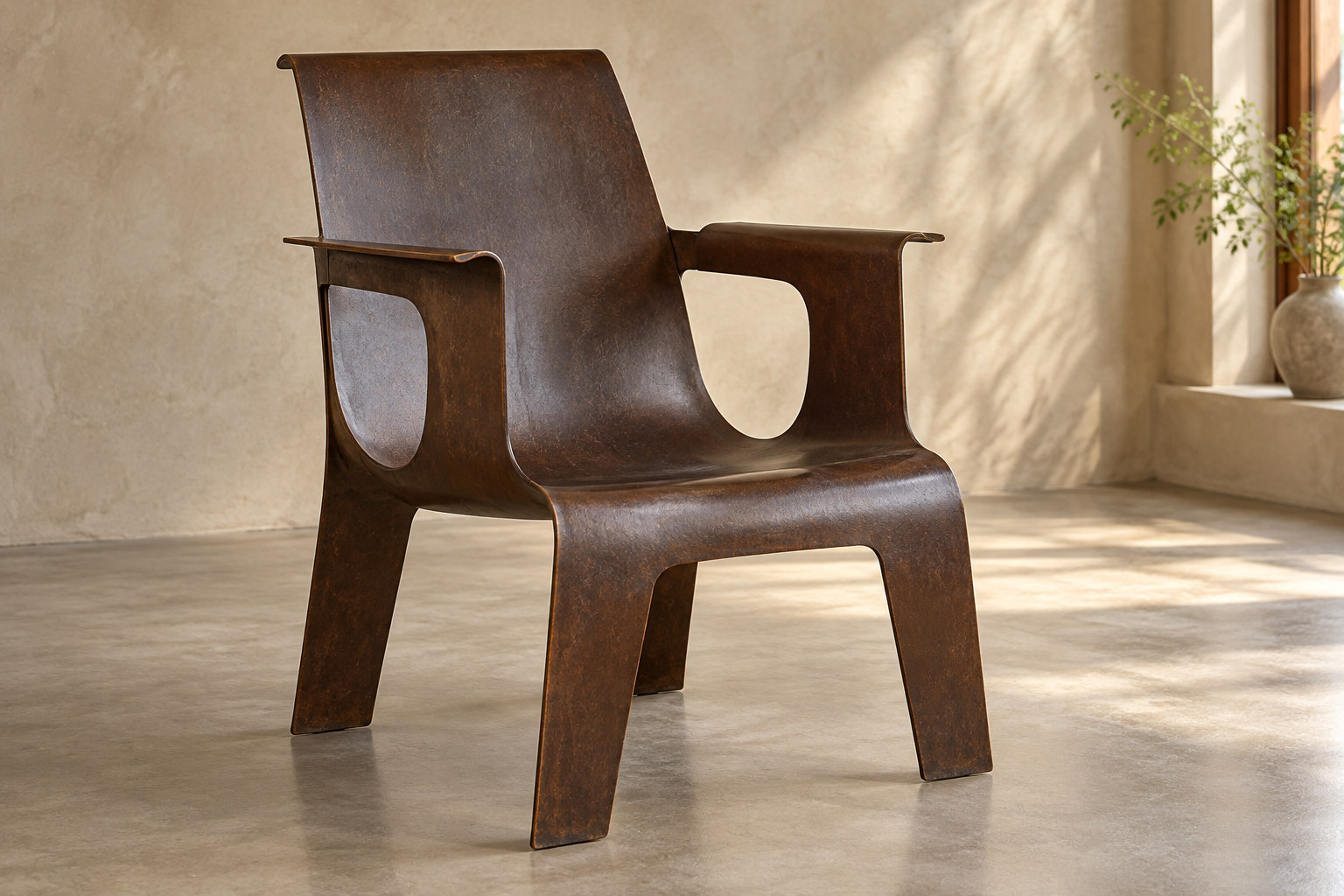
Interpretive dark brown fibre-sheet armchair with a curved seat and back, curled arm edges, open sides and broad tapering sheet supports.
PatinaHall editorial reconstruction. It is not a documentary photograph. A reconstruction of the formed-sheet idea. Curves, openings and broad supports show the different tasks a surface can take on; they do not document the exact forming process.
On this page
Key facts & takeaways

At a glance

Subject
Birza Chair
Entry
Design story
Last reviewed
23 October 2026
Designed
1927documented

Three things to remember

  1. The foundation records the Birza Chair design in 1927.
  2. Its account describes a chair made from a single piece of fibre.
  3. Centraal Museum 430 A 001 records a drawing of the design.

A different starting material

Rietveld’s familiar wooden furniture makes separate parts easy to notice. The Birza Chair starts a different conversation. The foundation dates it to 1927 and describes a chair made from a single piece of fibre.1

A continuous sheet makes the eye follow a surface through several jobs. A seat must turn towards a back; the body needs openings and support. Form is no longer simply the visible result of placing rails beside panels. The material’s bends become part of the argument.

A drawing is also a working question

Centraal Museum preserves a furniture drawing titled Stoel uit één stuk (Birza stoel), catalogued to 1927. Its medium is ink and pencil on transparent material. The small archival object records the thinking about a chair, rather than being a miniature description of a production line.2

That difference is useful. A drawing can carry an ambitious proposal even while the practical work of shaping and retaining the form remains demanding. The attraction lies in seeing a familiar object approached from another direction.
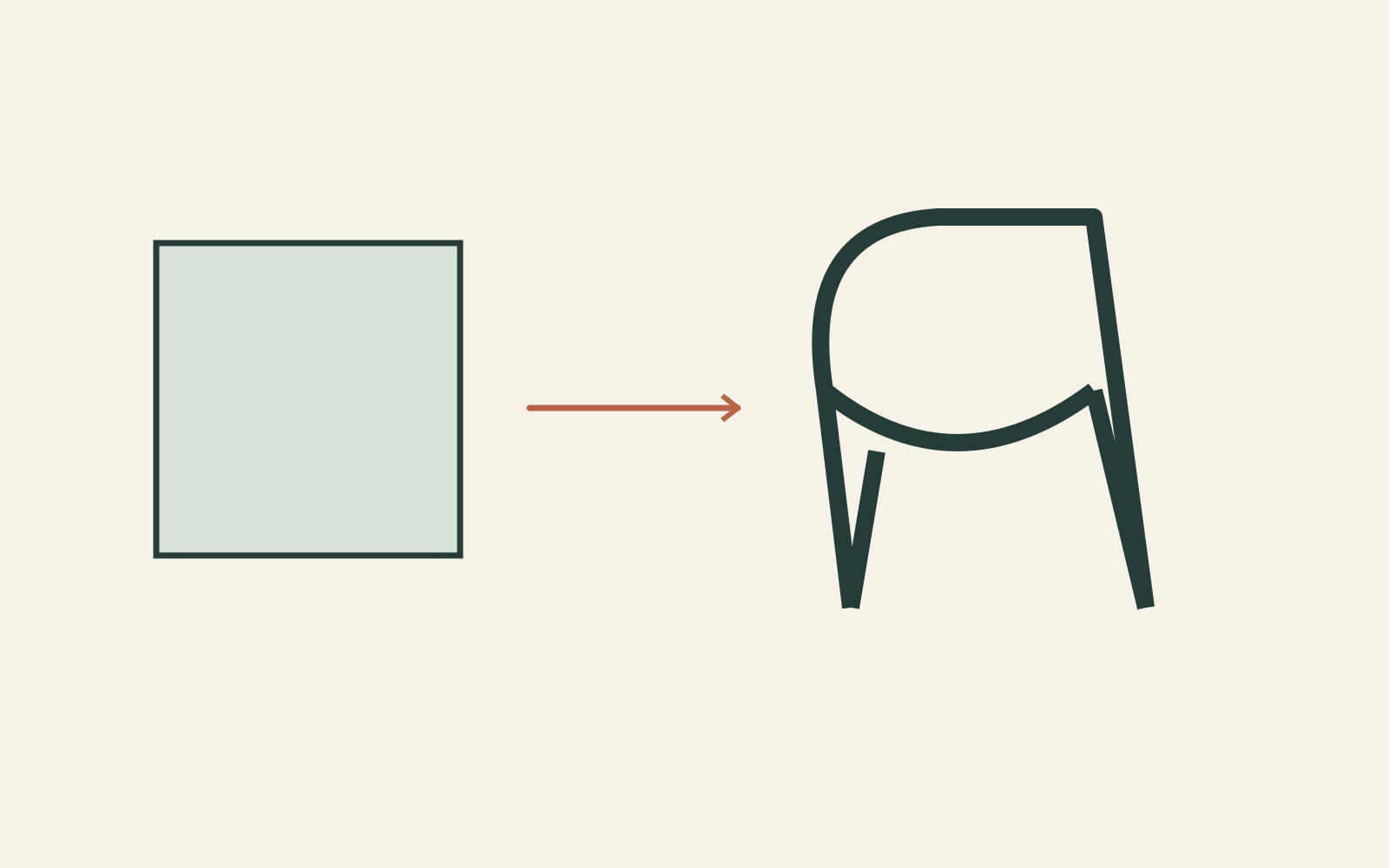
A pale rectangular sheet is linked to an abstract curved chair-like outline, showing a change from flat material to spatial form.
Original PatinaHall schematic, not to scale. A flat field becomes a sequence of curved supporting and contact surfaces. The drawing explains the change of design question from assembling members to shaping a sheet; it is not a cutting pattern or a forming sequence.

An experiment that belongs to a longer search

The Louis Kalff Instituut places Rietveld’s research into one-piece chairs within his broader interest in materials and industrial production. It also quotes a 1958 Goed Wonen account describing repeated attempts, including outcomes that were unstable or uncomfortable.3

The Birza idea becomes more interesting in that company. Ingenuity includes the decision to keep investigating. A continuous surface offers a fresh question, without making the answer automatic.
Research notesEvidence, connections and limits

The foundation dates the design to 1927 and describes a single piece of fibre. Centraal Museum 430 A 001 is an ink-and-pencil furniture drawing, not a chair or evidence of a production series.

Evidence map

Connected subjects and evidence

Reviewed facts

  • Designed 1927documented

    The foundation dates the design to 1927 and describes a single piece of fibre. Centraal Museum 430 A 001 is an ink-and-pencil furniture drawing, not a chair or evidence of a production series.

    Reviewed 23 October 2026 by PatinaHall editorial.
    • Source 1Schröder Small Table, 1923; Birza Chair, 1927

Reviewed connections

  • Birza Chairdesigned byGerrit Rietvelddocumented

    The cited primary or institutional record identifies this designer for the repeatable model or coherent project family. A design credit does not identify the manufacture of every example.

    Reviewed 23 October 2026 by PatinaHall editorial.
    • Source 1Schröder Small Table, 1923; Birza Chair, 1927
  • Birza Chairuses materialFibre sheet recorded for the Birza Chairdocumented

    The foundation dates the design to 1927 and describes a single piece of fibre. Centraal Museum 430 A 001 is an ink-and-pencil furniture drawing, not a chair or evidence of a production series.

    Reviewed 23 October 2026 by PatinaHall editorial.
    • Source 1Schröder Small Table, 1923; Birza Chair, 1927

Research trail

Sources and further reading

  1. Furniture: Schröder Small Table and Birza ChairRietveld StichtingAccessed 23 October 2026
  2. Stoel uit één stuk (Birza stoel), drawing 430 A 001Centraal Museum UtrechtAccessed 23 October 2026
  3. Gerrit Rietveld: research into one-piece chairsLouis Kalff InstituutAccessed 23 October 2026

Last reviewed 23 October 2026. Found an error or a stronger primary source? Contact PatinaHall.