A chair with a process inside its appearance
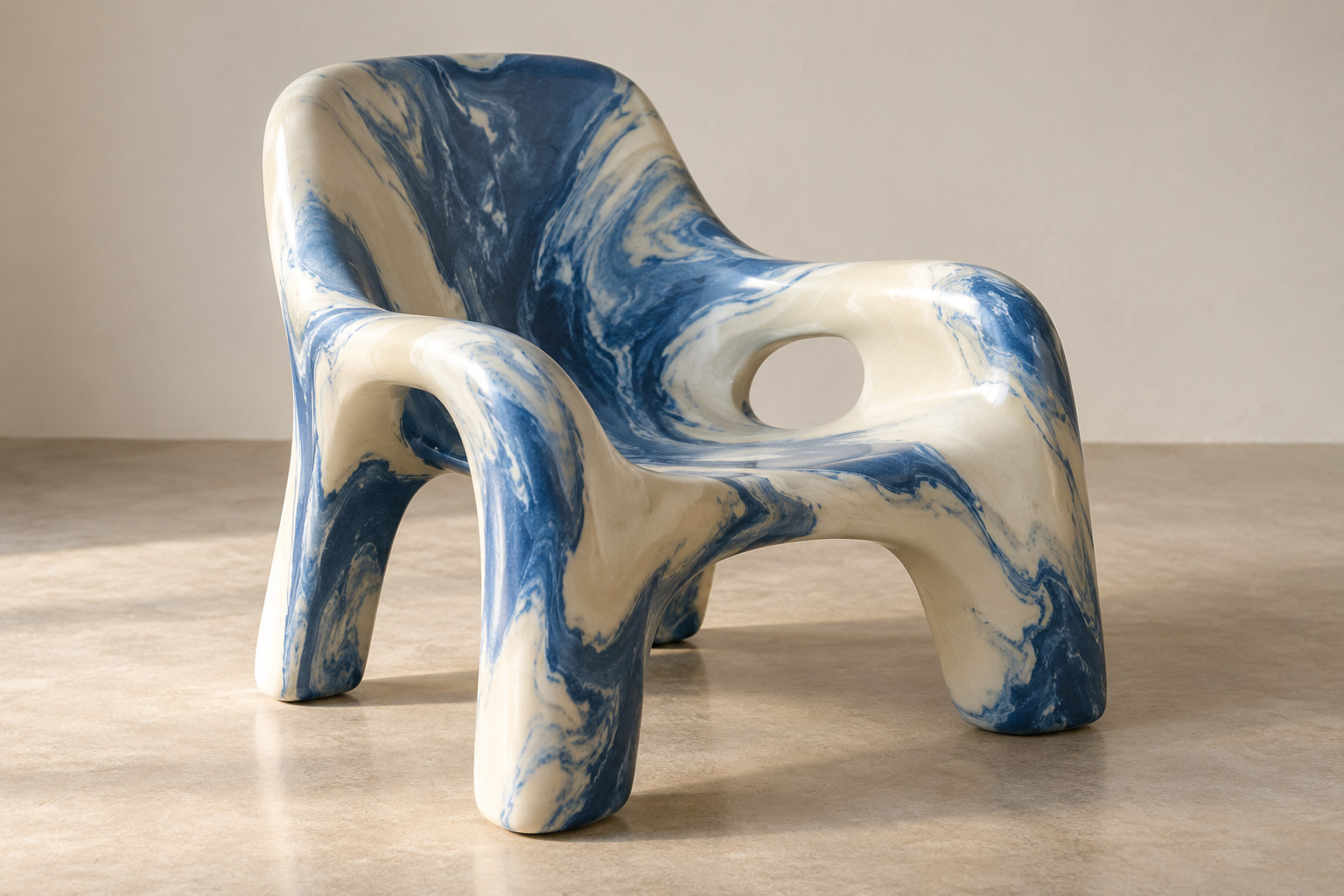
Bronto makes a production question visible at the surface. The chair can retain an overall form while allowing the meeting of its materials to vary from one outcome to another.
Centraal Museum’s object 28498 is specifically a prototype dated 1997 and credited to Richard Hutten. That identity anchors the account to one physical experiment rather than a whole later commercial family.1
Hutten’s studio describes seeking furniture that would not be assembled from an ordinary collection of constructed parts. Its account explains his move towards rotational moulding and the machine he made for the experiment.2
The machine belongs to the story because it opened a different kind of design decision: how much should be determined by the outline, and how much could be left to the way materials moved in the mould?
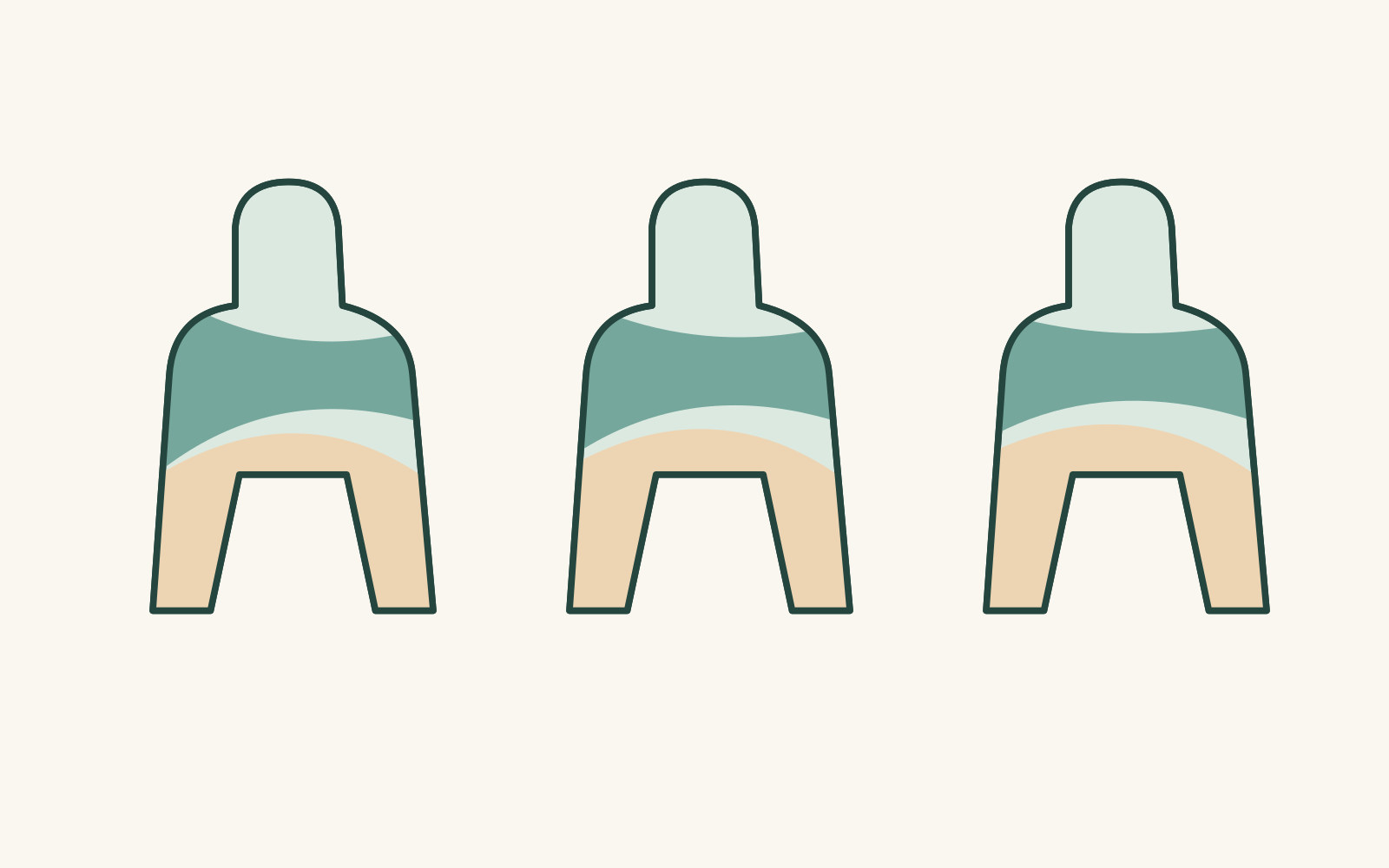
The repeated form keeps a changing surface
The studio describes two plastic types, one more rubber-like and one harder. It connects the pattern outside with rotation inside the mould and says the resulting arrangement cannot be controlled into an identical repeat.2
That gives the surface a record of process. The outline can remain recognisable while the colour areas and transitions vary, so repetition and difference are present in the same object.
The museum’s process account provides a more particular description of its prototype, including the partly rigid contribution of harder plastic. This remains the authority for that object’s material structure.1
Looking at the surface is therefore more than noticing a decorative pattern. It offers a clue to a method in which the materials’ encounter helps decide what each example will look like.
The prototype keeps the question open
The studio’s model entry is headed 1996 and goes on to describe later Gispen furniture. The museum prototype has its own 1997 date. Keeping those stages legible allows the experimental object to retain its particular role.12
A prototype can hold a question especially clearly. Here it asks whether a chair must be completely predictable to be designed.
Bronto’s answer is visible in the balance between a recognisable form and a surface with room to differ. The repeated shape gives the experiment a frame; the materials keep something of their own movement within it.