Designer profile

Richard Hutten: learning to look by collecting chairs

A designer’s collection can be a working notebook. The museum’s 2018 account describes Richard Hutten buying chairs and exchanging them with designer friends, keeping other people’s decisions close to his own work. Looking becomes part of the practice.

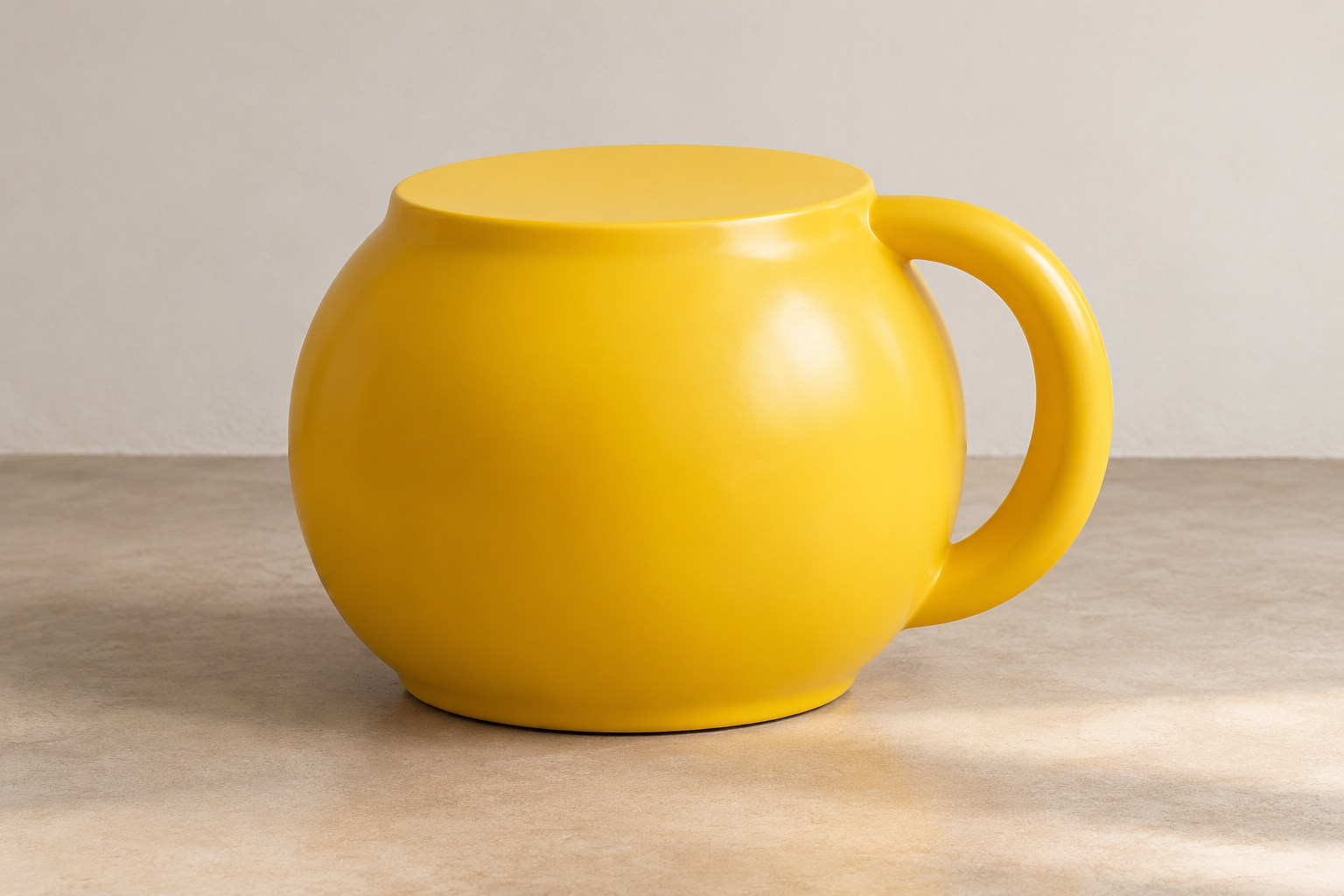
A rounded yellow body has a flat upper face and a large circular handle at one side.
PatinaHall editorial reconstruction. It is not a documentary photograph. This interpretation of Zzzidt gives a sphere-like form a flat top, a base and a generous handle. The colour and outline are illustrative rather than an exact manufactured example or a demonstration of use.
On this page
Key facts & takeaways

At a glance

Subject
Richard Hutten
Entry
Designer profile
Last reviewed
26 October 2026

Three things to remember

  1. The museum’s 2018 account describes a collection of more than 100 sitting objects.
  2. Chairs can matter because of their design and because of their makers.
  3. Looking underneath an existing chair helped generate a new design question.

Other people’s decisions enter the room

In 2018, the museum in The Hague presented Richard Hutten’s chairs beside chairs from his private collection. Its account described a collection of more than 100 sitting objects, ranging across prototypes, established designs, graduation work and individual pieces.1

The range matters because it gives looking several possible purposes. A chair might contain an unfamiliar solution, preserve an experiment or hold a connection with its maker. Finished furniture becomes something that can continue to ask questions.

Hutten’s own designs remain part of that conversation. The exhibition brought the collected objects and his work together rather than treating the collection as a separate biographical curiosity.1

A collection holds people as well as forms

The museum describes Hutten buying chairs and exchanging them with designer friends. It also explains that an object can matter because of its design or because the person who made it is dear to him.1

That gives the collection a human structure. A chair can carry a decision about material and a memory of a relationship at the same time. The collection records how design circulates between people as well as how forms develop.

This is a useful way to understand the designer-collector. Looking is not confined to selecting a favourite outline. It can include following another maker’s problem, remembering an exchange and discovering a detail that was easy to miss.
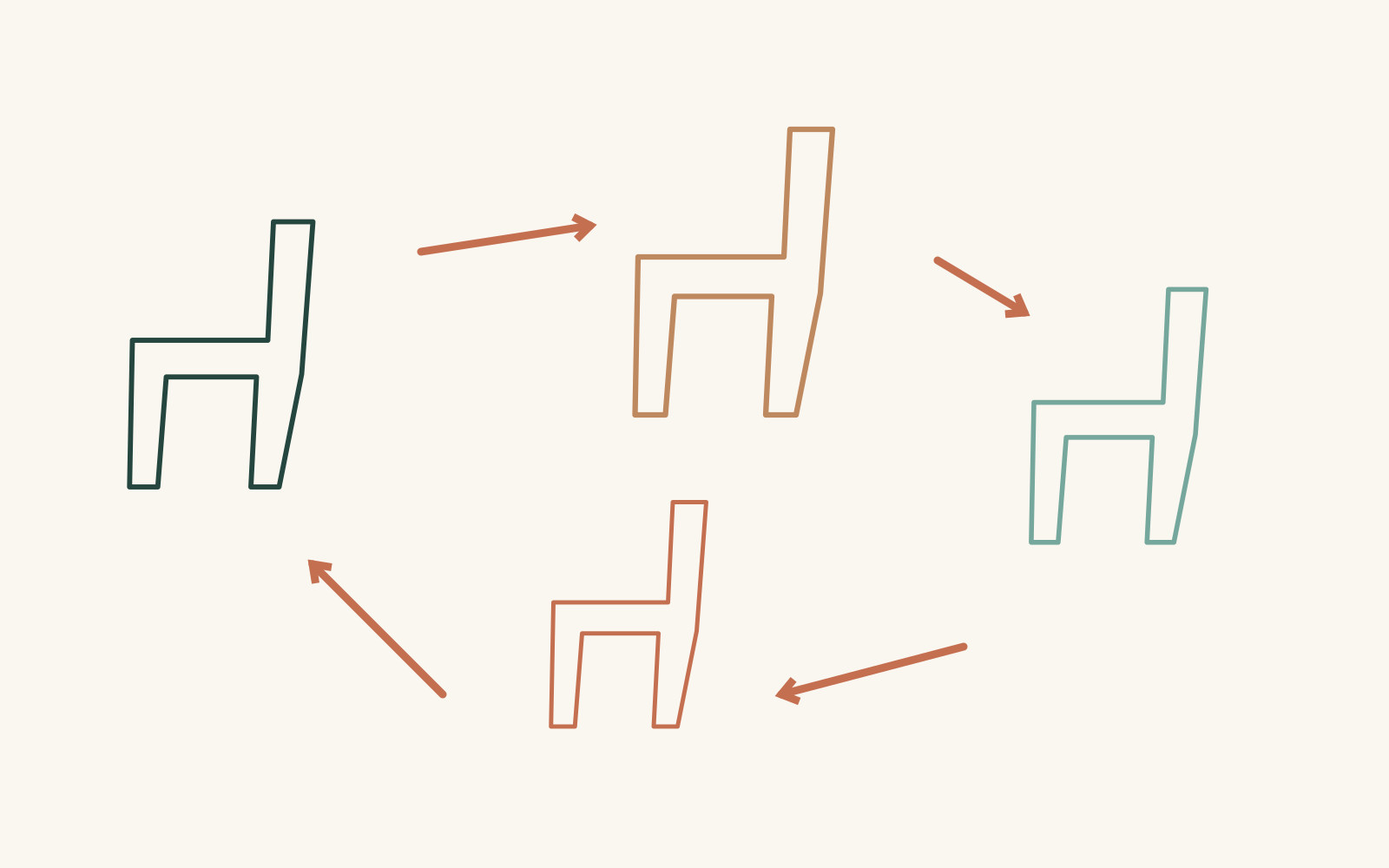
Four different-coloured chair outlines are linked by arrows around an open area.
Collecting and exchanging can bring different design decisions into conversation. These generic chairs indicate relationships, not particular works or the size of Hutten’s collection. Original PatinaHall schematic, not to scale.

A discovery beneath a seat

Berlage Chair offers a concrete example of looking turning into making. Hutten’s studio recalls studying older furniture in the museum depot and noticing an irregular upholstery connection underneath a Berlage chair. He made that observation a starting point for his new seat.2

The detail is small enough to be overlooked and specific enough to generate another design. It shows how a collection can remain active: an existing object supplies a question that a new object can answer differently.

Hutten’s collecting story is memorable for the same reason. Every chair has already been designed, but none has finished offering things to notice. The next useful detail may be waiting underneath the seat.
Research notesEvidence, connections and limits

The collection’s size and activities come from the museum’s 2018 account. The story of finding the Berlage underside detail is Hutten’s studio explanation.

Evidence map

Connected subjects and evidence

Reviewed connections

  • Zzzidtdesigned byRichard Huttendocumented

    Richard Hutten’s studio and CID credit him for Zzzidt. The studio’s garden-origin account and CID’s other usage context remain attributed accounts.

    Reviewed 26 October 2026 by PatinaHall editorial.
    • Source 3Zzzidt 2000; sphere, flattened sides and handle description
    • Source 4Object heading, designer/date/material; restaurant/bookshop/garden account
  • Berlage Chair by Richard Huttendesigned byRichard Huttendocumented

    The designer and museum credit Richard Hutten; the 2018 museum caption identifies Gispen execution and 2004. No later-Gispen introduction is invented.

    Reviewed 26 October 2026 by PatinaHall editorial.
    • Source 22004; paragraphs 12–13 on museum-depot study and upholstery underside
    • Source 110 Mar–19 Aug 2018; collecting paragraphs 91–97; Berlage/Gispen 2004 caption 102–106
  • Bronto prototype, Centraal Museum 28498attributed toRichard Huttenattributed

    Centraal Museum credits Richard Hutten for prototype 28498. The studio’s 1996 model entry and later Gispen family remain distinct from this 1997 prototype.

    Reviewed 26 October 2026 by PatinaHall editorial.
    • Source 5Prototype object record; Dating 1997; material/process account
    • Source 61996 heading; two-plastic rotational-moulding and later Gispen paragraphs 12–13

Research trail

Sources and further reading

  1. Richard Hutten—Zit!, 2018Kunstmuseum Den HaagAccessed 26 October 2026
  2. Berlage chair—GispenRichard Hutten StudioAccessed 26 October 2026
  3. Zzzidt object—GispenRichard Hutten StudioAccessed 26 October 2026
  4. ZzzidtCID Grand-HornuAccessed 26 October 2026
  5. Bronto prototype, object 28498Centraal Museum UtrechtAccessed 26 October 2026
  6. Bronto Childrenschair—GispenRichard Hutten StudioAccessed 26 October 2026

Last reviewed 26 October 2026. Found an error or a stronger primary source? Contact PatinaHall.