Design story

Zzzidt: what a handle can change

Add a handle to a sphere and the hand immediately has something to understand. Zzzidt combines that invitation with a flat top and a flat base, turning a ball-like hard form into a stool or small table that suggests it can move with an activity.

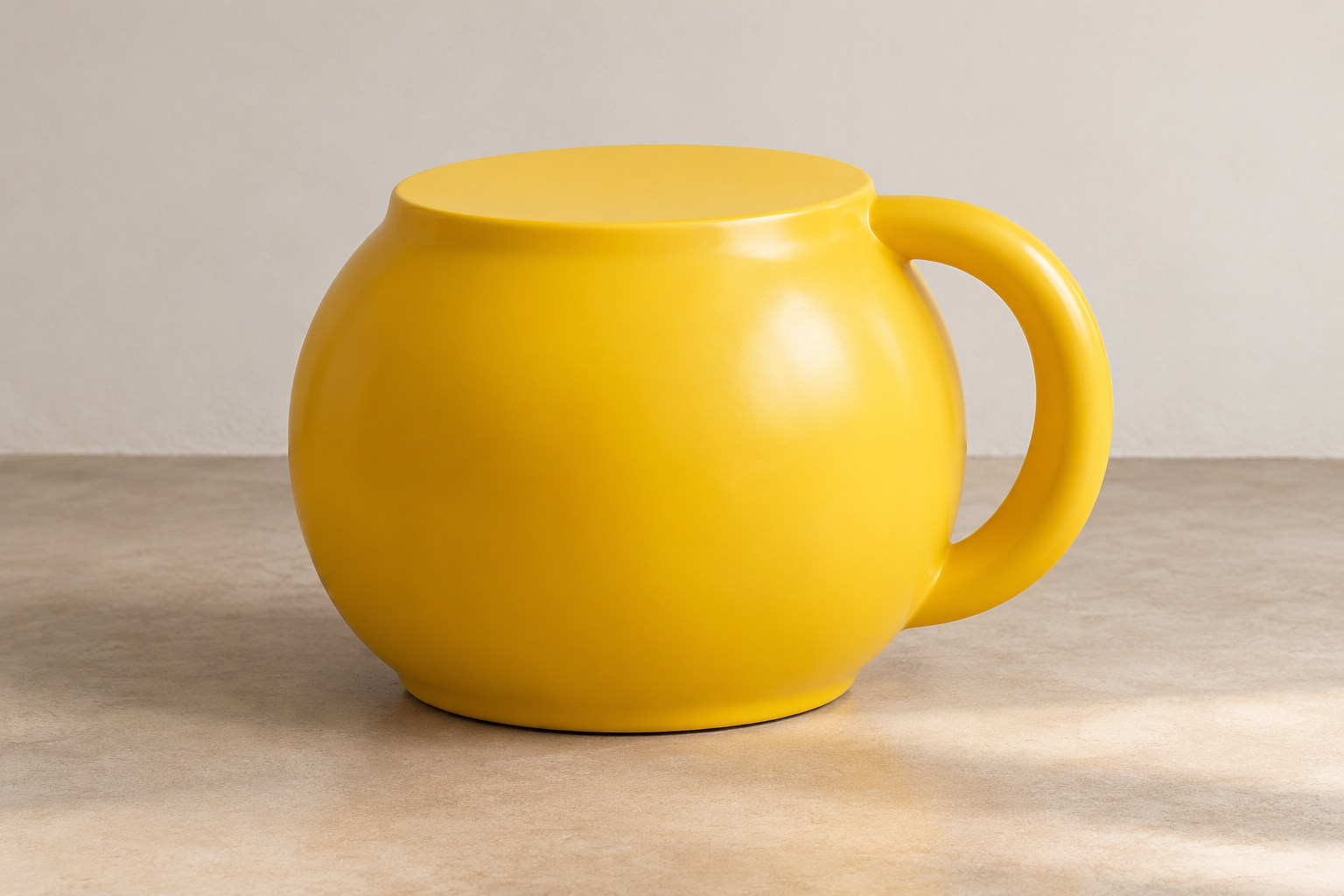
A rounded yellow body has a flat upper face and a large circular handle at one side.
PatinaHall editorial reconstruction. It is not a documentary photograph. This interpretation of Zzzidt gives a sphere-like form a flat top, a base and a generous handle. The colour and outline are illustrative rather than an exact manufactured example or a demonstration of use.
On this page
Key facts & takeaways

At a glance

Subject
Zzzidt
Entry
Design story
Last reviewed
26 October 2026
Designed
2000documented

Three things to remember

  1. The handle gives the hand a clear place to take hold.
  2. Flattened top and base give the sphere-like body furniture roles.
  3. The documented plastic object is distinct from a soft or bouncing ball.

A sphere acquires a place to land

Zzzidt keeps the visual directness of a large round body. Two flattened areas give that body a base and an upper surface, so the recognisable sphere-like form can take on the role of a stool or little table.

Hutten’s studio dates the design to 2000 and describes its garden origin. CID’s collection record also gives 2000 and identifies polyethylene, placing the object in a broader museum setting that includes restaurant, bookshop and garden.12

Those accounts give the form a human scale of activity. This is furniture small enough to be encountered as a movable companion to a setting, with its intended uses made unusually legible by a few large shapes.

The handle changes the conversation

The handle is the detail that turns looking into an imagined action. A rounded body can be seen as a compact mass. A generous opening beside it gives the hand an obvious destination.

Hutten’s account connects the handle with carrying the object. It becomes a visible sign that the stool need not be mentally fixed to one spot.1

That matters to the reading of a room. A chair’s orientation can suggest where a person should face; a carrying handle suggests that the arrangement might change. The detail makes movement part of the object’s appearance before anybody picks it up.

The handle also interrupts the sphere’s symmetry. It gives the round body a recognisable side, making the whole form easier to remember.
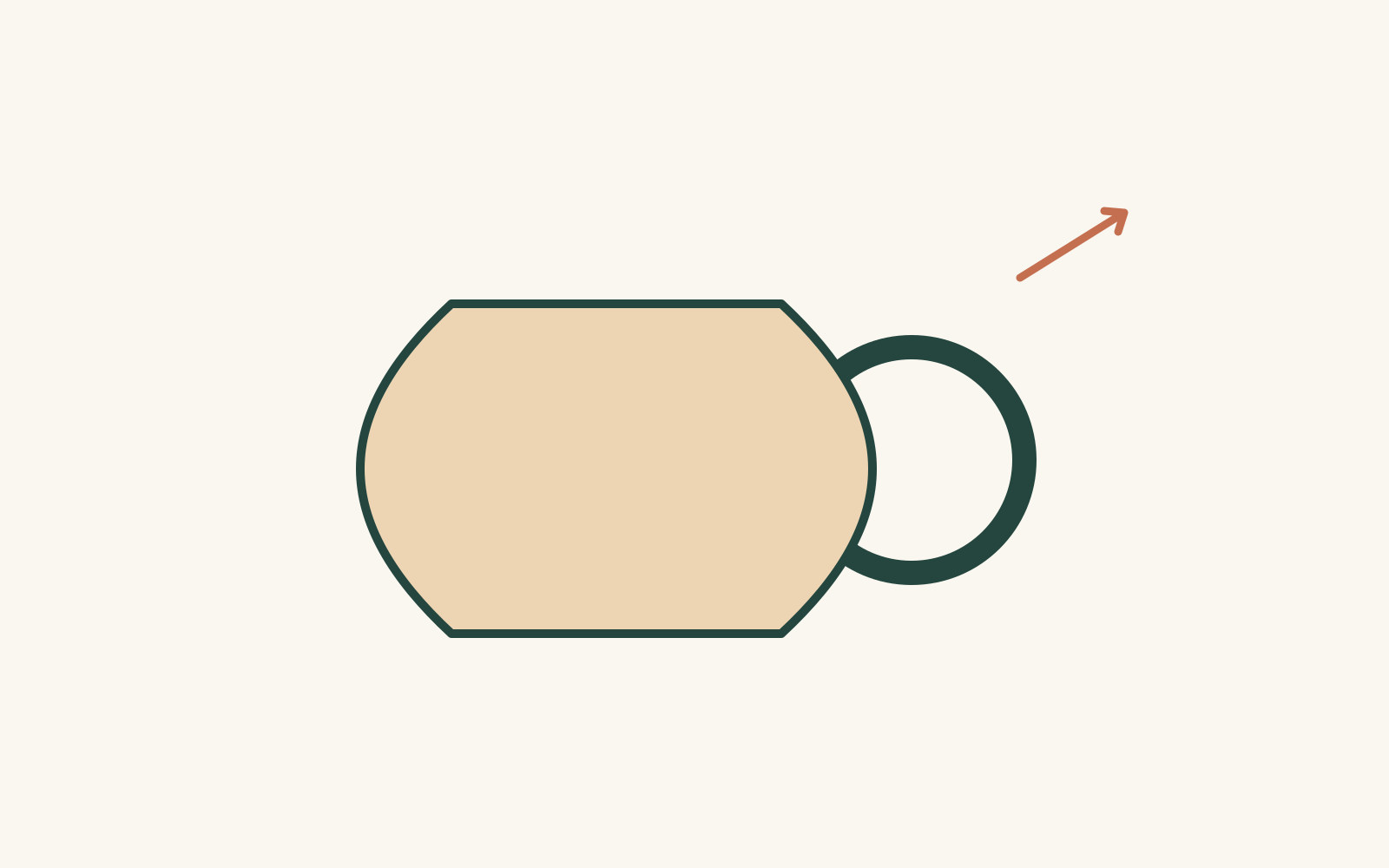
A rounded form has a flattened top and base, with a large loop at one side.
Flattened faces give the body furniture roles, while a loop offers a place for the hand. The arrow suggests movement, without demonstrating use or a tested carrying load. Original PatinaHall schematic, not to scale.

One compact form, several activities

CID records Zzzidt within a museum’s everyday spaces rather than treating it only as an isolated sculptural shape.2

A seat and a small table ask different things of the viewer’s imagination. One brings a person into the scene; the other brings a cup, a book or another small object. Zzzidt’s broad top makes both associations available in the design account.

Its economy is easy to retell. A rounded body gains two flat faces and a place for the hand. The handle is a modest addition, but it changes the story from a shape resting in a room to furniture that can join the next activity.

Research notesEvidence, connections and limits

The studio’s garden-origin account and CID’s restaurant/bookshop/garden account remain attributed. Polyethylene is documented, but no grade, toy function, child-safety certification or universal outdoor suitability is inferred.

Evidence map

Connected subjects and evidence

Reviewed facts

  • Designed 2000documented

    The studio and institutional entry attach 2000 to Zzzidt; the date does not apply to every manufactured example.

    Reviewed 26 October 2026 by PatinaHall editorial.
    • Source 1Zzzidt 2000; sphere, flattened sides and handle description
    • Source 2Object heading, designer/date/material; restaurant/bookshop/garden account

Reviewed connections

  • Zzzidtdesigned byRichard Huttendocumented

    Richard Hutten’s studio and CID credit him for Zzzidt. The studio’s garden-origin account and CID’s other usage context remain attributed accounts.

    Reviewed 26 October 2026 by PatinaHall editorial.
    • Source 1Zzzidt 2000; sphere, flattened sides and handle description
    • Source 2Object heading, designer/date/material; restaurant/bookshop/garden account
  • Zzzidtuses materialMoulded plastic in Zzzidtdocumented

    The hard plastic form combines a sphere-like body, flattened top/base and a handle. It is furniture, not evidence of bounce behaviour or child/outdoor safety.

    Reviewed 26 October 2026 by PatinaHall editorial.
    • Source 1Zzzidt 2000; sphere, flattened sides and handle description
    • Source 2Object heading, designer/date/material; restaurant/bookshop/garden account

Research trail

Sources and further reading

  1. Zzzidt object—GispenRichard Hutten StudioAccessed 26 October 2026
  2. ZzzidtCID Grand-HornuAccessed 26 October 2026

Last reviewed 26 October 2026. Found an error or a stronger primary source? Contact PatinaHall.