Looking underneath the collection
Hutten’s account begins inside the Gemeentemuseum in The Hague, now Kunstmuseum. The building and its collection gave a new chair an existing design world to converse with.
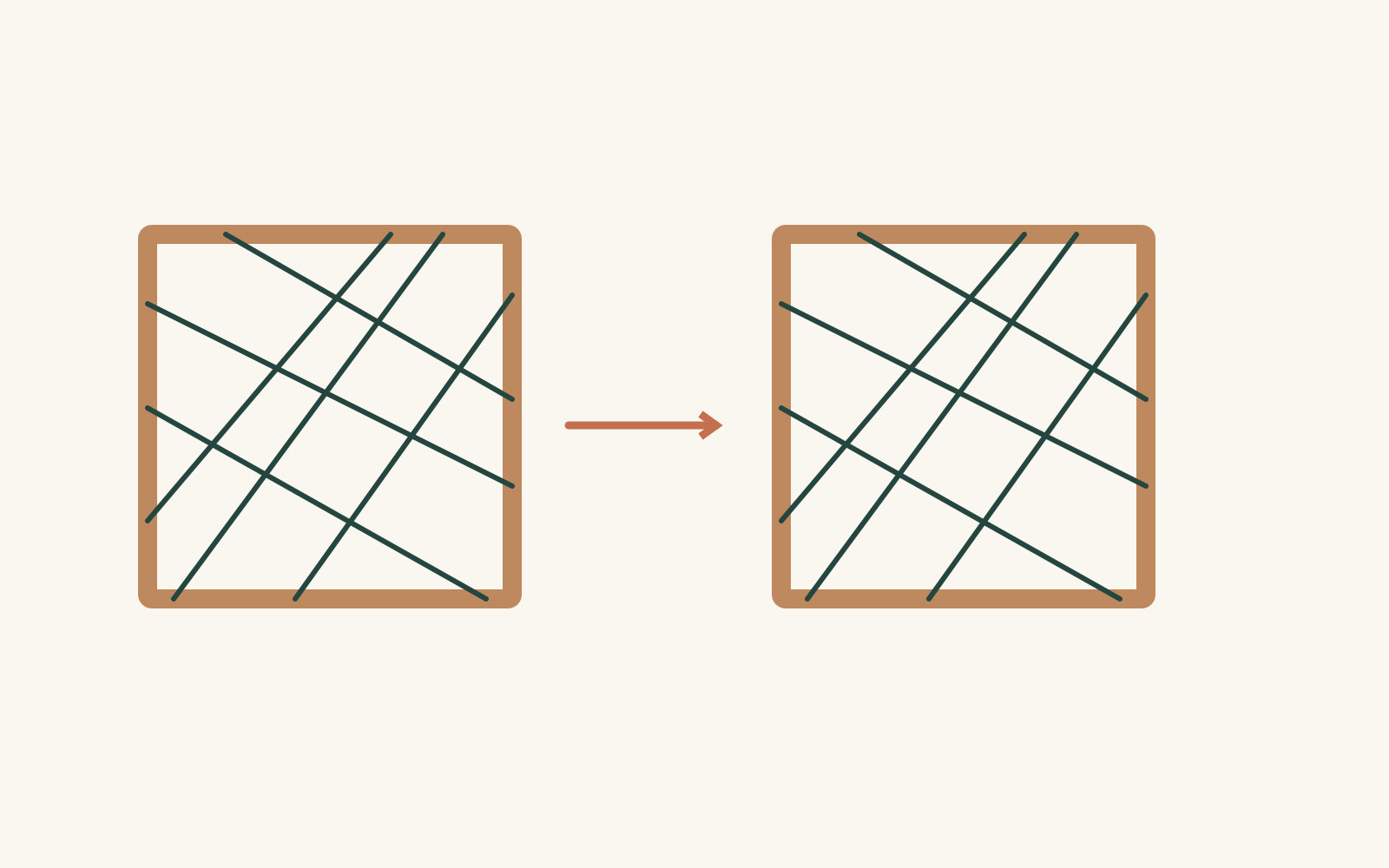
While studying a chair by H.P. Berlage in the museum depot, Hutten noticed how its upholstery was connected underneath. He describes the arrangement as irregular and identifies that observation as a starting point for the seat of his own chair.1
This is a particularly human kind of research: turn an object, look at a detail that is usually hidden and find something worth carrying into a new use. The observation offers a specific route from a collection to contemporary furniture.
An irregular detail enters an ordered frame
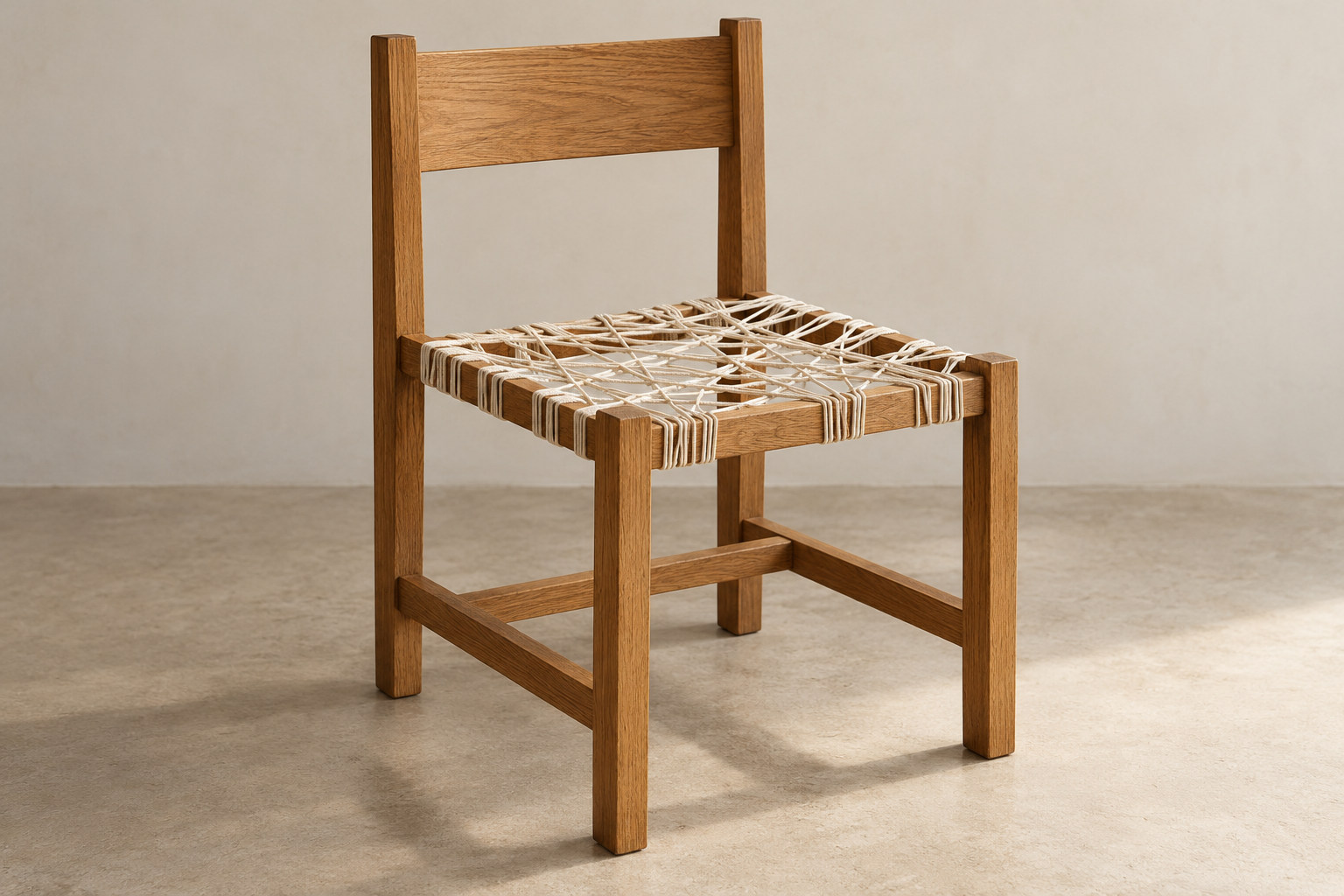
The new chair can be understood through the relationship between an organised supporting structure and the more irregular lines of its seat. Boijmans’s example V 2551 is dated 2004 and records oak and nylon.3
Those materials provide a useful way to read the translation. Timber supplies a clear frame, while nylon gives another kind of line room within it. The seat’s visual interest can grow from the difference between their orders.
Hutten’s underside story explains why the irregularity matters. It connects the new appearance to a discovered construction detail, allowing a museum observation to become part of furniture used in the museum’s everyday life.1
The relationship does not depend on copying every contour of the older chair. A small finding can become the active ingredient in a new design.
The museum sits with its own history
Kunstmuseum’s 2018 Hutten exhibition account identifies the Berlage chair among the designer’s own work and credits Gispen execution in 2004. It also places the seating family in the museum’s grand café.2
That setting gives the design a pleasing circularity. The collection supplied a detail for the new chair; the new chair then joined the spaces where visitors pause around the collection.
A museum can hold design history behind a display boundary. It can also let that history enter a place to sit, through something as modest as the way a few lines cross beneath a seat.