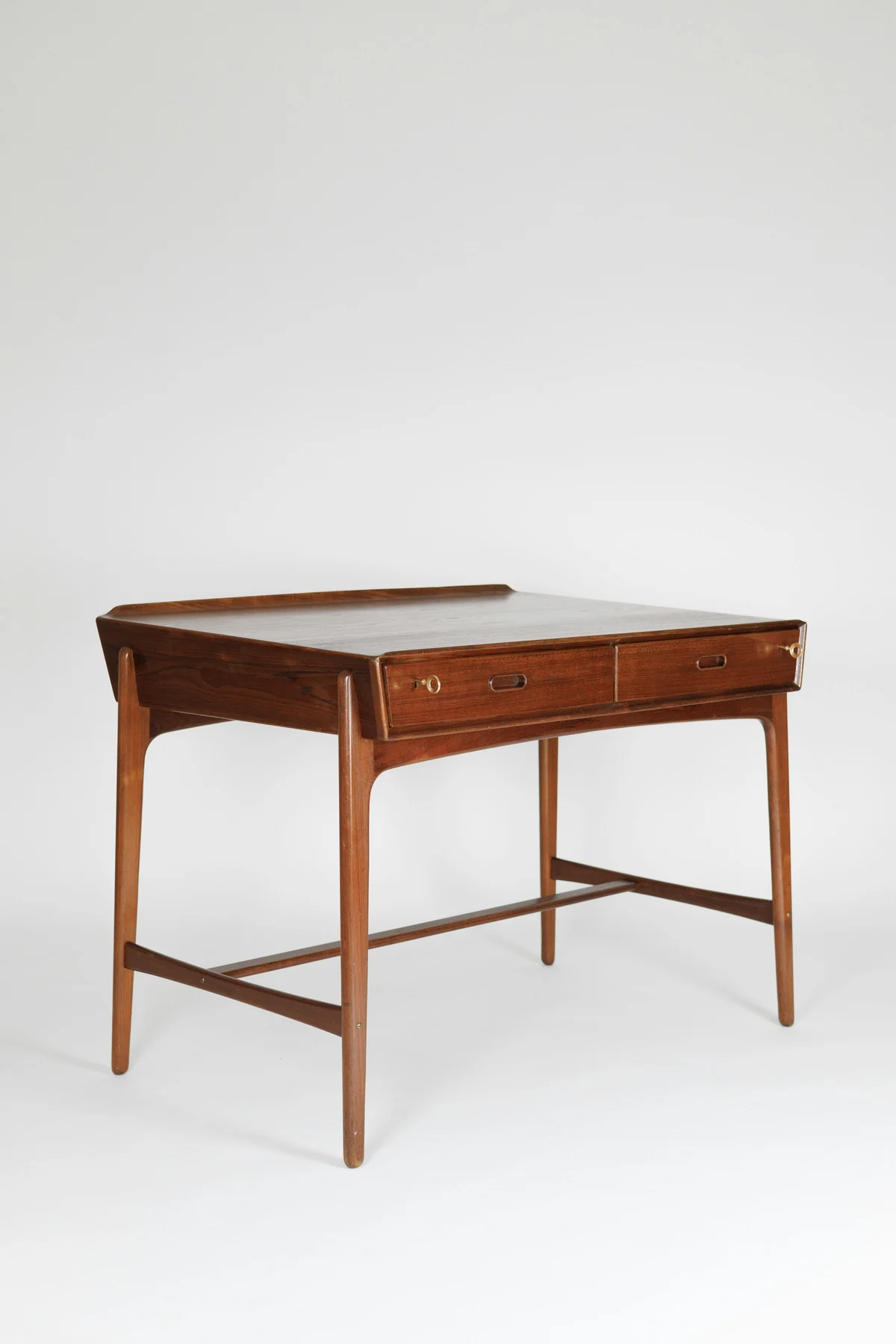
Decide which identification you actually need
‘What is this?’ can hide several questions. A buyer may need a useful object type, a style family, an approximate manufacture period, a material description, a maker or model attribution, or evidence that a particular production claim is supportable. Write those questions separately. A strong answer to one does not silently answer the others.
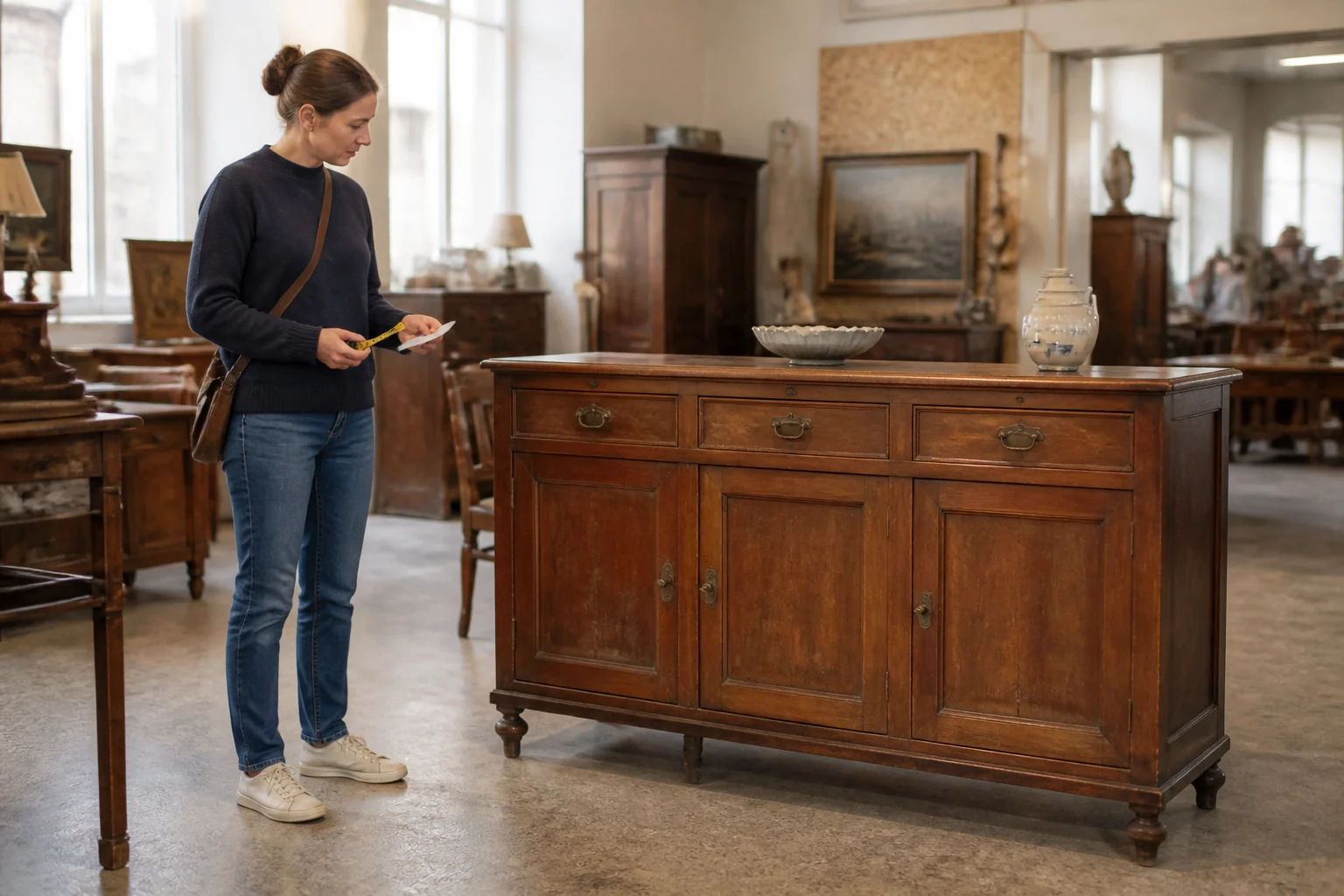
| Question | Useful result | Not automatically proved |
|---|---|---|
| What kind of furniture is it? | A functional form described from the complete object | Style, maker, date or intended historical name |
| Which style family fits? | A cluster of traits in a stated place and design context | That the piece was made during the style's original period |
| When was it made? | A supported range for the frame or another named component | One exact year for every finish, fitting and repair |
| Who made it? | An object-specific maker relationship supported by traceable evidence | Designer, retailer, owner, licensor or restorer |
| Is it original? | A complete component-specific statement | Authenticity, untouched condition or early production |
Scope rule
Never let the answer grow while you write it
‘Consistent with a 1960s Scandinavian-style sideboard’ is not ‘made in Denmark in 1964 by a named designer’. Add each stronger relationship only when its own evidence supports it.
Build a neutral object record
Begin with terms that remain true if your first attribution is wrong. Record the furniture type and current use, maximum dimensions, complete silhouette, front, sides, back and safely visible base. Inventory every component and detachable part. Describe joints, supports, hardware, surfaces, edge treatment, upholstery and moving mechanisms without converting appearance into an unverified species, process or date.
Use the photograph-request Guide for whole, context and detail views, and the marks and labels Guide to preserve every safely visible stamp, label, number and handwritten note with its exact location. Do not scrape, dismantle or remove a lining to improve the record.
Freeze the object before researching it
- Whole and profileComplete front, rear, side, top and safely visible base views, plus the open or extended state where relevant.
- DimensionsOverall and component measurements, spacing, thicknesses and the positions of repeated details.
- ConstructionObserved joints, fasteners, supports, interior surfaces, back, underside, drawer or frame details and tool evidence.
- Marks and documentsExact wording, typography, numbers, location, invoices, earlier photographs and reported ownership history.
- Changes and unknownsRepairs, replacement hardware, refinishing, upholstery, altered dimensions, inaccessible areas and seller-reported facts.
Turn observations into searchable questions
The V&A's account of furniture making shows how construction can involve different structural, shaping and decorative techniques. That makes construction useful evidence, but not a one-feature dating or maker rule: record which component shows which method and whether it appears original, repaired or replaced.[4]
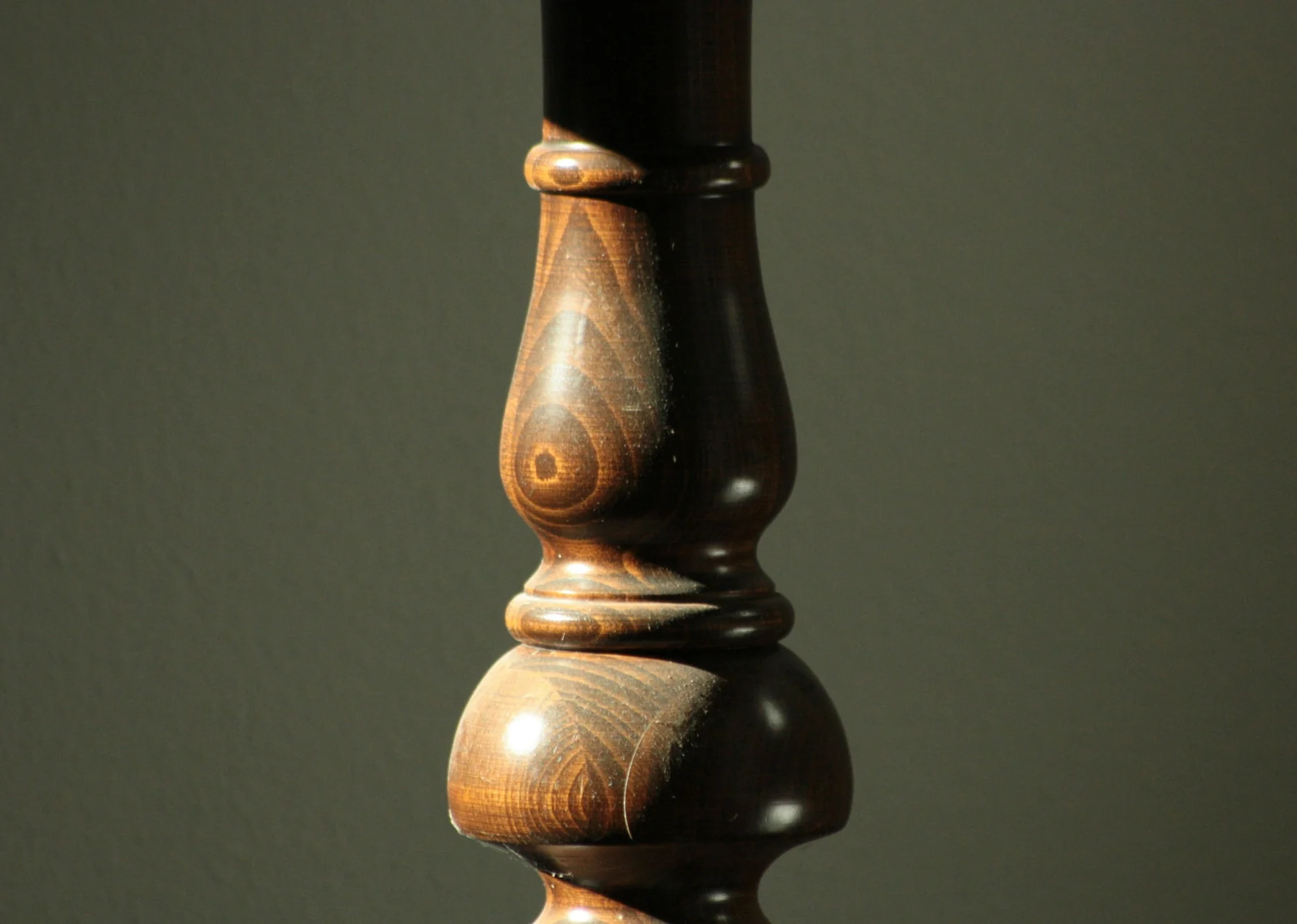
| Observation | Searchable question | Premature conclusion to avoid |
|---|---|---|
| Four doors, raised on a recessed base, 182 cm wide | Which documented cabinets share this complete proportion and base construction? | A style or maker based on width alone |
| Moulded one-piece shell on a separate base | Which models used this shell/base relationship and in which production generations? | A polymer or date from the silhouette |
| Stamped number beside a retailer label | What role did the retailer have, and is the number scheme documented? | That both marks name the manufacturer |
| Different screws on one hinge | Is this a local repair or part of a broader replacement pattern? | That the entire object is a reproduction |
| Dark striped face over a paler edge | Is this a veneer, finish, print layer or another construction? | A wood species from colour alone |
Search with the rarest stable combination first: object type plus mechanism, dimensions, unusual component relationship, exact label wording or model number. Add likely place, period or style only as a hypothesis. If the search returns only copied dealer wording, change the terms and look for a primary or institutional record.
Use documentary sources for their real jobs
The Library of Congress describes trade catalogues as sources for design or manufacture dates, original prices, materials and specifications, and warns that several search strategies may be needed. A catalogue can therefore establish that a model or feature was offered by a particular date; it does not prove that a visually similar object is that model.[1]
Smithsonian Libraries and Archives describes its trade-literature collection as evidence for company and industry history, styles and the documentation of objects. Use a catalogue page with its publisher, date, page and model context intact, rather than a cropped image detached from the record.[2]
| Source | May support | Check before using |
|---|---|---|
| Maker catalogue, price list or archive | Model, dimensions, materials, offered date and maker terminology | Edition, market, page context and whether this object actually matches |
| Patent or registered design | A documented design, mechanism, proprietor and legal date | Whether it was produced, by whom and when this example was made |
| Museum or institutional object record | A qualified identification for that accessioned object | Which evidence and attribution language the institution uses |
| Dated invoice or ownership document | A transaction or custody event linked to an exact object | Identity, completeness, date and connection to the furniture |
| Marketplace listing or image match | A lead, vocabulary or another candidate to investigate | Copied errors, missing underside evidence and circular attribution |
Test a candidate—and try to disprove it
The Met's record for table 1986.38.1 shows how an attribution can change. The following walkthrough summarises the museum's research; it is not a new inspection or authentication by PatinaHall.[3]
- Observe: the museum describes a rectangular marquetry top, four tapering legs and a double-Y stretcher. Record the combination before attaching a maker's name.
- Check the old claim: the 1977 sale described it as in the manner of Leonardo van der Vinne. In the mid-1980s, documentary evidence and comparisons supported a reattribution to Pierre Gole.
- Compare the document: a similar table appears in Mazarin's 1661 inventory. Its description includes a butterfly above the bouquet; the Met's table lacks that detail. Similar is not identical.
- Keep the conclusion bounded: the current record says attributed to Pierre Gole, about 1660. The museum does not know the table's early history. Neither the attribution nor the comparison proves that this was Mazarin's exact table.
Apply that sequence to your own candidate: record the observed combination, find the source behind the name, retain the mismatches and write a conclusion no stronger than the evidence.
Compare the same fields on both sides
- Proportion and dimensionsCompare the whole silhouette and exact measurements, not a cropped three-quarter view.
- Structure and component orderFollow how the top, frame, base, drawers, doors, shell, supports and loose parts connect.
- Repeated detailsMatch handles, feet, edges, holes and hardware in position, quantity and scale.
- Document contextCheck date, market, model variant, maker role, production generation and whether the source is contemporary.
- ConflictsRecord a different base, rear, dimension, material, mark or mechanism before explaining it away as a variation.
Comparison boundary
A possible variation still needs evidence
‘Perhaps a rare version’ is not an answer to a contradiction. Look for documentation of that version, leave the match provisional, or reject the candidate.
Map the identification result
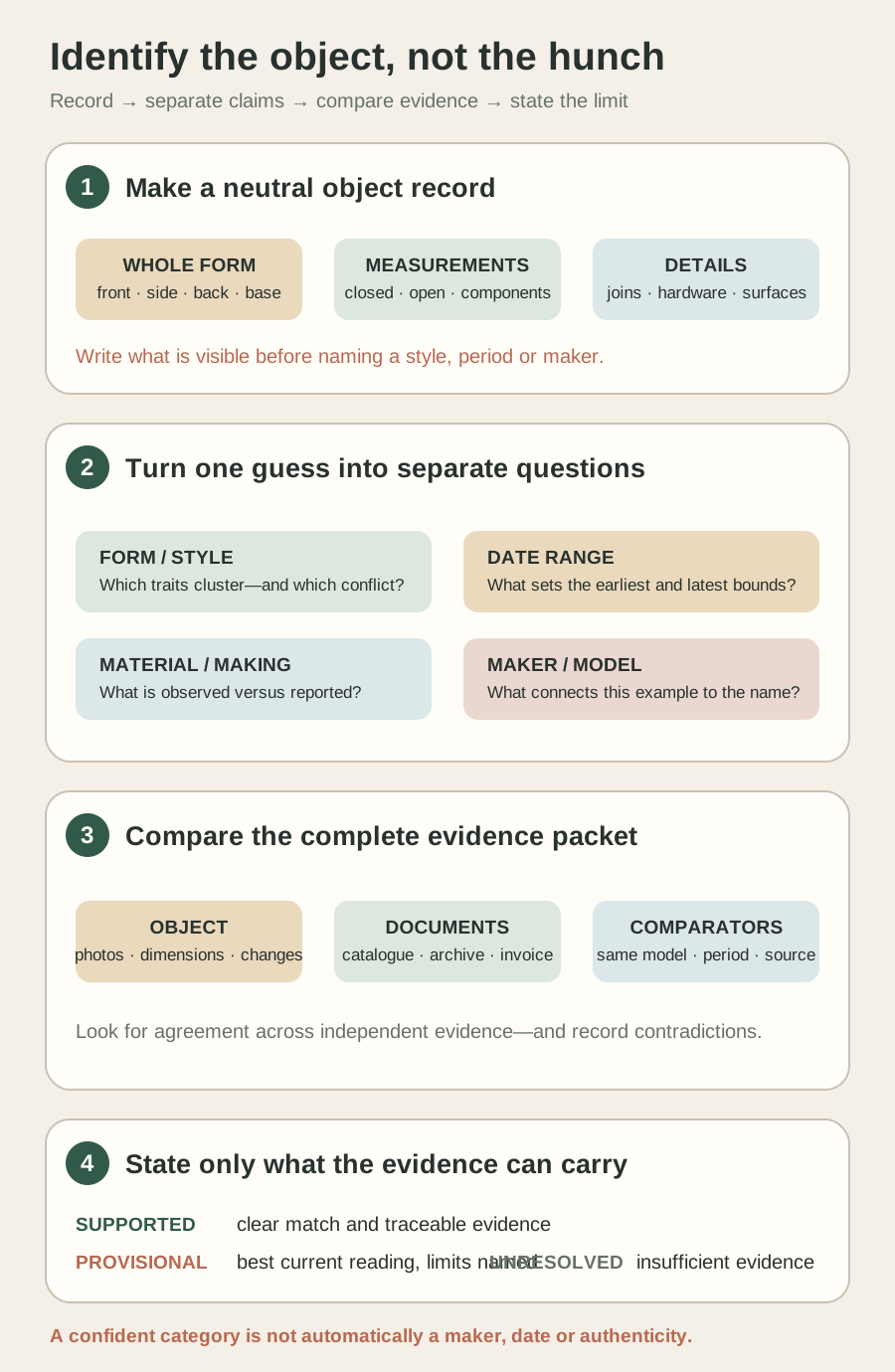
| State | Use when | Example structure |
|---|---|---|
| Supported | Independent evidence coherently links the exact object to the bounded claim | ‘Supported as [claim] by [object evidence] and [document], subject to [limit].’ |
| Provisional | One candidate best explains the current record but a material gap or conflict remains | ‘Provisionally consistent with [claim]; [gap] prevents a stronger attribution.’ |
| Unresolved | The available evidence does not distinguish credible candidates | ‘Maker unresolved; record supports [form/material/date boundary] only.’ |
Request the missing evidence and decide
Message to copy
Ask for an identification record
Hello—could you send complete front, side, rear, top and safely visible base views; overall and component dimensions; open-state views; close and location views of every label, stamp, number and handwritten note; and clear photographs of joints, hardware, drawer construction, backs, edges, repairs and replacements? Please copy the exact maker, model, style, date, material, originality and provenance claims and say which document or observation supports each one. Please also mark inaccessible areas and unknowns, and do not scrape, dismantle, clean or remove a label for my request. Thank you.
| Decision | Appropriate when | Record |
|---|---|---|
| Buy on the supported identity | The evidence and price remain coherent for the exact claim | Claim, sources, object record, limits and accepted changes |
| Buy as the fallback object | The furniture still fits the use and price if maker or date stays unresolved | Plain object description and the attribution excluded from value |
| Specialist before purchase | A consequential attribution, material or alteration requires examination beyond the available record | Named remit, evidence supplied, access and written limits |
| Decline | The price depends on a claim the evidence cannot carry | The unresolved claim and its decision consequence |
Identification is successful when the conclusion is useful and auditable, not when every object receives a celebrated name. A supported furniture type, broad period and material record may be enough to buy well. An unresolved maker is a valid result.