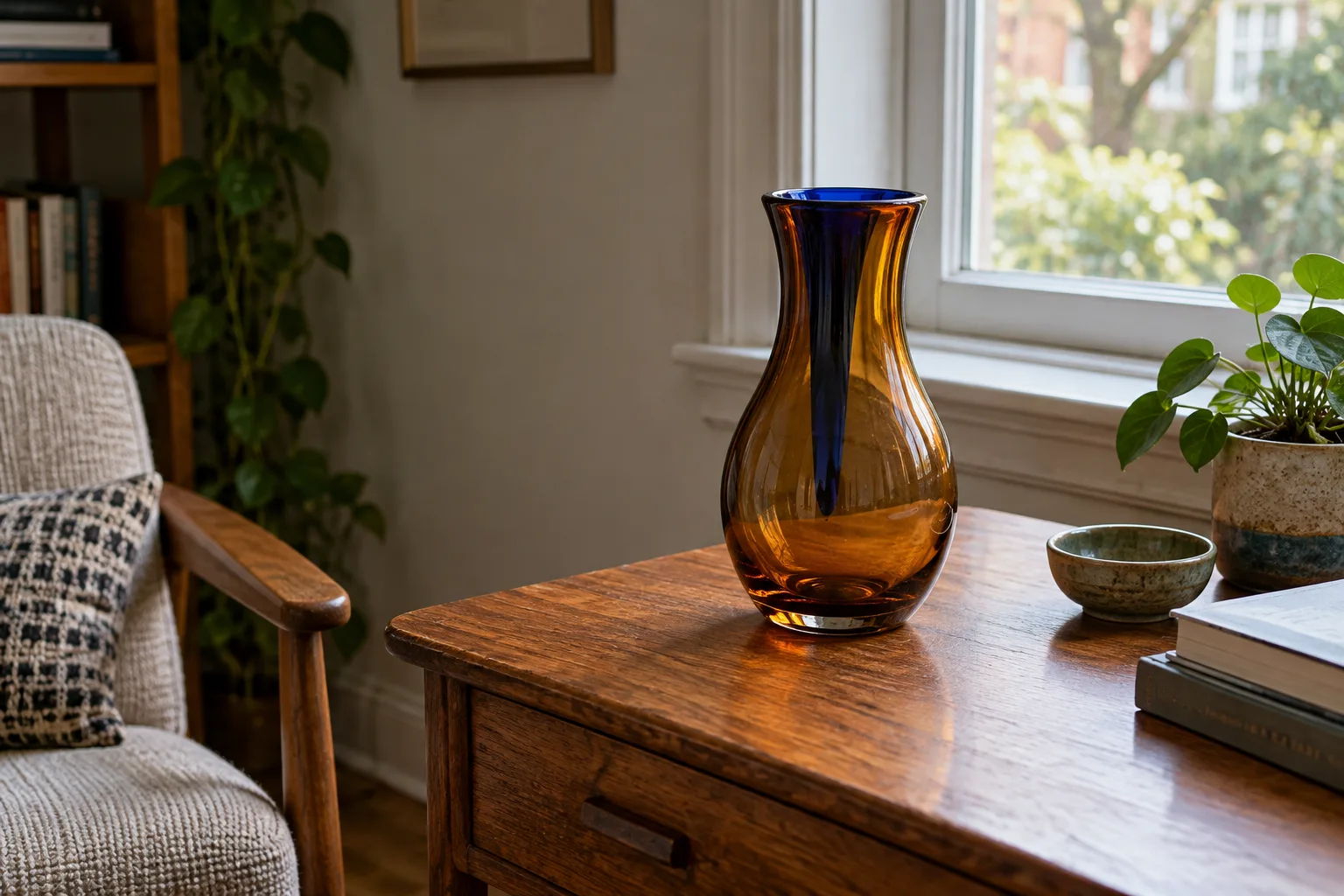
A traceable mark and a generic sticker are different things
Consorzio Promovetro explains that the Vetro Artistico Murano trademark is an origin scheme established under Veneto law in 1994. Its current traceability system includes company identifiers and, since 2016, serial and datamatrix information. Those dates immediately limit what the mark can tell you about an allegedly much older vase.[1]
A valid contemporary origin record does not by itself establish an early production date. Conversely, an older object cannot be rejected simply because it lacks a later scheme’s label. Ask what documentation is appropriate to its claimed period: a glasshouse record, dated catalogue, purchase history or a reliably attributed comparable example.
Treat an untraceable “Made in Murano” sticker as something to photograph in place, not a complete authentication. Keep the whole base and the object in the same record. Do not remove a label to inspect beneath it without specialist advice when it may be part of the provenance.
Fazzoletto shows why the year needs a noun
Venini’s 2024 brochure credits Fazzoletto to Fulvio Bianconi and Paolo Venini, with a design date of 1948, and presents current versions and dimensions. Its continued documentation makes a useful buyer distinction: “a design from 1948” does not mean “this vase was made in 1948”.[2]
The brochure lists, among others, references 700.00 at approximately 23 cm diameter and 31 cm high, 700.02 at 20 × 24 cm, and 700.04 at 13.5 × 13.5 cm. These are reference points for those documented versions, not a universal size test for every historical example. Handmade variation and different releases require period-appropriate comparison.
For a listing claiming an early Fazzoletto, ask which production features and records support the date. A broadly handkerchief-like rim may start the enquiry, but many objects can share a wavy outline. Keep the exact attribution separate from a style description.
Shape, layers and surface need several views
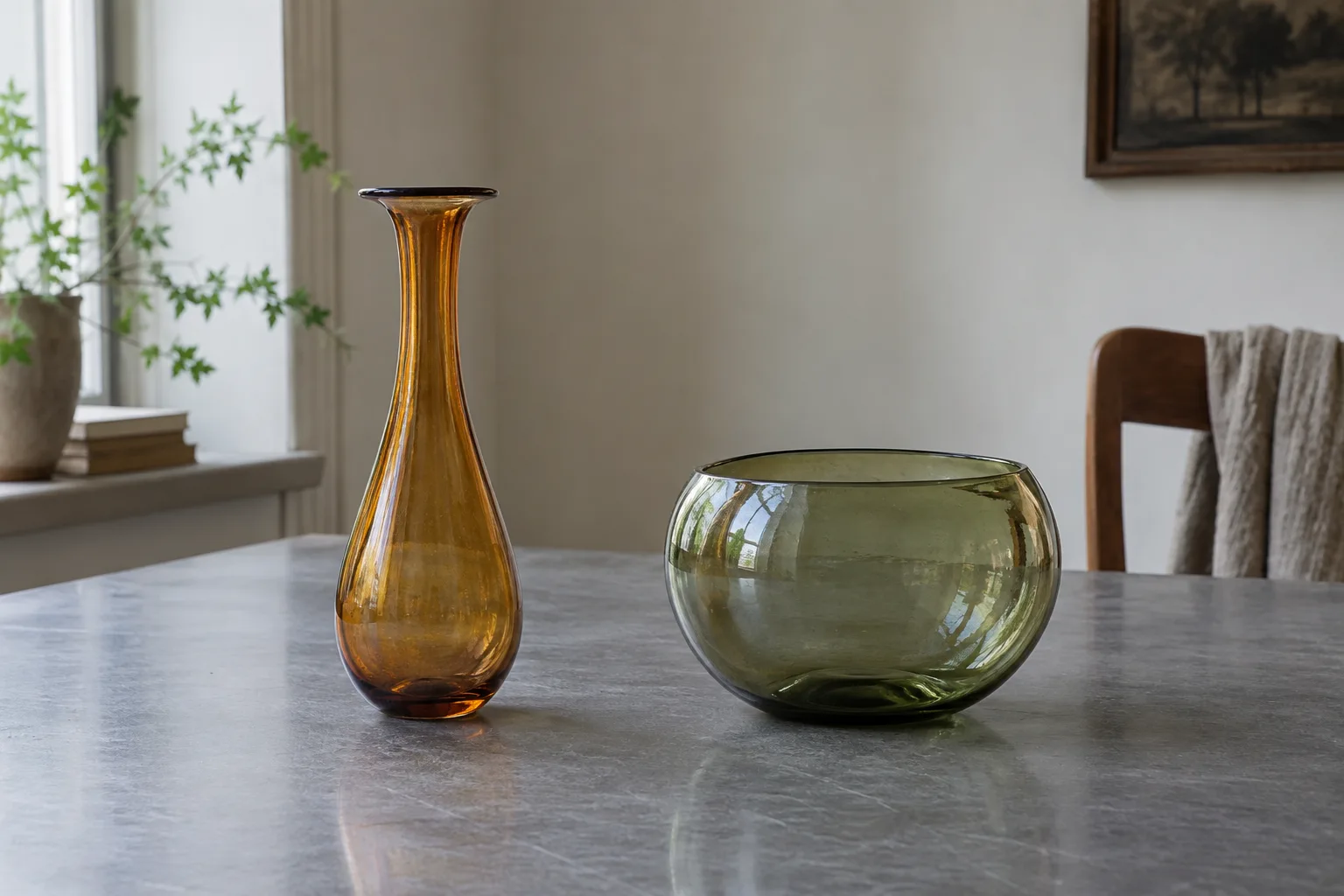
Request the complete vase against a plain background in ordinary daylight, then views of the rim, interior, base and any mark. Photograph transparent objects from more than one angle so reflections do not hide an edge. Keep a ruler beside the object for scale without pressing it against a fragile surface.
Bubbles, layered colour and a worked base can be useful observations, but they do not each prove Murano origin. Ask what a named technique means in the specific glasshouse’s documentation. Do not promote a manufacturing term from another listing into a maker identification.
For condition, ask about chips, cracks, grinding, polished-out damage and repairs. A smooth rim can be original or reworked; a close photograph alone may not settle the history. If early production or untouched condition carries a substantial premium, obtain a suitable specialist assessment before purchase.
A beautiful vase still needs a safe place to stand
Check the base footprint and the widest projection. Decide whether the vase is for dry display or flowers, and ask about known water use and repairs. CCI’s care guidance treats glass as a brittle material and distinguishes cleaning risks where surfaces or repairs are vulnerable. Do not assume that a substantial-looking glass object tolerates hot water or a dishwasher.[3]
Agree packing with the seller before paying: the vase needs support that prevents movement and protects its rim without loading a fragile projection. Record condition before packing and retain the packaging on arrival until you have inspected the piece.
Ask for three separate answers
What supports Murano manufacture, the named maker or designer, and the production date of this exact vase? Please provide full dimensions, ordinary-light views, the complete base and any relevant catalogue or purchase record. Has the rim or base been ground or polished, and are there cracks or repairs?
Buy the vessel you can describe. If its origin is uncertain, an honest anonymous glass vase may still be worth owning; an exact glasshouse attribution should come with more than a persuasive adjective.