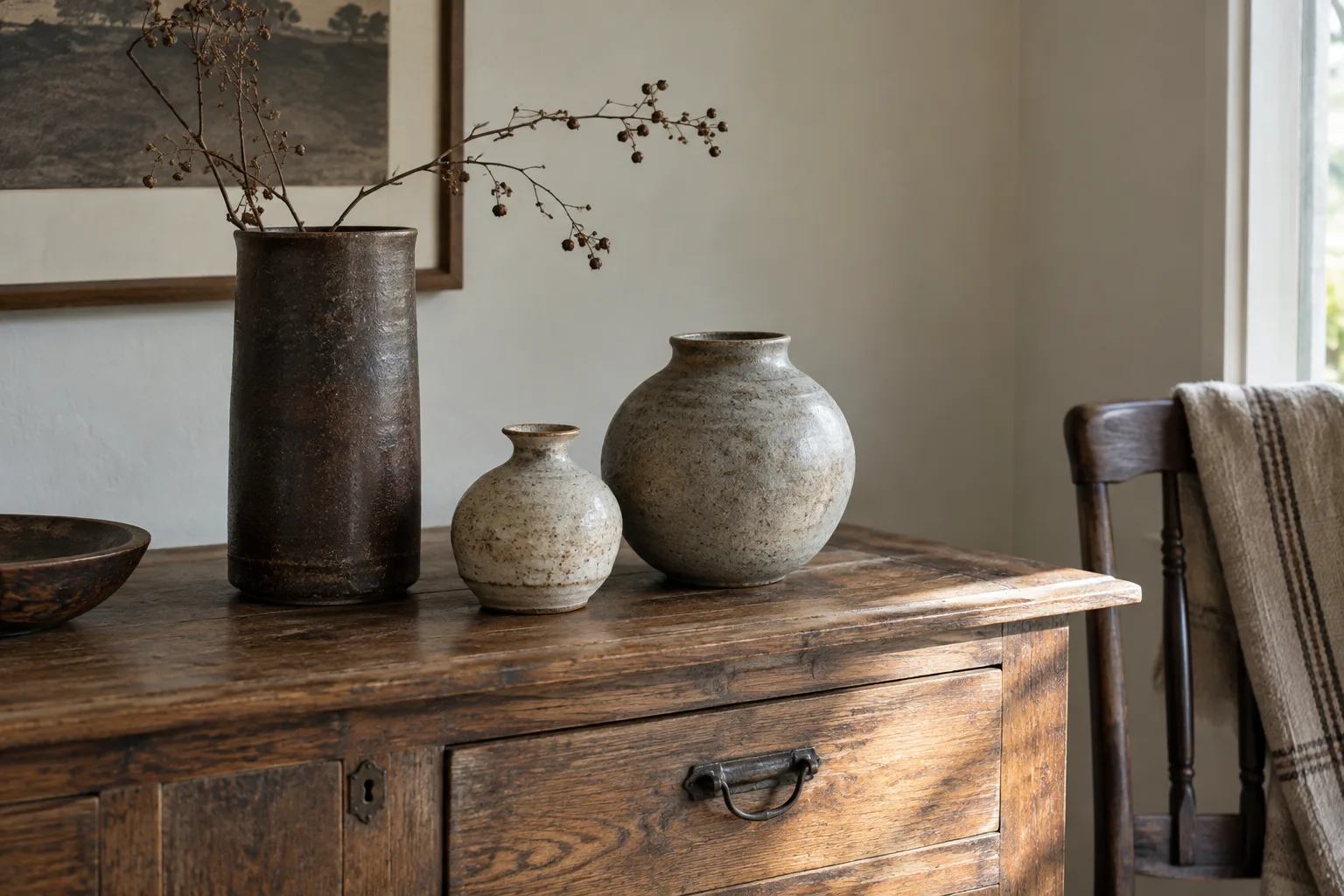
Would you still want it without the signature?
Turn the object slowly in the seller’s photographs or during a careful viewing. Compare the mouth, shoulder, body and foot. Does the shape hold together from the side as well as from the flattering front? Is it the size you expected? A tightly cropped vase can look much larger than it is.
Think about its role. A narrow neck may hold a few stems beautifully but be awkward to clean. A sculptural vessel with a small foot may belong in a protected display position. Those are practical differences, not a hierarchy of artistic merit.
The V&A’s account of Lucie Rie emphasises refined forms and experimental glazes. It is a useful antidote to the idea that all studio pottery must look rustic. Use museum records to widen your eye; do not turn a similar glaze or silhouette into an attribution.[2]
Marks need a pot around them
Leach Pottery’s teaching material distinguishes makers’ marks and explains their role in studio work. A workshop stamp and an individual potter’s mark can answer different questions. Photograph every mark, its location and the full foot, then compare the complete object with the proposed maker’s documented work.[1]
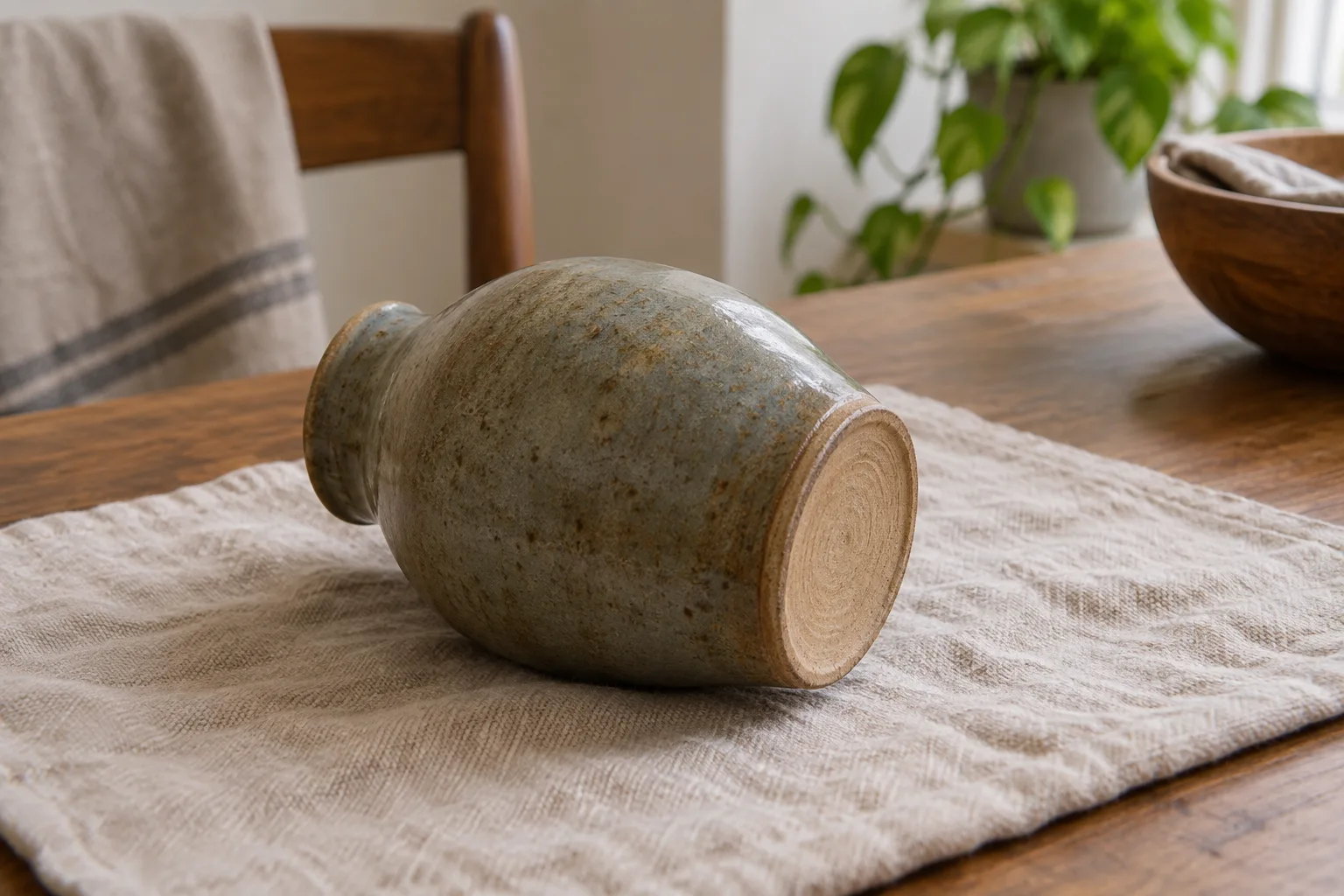
Consider an illustrative listing described as “Leach, signed”. The photograph shows a small stamp but no full base. Ask whether the seller means Bernard Leach, another potter working at the pottery or simply a resemblance to a workshop mark. A clear image and a reference may resolve the wording. Until then, do not let a shortened name become a stronger claim on the invoice.
A missing or unreadable mark does not make a pot worthless. It changes what can be supported about its maker. Decide whether the form and condition justify the price on that more modest description.
Ask about the line you can see
A network in the glaze, a line through the body and a repaired break need different explanations. Do not diagnose them from a thumbnail. Ask for views in diffuse and side light, the inside of the vessel and the corresponding area outside. Record discolouration or a change in gloss around a suspected repair.
CCI’s ceramics and glass guidance explains the brittle nature of these materials and the vulnerability of some decoration and repaired objects. Aggressive washing can be inappropriate even when a glaze looks robust. A seller’s “no chips” statement does not answer the separate questions of cracks, restoration or unstable surfaces.[3]
Avoid tapping a valuable pot to judge its sound, scratching the glaze or testing a suspect repair with solvents. These methods can cause damage and do not provide the complete condition assessment a purchase may need.
Water use needs an explicit answer
Ask whether the seller has used the vase with water, for how long and whether any leakage or staining occurred. Treat that as reported history, not a guarantee. A porous body, a crack or a repair may make wet use inappropriate. When uncertain, choose dry display or ask a conservator about a suitable supported liner and placement.
Put a vase where a knock will not send it onto a hard floor. Support the body when moving it; do not lift an old object by a handle, rim or attached decorative element just because it is convenient. Keep moisture away from the furniture beneath it.
A pottery enquiry
Please confirm height, widest diameter, mouth and foot dimensions, all marks and the basis of the maker claim. Are there cracks, chips, repairs, reglued parts or altered surfaces? I would like full views, the complete base and the interior. I intend [fresh flowers/dry display]; what use history is actually known?
Keep the description as careful as the handling. The pleasure of an older pot can lie in an unshowy curve or an unusual surface; it need not depend on a famous name.