Begin with a surface record, not a cleaning product
Describe each visible surface separately. A cabinet may combine a veneered and coated exterior, unfinished drawer interiors, painted details, metal fittings and later repairs. A single seller phrase such as “oiled wood” may not describe every part or establish what was used most recently.
Record before care begins
- ConstructionWhich parts appear solid, veneered, painted, laminated or made from another material?
- SurfaceIs there a continuous coating, waxy feel, bare porous area, paint, gilding or an unknown layer?
- StabilityLook for flaking, powdering, lifting veneer, soft or sticky finish, loose parts and fresh-looking dust beneath holes.
- Earlier workAsk about refinishing, spot repair, stain, oil, wax, silicone polish, household spray and professional treatment.
- Current useRecord direct sun, heat, plants, drinks, repeated contact, children, pets and the cleaning route around it.
Photographs can show sheen, loss, lifting and where a mark sits, but they do not reliably identify a coating or prove that it tolerates water or solvent. Keep “unknown finish” as a useful fact. It prevents a confident-looking experiment from becoming the first evidence.
Oil, wax, shellac or lacquer: ask which layer is meant
These names do not all describe the same kind of intervention. A cabinet may have an old coating, a later wax application and a locally repaired top. “Waxed recently” tells you about that application; it does not identify the surface beneath it. CCI’s furniture-finishes note describes different coating systems and explains why care must follow the actual finish.[2]
| Term in the description | What to establish | What appearance cannot settle |
|---|---|---|
| Oil | Exact product, surface, application date and whether it was a finish or maintenance treatment | A low sheen does not prove an oil finish. |
| Wax | Product and what coating, if any, lies beneath it | A slippery or shiny surface does not identify the underlying finish. |
| Shellac / French polish | Evidence for the coating and the parts to which the description applies | Warm colour and gloss do not prove shellac. |
| Lacquer | Specific coating where known, and any later recoating or repair | A smooth film does not identify its chemistry or compatibility. |
French polishing describes a method traditionally associated with shellac; it should not become a catch-all name for any shiny restored surface. Likewise, a product sold as “teak oil” does not establish either the timber or the existing coating. Keep the product label and the surface record together.
When the care history contradicts the listing
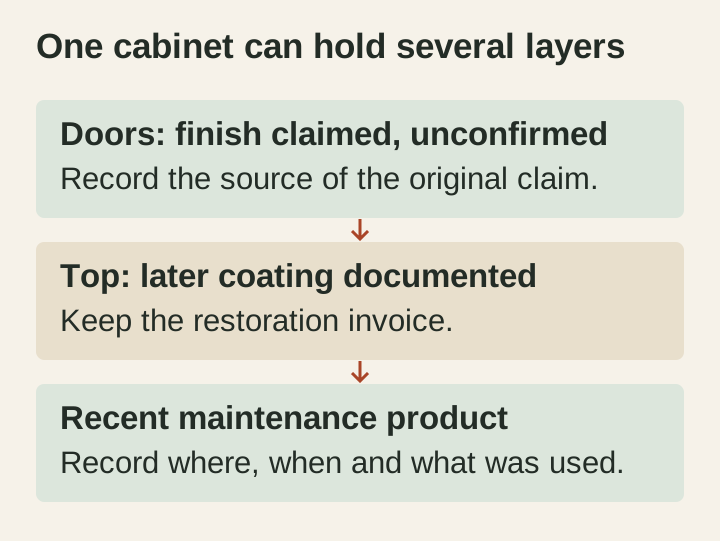
Consider an illustrative sideboard advertised as “original oil finish”. The owner says it was waxed last winter, while a restoration invoice describes a lacquered replacement top. These statements may describe different areas and times rather than one consistent surface. Mark the doors, top and interior separately, attach the invoice and leave any unresolved layer unnamed.
That record changes the next action. Do not apply one maintenance product to the whole cabinet because the oldest statement sounds authoritative. Ask the restorer to identify which areas they treated and what ongoing care they specified. Ask a conservator or suitable finishing specialist about the unrecorded surfaces before any product is applied.
A solvent test can alter or remove a coating, and a response may come from a later layer rather than the original finish. Do not run an internet alcohol, acetone or scraping sequence on an object you are considering buying. If identification is necessary, agree a proportionate examination with someone who can interpret the result and limit the damage.
A useful finish-history request
Please distinguish the original finish claim from later oil, wax, polish or coating applications. Which parts were treated, with what product and when? Is there an invoice or care instruction for the top, doors and repaired areas? Until those layers are clear, I will avoid adding another product.
A surface can be attractive and serviceable while its exact chemistry remains uncertain. Routine care should respect that uncertainty; a new bottle should not be used to resolve it.
Make the room do most of the care
Light damage accumulates, changes both wood and coatings and cannot be reversed by polish. Moisture changes can move wood and damage a finish, while direct heat and water add avoidable stress. Limit direct sun, keep the piece away from a direct heat source or vent and protect horizontal surfaces from plants and drinks.[1]

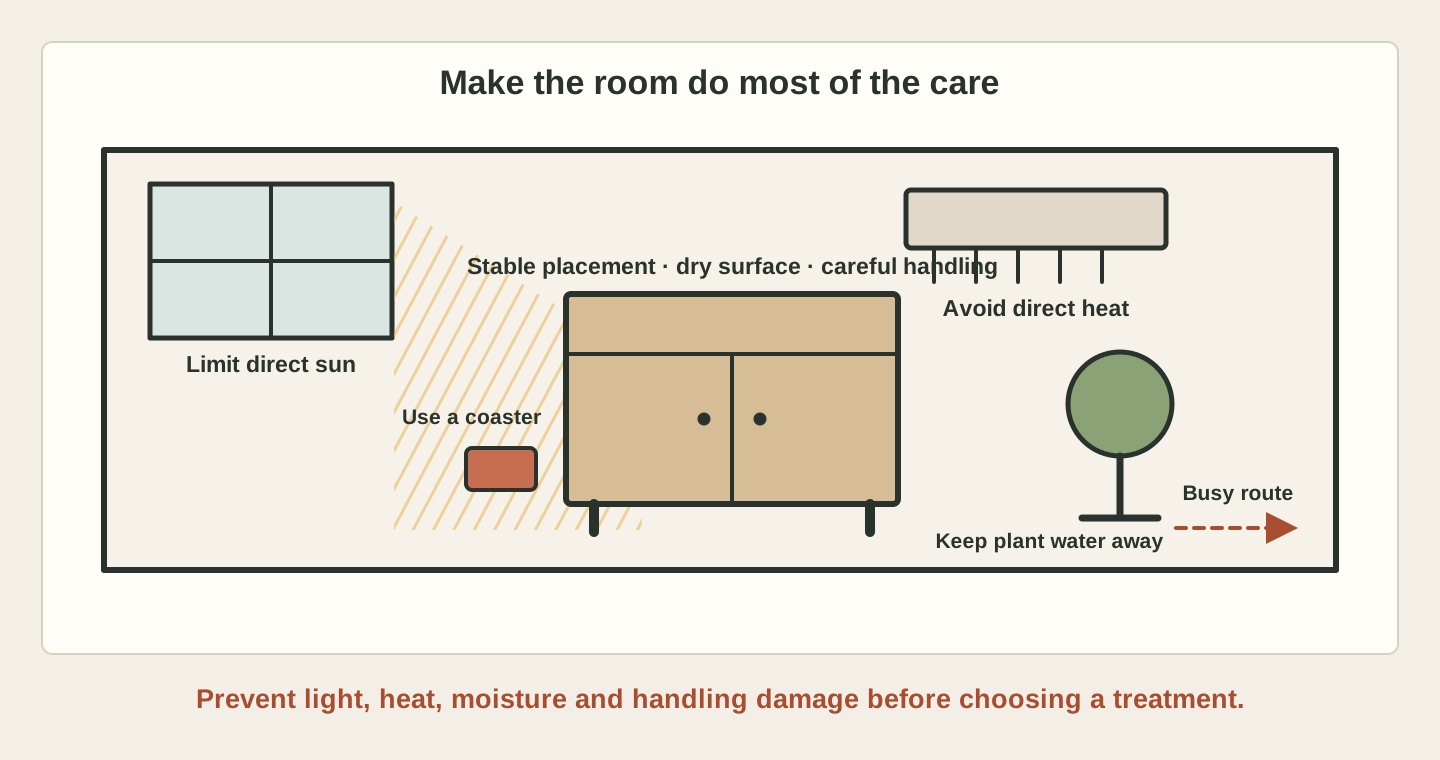
Use a coaster or a separate protective surface where drinks belong, and do not let a pot drain onto the furniture. Check that any glass top is supported without sticking to or abrading the finish. Leave enough ordinary room to open doors and drawers and to clean the floor without striking feet or lower edges.
Preventive care
Doing less can be the active choice
Moving a piece out of direct sun, stopping a plant leak and changing how it is lifted may preserve more than applying another coat. Care does not have to leave a new material behind.
Begin routine care with loose dust only
The U.S. National Park Service advises that cleaning historic wooden furniture should happen only as needed, that loose surface soil comes first and that anything beyond dusting depends on a sound, stable surface. That is a useful household boundary too: cleaning is a response to a real need, not a fixed polishing schedule.[4]
For a stable coated surface with no loose material, use a clean, soft, dry lint-free cloth and light pressure. Work with enough light to see whether dust is moving. Do not press into lifted veneer, snag flaking edges or drag grit across a polished face. Stop if colour, coating or fibres transfer to the cloth.
Unfinished wood is porous and can be softer than it looks. The Canadian Conservation Institute warns that water can swell fibres, raise grain and carry dirt below the surface. Loose, powdery or historically significant bare surfaces should not be cleaned as an ordinary household task.[3]
A soft brush may help move loose dust from a sound carving or corner towards a separately held, guarded low-suction nozzle, but do not place suction directly on the object or use the method around loose fragments. If that equipment or control is unfamiliar, a dry cloth on accessible stable areas and a professional question elsewhere is the safer plan.
Do not feed wood or chase shine
Wood does not need to be fed with oil or a commercial restorative mixture. The Canadian Conservation Institute notes that some polishes leave residues, and that oils, waxes or silicones can build up, attract dirt and complicate later conservation. A dry-looking appearance is not a diagnosis of missing oil.[2]
Do not add oil because the timber name sounds compatible, wax because another piece is waxed or spray because a label promises revival. First establish the present coating, earlier products, surface stability and the result you actually need. A finish may be original, later, mixed, worn through or already carrying several incompatible layers.
Wax can be appropriate for some known, stable surfaces, but it is not a universal routine and should not be layered into carvings or around fittings by default. Stripping or refinishing is a material change, not deeper cleaning. It removes evidence and cannot be undone by calling the new surface sympathetic.
Product boundary
A hidden test is still a treatment
An inconspicuous area can reduce the visibility of a mistake; it does not establish that an unknown finish and product are compatible. When identity or stability is uncertain, ask a furniture conservator before testing.
Should you oil a vintage teak sideboard?
A teak sideboard described as dry can lead to three different decisions. The useful distinction is the finish on the surface you intend to treat. Ask about the top, doors, interior and repaired areas separately; they need not have the same treatment history.
| What is established | A useful decision |
|---|---|
| Known oil finish, with a treatment record | Ask whether maintenance is needed and follow the confirmed compatible method for that finish. |
| Known lacquered surface | Care for the coating. Oil is not a repair for a worn, cloudy or damaged lacquer film. |
| Unknown finish, or different treatments on different areas | Map what is known and ask the seller or restorer to identify an appropriate care plan before adding a product. |
For example, a seller may have an invoice naming an oil treatment on the top but no information about the doors. That supports a question about maintaining the top; it does not establish a routine for the whole cabinet. Keep the product name, date and treated area together.
Carl Hansen & Søn separates maintenance for oiled, lacquered and soap-treated solid-wood tabletops. Its product-specific instructions demonstrate why finish matters; a sanding or oil procedure for one of those tables is not permission to do the same to an older veneered sideboard.[7]
If a lacquered top has gone dull while the sides still look good, ask about the coating and the cause of the change. Oil may alter its appearance without repairing the film. If the finish is unknown, do not try to settle the question with a scratch, solvent spot or improvised sanding test.
A useful message is: “The top looks duller than the doors. What finish and later products are documented on each area? Does the top need routine maintenance or assessment of the coating, and what method is compatible with the veneer and earlier repairs?” This gives the restorer a defined question without asking for a complete refinish by default.
Keep indoor furniture care separate from garden-furniture advice. The word teak does not make an outdoor oiling schedule relevant to a cabinet with lacquer, veneer or a later repair. Until the finish and necessary work are understood, the preventive care above remains useful: manage light and spills, and remove loose dust gently from stable surfaces.
Match the action to the surface you actually have
| Observed state | Useful action now | Do not assume |
|---|---|---|
| Known coated surface, sound and stable | Prevent exposure and remove loose dust gently when needed | That water, oil, polish or wax is compatible |
| Painted, lacquered, gilded or decorated surface | Check closely for lifting or powdering; keep routine care dry and light | That a clear-looking area behaves like the rest |
| Unfinished or worn-through wood | Keep dry, avoid abrasion and remove only loose dust if the surface is sound | That dark use deposits are dirt or that wet cleaning is safe |
| Unknown, sticky, cloudy, flaking, powdery or lifting surface | Photograph, isolate the cause if possible and seek professional advice | That another product will dissolve, seal or revive it safely |
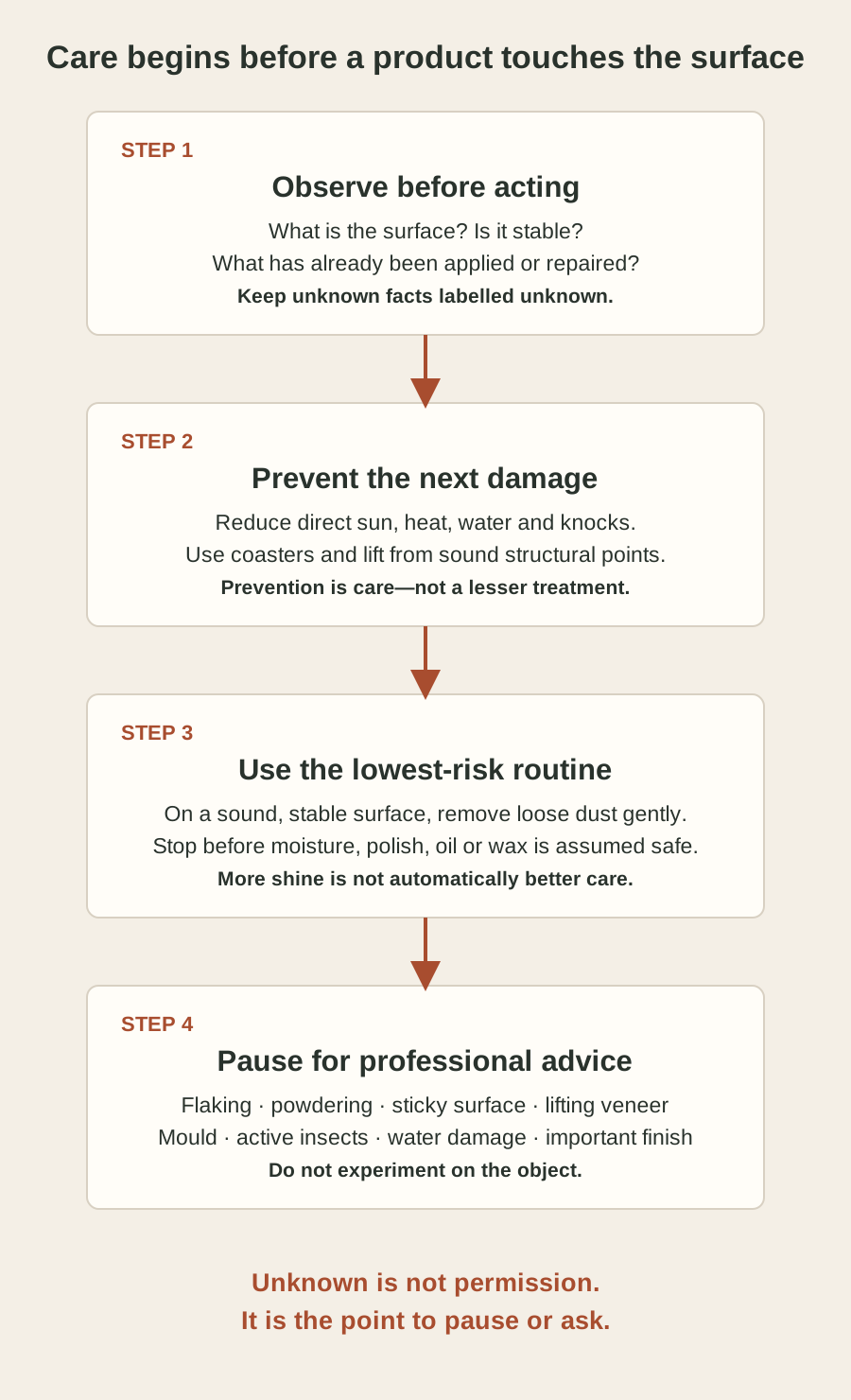
The Canadian Conservation Institute separates stable finishes from degraded ones and reserves aqueous or solvent cleaning of sensitive painted or deteriorated coatings for conservation professionals. Old repairs can also react differently from the surrounding surface, even when they are difficult to see.[2]
Material identity and finish identity are separate. A teak-veneered panel may carry lacquer, oil, wax, polish or a later mixture; a solid oak component may be painted. Use the construction Guide to describe the object, but do not turn a timber or veneer conclusion into a treatment recipe.
Respond to spills, pests and mould without escalating damage
Water can cloud a furniture finish, moisture changes can move wood and high humidity can support mould. If a fresh spill occurs, remove the source and blot accessible liquid promptly with a clean absorbent cloth; do not flood, scrub or add heat to make the mark disappear.[1]
Record what spilled, where it travelled and what changed as the area dried naturally. Lift loose objects only when that can be done safely. A persistent white mark, raised veneer, softened coating, staining at a joint or water reaching hidden layers is a treatment question, not an invitation to try heat, mayonnaise, oil or another internet remedy.
New sawdust-like material beneath holes can indicate active insect activity, while damp conditions can support mould. Keep a suspect piece away from other vulnerable objects when that can be done without disturbing it, limit access and seek suitable conservation or pest advice. A photograph of an old hole alone cannot establish current activity.[1]
Health and object boundary
Do not turn mould or pest evidence into a home treatment experiment
Mould can affect people as well as objects, and insect treatment depends on the species, activity and construction. Do not brush, vacuum or spray a suspect piece. Ask promptly how to isolate or contain it safely; the same method does not automatically suit mould and insects.
Move the structure, not the most convenient edge
Check for loose joints and damage before moving. The Canadian Conservation Institute recommends emptying furniture, removing safe loose components and lifting from strong structural points rather than dragging or pulling on a top, back or arm. The exact strong point still depends on the object and its repairs.[1]
Before an ordinary move
- EmptyRemove objects and separately secure only drawers, shelves, doors or loose parts known to be safely removable.
- InspectFind movement, detached moulding, lifting veneer, fragile feet, glass, stone and previous repairs before lifting.
- PlanChoose sound load-bearing points, enough people and a clear destination before the object leaves the floor.
- LiftDo not drag the feet or use a decorative top, drawer pull, chair back or arm as a handle.
- PlaceSet the piece level and dry, then reopen moving parts gently rather than forcing a change caused by the move.
For a delivery rather than a small room move, use the complete route-measurement Guide and let the seller or carrier confirm protection, orientation and handling.
Ask for the care history before the piece arrives
A useful seller history can prevent incompatible care even when it is incomplete. Ask what they know, who performed any work and which areas differ. Keep “not known” rather than converting a confident appearance into a finish claim.
Adaptable message
Ask about the surface and earlier products
Hello—before the piece arrives, could you describe which surfaces are coated, painted, waxed, oiled or unfinished, if known, and identify any refinished or repaired areas? What cleaning, polish, oil, wax or other product has been used during your ownership, and when? Please show the top, edges, back, underside and any sticky, cloudy, flaking, powdery, water-marked, lifting or newly dusty area in context. Please do not test a new product or remove material for the photographs. Thank you.
Use the photograph-request Guide to keep each detail attached to the whole object, and the construction Guide to describe mixed materials without scratching or dismantling the piece. Neither identifies an unknown finish from a photograph.
Keep the seller's answer, current photographs and any professional treatment record with the piece. Note only products and dates that are actually known. The next owner will benefit more from a short honest record than from a flawless-looking surface with no history.