Choose the room before choosing the wrapping
Wood gains and loses moisture as the surrounding humidity changes. The Canadian Conservation Institute explains that the resulting movement can damage wood and finishes, and warns against attics, basements and garages with fluctuating conditions. A piece that has survived decades in a home can still be harmed by a new storage environment.[1]
For a short gap between homes, first compare keeping the furniture in a suitable occupied room, agreed seller storage and a professional storage service. Each option has a different handling count, access arrangement and cost. The cheapest monthly rent may require two extra moves or leave the furniture inaccessible when your new home is ready.
Tell the provider what is involved: for example, a veneered cabinet with a loose corner, a table with separate leaves or a chair with upholstery. “Wooden furniture” may also contain glue, metal, leather, cane, glass or stone. Sensitive materials and existing damage may need a conservator’s storage plan.
Do not apply oil to “feed” the timber before storage. CCI specifically rejects that idea: maintaining an appropriate environment matters, and oil will not prevent drying damage in air that is too dry. Keep any cleaning or finish treatment separate from the booking decision.[1]
Ask what climate control means in this room
A comfortable reception office tells you little about the unit upstairs or the container outside. Ask about the exact room you would rent and whether the service controls temperature, relative humidity or both. Heating and humidity control are different claims; request the actual operating description.
CCI’s storage guidance calls for conditions appropriate to the objects, monitoring, avoidance of extremes and attention to leaks and condensation. Translate that into questions a provider can answer. Museum recommendations do not certify a commercial unit, and this Guide does not prescribe one humidity number for every mixed-material antique.[2]
| Ask the provider | Why it affects your choice |
|---|---|
| What is controlled and logged in this room? | A label alone does not describe the actual environment. |
| Can you show recent and seasonal records? | One reading cannot describe a winter or hot spell. |
| Who receives an alarm and responds? | A measurement helps only if someone can act on it. |
| Any known leaks, condensation or pest incidents? | You need the history and the current response. |
| When can I inspect and retrieve my furniture? | The plan must work for a changed moving date too. |
Confirm minimum rental periods, notice, access charges and the cost of retrieval in writing. If protection or insurance is part of the offer, ask for the actual terms and check whether the intended furniture and relevant causes of damage are included. A storage advertisement cannot settle your cover.
Make a condition and parts record before packing
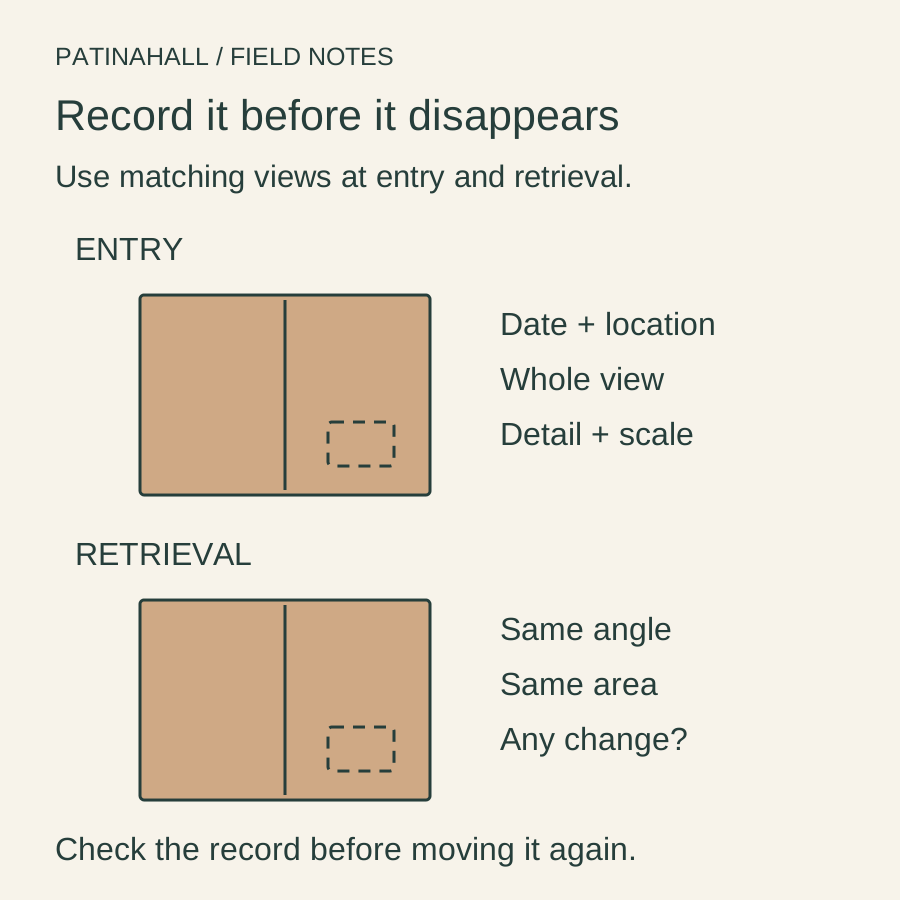
Give each piece a simple reference such as “dining table A”. Take dated front, back, side and safely accessible underside views before wrapping obscures them. Record existing marks and repairs in context, then take a closer view of anything you will want to compare later. Include the current location and who handed the piece over.
List leaves, shelves, keys, cushions and other included parts. Record their number and location, including parts stored separately. Label the packaging with the furniture reference and a clear description, without sticking a label onto the old finish or covering an existing maker’s mark.
Agree which parts are designed to come off and who will handle them. Do not unscrew an old joint simply because dismantling would save floor space. A separate stone top, fragile glass panel or unstable cabinet needs a suitable professional handling and support plan.
For the journey into storage, use arranging professional furniture delivery. The transport plan and the months-long storage arrangement are separate decisions.
Choose covering for the surface and the environment
CCI’s guidance for closing museums discusses polyethylene and cotton furniture covers, with attention to the storage conditions and the object. For a household move, ask the packer what will touch the finish, how vulnerable edges are protected and whether the covering is suitable for the intended duration. A cover chosen for one journey may need changing at arrival.[3]
Use clean materials appropriate to the surface. Keep tape and adhesive labels on the packaging, and avoid tying a cover so tightly that it presses on a raised ornament, loose veneer or projecting handle. A flaking or tacky surface needs specialist advice before anything is laid against it.
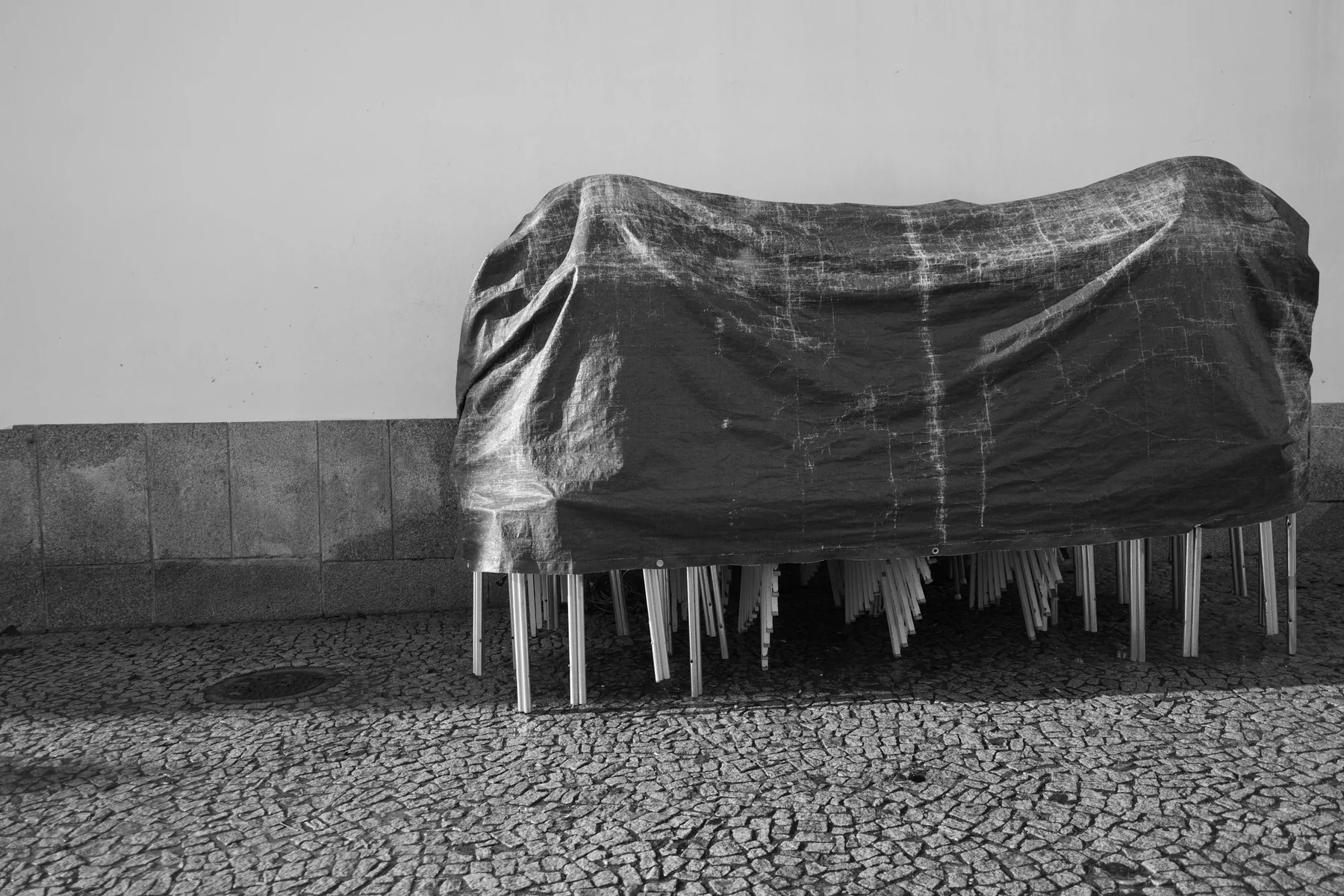
There is no useful blanket rule that all plastic is good or all plastic is bad. CCI describes designed polyethylene enclosures that buffer humidity, alongside suitable platforms and understood room conditions. That is a controlled approach, not permission to seal an unknown or damp piece in domestic stretch wrap. Ask a conservator when the packing itself is meant to control the environment.[4]
If a piece arrives wet, with visible mould or a suspected infestation, pause its entry into shared storage and contact the provider and an appropriate specialist. Do not hide the problem under fresh wrapping or attempt a treatment inside the unit. A neutral odour or clean photograph alone does not settle the cause.
Plan the space around each object
CCI recommends keeping stored objects off the floor on suitable supports and away from water and heat risks. Its broader preventive-conservation guidance shows how an appropriate platform can reduce exposure to minor flooding. The support still has to suit the object’s weight, footprint and vulnerable parts.[4]
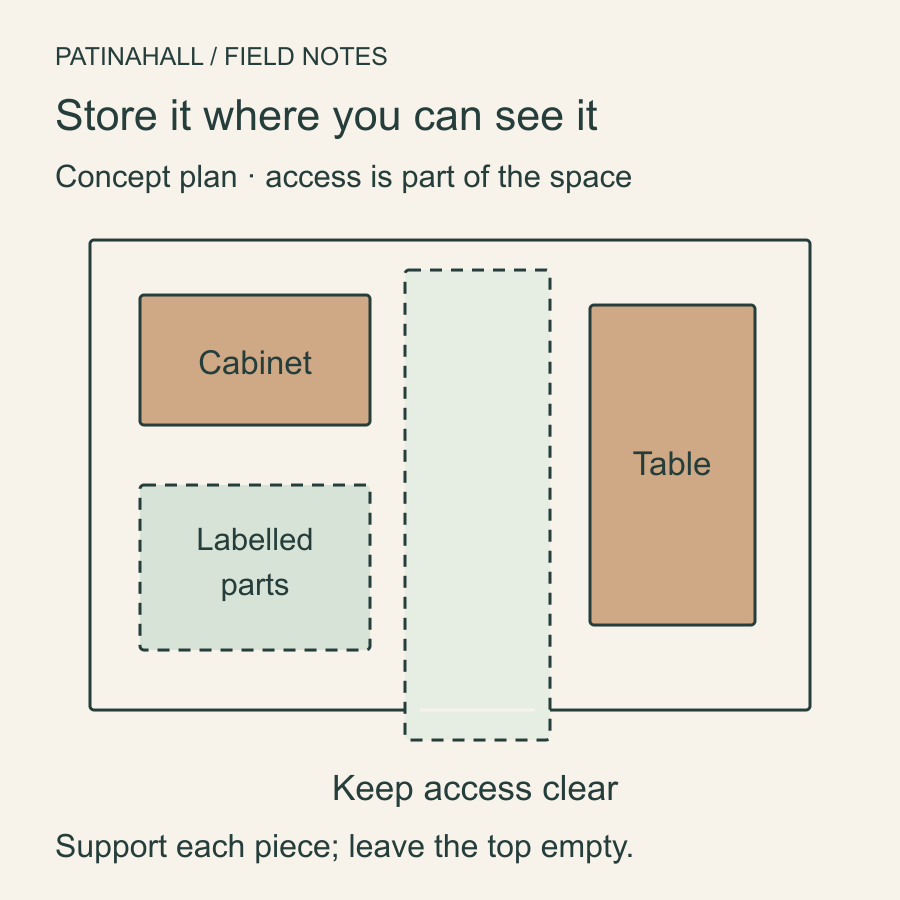
Ask the provider to specify the platform or support arrangement; do not improvise a tall stack of loose blocks beneath delicate legs. Keep each piece in its agreed supported orientation, with no boxes piled on a veneered top or chair seat. Store detached parts on their own appropriate supports.
Leave enough access to see the back and lower areas without pulling several other pieces out. Keep exits, building systems and required aisles clear. A footprint that technically fits every item can still be too crowded for the people who must inspect and move them.
For a table and six chairs, draw all seven footprints plus the separate leaves and the route to the door. If the plan depends on nesting or stacking furniture, have that arrangement assessed for those exact pieces. Saving a little floor area is not useful if every inspection requires another risky move.
Agree checks now, then compare before the next move
CCI treats regular inspection and a record of change as part of storage, with attention after hot or humid periods. Agree who checks the room and who can inspect the furniture, how a concern reaches you and what happens if the environment becomes unsuitable. Set that arrangement with the provider rather than assuming someone will notice.[2]
At retrieval, compare the entry photographs before repacking. Check the parts list, wrapping condition, visible joints, lower edges and recorded repairs. Note any new change and photograph it in the same way. A new gap or mark deserves explanation; its appearance alone does not prove when or why it happened.
Allow the packer or conservator to advise on unpacking after a substantial environmental change. Do not rush a cold or damp arrival into use beside a heater. If a concern remains, document it and agree the next assessment before the furniture disappears into another vehicle.
Send a storage brief that someone can act on
Message to copy
I need to store [pieces, materials and dimensions] for approximately [period]. Please confirm the exact room, what temperature and humidity controls and records are available, water and pest history, and who responds to alarms. How will each piece and its loose parts be supported and covered? Please include inspection access, retrieval notice and charges, the condition-record handoff and the applicable protection or insurance terms.
Choose storage when the environment, handling, inspection and exit arrangements are clear enough to write down. If nobody can explain the room conditions or let you reach the furniture, compare another option before moving it in. Keeping a piece well includes being able to see it again.