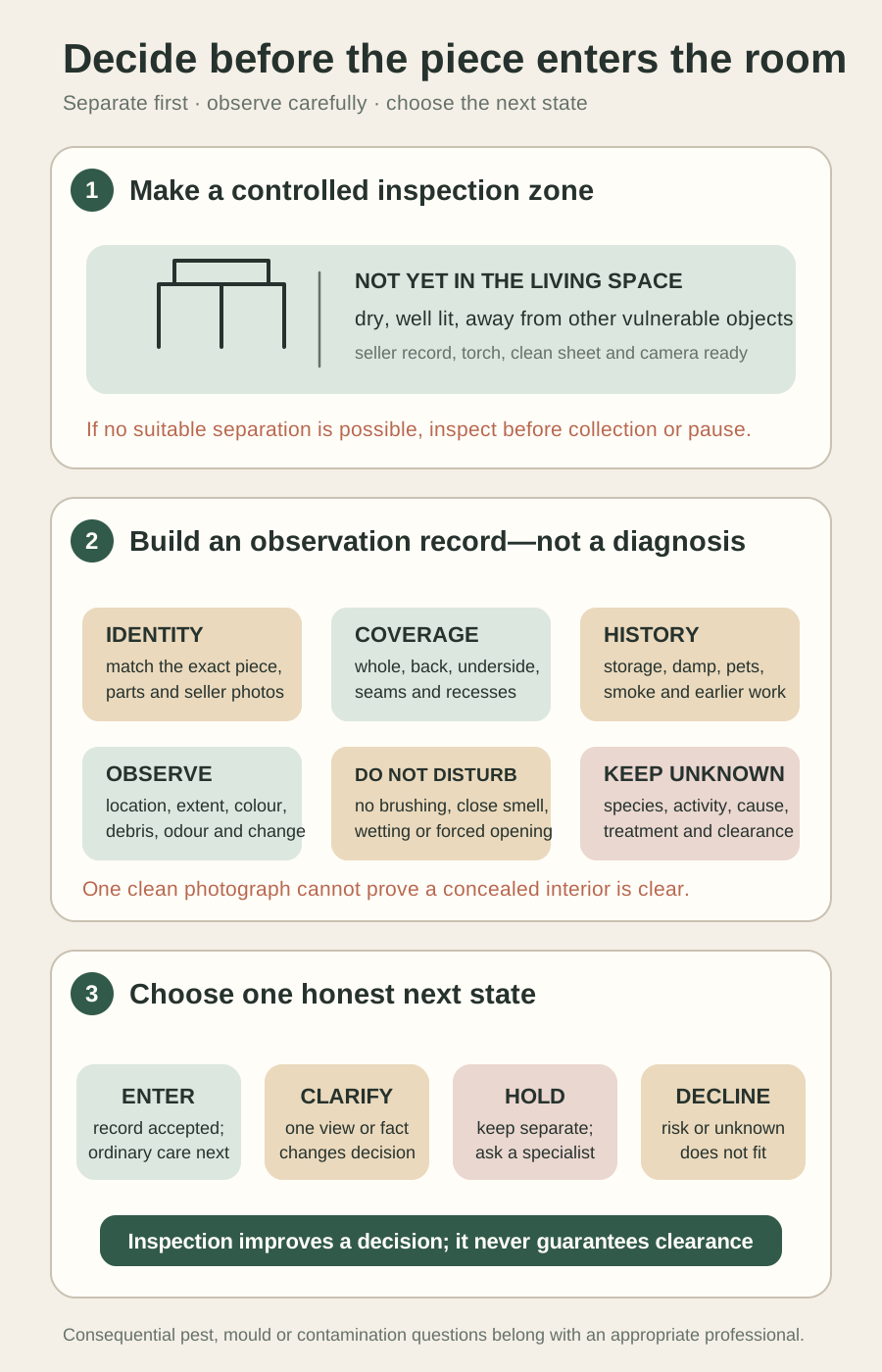
Choose the inspection point before collection
A workable home-entry zone
- SeparateKeep the piece away from beds, sofas, wardrobes, stored textiles and other vulnerable objects while the decision remains open.
- Dry and shelteredUse a stable dry location rather than rain, damp ground or a space that creates a new moisture problem.
- Light and accessProvide bright general light and safe access to every exterior side that can be viewed without invasive opening.
- Clean baselineA clean pale sheet or paper beneath the piece can make later debris visible without declaring what caused it.
- Controlled movementKeep children, pets and unnecessary handling away until structure and consequential observations are accepted.
- Exit routeThe piece can still be held, professionally collected or declined without carrying it through the occupied home.
Before you buy
No holding zone changes the purchase decision
If a large sofa, bed frame or upholstered chair must move directly from a seller into an occupied room, arrange the important inspection at the seller, dealer or another suitable site before payment and collection. Do not buy first and invent a safe place afterwards.
Use the delivery-route Guide for openings, turns and final position. This Guide owns the separate decision point before the piece crosses into ordinary household use.
Freeze the seller baseline before anything changes
Save the listing, accepted photographs, seller answers and collection condition before cleaning, dismantling or transport changes the evidence. Confirm the exact piece and every included cushion, drawer, shelf, key, loose fitting and removed component. Photograph it again at handoff and on first placement in the inspection zone.
| Record | Useful detail | Do not turn it into |
|---|---|---|
| Seller history | Known storage, damp or leak events, pets, smoking, odour, pest concern, treatment, cleaning and repair | Proof that an unremembered or undisclosed event never happened |
| Accepted condition | Dated whole views and close-ups of every disclosed mark, hole, stain, repair, tear and underside closure | A guarantee about concealed interiors or future activity |
| Arrival observation | Exact location, extent, colour, texture, odour and loose material seen before cleaning | A diagnosis of pest, mould, contamination or cause |
| Change after handoff | New debris, dampness, odour, movement or surface change with date and location | Certainty that transport or the seller caused it |
Useful language
Write what another person could find
‘Pale granular debris beneath the rear left rail’ is a reproducible observation. ‘Active woodworm’ is an identification and activity claim. ‘Sweet smell means bed bugs’ is not a responsible diagnostic shortcut. Keep observation, seller report, inference and professional assessment visibly distinct.
Inspect from the whole object to accessible recesses
The Canadian Conservation Institute advises checking furniture for damage and loose joints before moving it, and notes that high humidity can promote mould while sawdust-like material beneath a piece can warrant concern about insects. For a buyer, that supports a calm pre-move record; it does not identify a species, prove activity or certify structure.[2]
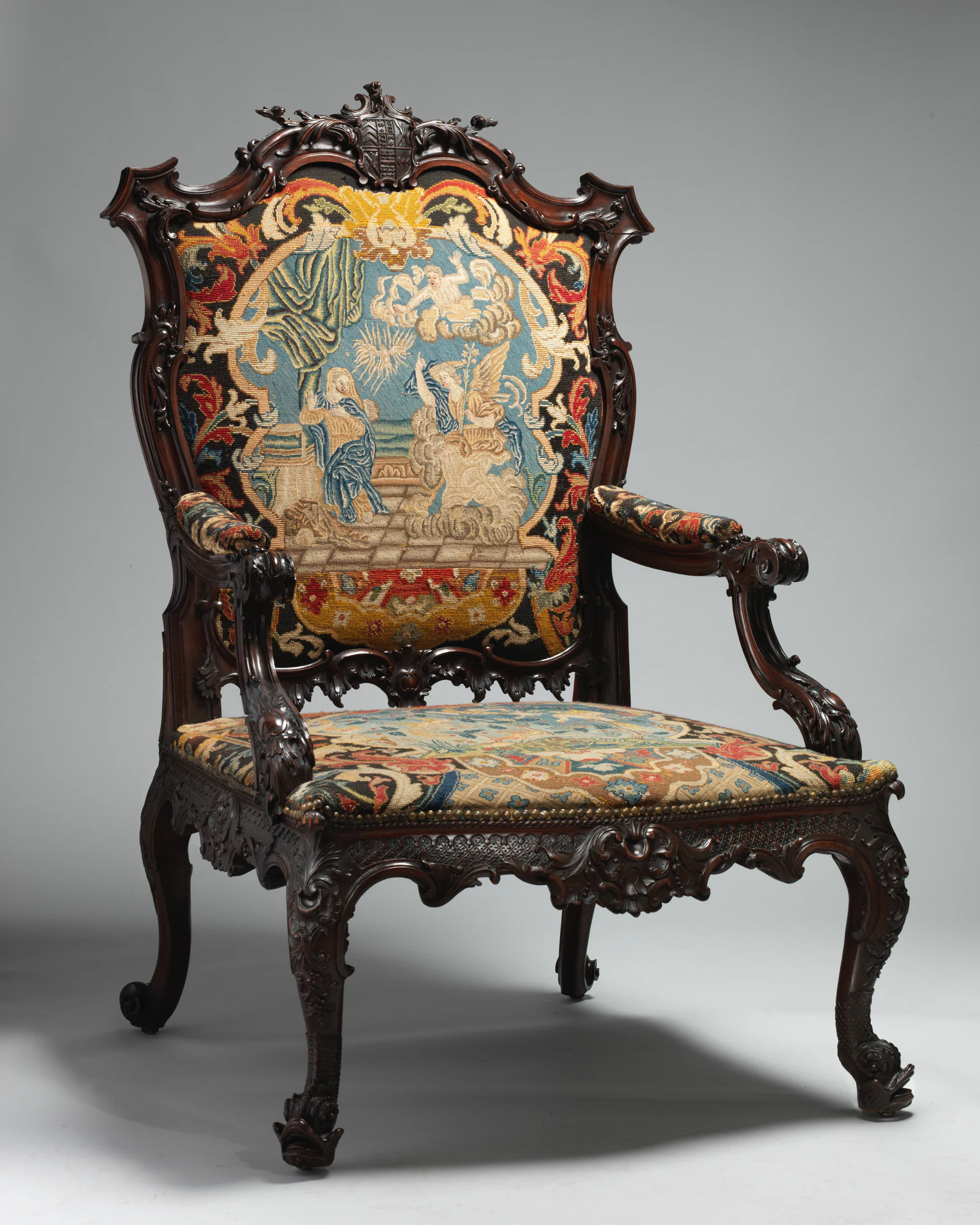
- Stand back first: confirm identity, stance, completeness, overall dryness and whether anything has changed since the accepted seller record.
- Follow exterior edges, feet or base, joints and contact points; then look behind and beneath removable cushions without tearing, unpicking or forcing them.
- Use a torch across seams, tufts, piping, folds, screw recesses, drawer cavities and junctions where accessible, keeping each close-up tied to a whole view.
- Open ordinary drawers and doors one at a time only after structure is accepted; remove a part only when it is designed to come out and can be handled safely.
- Photograph loose debris where it lies before anyone brushes, blows or vacuums it. Add a scale and the exact location.
- Record odour from an ordinary standing distance. Do not place the face close to a suspect surface or ask someone else to perform a close smell test.
The furniture-photograph Guide provides the whole, context and detail sequence. Use it to request one missing view, not to turn photographs into an all-clear.
Keep concealed interiors honestly unknown
Upholstered interiors, lined drawers, closed dust covers, double walls and fixed panels may hide construction and material that an ordinary buyer cannot inspect. The boundary is useful: record the closure, adjacent frame, seller history and any observation around it; do not cut cloth, remove staples, unscrew a historic panel or drill an access hole for reassurance.
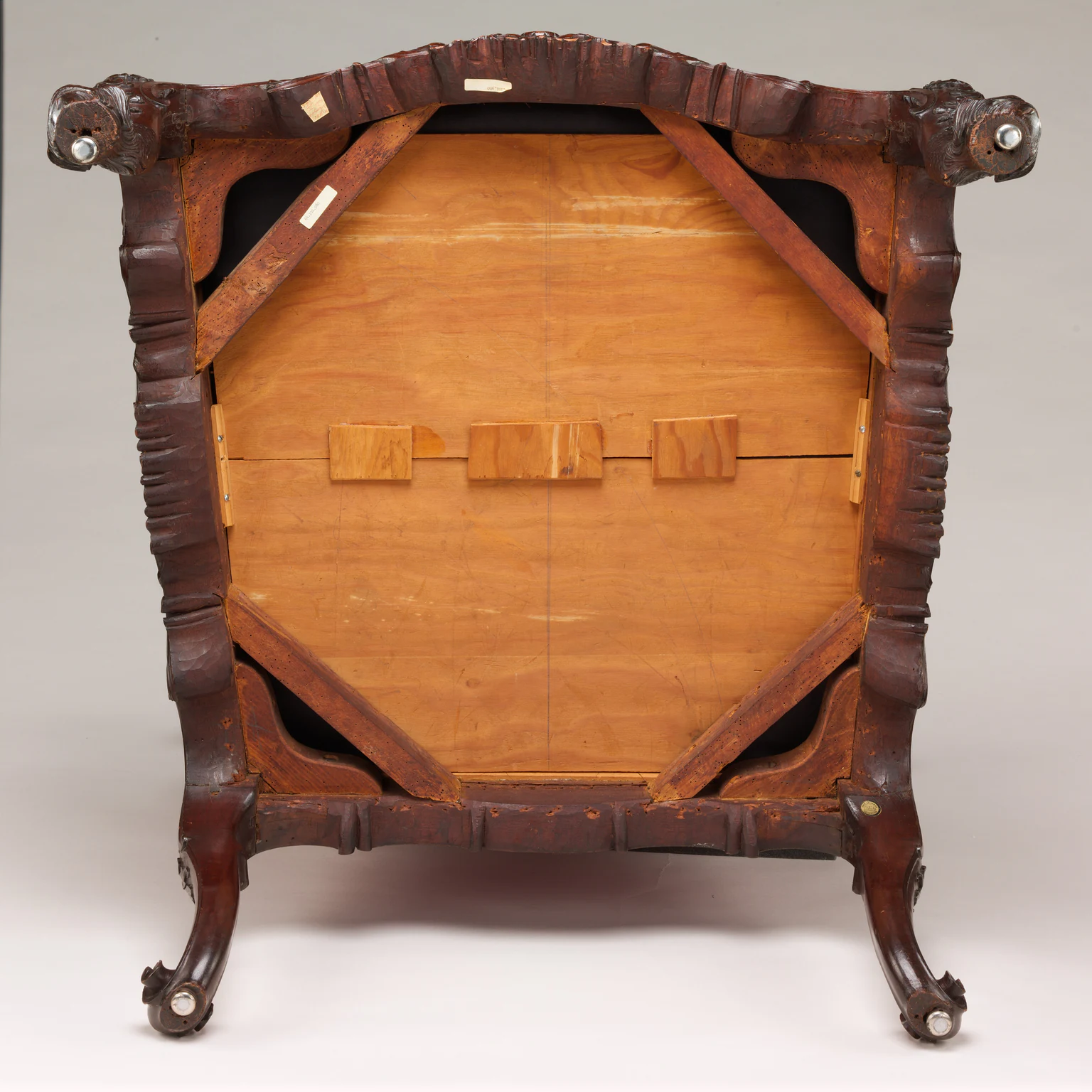
For a layered seat or sofa, use the vintage-upholstery Guide to separate cover, padding, support, frame and likely work. The home-entry decision remains narrower: can this piece enter now, or must an unresolved observation stay separate?
Hard limit
A clean exterior does not clear a concealed interior
If the intended use, household vulnerability or seller history makes an inaccessible area consequential, ask an appropriate professional what inspection is possible before buying. When it cannot be resolved proportionately, accept that uncertainty explicitly or decline.
Separate pest, moisture, odour and ordinary age
CCI's pest guidance explains that distinguishing mould from dust or other soiling, and identifying risks to people and objects, requires suitable training and equipment. Appearance alone should therefore determine the next question or stop boundary—not a confident label.[3]
| Conversation | Record | Responsible next step |
|---|---|---|
| Possible pest evidence | Live or dead insect, cast material, spotting, holes, loose debris, damaged fibres; exact place and change over time | Keep separate and ask an appropriate pest or conservation professional when the finding is consequential |
| Moisture or possible mould | Current dampness, tide line, bloom, powder, staining, deformation, storage or leak history; do not disturb it | Stop ordinary handling where exposure or spread is plausible and obtain suitable object and health advice |
| Odour or residue | Where and when noticed, intensity at ordinary distance, smoke/pet/storage/cleaner history and affected material | Ask a material-appropriate cleaner, upholsterer or conservator about realistic scope before assuming removal |
| Dust, wear or old damage | Distribution, colour, attachment, historic photographs and whether anything appears new | Use material-safe ordinary care only after consequential alternatives and structure are accepted |
CCI warns that mould on heritage material may damage the object and pose a health risk, and its response guidance is written for trained collection work. A household buyer should not convert that technical publication into a DIY remediation recipe. Suspected mould stays undisturbed and separate until the right person defines the next step.[4]
Not a shortcut
Old holes do not prove active insects—and fresh debris is not routine dust
Age, species, activity and structural consequence need evidence. Photograph the holes and material in context, record whether new material appears on a clean baseline, and use professional identification when the decision matters.
Do not turn cleaning into clearance
The U.S. Environmental Protection Agency advises thoroughly inspecting and cleaning second-hand furniture before bringing it into the home as part of bed-bug prevention. Read those as separate responsibilities: inspection does not guarantee absence, and cleaning must still suit the exact material and finish. Integrated pest management is not a licence for casual pesticide use.[1]
Keep these out of an improvised arrival test
- Pesticide or insecticideDo not spray, dust or fog an unidentified object or use a product outside its exact label and competent professional context.
- Heat, cold or steamDo not improvise treatment temperatures or durations; heat, freezing and moisture can damage composite furniture and still fail as treatment.
- Ozone or fragranceMasking an odour does not identify or remove its source, and a strong new smell can erase useful evidence.
- Solvent, bleach or wet washUnknown finishes, dyes, adhesives, veneer, leather and historic textile can be irreversibly altered by generic cleaning advice.
- Aggressive vacuuming or brushingLoose finish, fibres, suspected mould and diagnostic debris may be damaged, dispersed or removed before they are documented.
After the entry decision is accepted, use the vintage-wood care Guide or an appropriate material professional for ordinary care. The method begins with material, finish and condition—not a universal disinfecting routine.
Choose enter, clarify, hold or decline
The four honest outcomes
- EnterThe exact piece matches the record, structure allows ordinary handling, no consequential observation remains and material-safe care is understood.
- ClarifyOne seller answer, complete view, date, storage fact or accessible observation could materially change the decision.
- HoldKeep the piece separate while an appropriate pest, conservation, mould, cleaning or other professional defines the concern and next step.
- DeclineThe observed condition, likely work, household consequence or unavoidable uncertainty does not fit the purchase.
If the piece enters, preserve the seller baseline and first inspection record. Place it where all sides needed for ordinary follow-up remain accessible, then watch for a material change rather than repeatedly disturbing the object. If new debris, dampness, odour or movement appears, return to the separate observation state and choose the right handoff.
A balanced decision
Used furniture is not automatically unsafe
The point is not to treat every old object as contaminated. It is to give a consequential observation somewhere to go before the object reaches a bedroom, sofa, wardrobe or collection—and to let a well-recorded, accepted piece enter without vague fear.
Send one home-entry request before collection
Message to copy
Ask about the conditions that change entry
Hello—before arranging collection, could you confirm where and how long the piece has been stored; any known damp, leak, mould, pest, pet, smoking, strong odour, cleaning or treatment history; and whether anything new has appeared beneath or around it? Please send current whole views plus the back, full underside, feet/base, seams or cushion recesses and every hole, stain, loose debris or affected area in context and with scale where these can be viewed safely. Please do not brush, vacuum, spray, wet, force open or dismantle anything for the photographs. I need to decide whether it can enter my home directly, needs a separate professional check or is not the right piece for me. Thank you.
PatinaHall helps you form the evidence request; the independent seller remains responsible for their description, sale, handoff, delivery and returns. Agree what happens if the exact piece or its condition at collection differs materially from the saved record before anyone loads it.
Proceed when the record and home-entry state are acceptable, not because a seller uses the word ‘clean’, ‘treated’ or ‘from a good home’. Pause when an observation needs the right person. Decline when safe separation, inspection or a credible next step is unavailable.