Begin with the whole object
Start with a clear view of the complete piece. It should be visible from edge to edge, without furniture, cushions or decorative objects hiding important areas.
For a cabinet, sideboard or chest, ask for:
- the front with every door and drawer closed;
- both sides;
- the back;
- the top;
- the underside, when it can be photographed safely;
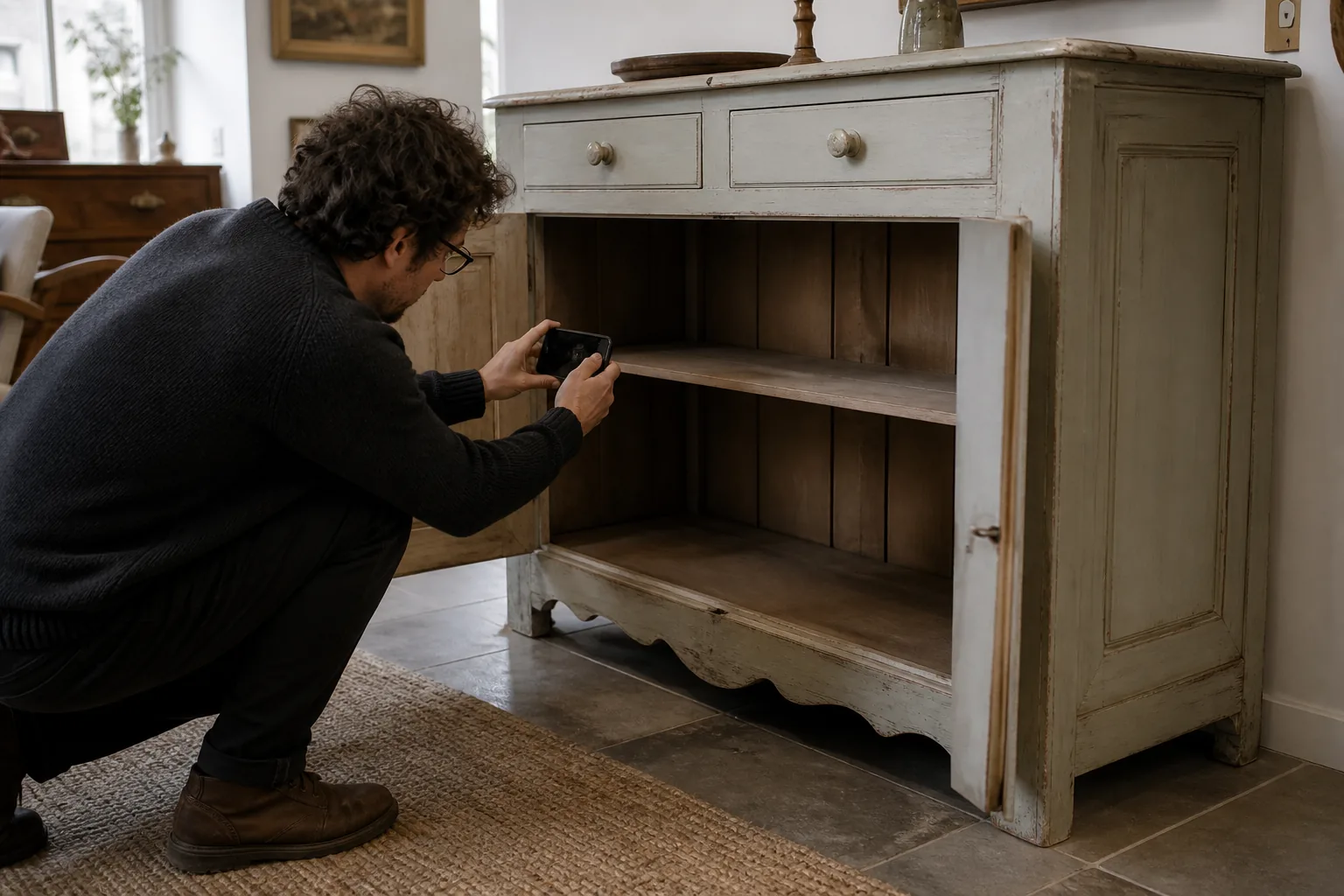
- the interior with doors and drawers open.
For a set, ask for one photograph showing every included piece together. Then request individual views of any chair, leaf, shelf, cushion or fitting whose condition differs from the others.
A styled room photograph can show scale and character, but it should not replace a clear record of the object itself.
Ask for the parts that work hardest
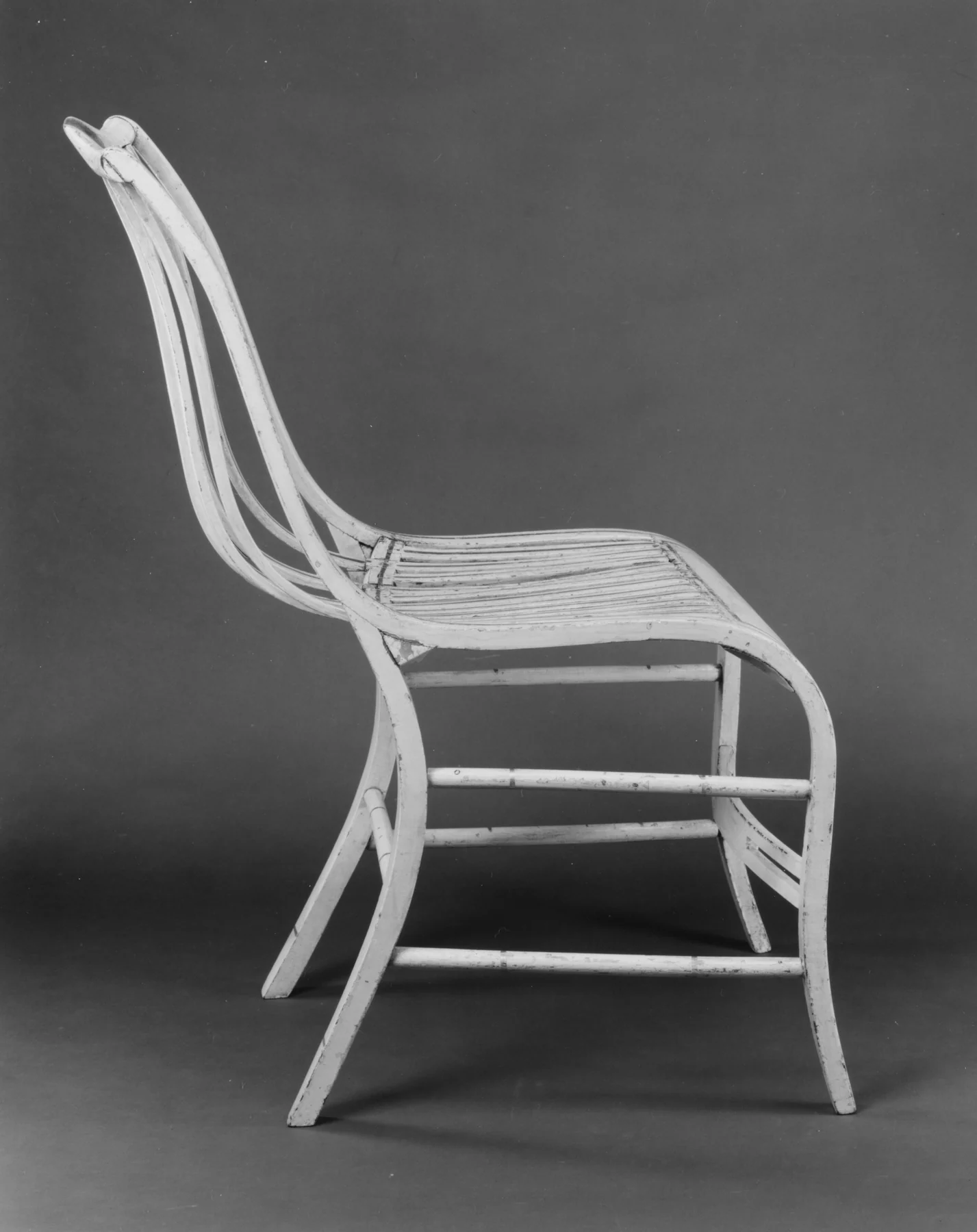
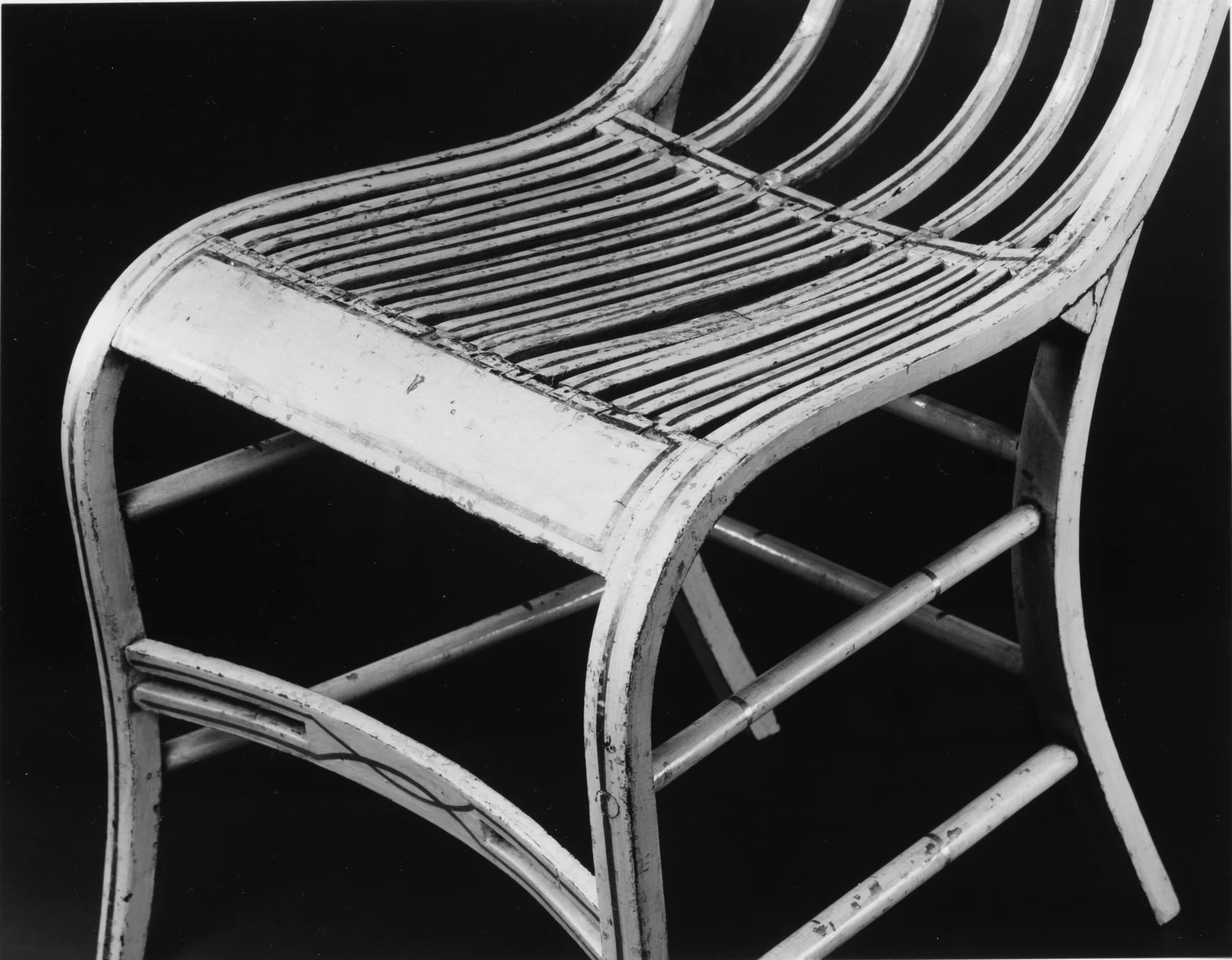
The most informative photographs are often not the most attractive ones. Look closely at the parts that carry weight or move repeatedly:
- chair legs, stretchers, backs and seat rails;
- table legs, aprons, bases and extension mechanisms;
- cabinet feet, hinges, door pivots and shelf supports;
- drawer sides, runners, stops and joints;
- handles, locks, keys and other hardware;
- cane, upholstery, straps and exposed seat construction;
- stone, glass or ceramic where it meets a supporting frame.
Ask whether anything is loose, distorted, difficult to operate or supported by a later bracket or fastener. A short video can help show a drawer, door, swivel or extension mechanism in ordinary use, but no fragile part should be forced for the camera.
The back and underside may reveal replacement boards, new screws, metal plates, old repairs, labels and differences in construction that are not visible from the front.
Show marks in context
A close-up of a label, stamp or metal plate is useful only when its location is understood. Ask for two photographs:
- a wider view showing where the mark sits on the object;
- a sharp close-up in which the wording, numbers and edges can be read.
A mark may relate to a manufacturer, retailer, importer, model, owner or repairer. Consider it alongside the object's construction, dimensions and documented comparisons rather than treating it as proof on its own.
Do not ask a seller to remove a label, scrape a surface or dismantle the piece to expose a mark.
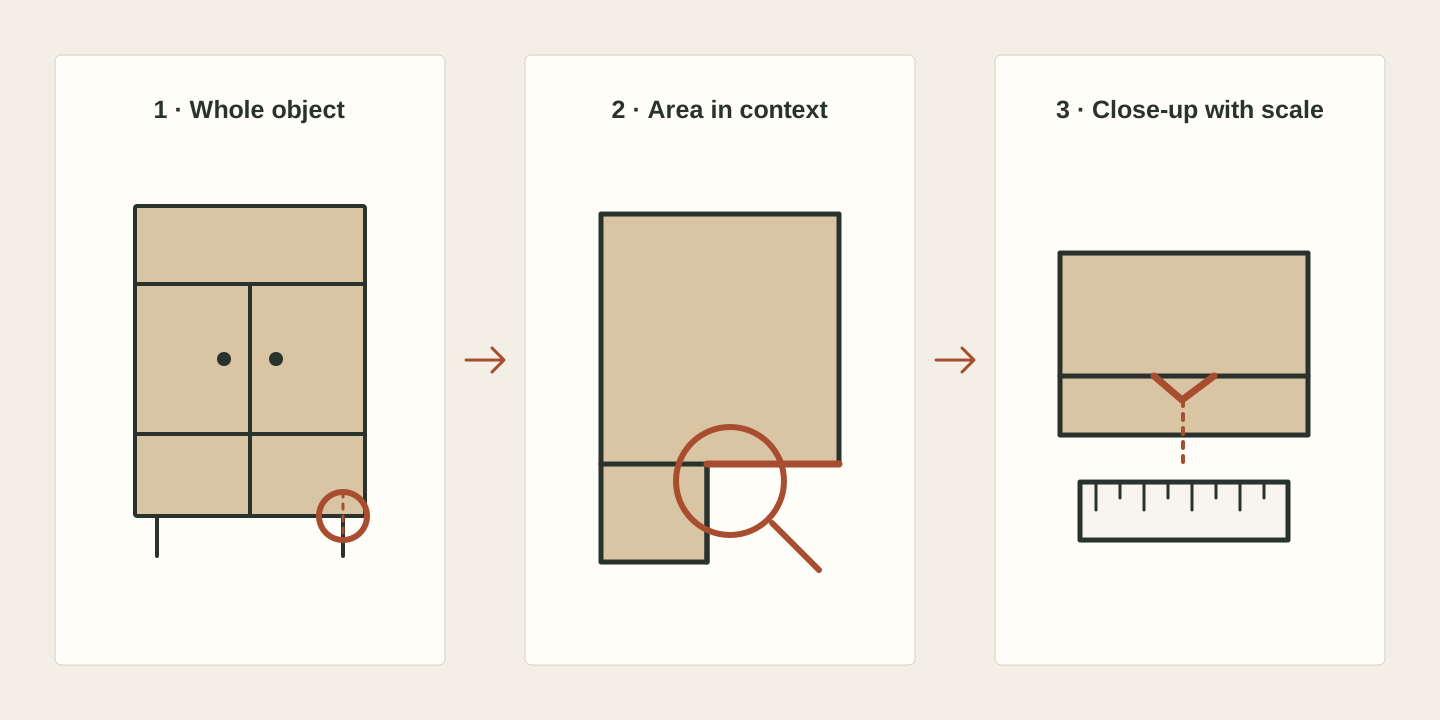
Show defects at three distances
A single close-up can exaggerate a small mark or hide its significance. For every notable defect or repair, ask for:
- The whole object — to establish proportion and location.
- The area in context — to show the nearest edge, joint, foot or moving part.
- A close-up with scale — to show surface detail and approximate size.
A ruler is usually clearer than a hand or coin because its size is known. Place it beside the issue rather than over it.
Use the same sequence for scratches, veneer loss, stains, cracks, chips, repairs and upholstery damage. Photographs can show what is visible; they do not always establish the cause, depth, stability or likely cost of repair.
Use light that reveals the surface
Ask for neutral, unfiltered photographs in good light. Keep a clear overall view, then request a second view with ordinary light falling across the surface.
The Canadian Conservation Institute demonstrates why both views matter: even lighting records general appearance but can conceal texture and damage; low-angle, raking light makes surface texture and damage more apparent. Its example is a framed textile, not a furniture diagnosis. Use the lighting principle to ask about a visible ridge or depression, not to decide its cause from a photograph.[1]
Dark shadows can hide lower edges and interiors. Strong reflections can hide glass, polished finishes and metal. When colour matters, compare several views rather than relying on one heavily edited image.
Do not expect photographs to establish an exact timber colour. CCI's photodocumentation guidance treats lighting, colour balance, camera settings and image-quality checks as parts of the recording process. For a purchase, compare unfiltered views and ask the seller about colour; do not identify wood from a screen colour alone.[2]
Confirm what is included
A photograph should make the offer itself clear. Ask the seller to show:
- every table leaf or extension;
- removable shelves;
- keys;
- cushions;
- mounting hardware;
- cables, plugs or shades supplied with lighting;
- loose or replaced parts retained with the object;
- every matching piece included in a set.
If something appears in a styled photograph but is not part of the sale, the listing should say so plainly.
A useful request to send the seller
Message to copy
Could you please send clear photographs of the full piece from the front, back and both sides, together with the top, underside and interior where practical? I would also like to see the main joints, feet, moving parts, hardware and any maker's marks. For each area of damage or restoration, could you include the whole object, the affected area in context and a close-up with a ruler? Please also confirm which shelves, leaves, keys, cushions, fittings or other loose parts are included.
What photographs cannot settle
Good photographs help you ask better questions. They cannot guarantee authorship, date, structural safety, electrical safety, active insect status or the quality of work hidden beneath a surface.
Leave an attribution unconfirmed when the evidence remains incomplete. Seek qualified advice when an issue may affect safety, electrical use, structural stability, active infestation or an important historic surface.