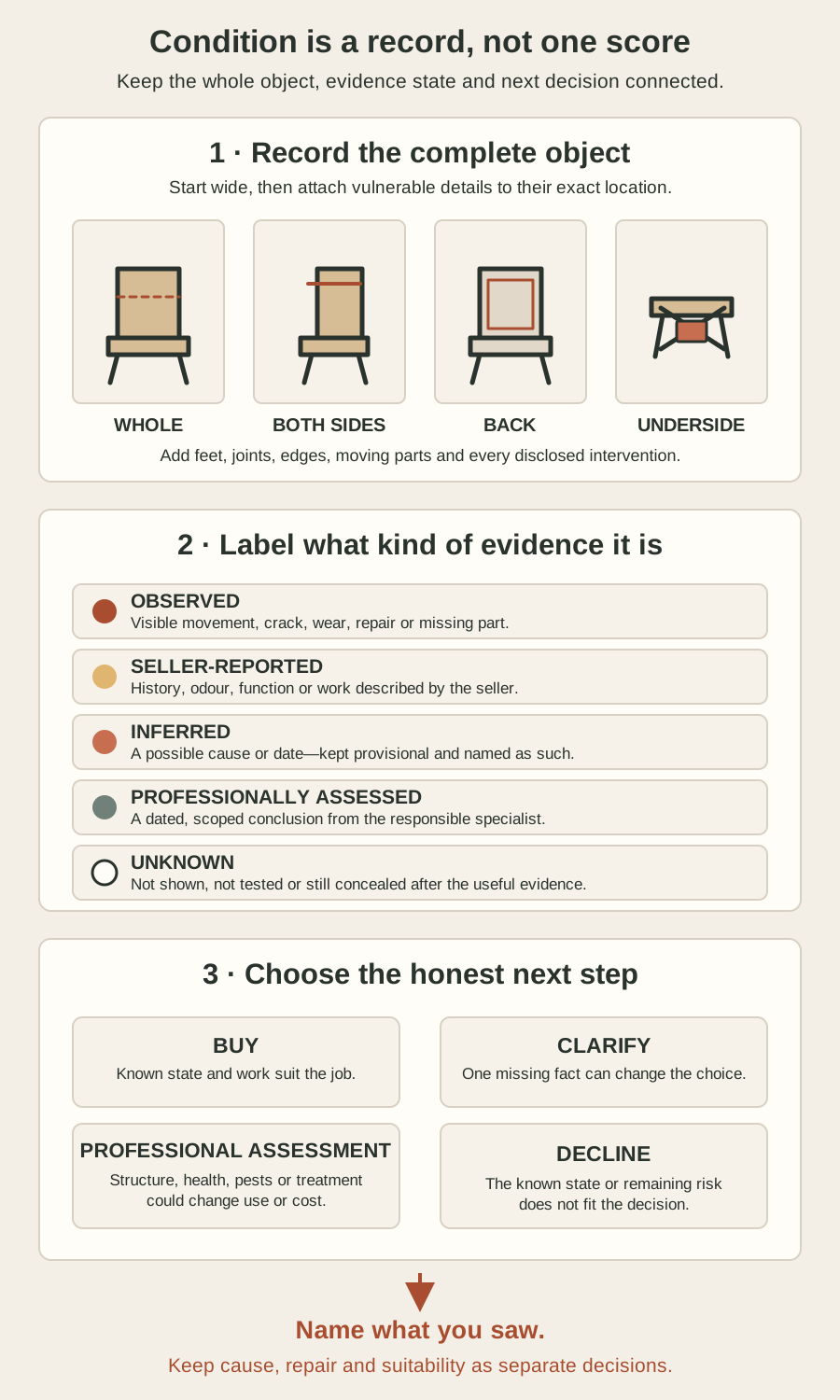
Choose the job—and the consequence of getting it wrong
Begin with what the object must do. A dining chair used every evening needs a different level of structural confidence from an occasional chair kept for display. A chest for folded linen has a different loading and access problem from one expected to hold records, tools or a television. Historical importance may also make preservation more important than quick refinishing.
Write a short condition brief
- UseWho will use the piece, how often, in which position and with what realistic load or movement?
- ReadinessMust it be usable on arrival, or can assessment and professional work happen first?
- CharacterWhich fading, scuffs, softened edges, old repairs or replaced parts are welcome when stable and disclosed?
- Stop conditionWhich structural, sensory, pest, moisture, material or cost unknown would make you pause or decline?
- Decision budgetCan likely work, transport and a responsible contingency still fit the purchase?
A useful standard
Age is allowed; surprise is the problem
Do not demand new-furniture uniformity from a vintage object. Equally, do not let ‘patina’, ‘as found’ or ‘restored’ stand in for a precise account of present function, intervention and unknowns.
Build one complete object record
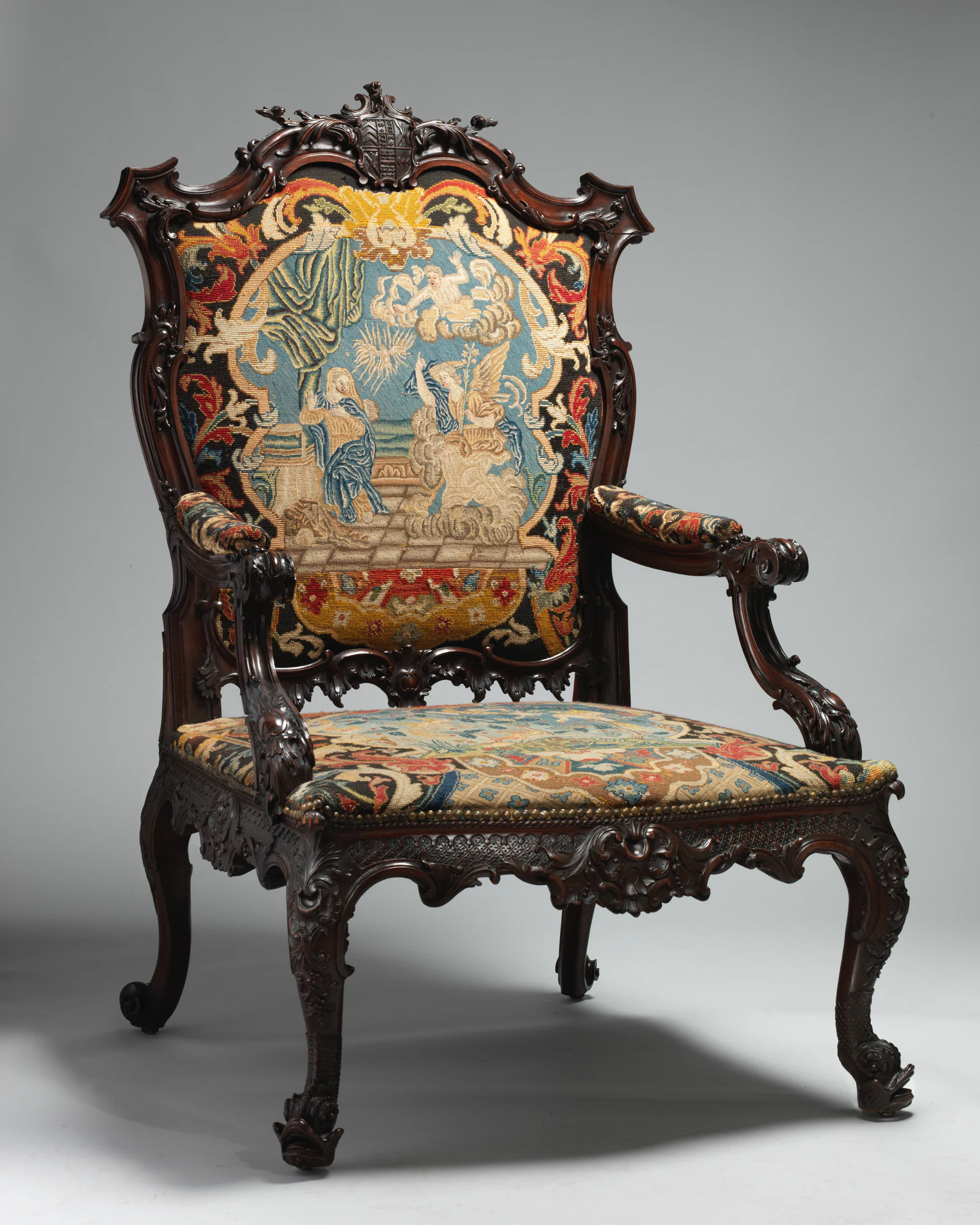
The Met's whole-object photograph of armchair 1974.325 keeps upholstery, edges, arms, legs, feet and frame visible together. It is useful here as a documentary method: the museum's attribution, date, materials and condition belong only to that recorded object and do not transfer to a similar chair for sale.[3]
Request the record in a stable order
- Whole viewsFront, back, both sides and both front corners, square enough to compare stance, level and repeated parts.
- Top and undersideThe complete top and a safe underside or base view, with any closed panel left intact.
- Working areasFeet, joints, supports, handles, hinges, runners, seat edges, corners and points that touch walls or floors.
- Every exceptionEach crack, loss, stain, repair, replacement, loose part or area the seller says behaves differently.
- Scale and locationA ruler beside the detail and one wider frame that shows exactly where it sits on the object.
Use the photograph-request Guide for the whole, context and detail sequence. Save the original files and seller description together; a cropped close-up detached from its location loses much of its decision value.
Follow what carries weight or moves
The Canadian Conservation Institute advises checking furniture for damage or loose joints before it is moved and handling it from strong structural areas rather than vulnerable tops, backs or arms. For a buyer, that supports a conservative sequence: observe the current stance and connections before asking anyone to lift, open or reposition the piece.[1]
| Object | Trace visually | Keep separate |
|---|---|---|
| Chair or sofa | Feet or base → legs → rails and joints → seat support → back and arms | Visible coherence does not certify strength, comfort or a particular user's load. |
| Table or desk | Feet or plinth → legs or pedestal → apron and joints → top supports → extensions | A level top does not prove every joint, leaf or mechanism is ready for use. |
| Cabinet or chest | Feet or base → case sides and back → shelves or dividers → doors and drawers | An even front does not establish wall restraint, loaded stability or hidden back condition. |
| Bed or modular system | Every rail, bracket, support, connection and loose component in the assembled configuration | Completeness, compatibility and professional installation remain separate decisions. |
Look for a pattern rather than one dramatic mark. Movement across several joints, a shifted base and doors that all lean may describe a different problem from one worn runner. Record whether a gap changes, a joint opens, a foot loses contact or a connected member moves. Stop before force, rocking, loading or repeated operation becomes the test.
For case furniture, use the dedicated drawers, doors and locks Guide. It keeps levelling, closed alignment and one-at-a-time movement distinct from the wider condition record.
Separate four condition conversations
| State | Examples | Decision question |
|---|---|---|
| Ordinary age and use | Even fading, softened edges, stable scuffs, small marks and wear where hands or feet normally meet the piece | Is it stable, honestly shown and acceptable for the intended use? |
| Disclosed intervention | A refinished top, replaced handle, reupholstered seat, patched veneer or repaired joint | What exactly changed, what remains original, when was the work done and is more work expected? |
| Active or consequential problem | Current movement, a spreading split, detached part, fresh moisture, unstable material or questionable electrics | Who should assess it, what use stops now and can the likely scope be known before purchase? |
| Unknown from the evidence | A closed underside, missing back view, untested lock, unknown odour or unrecorded repair history | Can one answer resolve it, does a professional need access or must the uncertainty be accepted or declined? |
Restoration is not automatically a loss and originality is not automatically usable condition. A sound, clearly described repair may make an object suitable for its next life. An untouched but loose joint may need work first. Compare present state, historical importance, intended use and the quality and reversibility of proposed work without treating one word as the verdict.
Language check
Patina is not a disclosure category
Use ‘patina’ only after the actual surface changes are named. It cannot absorb cracks, corrosion, loose joints, losses, damp, pests, mould, electrical uncertainty or an undisclosed intervention.
Name the observation before the cause
Write what is visible and reproducible first: ‘the left front foot loses contact on the seller's level floor’, ‘a 60 mm split reaches the screw hole’, or ‘pale granular debris is visible beneath three small holes’. Then record who supplied the fact and when. Only after that should a possible cause appear—and it should remain an inference until suitable evidence or assessment supports it.
Use five evidence labels
- ObservedVisible in the supplied record, with location, scale and current date.
- Seller-reportedA direct report about movement, odour, storage, repairs, use or included parts.
- InferredA possible cause, date, material or consequence that still needs support.
- Professionally assessedA dated conclusion from the responsible specialist, with its exact scope and any excluded areas.
- UnknownNot shown, not tested, concealed or unresolved after the proportionate checks.
A careful seller can be certain about an observation and uncertain about its meaning. That is useful. ‘The chair moves at this joint; I do not know whether an earlier repair is failing’ is a stronger buying record than an unsupported promise that it only needs glue.
Use the back and underside without invading the piece
Backs, interiors and undersides can reveal rails, braces, corner blocks, fasteners, labels, plugged holes, replaced boards and earlier access. They can also be closed by fabric or a panel. Photograph the closure and surrounding structure; do not cut, unscrew or remove historic material merely to answer an online question.
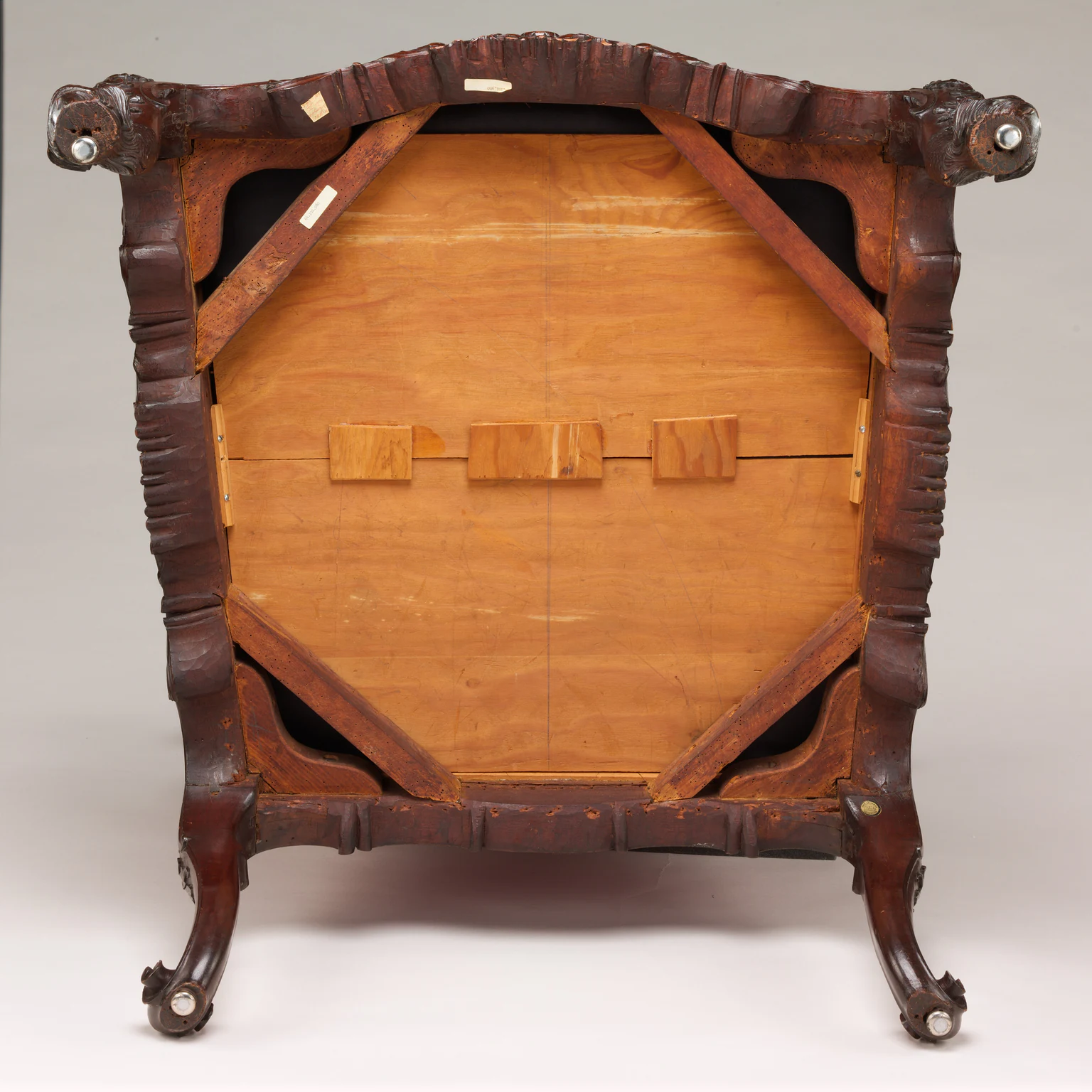
- Attach every underside detail to a complete underside view so its position and neighbouring structure remain clear.
- Record added screws, plates, blocks, glue residue, plugged holes or replaced material without assigning a date or quality from appearance alone.
- Compare repeated joints and fittings on the same object; one exception is often more informative than a generic example online.
- Note loose labels, fragments and detachable parts before transport rather than cleaning or reattaching them for the photograph.
- Leave concealed construction, internal cleanliness and remaining service life unknown unless authorised specialist access establishes them.
Keep moisture, suspected mould and pests out of a photo diagnosis
The Canadian Conservation Institute notes that high humidity can promote mould and that sawdust-like material beneath furniture may signal active insects. It recommends isolating suspected insect-infested furniture and consulting a conservator. For a buyer, these are reasons to stop ordinary handling and obtain appropriate advice—not proof of a species, activity or treatment from one photograph.[1]
CCI's wider pest guidance explains that distinguishing mould from dust or other soiling, and identifying the resulting risk to people and objects, requires suitable training and equipment. Do not ask a seller to brush, smell closely, vacuum or wrap a suspect area merely to improve the listing evidence.[2]
Ask for a bounded report
- Location and extentShow the whole affected area, adjacent surfaces and what sits beneath or behind it where safely visible.
- Change over timeAsk when it was first noticed and whether new debris, odour, dampness or surface change has appeared.
- Storage historyRecord known basement, garage, exterior-wall, flooding, leak or treatment history without converting absence of memory into proof.
- Current separationEstablish where the object is kept and whether it can remain away from occupied rooms and other vulnerable objects until assessed.
Stop boundary
Do not price a health or pest unknown as routine cleaning
If suspected mould, damp or active pests could affect people, the building or other objects, arrange an appropriate professional decision before ordinary transport. When that is not possible, leave the outcome and cost unknown or decline.
Scope likely work before comparing price
| Evidence | Useful scope | Do not promise |
|---|---|---|
| Loose joint or moving frame | Structural assessment of the complete connected assembly before regular use | That visible glue, a screw or one local repair is the complete solution |
| Lifting veneer, flaking finish or unstable surface | Material-appropriate stabilisation and conservation options | That sanding, oil, polish or refinishing is harmless or sufficient |
| Stiff mechanism or uneven case | Level, case, runner, hinge, lock and earlier-work assessment in sequence | That forcing or one adjustment reveals the cause |
| Old repair or replacement | Document what changed, its present stability and any effect on future use or conservation | That all old work is good, bad, original or reversible |
| Moisture, suspected mould or pest evidence | Appropriate object, pest and health assessment before transport or treatment | A diagnosis, household remedy or predictable cleaning result |
| Consequential concealed area | A quotation that states what remains unopened and how discovery could change the scope | That the visible exterior fixes the final price |
CCI recommends referring extensive furniture repair or cleaning to a conservator and warns that original finishes can carry historical information that stripping permanently removes. The responsible person and treatment depend on the object's materials, significance, condition and intended use; ‘restore’ is not one standard job.[1]
Ask a furniture conservator, restorer, cabinetmaker, upholsterer, electrician or another relevant professional only for the part within their expertise, and ask them to name assumptions and exclusions. Compare the asking price plus transport, immediate work and a realistic discovery allowance—not the asking price plus the cheapest imagined fix.
Send one complete condition request
Message to copy
Ask for the exact state, not a better adjective
Hello—I'm considering this piece for [daily/occasional/display] use. Could you show the complete front, back, both sides, top and full underside where it can be photographed safely; then the feet or base, load-bearing joints, moving parts and every crack, stain, loss, repair or replacement in context and with scale? Please describe any current movement, unevenness, odour, damp or pest concern, known restoration and parts that were not opened or tested. For each important point, could you distinguish what you observed, what a previous owner reported and what a professional assessed? Please do not force, load, clean, dismantle or treat anything for the photographs. Thank you.
Ask the smallest consequential follow-up after the seller replies. If one underside view resolves the decision, a twenty-image investigation is unnecessary. If a structural, health or historical question remains consequential, more casual photographs may not be the right next tool.
Decide with the unknowns visible
Choose the next honest state
- BuyThe exact condition, disclosed work, likely scope and remaining unknowns suit the job and total commitment.
- ClarifyOne answer, view, measurement or document could materially change the decision.
- Arrange assessmentStructure, unstable material, health, pests, electrics or important historic fabric needs a responsible professional.
- DeclineThe known state, required work or unavoidable uncertainty does not fit the intended use, price or risk.
A confident no is not a failed inspection, and an old repair is not a failed object. The success is knowing why the exact piece works—or does not work—for you without promoting a photograph, seller phrase or attractive surface into a guarantee it cannot carry.