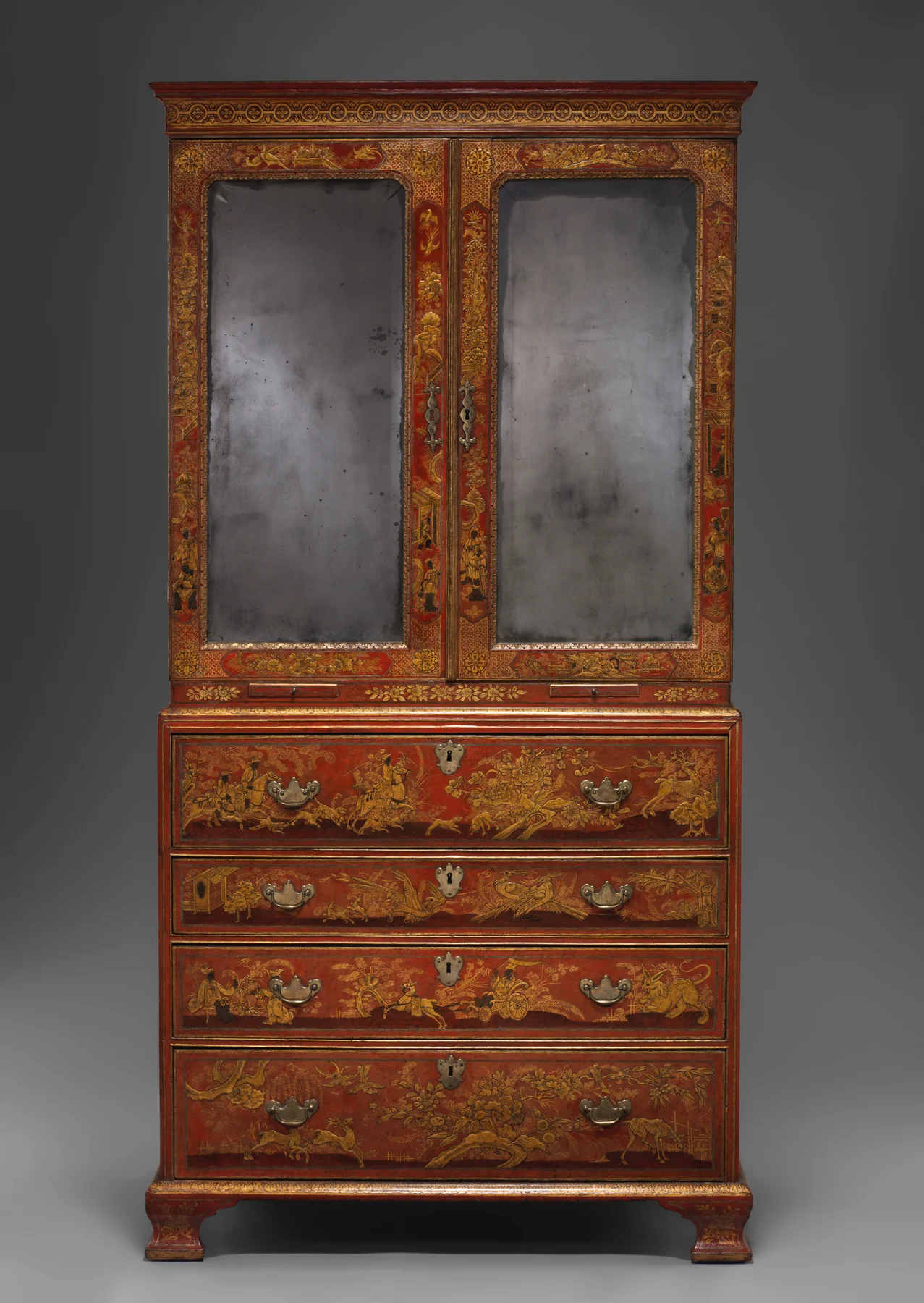
Begin with a level, lightly loaded case
Ask the seller to place the furniture where all feet or the complete base can bear normally. Record an uneven floor, a loose foot, later castor, missing glide or packed corner before treating a changed gap as cabinet distortion. A case can behave differently after moving from one floor to another.
Remove loose objects that could fall or mask movement. Do not empty, dismantle or remove a drawer, shelf or door if the seller cannot do so safely and normally. The useful test starts with the current assembled piece and an honest note about anything not operated.
Establish the starting state
- Floor and feetAll contact points visible where practical, with any packing, levelling piece, castor or loose base identified.
- LoadingHeavy contents removed for movement testing without pretending an empty case proves loaded performance.
- Overall stanceUnexpected lean, rocking, twist, loose cornice, moving back or separation at the base recorded before operation.
- Safe stopAny warning, unstable part, jammed lock or seller concern identified before a handle is pulled.
Start-state boundary
Levelling is a check, not a repair
A small reversible floor correction can reveal how the case behaves when supported normally. It does not justify planing a drawer, bending a hinge or altering an old base before the cause is understood.
Read the complete front while everything is closed
Photograph the furniture square-on, then from both front corners and sides. Compare the top and base, vertical sides, door meeting lines, drawer fronts and the spaces around repeated openings. Look for a pattern: do several gaps widen in the same direction, or does one part sit differently from the rest?
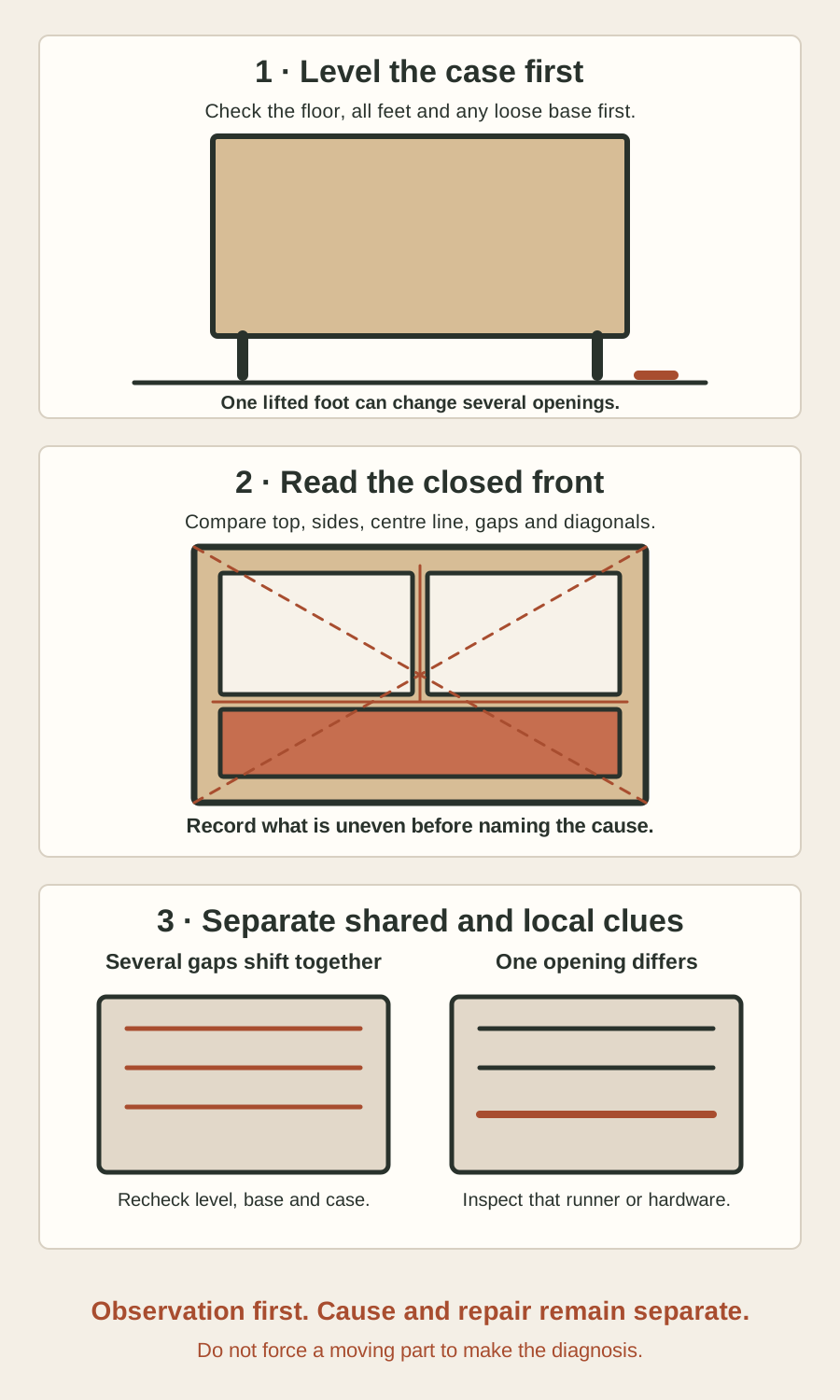
An even reveal is useful evidence of present alignment, not proof of age, originality or hidden structure. An uneven reveal is an observation, not yet a diagnosis. Floor contact, case movement, a worn runner, a dropped hinge, a swollen component, a replaced front or an earlier adjustment can produce different versions of the same photograph.
| Observe | Compare | Do not conclude yet |
|---|---|---|
| Top and base lines | Level relationship and any visible bow, sag or twist | Whether the floor, case or one component caused it |
| Repeated drawer gaps | Left, right and vertical spacing across the stack | That one narrow gap only needs runner adjustment |
| Door meeting lines | Top, centre and bottom reveals with catches released | That a dropped edge proves a broken hinge or twisted case |
| Hardware position | Handles, escutcheons, plugged holes and finish shadows | The date or originality of any fitting from position alone |
If the seller can safely measure both front diagonals between the same case corners, record them as geometry only. Equal numbers can support squareness at those points; they do not reveal loose joints, a flexible back or distortion hidden by later work.
Operate one moving part at a time
Use the normal handle and ordinary hand pressure. Watch the case, base and neighbouring gaps while the part begins moving, travels and reaches its intended stop. Record where resistance starts, whether it changes with position and whether the part can return closed without lifting, twisting or impact.
The Canadian Conservation Institute's handling guidance distinguishes attached moving parts that need restraint from separable components that may travel independently. That principle matters before purchase and delivery: identify what is attached, removable, loose or unsupported rather than discovering it while the furniture is being carried.[2]
- Open only one drawer at a time and never use a stack of open drawers as steps or leverage.
- Support a heavy door or fall front only as the seller normally would; do not lift it into alignment to make it appear functional.
- Stop if the case rocks, a joint opens, a hinge pulls away, a runner binds sharply or a lock resists the correct key.
- Record parts that cannot be tested and why, rather than converting 'not operated' into 'working'.
- Repeat the same calm movement once only when needed to confirm an observation; repeated force is not better evidence.
Inspection boundary
Resistance is information
Do not add oil, wax, soap, graphite, silicone or another product during a buying inspection. Do not pick a lock, bend hardware or sand a runner. The intervention depends on material, construction, finish and cause.
Inspect each drawer as an assembly
A drawer is more than its decorated front. Ask for both sides, the underside, bottom panel, back, runners or guides, stops, handle fixings and the interior of the case where it travels. Compare drawers from the same stack instead of using the smoothest one as the condition sample.
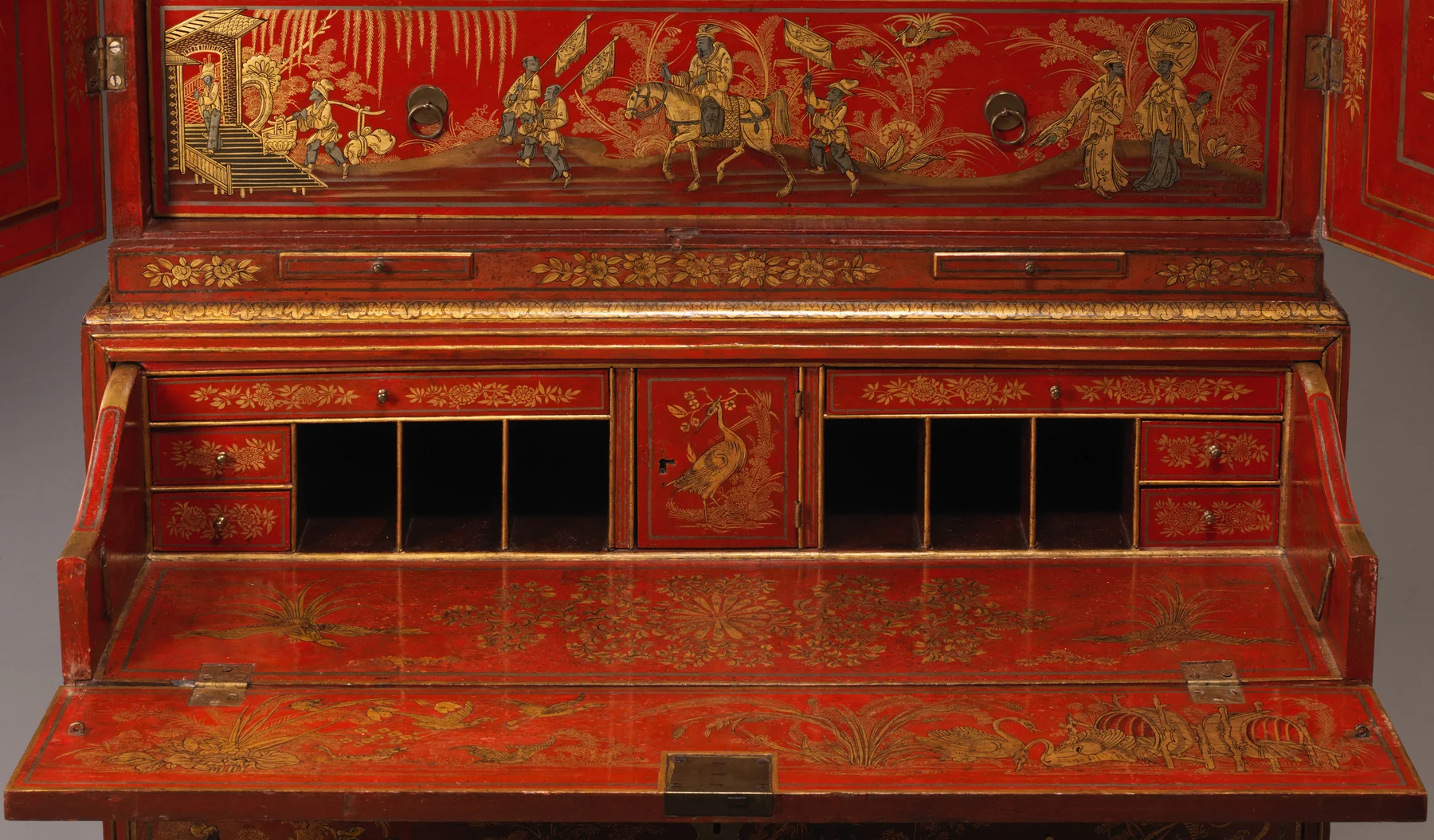
Follow the drawer from front to stop
- Front and handleSecure attachment, cracks around fixings, replaced holes, escutcheon alignment and enough grip for ordinary use.
- Sides and jointsWear, splits, added fasteners, repairs and whether both sides remain coherent with the front and back.
- BottomSag, split, looseness, staining, later board or contents that could exceed its present support.
- Runner or guideWhere contact occurs, whether wear is broadly even and where resistance, lift or side play begins.
- Stop and removal methodWhether a stop exists and whether normal removal is known; do not pull past an unfamiliar restraint.
- Case interiorLoose guides, debris, repairs, moisture marks, pest evidence and anything the drawer hides when closed.
Smooth travel does not date a drawer, and a dovetail does not name a maker by itself. Construction can support a wider evidence record; it should not turn a mechanical check into an authenticity shortcut.
Separate doors, sliding panels, catches and locks
For a hinged door, observe hinge attachment, pivot points, edge clearance, catches and how the weight is supported through the whole swing. A door that closes only when lifted is a different report from one that rubs lightly at a single edge. Record both without deciding the repair from the photograph.
For sliding or tambour doors, show the upper and lower tracks, overlap, handles and both end stops. Ask whether each panel travels through the complete intended range. Debris, case alignment, damaged slats, a loose backing fabric or an altered guide may create resistance; do not force the door to choose among them.
A key proves only that a key is present. Photograph it beside the lock and any matching marks, then ask whether it enters, turns and releases the bolt under ordinary operation. Do not promise that it is original, complete or safe to copy. A jammed or consequential historic lock belongs with an appropriate furniture or lock specialist.
Evidence boundary
Hardware can be old and still be later
Finish shadows, plugged holes, mismatched screws and altered escutcheons can support a replacement question. They do not establish the date, maker or reason for the change without the complete object and documentary evidence.
Map the complete travel in the room
Measure each drawer's maximum extension, every hinged door's swing and the working projection of a fall front or pull-out surface. Include handles and the hand position needed to operate them. For sliding doors, record which area remains covered in each state.
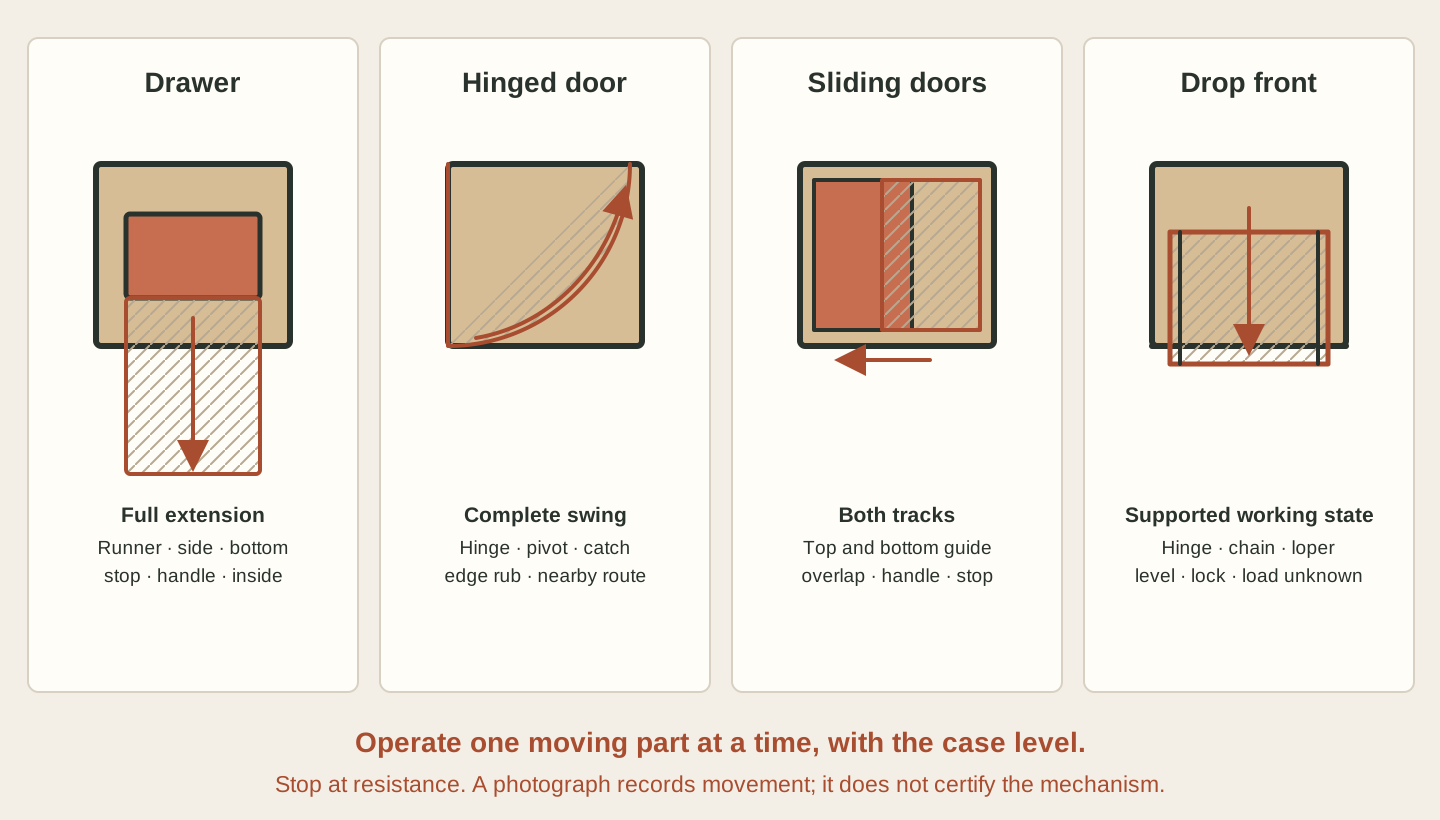
Mark those envelopes on the floor and wall around the intended position. Check skirting boards, radiators, curtains, nearby furniture, room doors and the route used while carrying objects. The exterior can fit neatly while a drawer or cabinet door remains unusable.
If the moving part belongs to a desk, use the vintage-desk Guide to add the chair, body, equipment and complete working footprint.
Read repair and replacement without demanding perfection
Old drawer runners often wear; hinges can be replaced; a handle can be added after one was lost. A sound, disclosed intervention may support decades of continued use. The buyer's question is what changed, whether the current assembly works coherently and what future work is likely—not whether every screw appears untouched.
| Observation | Ask next | Keep unpromised |
|---|---|---|
| Broadly even runner wear | Current travel, side play and whether earlier work is known | Remaining life or the correct treatment |
| One door drops or rubs | Hinge attachment, case level and where the contact begins | That hinge adjustment alone will solve it |
| Plugged holes or finish shadows | Which hardware was replaced and whether old parts survive | Original layout, date or maker from shadows alone |
| Added screws or blocks | What they secure, when the work was done and whether movement remains | Strength, reversibility or professional quality |
| Missing key or failed lock | Whether the furniture can be used securely without invasive work | A simple replacement key or predictable cost |
Use the marks and labels Guide when a stamped lock, branded hinge or numbered fitting becomes part of an attribution claim. A component mark still needs the whole-object evidence sequence.
Plan stability, wall restraint and transport separately
Opening a drawer or fall front moves weight away from the case. Observe whether the unloaded furniture remains stable during ordinary one-part-at-a-time operation, but do not use a buying inspection as a tip test. Tall, narrow or top-heavy furniture needs an installation plan for the actual room and use.
The U.S. Consumer Product Safety Commission's Anchor It! guidance treats furniture tip-over as a serious hazard, particularly where children may climb or pull on furniture, and calls for top-heavy furniture to be secured. Use the current instructions and a fixing system appropriate to the exact furniture, wall and substrate; this Guide does not specify one universal anchor.[3]
CCI handling guidance also asks movers to identify loose interiors and to secure attached moving parts that cannot be removed safely. Confirm which drawers, shelves, doors, keys and fittings travel separately, how the remaining case is restrained and who is responsible for reassembly.[2]
Use the delivery-route Guide for the protected case and every separately packed component. Removing drawers changes weight; it may not change the width or turn that blocks the route.
Send one complete moving-parts request
Message to copy
Ask for level, travel and what remains unknown
Hello—could you show this piece level and closed from the front, both corners, sides, back and base, then operate each drawer, hinged or sliding door, fall front, catch and lock one at a time using normal pressure? Please show the sides, bottoms, runners, stops, hinges, pivots, handles, keys, interiors and any plugged holes or repairs, and measure the full extension or swing needed in the room. Please identify loose, missing, replaced, jammed or untested parts and any known damp, odour, pest or stability concern. Please do not force, lubricate, adjust, pick, load or dismantle anything for the inspection. Thank you.
Use the photograph-request Guide so each close view retains its position on the complete furniture. Save the seller's response with the listing rather than strengthening it when the object changes hands.
Buy when the case works in its intended place, ordinary wear and disclosed changes are acceptable, important moving parts operate or have a credible work scope, and stability and transport have a responsible plan. Pause when the decision depends on forcing a mechanism, guessing at structural distortion, promising a lock repair or treating a health or tip-over concern as cosmetic.