Name the claim before reading the mark
Begin with the sentence you are being asked to believe. “Designed by”, “made by”, “sold by”, “made in”, “model”, “dated”, “from the home of” and “restored by” are not interchangeable. A mark can be genuine and still answer only one of them.
Separate the identities
- DesignerWho is credited with the design, and what document connects that design to this model?
- Manufacturer or workshopWho made this example or the component carrying the mark?
- Model and productionDoes a documented name or number match the dimensions, materials and known variants?
- DateIs the claim a design year, a manufacture period, a patent date, a retailer address or an inferred style date?
- Ownership and route to marketDoes the evidence record an owner, retailer, importer, auction, shipment or museum inventory rather than manufacture?
First boundary
Do not let one name absorb every role
A label carrying a famous company name may identify manufacture, retail, distribution, licensing, quality control or a replacement part. Read the wording before turning the name into a designer, date or provenance claim.
Record the mark without damaging the piece
Inspect for loose joints and damage before moving furniture, and handle it from sound structural points. The Canadian Conservation Institute's handling boundary matters here: obtaining evidence does not justify tipping an unstable chair, pulling on an arm or forcing a heavy cabinet into an unsafe position.[5]
Make one repeatable mark record
- Whole objectShow the complete piece and every included component before cropping into a detail.
- Exact locationUse a wider photograph to show the rail, drawer, back, underside, hardware or upholstery decking that carries the mark.
- Readable detailPhotograph square-on in even light, include the full edges and add a ruler beside the mark when size matters.
- Literal transcriptionPreserve line breaks, punctuation and uncertain characters. Do not silently complete a faint name or convert a number into a date.
- Material and methodRecord paper, foil, ink, brand, impressed stamp, plaque, stencil, pencil, chalk or another observable form.
Use the photograph-request Guide for the whole, context and close-view sequence. Do not scrape a finish, peel a label, polish a plate, remove upholstery or dismantle the piece to improve a photograph.
Classify what you are looking at
| Observed form | It may record | Question to ask next |
|---|---|---|
| Maker's brand, stamp or factory label | Workshop or manufacturer identity | Is this form documented for the claimed maker, period, factory and component? |
| Retailer, importer or distributor label | A route to market | Does the wording say made by, made for, sold by, imported by or only give a trading name? |
| Model, order or batch number | A code within one production system | Is there a period catalogue or maker archive that explains the exact scheme? |
| Control, patent or standards mark | A defined scheme, claim or legal event | What did that exact mark cover, where and during which dates? |
| Initials, chalk, pencil or assembly marks | A worker, matching part or workshop instruction | Can the role be documented without assuming the initials name the company? |
| Owner, inventory, auction or shipping label | Later custody, movement or sale | Can the number be joined to an independent record for this exact object? |
| Repairer's note or replaced-component label | An intervention after manufacture | Which component was worked on, when and what evidence remains of the earlier state? |
Museum of the Home object F 106-2 demonstrates why this classification matters. Its underside carries a Fritz Hansen maker stamp, a Furnituremakers Danish Control label and a temporary museum label, while the catalogue separately records designer, manufacturer, design year and approximate manufacture date.[2]
Several marks on one object are not necessarily contradictions. They may be a layered record of making, selling, export, ownership, repair and collection. Keep each attached to the event it can actually support.
One visible brand can remain uncertain
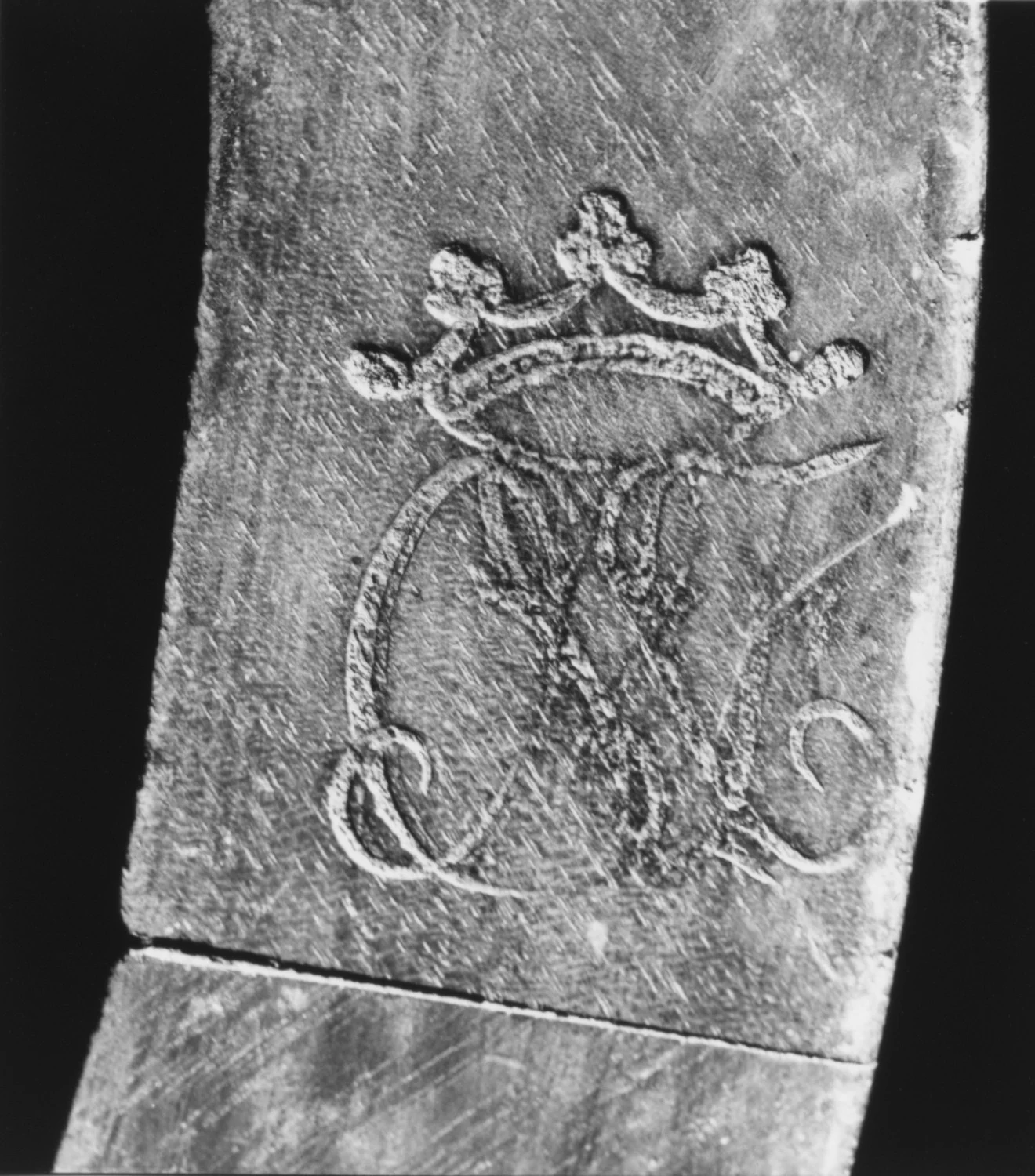
The Met records crowned initials CMJ branded beneath an Empire-style desk chair dated 1804–14. The museum describes a possible connection with Caroline Murat and Joachim Murat as a likely inference, but states that the marks are not otherwise recorded. The photograph proves the physical observation; it does not turn the proposed reading into documented ownership.[1]
That is the useful discipline for a listing too. Write “crowned CMJ brand beneath the seat rail” before writing who the initials may name. Then state which comparison or provenance record supports the next step and which part remains unresolved.
Evidence boundary
Legibility and meaning are different tests
A crisp label can be attached later; a faint mark can be original; a genuine retailer label can be irrelevant to the claimed maker. Condition, age and confidence of appearance cannot replace a documented function and connection to the whole object.
Build the evidence chain in order
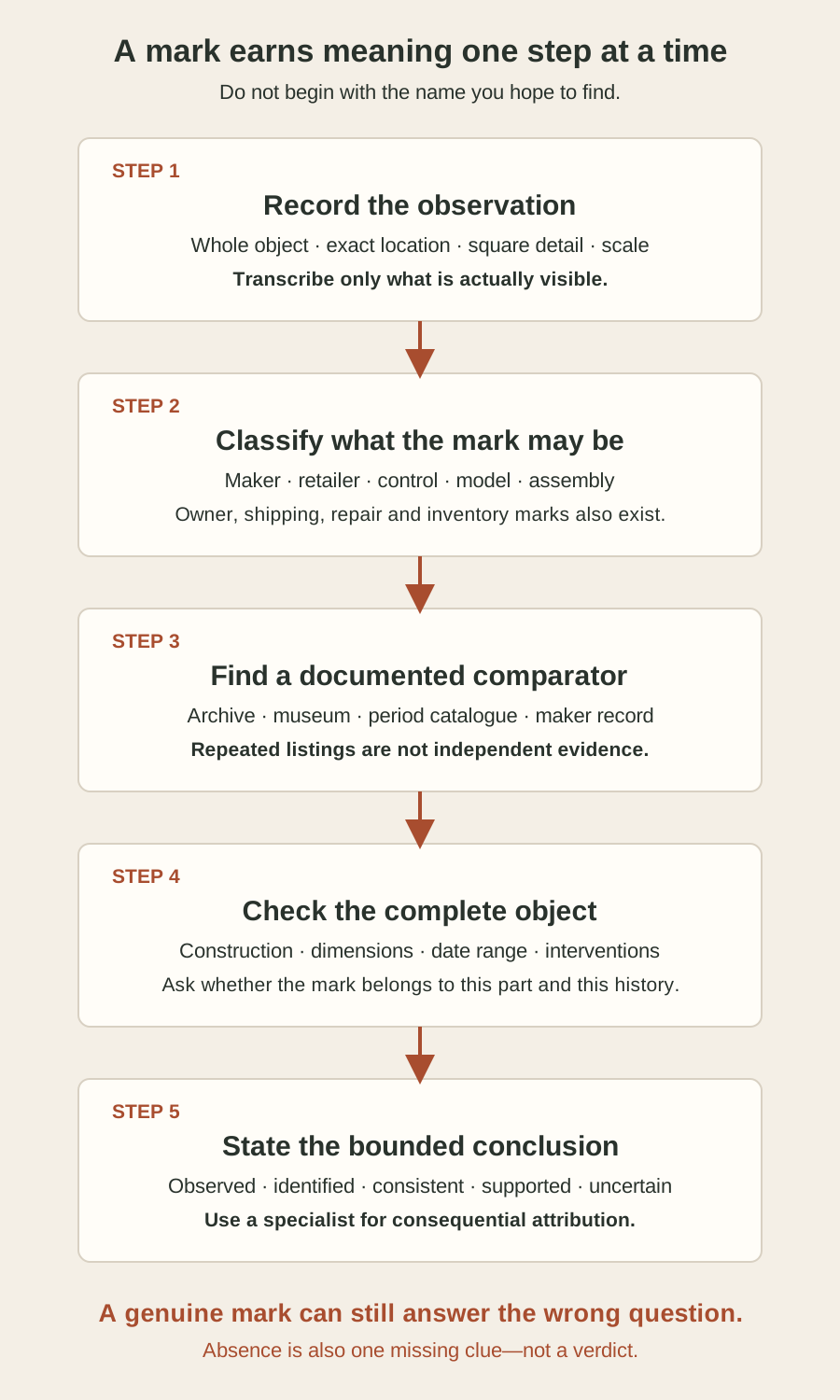
Wycombe Museum notes that initials stamped on many local chairs commonly identify the chair framer who assembled the parts and are not enough on their own to identify that individual. This is a practical warning against treating every pair of initials as a company signature.[3]
For British and Irish furniture, BIFMO is a useful institutional research route across makers, associated tradespeople, locations, work, materials, patronage and commissions. A database match produces a candidate to test; it does not establish that a similar-looking mark belongs to the exact piece in front of you.[4]
Prefer a period catalogue, maker archive, patent record, museum object with complete metadata or another source that explains the exact wording and role. Ten listings repeating one seller's attribution are one chain of repetition, not ten independent confirmations.
Check the object, not only the mark
Ask whether the claim fits
- ConstructionDo joinery, materials, hardware and production methods agree with documented examples and known variants?
- Dimensions and configurationDoes the exact piece match the model, or could the marked component belong to another size, base or later assembly?
- ChronologyCould the mark, address, control scheme, patent, company name and claimed production date coexist?
- InterventionsWhich upholstery, finish, hardware, feet, drawers, panels or labels were replaced, moved or restored?
- ProvenanceDoes an invoice, inventory, photograph or ownership record identify this exact object rather than only the model or household?
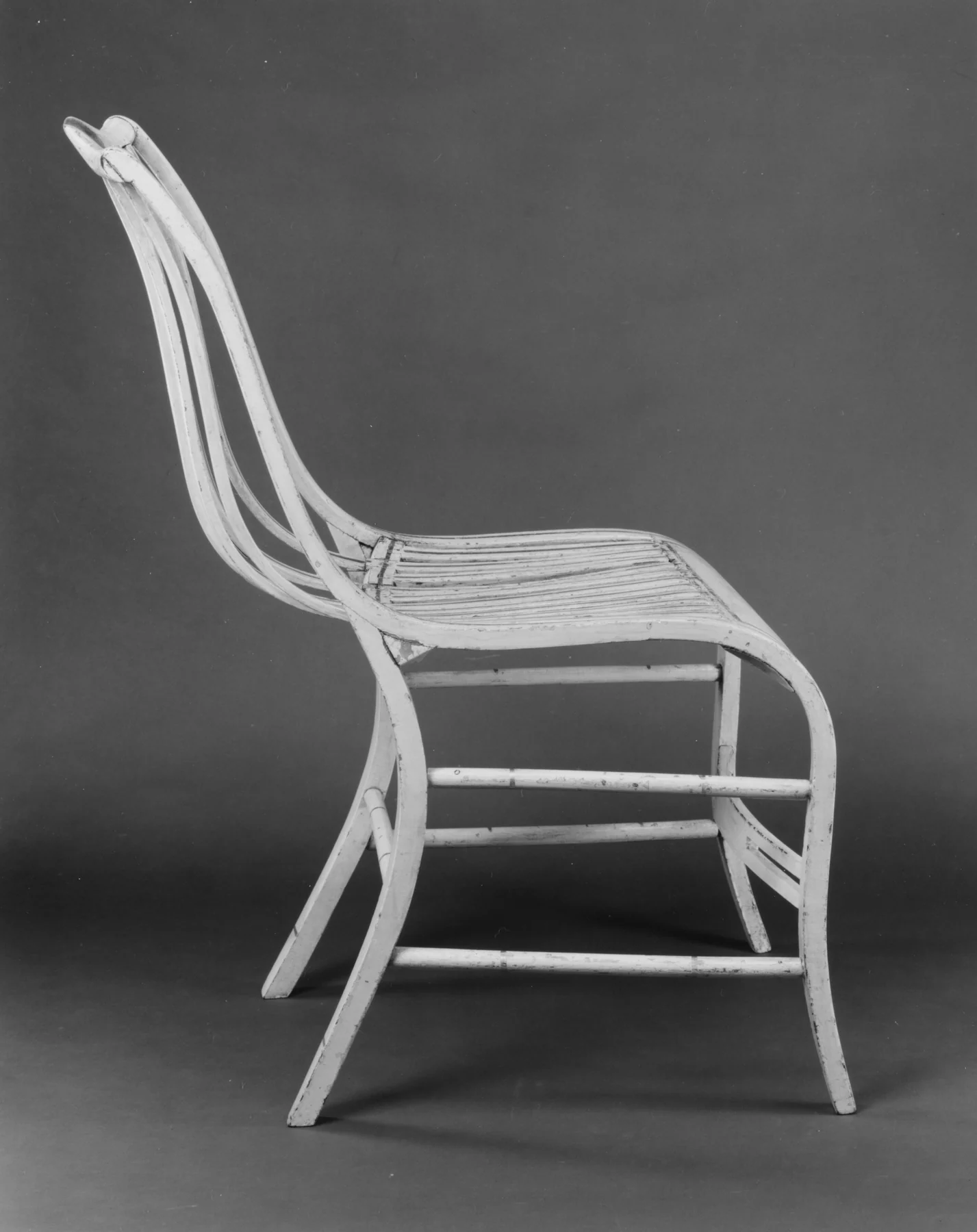
Use the construction Guide to record edges, backs and substrates without turning material resemblance into authorship. A branded drawer, cushion or base does not automatically identify every part assembled around it.
A replaced label does not erase the object's whole history, and a missing paper label does not prove a copy. It changes which evidence is available. Keep the missing fact visible and move to construction, dated records and provenance rather than inventing certainty from absence.
Write the conclusion at the right level
| Evidence state | Useful wording | Do not promote it to |
|---|---|---|
| Mark visible but not decoded | An observed stamp or label with exact transcription and location | A named maker or date |
| Issuer or mark type documented | The mark is consistent with a named maker, retailer or scheme | Proof that the whole object is an authentic model |
| Mark and object agree with a documented model | The piece is consistent with the documented attribution | Complete originality, provenance or untouched condition |
| Independent provenance and specialist examination agree | Attributed or authenticated by the named responsible specialist | A permanent guarantee against later research |
The seller's wording should remain a seller claim until its support is named. Save the original photographs, exact URLs or catalogue references and the date of your research so another person can reproduce or challenge the conclusion.
Buying decision
Uncertainty can be priced or declined
You do not need to solve every attribution to buy a useful piece. Decide whether the furniture still works for you at the offered price if the famous name, exact date or provenance remains unconfirmed.
Ask the seller for the evidence packet
Message to copy
Keep the mark attached to the object
Hello—could you please show the complete piece and then where every label, stamp, brand, plaque, number or handwritten mark sits? For each one, could you send a square readable close-up with the full edges visible and a ruler beside it, without removing or cleaning the mark? Please transcribe any faint wording exactly, identify which parts or upholstery are known replacements, and share the catalogue, archive, invoice or other record supporting the stated designer, maker, model and date. If any part is unknown, please leave it as unknown. Thank you.
A careful answer may separate what the seller observed, what a previous owner reported and what an outside specialist concluded. That separation is more useful than a confident paragraph with no reproducible source.
Hand off a consequential attribution
Seek appropriate specialist examination when the attribution materially changes the price, insurance, export, conservation approach or historical significance. Give the specialist the complete object record rather than only a cropped logo: photographs, dimensions, construction details, interventions, seller claim and every provenance document.
For one exact example of a mark with a deliberately narrow meaning, continue to the Furnituremakers Danish Control evidence guide. It explains that quality-control mark's history; it does not authenticate an unrelated object.
End with two notes: what the evidence supports now and what remains unknown. That is a usable buying record even when no famous name emerges.