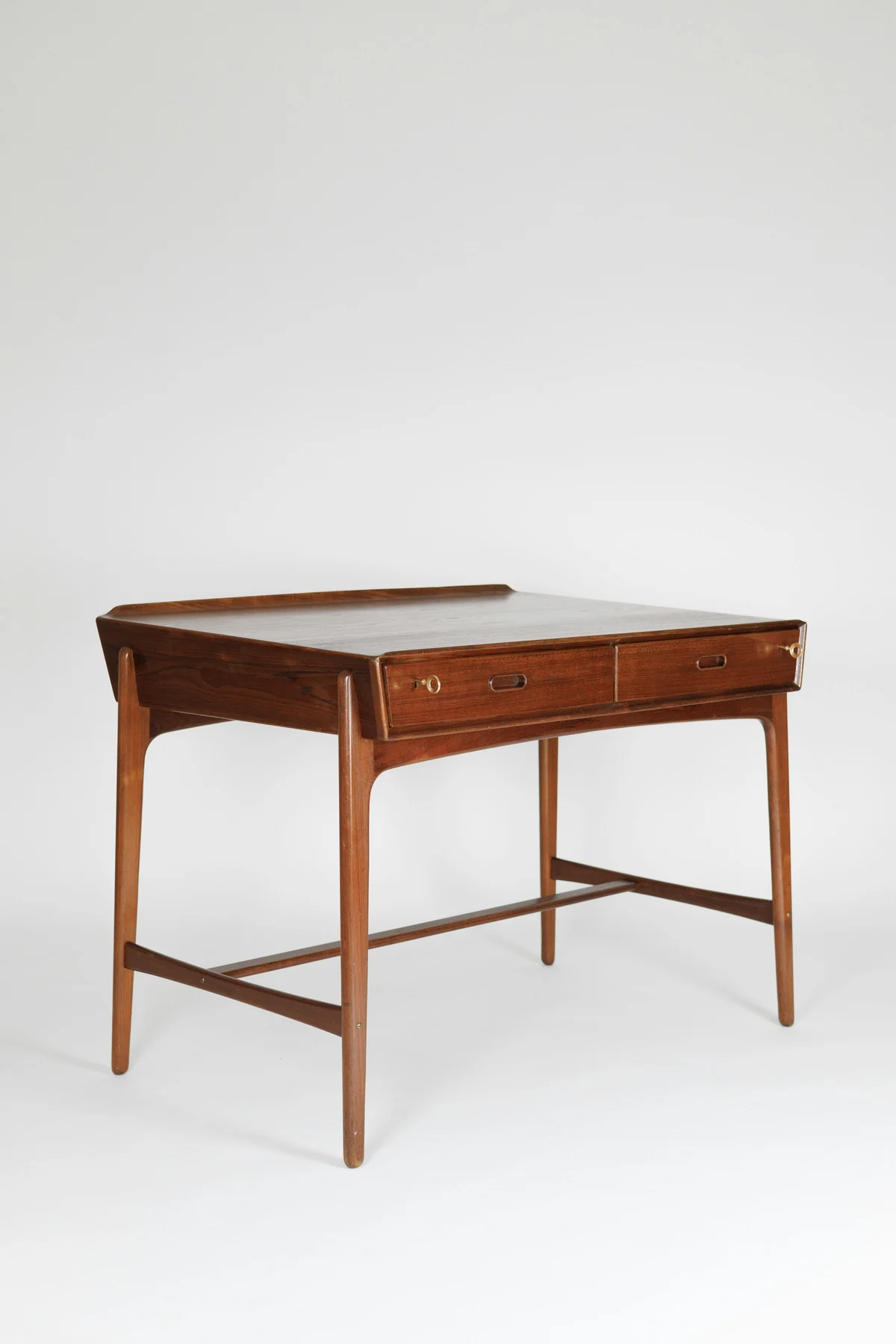
Define the working day before judging the desk
Begin with the work rather than the furniture name. A writing table used for twenty minutes, a bureau opened for household paperwork and a desk carrying a screen for a full working day place different demands on surface depth, body position, storage, light and movement.
List the equipment that must be present together, not the objects that could be cleared away in an ideal photograph. Include the computer, screen, keyboard, pointing device, documents, task light, chargers and any specialist tool that belongs in the ordinary setup. Decide whether the desk must close with those objects inside or whether closing it means clearing the surface.
Write the use brief
- TaskOccasional writing, study, sewing, drawing, laptop work or sustained display-screen use.
- UserThe exact person, chair, preferred working position and any individual access need.
- EquipmentEverything that must remain usable at the same time, including stands, cables and task lighting.
- DurationA short occasional task or a setup that must remain comfortable and sustainable for longer sessions.
- Room statesClosed, working, occupied, storage-open and any state needed to leave the chair or cross the room.
Vintage reality
The original job may not be your job
A handsome writing desk can be excellent occasional furniture and poor computer furniture. That is a fit result, not a defect. Decide what the exact piece can honestly do before asking it to imitate a modern workstation.
Measure three envelopes, not one desk
Ask the seller to show where each tape begins and ends. Maximum outer measurements decide placement and contribute to delivery. Usable-surface measurements exclude galleries, slopes, hinges and fittings. Clear-opening measurements begin beneath the lowest rail, drawer or projecting edge and describe the space available to the chair, knees and legs.
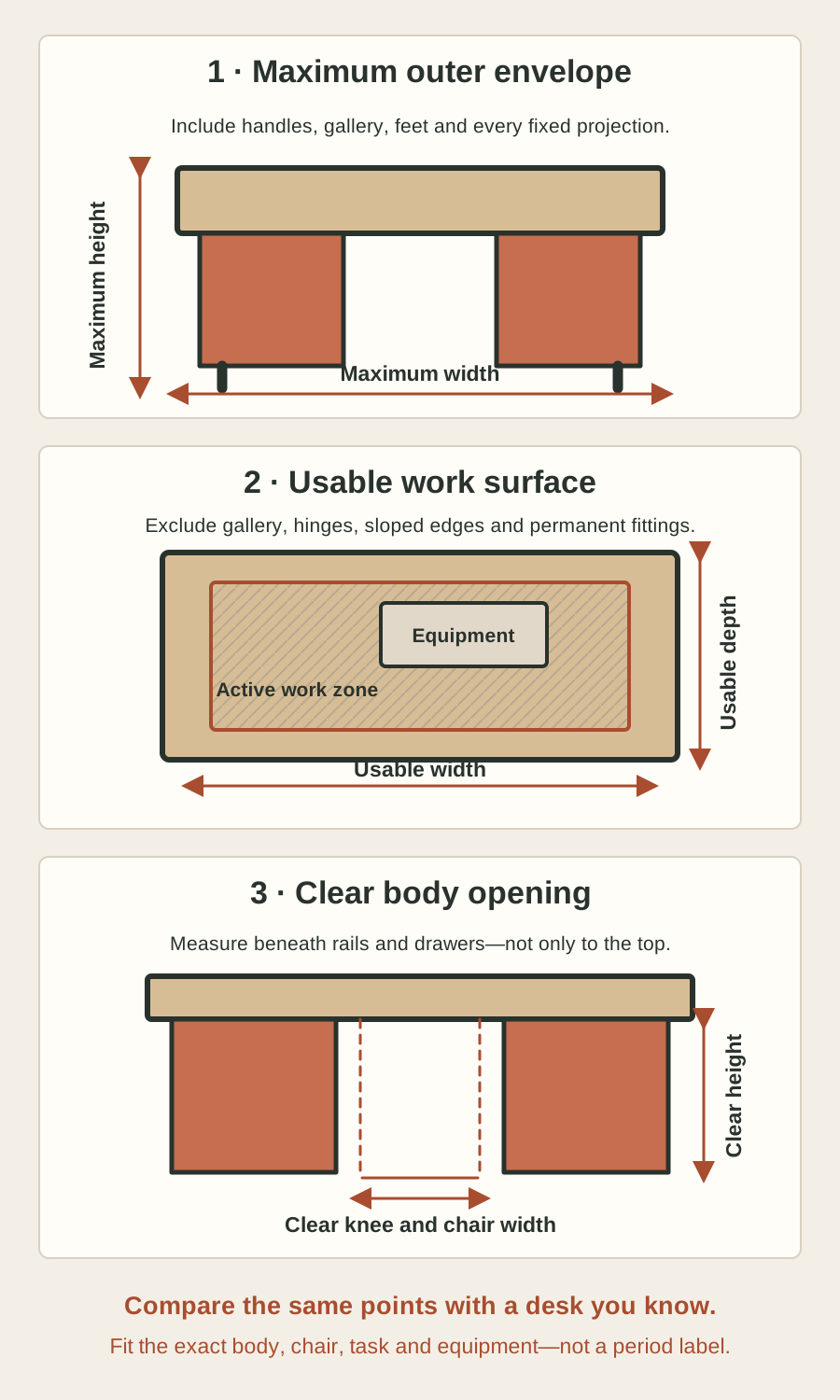
| Decision | Measure on the exact piece | Keep explicit |
|---|---|---|
| Room placement | Maximum width, depth and height | Gallery, handles, splayed feet, raised lid and fixed projections |
| Working surface | Flat usable width and depth | Sloped edges, hinges, wells, leather panels, fittings and opening seams |
| Body and chair | Clear width, height and depth beneath the top | Drawer blocks, front rails, cross rails, centre drawers and supports |
| Equipment | Space remaining after the real task is arranged | Screen base, keyboard, documents, light, ventilation and cable exits |
| Moving state | Maximum depth and width with every intended part open | Chair, user, drawers, doors, roll top, fall front and pull-out supports |
Measure the smallest useful opening as well as the widest outer point. A broad desktop above two drawer banks may leave a narrow knee space; a secretaire may occupy little floor area while closed and project far into the room when its writing surface and chair are in use.
Compare with a workstation the user already knows
The UK Health and Safety Executive treats display-screen suitability as a whole-workstation assessment: furniture, equipment, the work being done and the individual user all matter. That is why one advertised desk height cannot answer the comfort question.[1]
Measure the same surface height, usable depth, clear opening and chair position on a setup that already feels workable. Record what the candidate changes: a shallower surface, lower rail, narrower opening, thicker top, higher chair or screen pushed closer. Test those differences together rather than accepting or rejecting one number in isolation.
HSE's current home-working guidance asks whether the exact setup can support a comfortable, sustainable posture and notes that ordinary home furniture may or may not be suitable. For sustained screen work, use the relevant workplace or professional assessment rather than treating this Guide as an ergonomic clearance.[2]
Comfort boundary
Measurements make a comparison, not a medical promise
Bodies, chairs, tasks and session lengths differ. If the desk is intended for sustained work or a specific access need, test the complete setup with the user and obtain the assessment appropriate to that situation.
Map the closed, working and occupied states
Mark the desk's closed footprint in the intended position. Then add the writing surface, every drawer or door needed during work, the chair and the space the user occupies while sitting down, working and standing up. Open nearby doors and walk the normal route through the room.
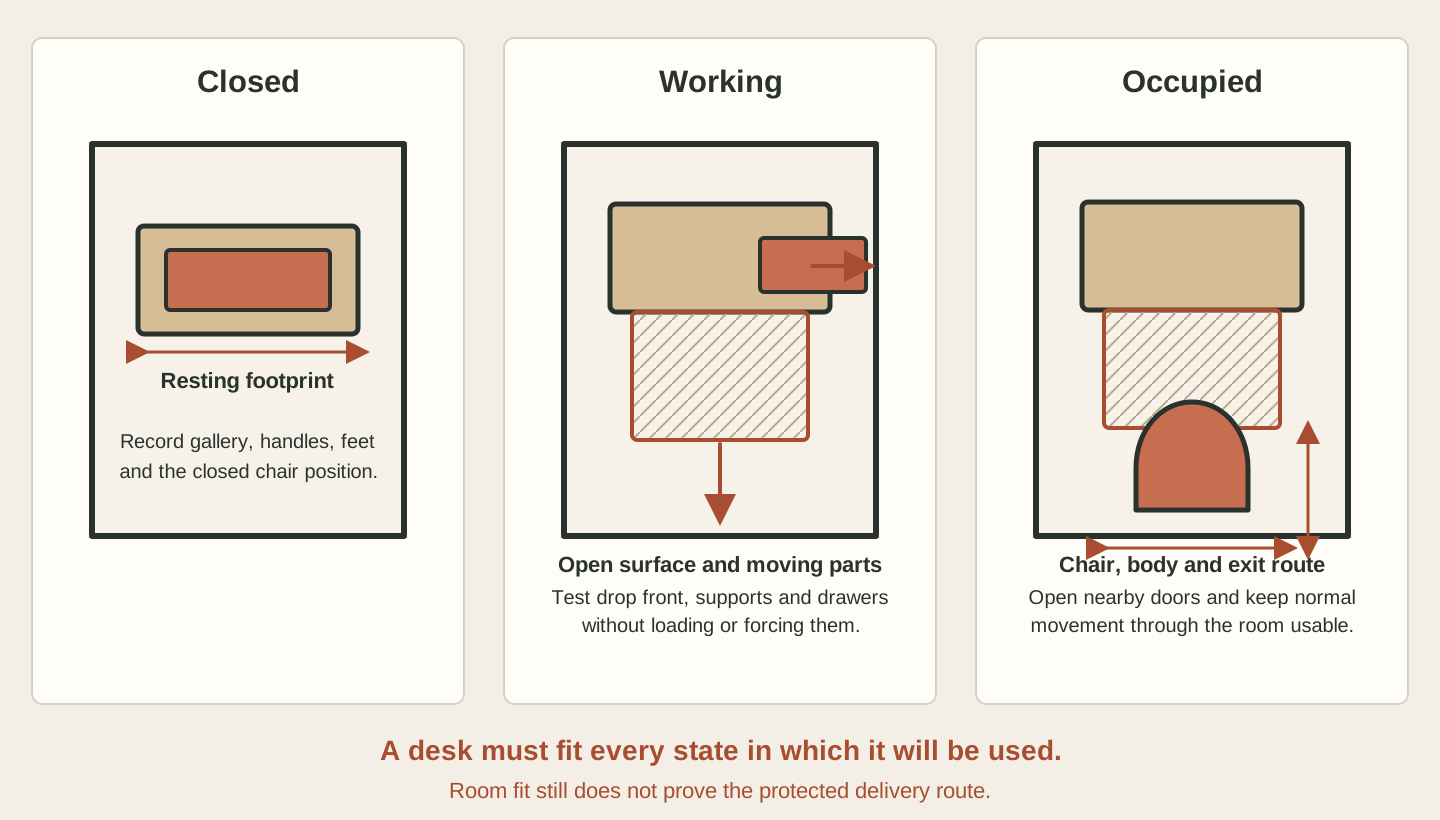
A drop front can meet the chair, a long drawer can block the route and an open door can occupy the only comfortable exit. If the desk closes, check whether closing requires the screen, light or papers to be removed and where those items will go in ordinary use.
Keep room fit and access separate. The open desk may work beautifully once installed while its protected outer envelope, fixed gallery or non-removable top still cannot pass the delivery route.
Inspect the parts that carry the work
Look across the top in ordinary and raking light. Record splits, lifted veneer, loose leather, cupping, sagging, repairs and areas where equipment feet would sit. A mark can be ordinary use; movement at a joint or a writing surface that does not sit level changes the working decision.
Follow the load to the floor
- Top and writing surfaceFlatness, attachment, seams, inserts, repairs and any movement when the seller operates it normally.
- Rails and drawer blocksSplits, loose joints, added screws, missing blocks and parts that reduce the clear opening.
- Fall-front supportsHinges, chains, quadrants, pull-out lopers or other supports present on both sides and operating together.
- Legs, feet and baseAll contact points present, no active movement and any castors, levellers or later height changes disclosed.
- Known workWhat was repaired or replaced, by whom if known, and whether the work changed dimensions or operation.
The Canadian Conservation Institute recommends checking furniture for damage and loose joints before movement and handling it from sound structural points. Apply the same discipline before a buyer or seller loads a historic writing surface: observe ordinary operation, but do not prove strength by leaning on, bouncing or overloading an uncertain mechanism.[3]
Stop boundary
Do not load an untested fall front
If supports are missing, mismatched, loose or unexplained, keep load capacity unknown. A furniture specialist can assess the complete mechanism; a listing photograph cannot certify it.
Test storage without letting it steal the workspace
Open one drawer or door at a time while the desk stands level. Record travel, rubbing, stops, handles, keys, locks, interiors and any part that must remain open during work. A centre drawer may remove useful knee height; a deep side drawer may meet the chair before it opens fully.
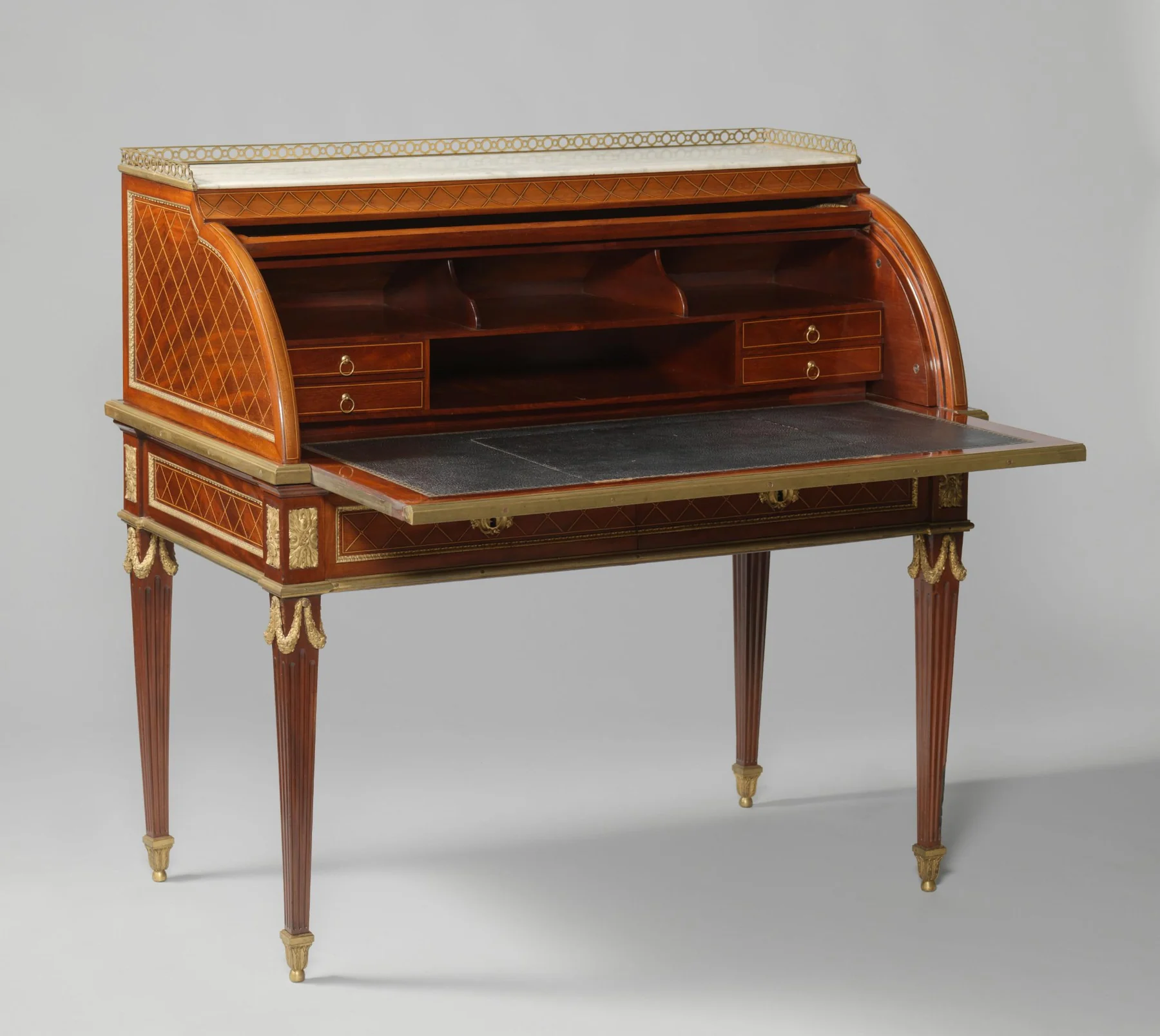
Use the drawers, doors and locks Guide for the full moving-part sequence. Keep a stiff drawer, a tilted case and a failed lock as different observations until the evidence supports a cause.
Storage volume is useful only if its contents and movement suit the task. Measure the clear interior, identify removable trays or fittings and decide whether opening storage disrupts the screen, chair, user's legs or room route.
Plan modern equipment without damaging the piece
Place the real equipment on a paper or floor template of the usable surface. Check screen distance and height, keyboard and pointing-device space, task light, ventilation openings and whether lids or roll tops still operate. Heavy or warm equipment may be unsuitable for a fragile finish even when it fits geometrically.
Trace power and data cables from the wall to the equipment without trapping them in a hinge, drawer, fall front or sharp rear edge. Historic furniture often has no cable route. Treat drilling, cutting or removing original material as a separate alteration decision, not the default price of using the desk.
HSE guidance also asks users to arrange screens to avoid glare and bright reflections. Test the actual window, task light and screen positions in the intended room; the desk's colour or period cannot settle that environmental question.[1]
Separate room fit from the delivery proof
Confirm which components are genuinely removable: drawers, shelves, gallery, legs, base, top or internal fittings. Ask how each part is released and reinstalled without forcing old joinery. Do not infer disassembly from visible seams or from another example of the same model.
Record the protected maximum envelope and use the delivery-route Guide for doors, turns, stairs, lifts and handling. The carrier should approve a tight route using the exact transport configuration.
A desk with removable drawers may become lighter without becoming narrower. A secretaire with a fixed gallery may be taller than the listing's main case measurement. Keep weight, protected dimensions and reassembly responsibility in the carrier conversation.
Send one complete desk request
Message to copy
Ask for the working desk, not only the closed object
Hello—I'm considering this desk for [task and typical duration]. Could you show it closed, open for work, from both sides, behind and underneath where safe; measure its maximum width, depth and height, flat usable surface, and clear knee width, height and depth beneath every rail or drawer; and show each drawer, door, roll top or fall front operating one at a time? Please identify every support, key, lock, removable part, known repair and cable opening, and confirm what remains untested. Please do not force, load, alter or dismantle anything for the photographs. Thank you.
Use the photograph-request Guide to keep close-ups attached to the complete object and the tape visible at each measurement point.
Buy when the exact setup supports the intended task, ordinary wear and disclosed work are acceptable, the moving parts have a credible scope and both room and delivery plans work. Pause when sustained comfort, load-bearing supports, electrical equipment, a jammed mechanism or access still depends on a promise the evidence cannot supply.