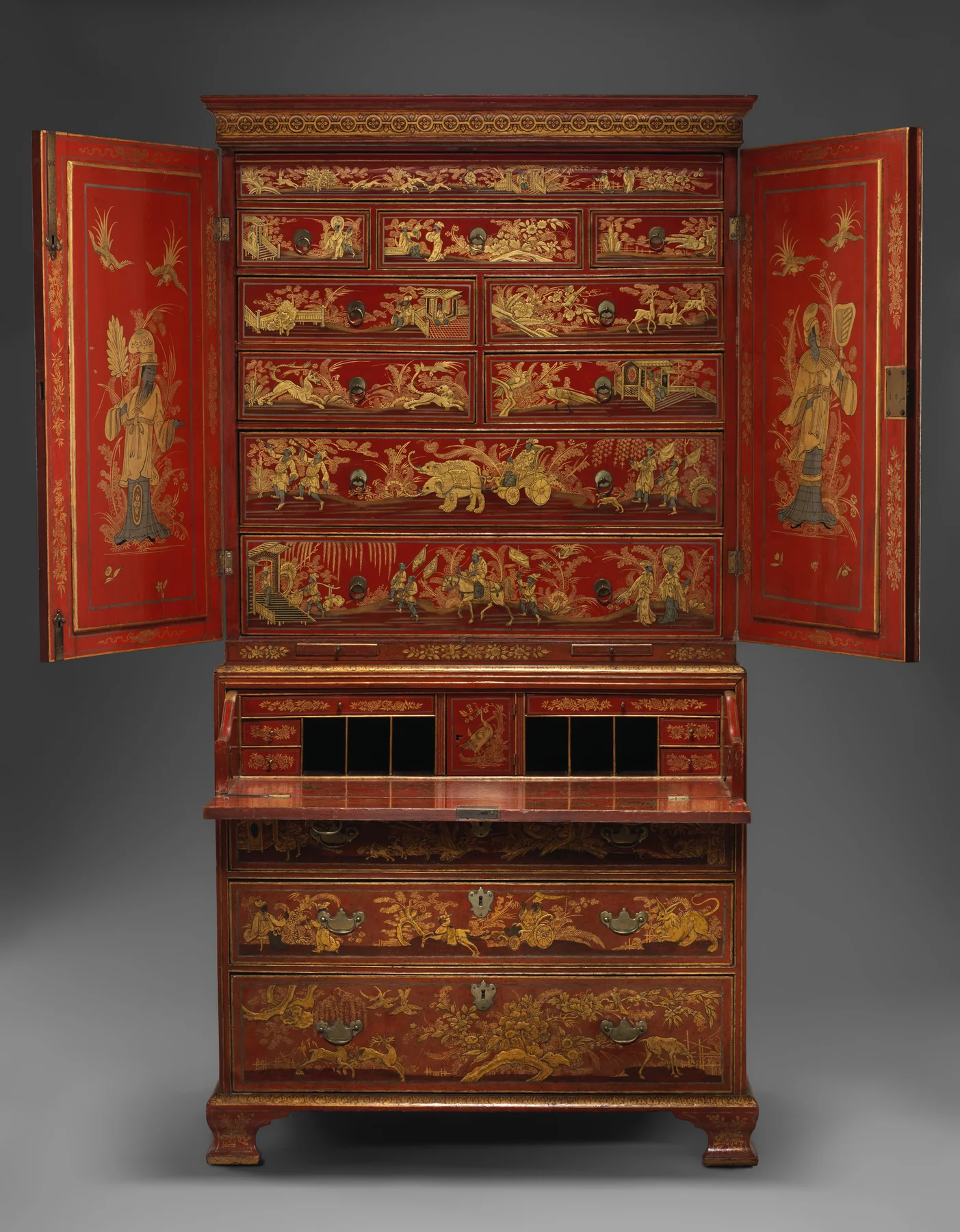
Decide whether the job is writing or a full working day
A bureau can be delightful for letters and a short laptop session, then frustrating for a monitor, keyboard and long meetings. List the equipment you actually use, including its open dimensions. Decide whether it must stay inside when the bureau closes or be put away elsewhere.
Test a similar work surface with your intended chair before buying. A fixed fall-front height and a shallow knee opening offer fewer adjustments than a modern desk. The relevant comparison is your working posture, not the height of the top cornice.
Establish how the fall-front is supported
Ask the seller to open the empty bureau slowly. Some writing fronts rest on pull-out supports; others use different fittings. Photograph the intended contact points, hinges and any stays. Do not assume that the hinge or a thin chain is intended to carry the whole working load.
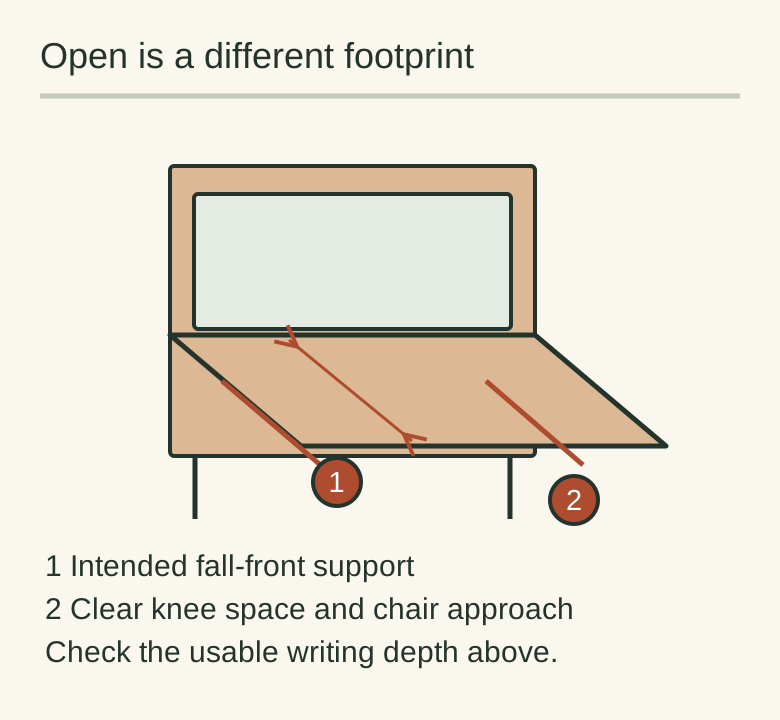
Look for gaps, missing parts, split fixing positions and a front that hangs below its intended level. Stop if it moves unexpectedly. A seller leaning on the leaf is not an appropriate substitute for establishing the construction and condition.
Measure the usable depth with the interior open
The Met’s secretary cabinet 2014.186a, b is recorded as a British piece of about 1735. Its open photographs reveal a fitted writing interior. They are useful for seeing how storage and work share the same object, but they do not establish the working dimensions or capacity of a different bureau.[1]
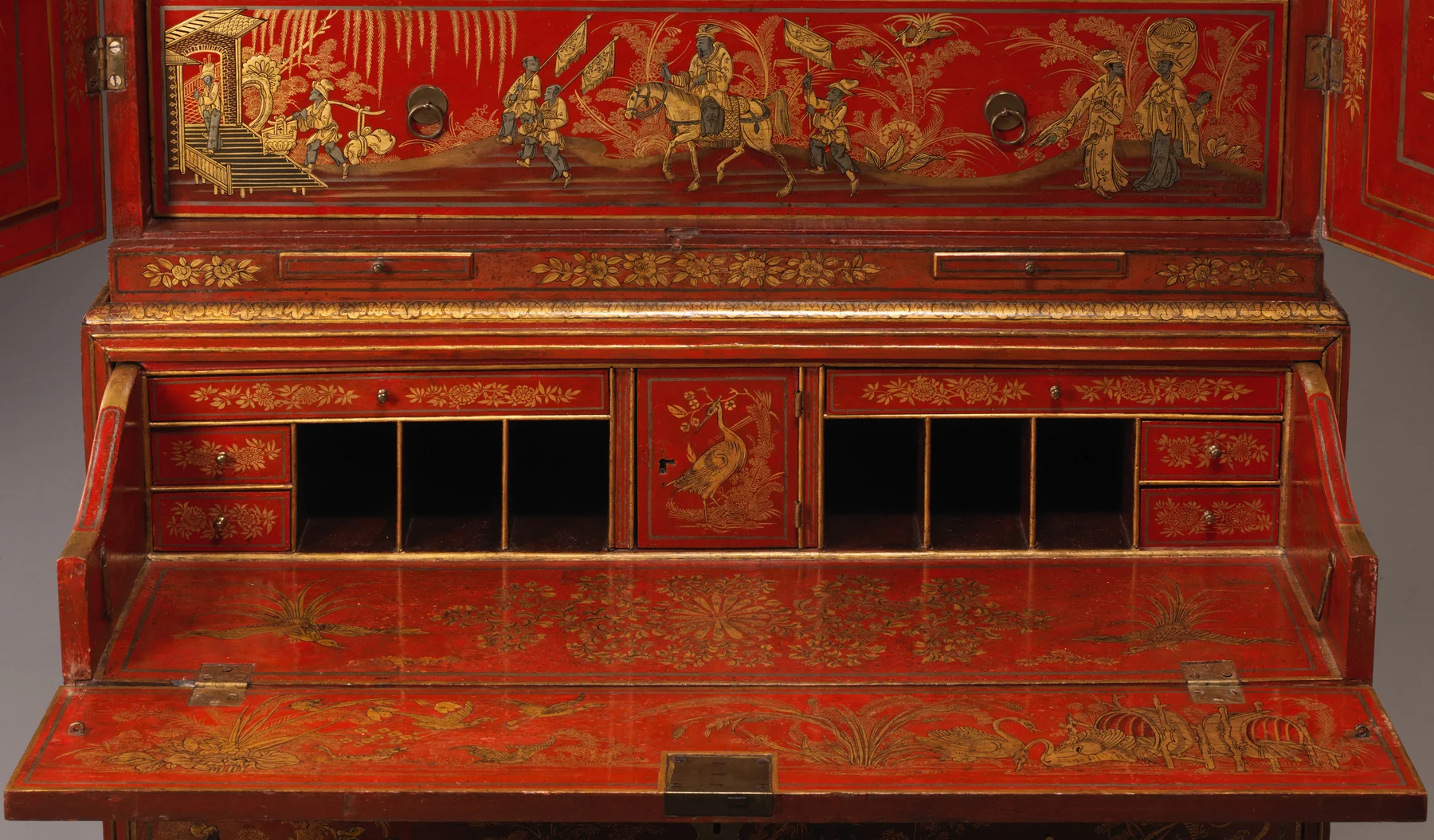
Place paper templates of the open laptop, keyboard and any other equipment on a measured plan. Include the screen’s backward projection and the space for your wrists. An attractive shelf at the back can stop a laptop opening far enough even when its base fits.
Check the underside too. Drawers beneath the leaf may leave little knee space, and pull-out supports can narrow the approach. Try getting in and out with the actual chair rather than only measuring a seated position.
Work out how the day ends
Closing the bureau should be a simple routine, not a cable trap. Plan how equipment is removed or stored, keep ventilation needs in mind and follow the device maker’s instructions. Do not drill cable holes into an old case before considering a reversible arrangement and the effect on the piece.
Rehearse the closing sequence
- EquipmentWhere does every item go, and is the device shut down or stored as instructed?
- CablesNothing crosses the hinge line or catches behind the front.
- Loose papersThey cannot foul a catch or push a small drawer open.
- ChairIts parked position leaves the normal room route clear.
Ask about the writing surface material and previous treatment. A worn leather insert, baize or polished timber may need different protection. Keep drinks and hot equipment away from an unknown finish until the appropriate care arrangement is established.
Buy the working arrangement you can demonstrate
Ask the seller
Please show the complete empty opening and closing sequence, both fall-front supports, hinges and the underside. I need clear writing width and depth, writing height and knee opening. Are any supports, hinges, surface coverings or locks replacements?
If the bureau works for occasional writing but not daily computer use, that can still be a good result. Choose it for that role and give the long working day a suitable desk, instead of forcing a historic storage form to carry a job it cannot comfortably do.