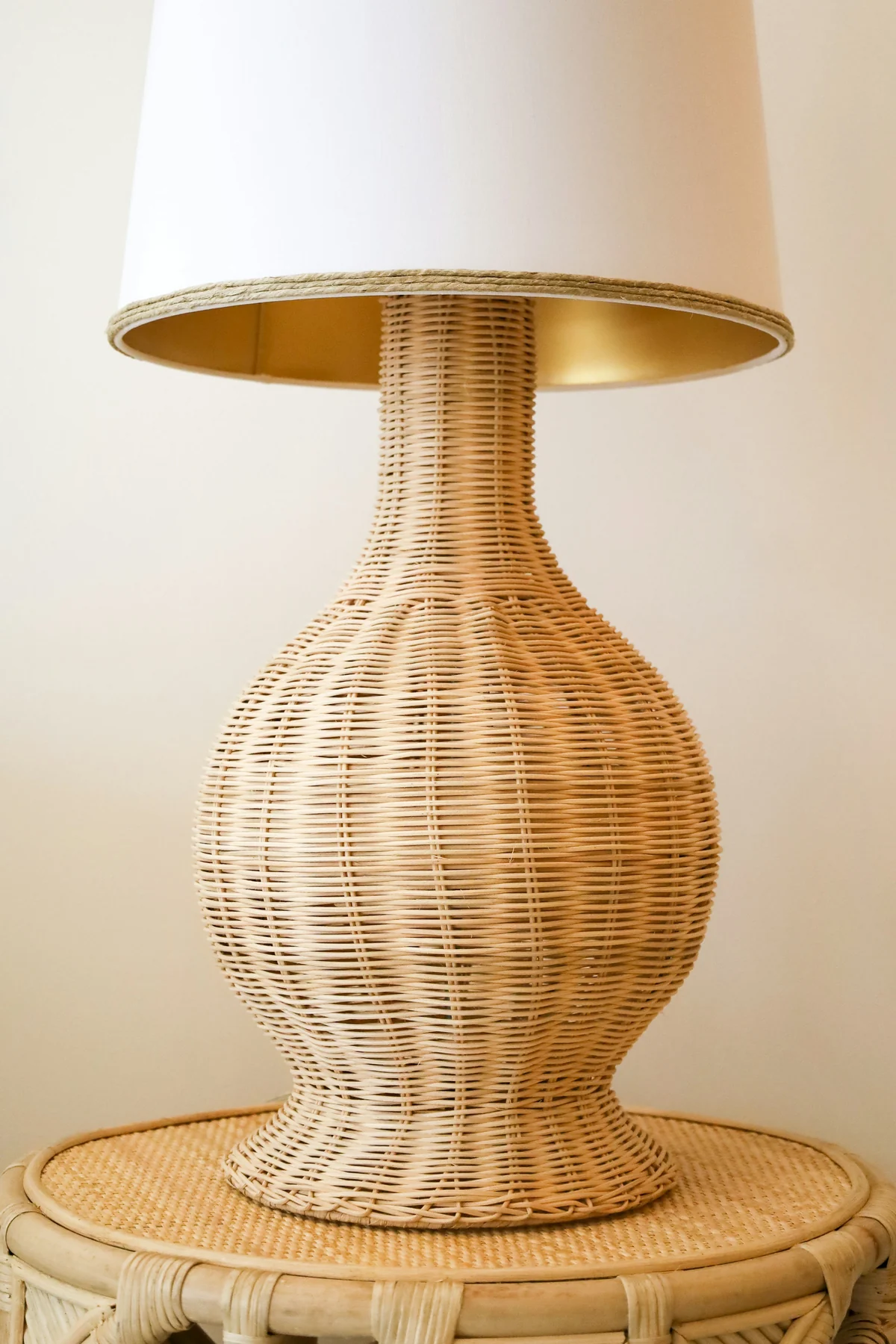
Choose the job and destination first
Start with the intended light, not the plug. A table lamp for a reading corner needs a useful height, shade direction, stable footprint and reachable switch. A floor or arc lamp adds reach, articulation and a larger working footprint. A wall or pendant light adds a fixed installation, canopy or backplate, drop or projection and responsibility for the building connection.

Write the lighting brief
- JobTask, ambient, accent or display use, with the area and direction that actually need light.
- DestinationCountry and intended premises, because supply, plug, installation and product requirements are not universal.
- Object typePortable table or floor lamp, wall light, pendant or another fixed assembly.
- ReadinessDecorative display only, professional assessment before use, or documented current use in the destination country.
- Installation ownerThe qualified local professional who will assess, disconnect, adapt or install when required.
Scope boundary
A portable lamp and a fixed light are not the same handoff
If the light is connected to a building, do not ask the seller to disconnect it or the buyer to install it as part of an inspection. Establish who is qualified and authorised to handle each end of the move.
Confirm the exact included assembly
The UK Office for Product Safety and Standards warns that second-hand products can carry extra risk from worn components, missing modern safety features or modifications that may not be obvious. It advises checking available instructions, recall information, seller identity and known modifications. Treat those as evidence questions, not as a promise that one country's guidance settles another country's requirements.[2]
Inventory the object before discussing condition
- Light source interfaceVisible holder type, readable markings, shade attachment and every cap, ring, clip or diffuser that is included.
- Shade and diffuserNumber, material, dimensions, inner and outer condition, edge profile and how each part attaches.
- Body and jointsStem, arms, pivots, galleries, decorative covers and each point intended to move or carry another part.
- Base or installation setPortable base and feet, or canopy, backplate, drop components and seller-identified mounting pieces.
- Electrical accessoriesComplete flexible cable, switch, plug and any separate transformer, driver, connector or control supplied with the light.
- DocumentationLabels, instructions, repair invoices, test reports, previous country of use and exact parts or bulbs supplied.
Do not infer a missing ring, bracket, canopy, transformer or mounting part from a styled photograph. Ask the seller to lay loose components out separately, label their relationship to the complete light and state whether any part comes from another example. ‘Complete’ should mean a reproducible inventory, not that the seller remembers it working.
Follow the visible exterior path—without opening it
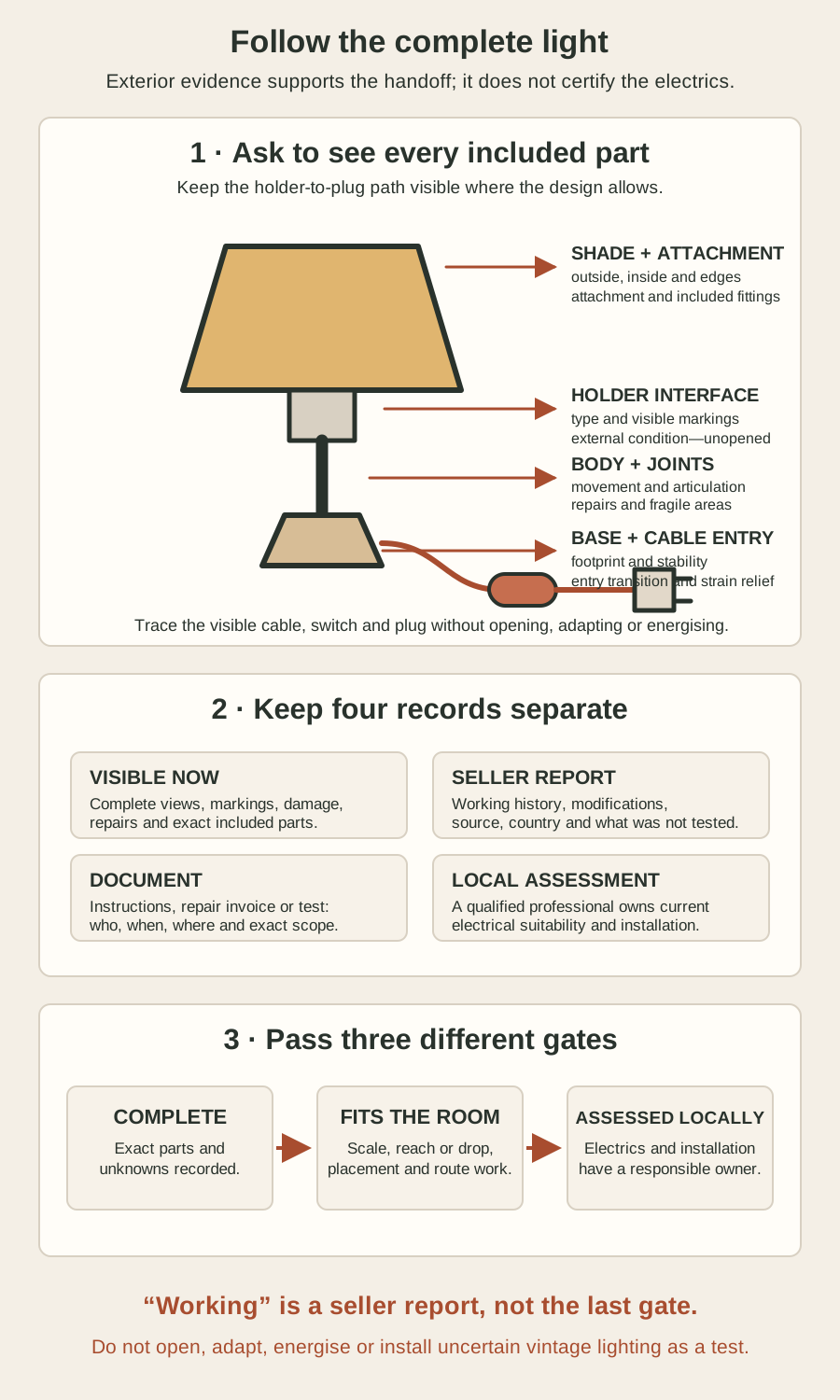
Ask for a continuous visual record
- Holder areaShade removed only by its normal method, if the seller can do so safely; exterior holder, attachment and readable markings in context.
- Articulated jointsEach pivot or adjustable arm at rest and through its seller-approved normal range, without tightening or forcing.
- Cable entryWhere the flexible cable enters the body or base and the external transition visible around it.
- Complete cableOne continuous view or overlapping sequence showing the full exterior, not only the cleanest section.
- Switch and plugAll exterior faces, mouldings, markings, repairs and connections without removing covers.
- Fixed-light terminationCanopy, backplate, drop and loose installation components as supplied; concealed building wiring remains outside the buyer inspection.
Use the photograph-request Guide to keep every close-up attached to the whole light. Do not ask for an opened holder, exposed conductor, continuity test, meter reading or powered demonstration as a substitute for professional assessment.
Read damage, repairs and test claims at the right level
Electrical Safety First advises stopping use when a lamp's cable, plug or fitting is damaged and using the correct light source specified for the lamp. It also treats stable placement, cable routing and separation from flammable materials as use questions. The source is UK guidance; a qualified professional must translate the exact object and destination into the applicable decision.[1]
| Claim or evidence | What it establishes | What remains open |
|---|---|---|
| ‘It works’ or a powered seller video | The seller reports operation in that setup at that time | Electrical safety, internal condition, correct light source and suitability in the buyer's premises |
| ‘Rewired’ | Only what the invoice or named person says was replaced or altered | Unlisted components, quality, current condition and destination-country requirements |
| Test label or report | The identified person, date, method, object and scope recorded on the document | Excluded parts, later changes, transport damage and whether that test answers the intended use |
| Original label or marking | Visible information attached to the object | Current compliance, authenticity of the whole assembly and safe use after age or modification |
| Qualified local assessment | A scoped present conclusion for the exact object, supply and installation considered | Any limitation, future maintenance or work expressly excluded by that professional |
WorkSafe New Zealand gives a useful jurisdiction example: second-hand appliances supplied there must satisfy local requirements, and tested items are identified with details of who inspected them and when. This demonstrates why a foreign plug, label or seller assurance cannot be promoted into universal approval; the buyer needs the rule and responsible assessor for the actual destination.[3]
Electrical boundary
Do not turn missing evidence into a home test
Do not energise a light with visible damage or uncertain wiring, fit an adapter to see what happens, open covers, replace a plug, select a higher-output bulb or touch exposed parts. Record the uncertainty and hand it over.
Inspect fragile and heat-affected parts as an assembly
A light is also a stack of materials under gravity and repeated handling. Show glass rims and screw holes, ceramic necks, stone or weighted bases, metal seams, soldered decorative joints, painted surfaces, parchment or fabric shade interiors and every place one material bears against another. A hairline at an attachment matters differently from an isolated surface mark.
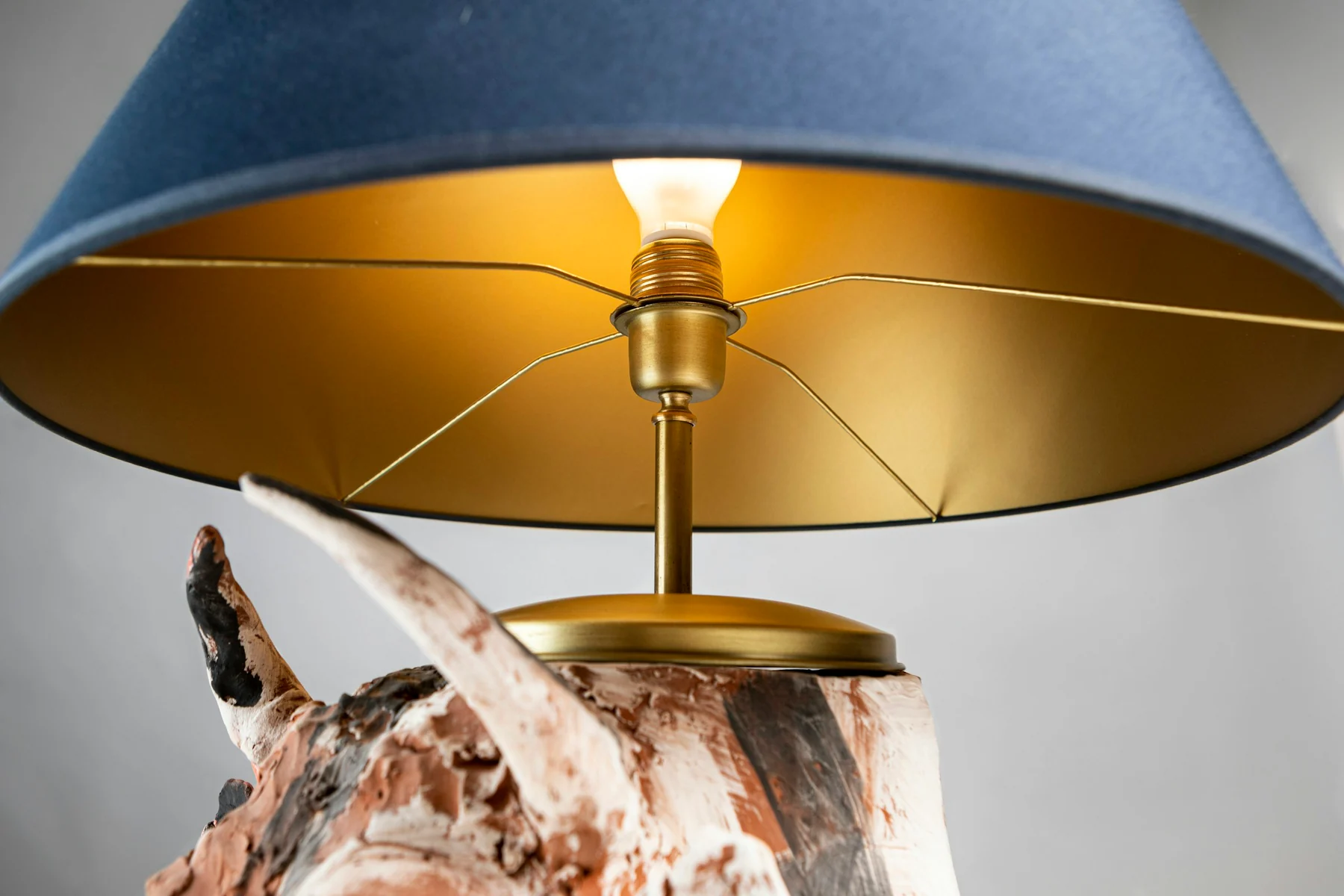
Move from attachment to edge
- Shade supportRing, gallery, harp, clip or other attachment present, coherent and matched to the supplied shade without forcing.
- Fragile rims and holesChips, cracks, repairs and missing material shown in context where screws, clips or weight meet glass, ceramic or stone.
- ArticulationArms, pivots and counterweights shown at rest; any drift, looseness or improvised stop reported without adjustment.
- Heat historyDiscolouration, deformation, brittle material, odour or seller-reported overheating shown and left for professional interpretation.
- Surface and repairCorrosion, lifting finish, overpaint, adhesive, replacement screws and repaired breaks named without assuming cause or age.
Do not ask the seller to tighten an old joint, scrape corrosion, remove an unknown bulb or clean a fragile shade for the listing. The correct intervention can depend on both conservation and electrical requirements. Photograph first and ask the relevant professional which part of the object they can responsibly assess.
Measure the light in its working state
| Type | Record | Test on paper or in the room |
|---|---|---|
| Table lamp | Maximum height, shade width and depth, base footprint, switch position and full cable length | Eye line, working surface, stable support, switch reach and an unpinched route to the supply |
| Floor or arc lamp | Base footprint, maximum height and reach, shade envelope, every intended position and cable length | Walking route, furniture collision, stability at rest and access to controls |
| Pendant | Canopy, total supplied drop, shade envelope, lowest point and weight as documented | Ceiling location, room use and final drop—confirmed with the responsible installer |
| Wall light | Backplate, projection, shade envelope, orientation and supplied installation parts | Mounting position, doors or curtains, cable/building connection and installer access |
Measure adjustable lights in every intended resting position and record how the seller supports the movement. Do not assume an arm should hold a pose that it reaches only when tightened, balanced or pressed. A photograph can show geometry; it cannot provide a load rating, installation design or safe clearance.
WorkSafe's consumer guidance tells buyers of second-hand appliances to confirm safety testing, working safety features, the correct plug and the correct voltage for New Zealand. Use that only as a reminder to ask the equivalent destination-specific questions; never copy one country's answer into another country's room.[4]
Plan packing, disconnection and installation separately
List what detaches by its normal documented method: shade, diffuser, finial, arm, base weight, canopy cover or another loose component. Ask who will remove and label each part, how fragile edges will be protected and whether the electrical cable, fixed connection or old joint limits handling. Do not discover disassembly by pulling during collection.
- Photograph the complete assembled light before any authorised disassembly.
- Give every loose part its own label and place in the inventory, including screws or rings supplied by the seller.
- Protect shades, glass and ceramic from carrying the weight of metal bodies, cables or plugs.
- Keep the plug, switch and cable from striking fragile surfaces or being used as lifting points.
- For a fixed light, name the qualified person responsible for disconnection at origin and assessment and installation at destination.
- After transport, treat any new movement, impact or damage as a fresh condition fact before use.
Use the delivery-route Guide for the protected object and access route. A lamp that fits the room can still need a different packing and professional installation plan.
Send one complete lighting request
Message to copy
Ask for the assembly, history and handoff
Hello—I'm considering this light for [job] in [country]. Could you show it complete and switched off from all sides; then the shade inside and out, holder interface and markings, body and joints, base or canopy, cable entry, full cable, switch, plug and every separate transformer, driver or installation part that is included? Please measure the maximum height, shade envelope, base or backplate, reach or drop and complete cable length; describe any movement, crack, repair, heat mark or missing part; and state who rewired, repaired or tested which components, when and for which country, with any document available. Please identify what remains untested. Please do not open, adapt, energise, disconnect or install it for the photographs. Thank you.
A seller can answer carefully without promising electrical safety. Save the reply and original images with the repair or test documents. If the object remains interesting, send the same packet to the qualified professional who will own the destination-country decision.
Make the decision at the right gate
Three gates before use
- Complete enough to assessThe exact assembly, loose parts, documents, repairs, visible damage and unknowns are recorded.
- Fits the intended placeScale, light direction, shade, base, reach or drop, controls, route and packing plan work for the room.
- Professionally resolvedA qualified person in the country of use owns current electrical suitability and any repair, conversion or installation.
Buy when the complete object and work path make sense even if professional assessment is still a priced, scheduled condition before use. Pause when a missing part, concealed repair, fragile attachment, foreign specification or unclear installation could materially change that scope. Decline when the decision depends on treating ‘working’ as the final gate or testing uncertain electrics yourself.