The arrangement is doing the work
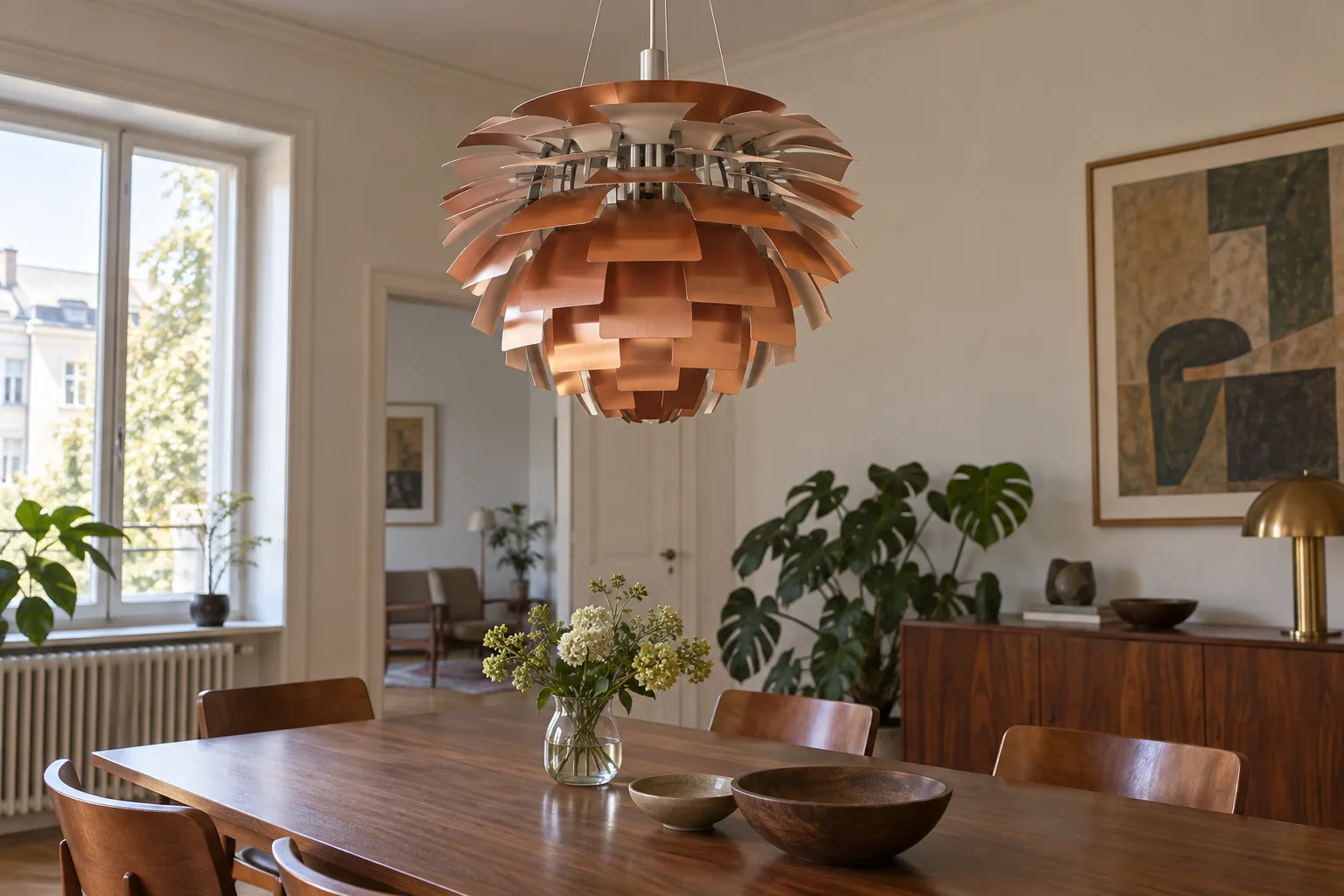
A PH Artichoke can be wonderfully sociable above a dining table: a substantial object to look at, with light passing through a carefully arranged surface. It is also a pendant whose apparent complexity becomes very practical when one component needs replacing.
Louis Poulsen describes 72 metal leaves arranged in twelve rows of six, developed for Copenhagen’s Langelinie Pavilion in 1958. The positioning is part of the lighting design. That makes completeness and alignment meaningful buying questions; counting roughly similar pieces in a photograph is not an authentication method.[1]
Ask for photographs all the way around the unpowered pendant, including the underside and the visible supporting assembly. Mark missing, distorted, loose or refinished areas on copies of those photographs. A front view can hide the part most in need of attention.
Have the seller identify the version, diameter, finish and known production period separately. Establish whether it uses a replaceable lamp or a later integrated system and whether parts have been changed. A current electrical specification should not be silently applied to an older pendant. If the version is unclear, send the evidence to Louis Poulsen or an appropriate specialist.
One damaged leaf can mean several operations
The maker’s repair document for PH Artichoke Glass gives a useful example of why position matters. It distinguishes upper numbered leaves that can be replaced without removing neighbouring leaves from lower ones that require surrounding parts to come off. That is a glass-version service reference, not an instruction for a buyer to dismantle a metal pendant.[2]
Use that example to improve the quotation request: identify where the damage sits, rather than asking for a generic price for “a leaf”. The specialist needs the exact version and the surrounding condition to judge access, parts and handling. A replacement offered online under the right product name may still be the wrong position, finish or production fit.
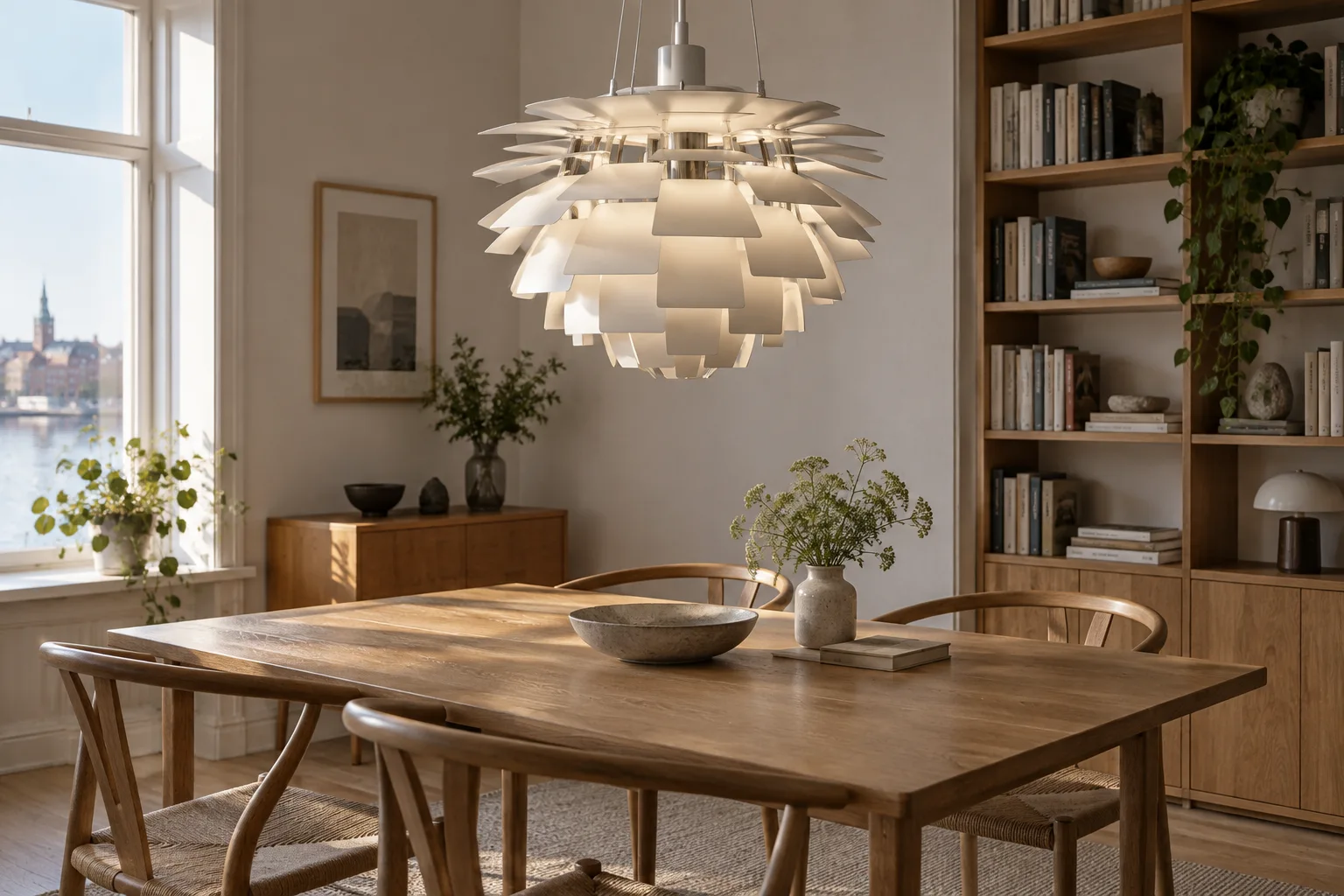
Ask whether any leaves have been repainted, polished or straightened. A repair may be acceptable while still changing the appearance among adjacent surfaces. View the proposed finish in the full arrangement and from below, where the pendant will usually be seen.
Do not straighten a leaf for a viewing or tighten an uncertain fixing until it appears level. Those interventions can make the condition harder to assess. A clear record of the existing state gives the person doing the work a better starting point and makes the agreed scope easier to review.
Price the installed light, not the carton of parts
| Job | Include in the scope |
|---|---|
| Identify and repair | Exact version, affected positions, compatible parts and the retained finish. |
| Service the electrical assembly | Assessment for the actual components and intended installation; document any changes. |
| Pack and transport | Who handles the pendant, whether disassembly is necessary, packaging and reassembly. |
| Install and hand over | Verified weight, suitable structural fixing, suspension, electrical connection and final inspection. |
Ask who is responsible for each handoff. The carrier may not be the specialist who can safely disassemble the leaves. The electrician may need a separate competent assessment of the ceiling fixing. Agree these boundaries before collection so the lamp does not arrive with delicate loose parts and no clear assembly plan.
Use the exact pendant’s weight and suspension information, confirmed by the specialist. Do not borrow a figure from another diameter or material. The installation must suit the real ceiling structure and local requirements. A decorative ceiling rose tells you little about what is carrying the load above it.
Check the room fit with a simple paper outline at the proposed position, without suspending a heavy mock-up. Include the view across the table and the paths around it. A large pendant may be perfect above an open table yet feel crowded where chairs sit close to a cupboard or walkway.
Choose the amount of restoration you want to own
Compare an as-found purchase with a serviced example using the same finished brief. Both should include the version, retained appearance, complete working assembly, transport and installation. Otherwise the cheaper quotation may simply leave more tasks to you.
A useful specialist enquiry
Please assess the attached PH Artichoke, including the identified version and marked component positions. Confirm which parts can be retained or replaced, the expected finish match, electrical work and suspension requirements. Price packing, any disassembly, transport and reassembly separately, and identify what must be inspected before the quote is firm.
Keep the condition photographs and the final work record. They make an honest restored pendant easier to understand for its next owner. If an essential replacement remains speculative, or the seller cannot explain how it will be packed, leave those costs unresolved in your decision rather than assuming the impressive object will somehow sort them out.