
The loose bag is part of the offer
Ask for one clear whole-fixture photograph and another showing every loose component supplied with it. Have the seller distinguish parts removed for packing, parts already missing and pieces that are broken. Ten objects in a bag are not necessarily ten correct replacements for ten empty positions.
Separate decorative trim from components that hold weight or position another part. A drop, bead chain, glass dish, socket cover, arm and ceiling attachment have different jobs. If you cannot describe the job of a missing piece, ask a lighting specialist before assuming it is decorative.
Map the pattern before counting it
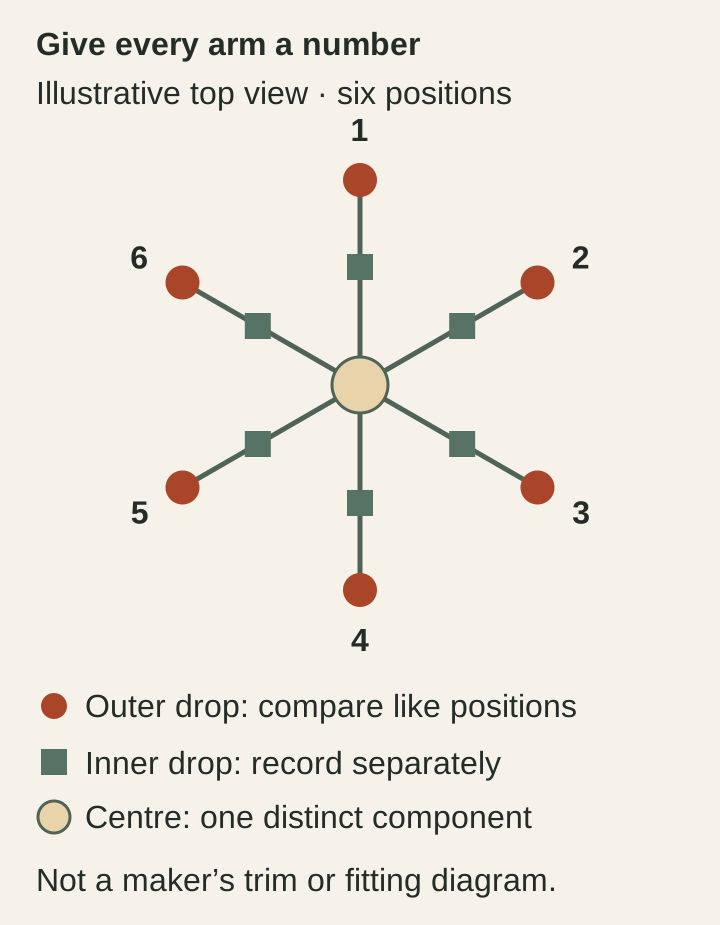
Choose a repeatable orientation in the photograph and number the arms. Describe a missing item as “arm 3, outer lower drop”, not “the one on the left”. For a symmetrical fixture, compare the same position on the other arms. Differences may be intentional, so do not make the pattern uniform without evidence.
Schonbek’s care guidance directs owners to the fixture’s trim diagram for replacing crystal and to customer service if the diagram is missing. That is a useful principle for a recognised model: obtain its own map rather than borrowing one from a similar-looking chandelier. An unidentified fixture may need a specialist to prepare an inventory from the object itself.[1]
| Position | Expected from a confirmed pattern | Present | Question |
|---|---|---|---|
| Outer drop, one per arm | 6 | 5 | Does the retained sample match an obtainable replacement? |
| Inner drop, one per arm | 6 | 4 | Are both gaps the same component and fitting? |
| Central pendant | 1 | 0 | Can its form and attachment be established from a reliable record? |
In this example there are four missing pieces, but only three replacement questions. Count the repeated positions and the distinct part types separately. A supplier needs both.
Compare a real replacement beside the original
For a decorative drop, ask the supplier which measurements matter: complete length, width, thickness, hole position and connector arrangement may all be relevant. Describe the shape and edge treatment, and send a photograph beside a ruler without hiding the component. Do not dismantle a fragile fitting just to measure it.
A clear-looking replacement can differ in tint, facet pattern and visual weight. If appearance matters, obtain one sample before ordering a set. Compare it beside an existing piece in ordinary daylight and in the intended lighting conditions. A web photograph cannot settle a subtle colour difference.
The specialist must also confirm the attachment and any effect of changed weight or geometry. Do not enlarge holes, improvise wire supports or transfer the load to a decorative part. If a suitable component cannot be found, discuss a coherent documented alteration or decline the project.
Price the chandelier after completion
Write the total as purchase plus accepted replacement parts, professional service, packing, transport and installation. Include any examination charge and clarify tax. Keep a separately identified allowance for an unresolved job; do not hide an unknown arm repair inside the price of decorative drops.
A seller’s claim that replacements are “easy to find” becomes useful when it names a supplier, exact part and current availability. Ask that supplier directly. A made-to-order part may have a minimum quantity or a long lead time, and an abandoned project can occupy more space than its purchase price suggests.
For a named Schonbek product, its current contact route is a place to begin an enquiry, not a promise that discontinued trim remains available. Keep the supplier’s answer with the proposed purchase.[2]
Make the packing list match the part map
Agree who removes any trim, how it is labelled and which photograph records its original position. The seller or specialist should choose a safe packing method for the particular fixture. Repeated glass parts need separation and protection; a bag of loose pieces can arrive as a bag of new damage.
Message to the seller
Please send the complete chandelier, labels and every loose part included. Could you mark the missing or damaged positions and distinguish decorative trim from arms or supporting fittings? I would like any model-specific trim diagram, known replacement source and service history, plus the agreed packing and component-labelling plan before buying.
Buy when the complete arrangement and route back to use are credible. A missing drop can be a manageable detail. An unidentified structural component and an optimistic guess are a different purchase.