Find the catalogue match before the donor lamp
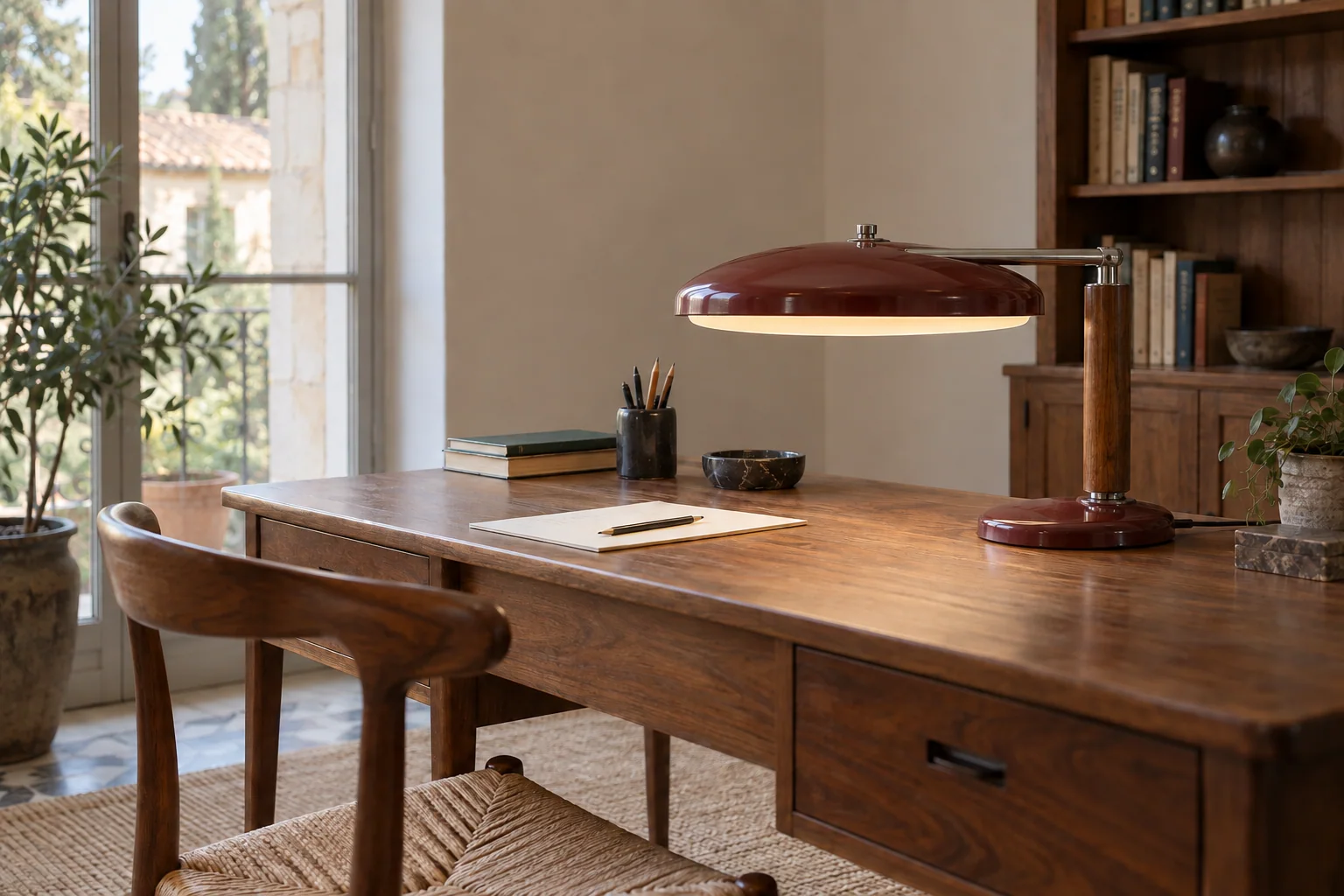
Vintageinfo reproduces a 1974 Fase catalogue page for the President S/C. It records a 300 mm shade and 410 mm overall height, and describes the glass diffuser and two-light arrangement. Use the dated page to compare the whole offered lamp: wooden support, arm, shade and base. The 300 mm figure is not an order size for a replacement glass disc.[1]
Ask for photographs of the complete profile, underside, shade from below and surviving marks. Keep loose pieces in those photographs. A seller may have a glass support or fixing in a drawer without recognising its purpose, while a donor lamp with a similar red shade may have a different attachment.
Avoid buying the donor first and asking whether it fits afterwards. Send both sets of photographs to the repairer who would complete the work. Have them identify which parts can be used and which questions still require measurements or physical inspection.
A circle of glass is not yet a diffuser
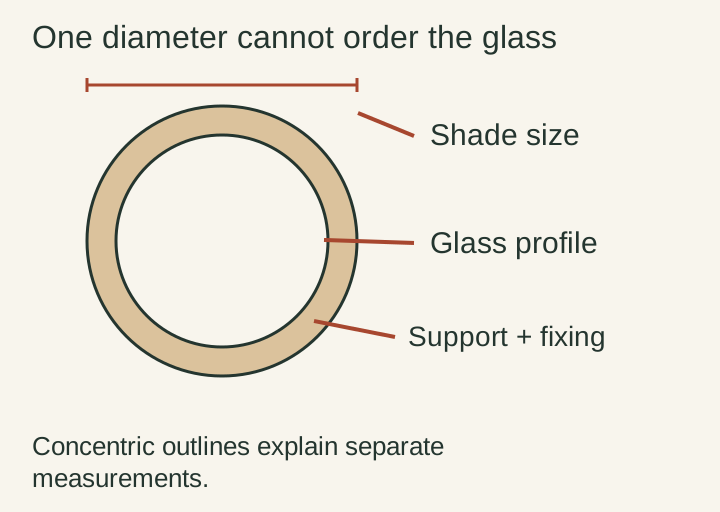
The replacement enquiry should establish the glass profile, its thickness, the supporting edge and how it is retained. Those details need to come from the actual assembly or a confirmed matching reference. A flat disc cut to the outside shade diameter may neither seat correctly nor stay in place.
| Part | Resolve before paying |
|---|---|
| Glass diffuser | Correct profile, dimensions, support and retention. |
| Base or lower support | Compatible structural assembly and stability. |
| Shade pivot or fastener | The correct joint and its ability to hold position. |
| Switch, holders or wiring | Professional electrical assessment and suitable replacement scope. |
Ask the glass specialist and lamp repairer to agree the specification, including suitability near the light source. Do not substitute acrylic or a decorative plate because it fills the opening. The appearance you want depends partly on the diffuser, but its secure fitting comes first.
Price a lamp you can actually switch on
Make three realistic offers comparable: incomplete lamp plus confirmed work; a donor-and-project pair with a priced assembly plan; a complete example with a documented inspection. Include two deliveries if you need a donor, and packing for fragile glass. Do not count selling the donor’s leftovers as guaranteed income.
A restored lamp may have new wiring and a replaced diffuser. That can be a sensible usable purchase when the work is disclosed. Ask for a list of original, replaced and still-uncertain components, rather than treating restored as a promise that everything is original.
Look at the wooden support and the joints before being distracted by the glossy shade. Splits, movement and poorly fitted repairs need their own assessment. The repairer should see the entire lamp; an electrical quote alone does not include rebuilding its support.
Know which uncertainty you are buying
A complete, mechanically sound lamp with a known electrical job can be a manageable project. A shade and arm without a base, diffuser or confirmed model is a collection of parts until someone establishes the route to a complete lamp. Price and describe it that way.
Ask the repairer
Can you identify this version from the attached views, specify the missing diffuser and fixings, and quote a complete supported lamp with electrical work included? Please mark anything that still depends on finding a donor.
The pleasure of a President is its generous pool of light and composed shape on a desk. A patient search for a complete example may get you there sooner than the most tempting incomplete one.