Decide how hard the piece needs to work
Begin with use, not fabric colour. A chair for dinner every evening needs dependable support, a stable frame and a comfort check. A lightly used bedroom chair may allow a different balance of wear, originality and future work. A historically important seat may need preservation decisions before ordinary re-covering.
Write the use brief
- FrequencyDaily, weekly, occasional or display use changes how much uncertainty you can reasonably accept.
- UsersRecord the people, pets and accessibility needs that materially affect comfort, cleaning and durability.
- ReadinessMust it be usable on arrival, or can professional upholstery or structural work enter the plan?
- Historic materialWould preserving an old cover, trim or stuffing matter even if it is not suitable for ordinary use?
- Decision budgetCan you obtain a scoped quotation before purchase rather than reserve only for replacement cloth?
There is no universal acceptable sag, softness or wear percentage. Compare the exact piece with its job and keep decorative appeal separate from load-bearing confidence.
Read upholstery as a system
The U.S. National Park Service describes upholstered furniture as a multi-material assembly: a usually wooden frame can carry varied historic fillings, later batting or foams, springs or other support and a wide range of textile or leather covers. Deterioration in one material can affect another, so the visible cloth is only the first layer.[1]
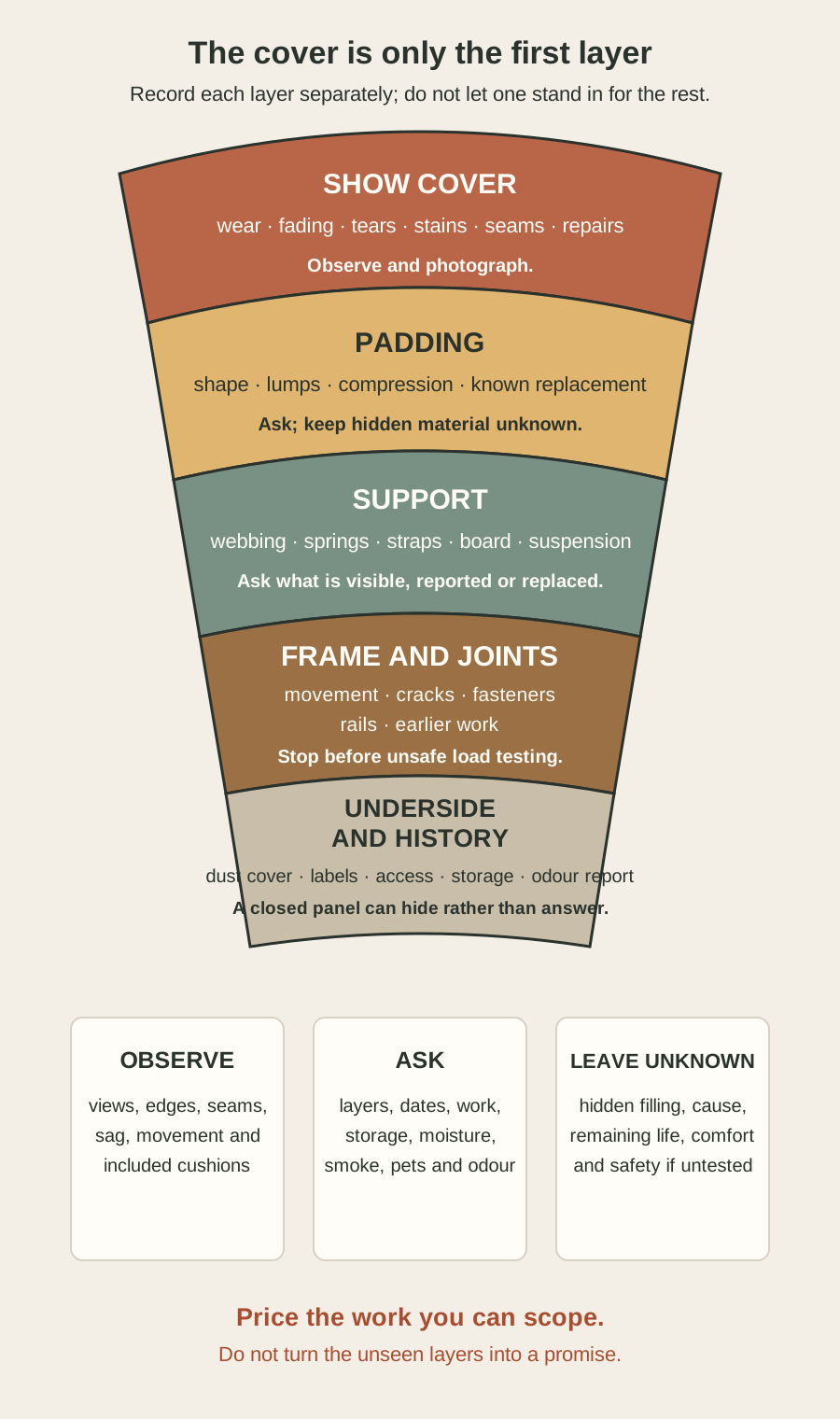
Use material names only when they are known. “Foam”, “horsehair”, “springs”, “webbing” or “original filling” should stay seller-reported until the source is clear. Do not ask someone to cut a dust cover or pull upholstery apart merely to satisfy an online inspection.
Inspect the whole shape before the detail
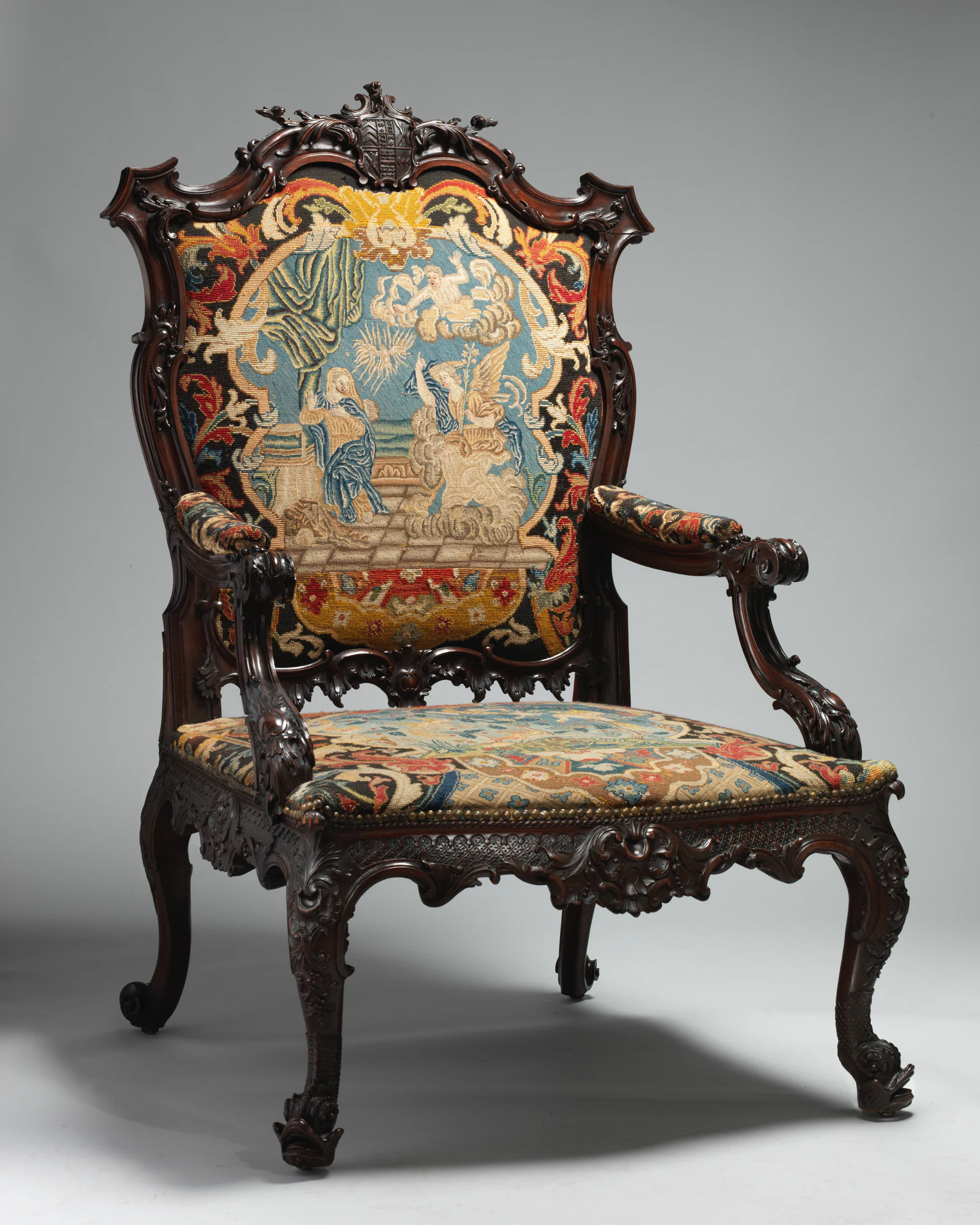
The whole-object photograph here documents The Met armchair 1974.325, after a design by Thomas Chippendale, from about 1755. It is useful because the show cover, upholstered edges and wooden load path remain visible together; the museum attribution and condition do not transfer to a marketplace chair that resembles it.[4]
Request a complete visual record
- Front and both sidesCompare overall level, left-to-right shape, arms, seat crown, back profile and how the upholstery meets the frame.
- BackLook for a different cover, open seams, fasteners, repairs, fading and contact damage.
- Cushions on and offShow every included cushion, decking beneath it, zips where intended and any mismatch in filling or cover.
- Working edgesRecord front rails, piping, corners, arms, head contact, cushion reverses and every repeated wear point.
- Safe undersideShow the complete underside only when the piece can be positioned without stressing loose joints or upholstery.
A low or uneven seat may result from compressed filling, altered cushions, support failure, frame movement or the intended form. The photograph identifies the symptom and its location; it rarely establishes the hidden cause.
Read the cover, seams and edges
Light can fade and embrittle upholstery fibres, while dust and dirt add abrasion and can support other deterioration. The NPS advises that unstable fabric and old stains are conservation questions rather than invitations to vacuum or spot-clean. For a buyer, fading, weakness and staining therefore belong in the work scope before any cleaning promise.[1]
Move from surface to edge
- Colour and fadingCompare exposed faces with cushion reverses, folds and protected edges without assuming the hidden colour is recoverable.
- Abrasion and fibre lossLook for thinning, shine, pile loss, splits, powdering and areas where the ground or padding is exposed.
- Seams, piping and fastenersRecord open stitching, pulled corners, detached trim, displaced tacks and earlier patching.
- Stains and tide linesShow the complete affected area and ask when it appeared, what caused it if known and whether it changed after storage or cleaning.
- Cover historyAsk whether the cover is original, later, layered over earlier material or only partly replaced, and who performed known work.
The Canadian Conservation Institute notes that textiles can be vulnerable to environment, dirt, insects, mould and handling, and that weak, splitting, fragmenting or broken material should not be treated as a routine surface-cleaning task. A buyer need not diagnose the fibre to recognise that visible instability changes the handoff.[2]
Ask what the underside does—and does not—show
The underside can reveal rails, corner blocks, support, fasteners, dust cover, labels and previous access. It can also be closed by a board or fabric panel. In that case the photograph documents the closure and surrounding frame; it does not prove the filling or support behind it.
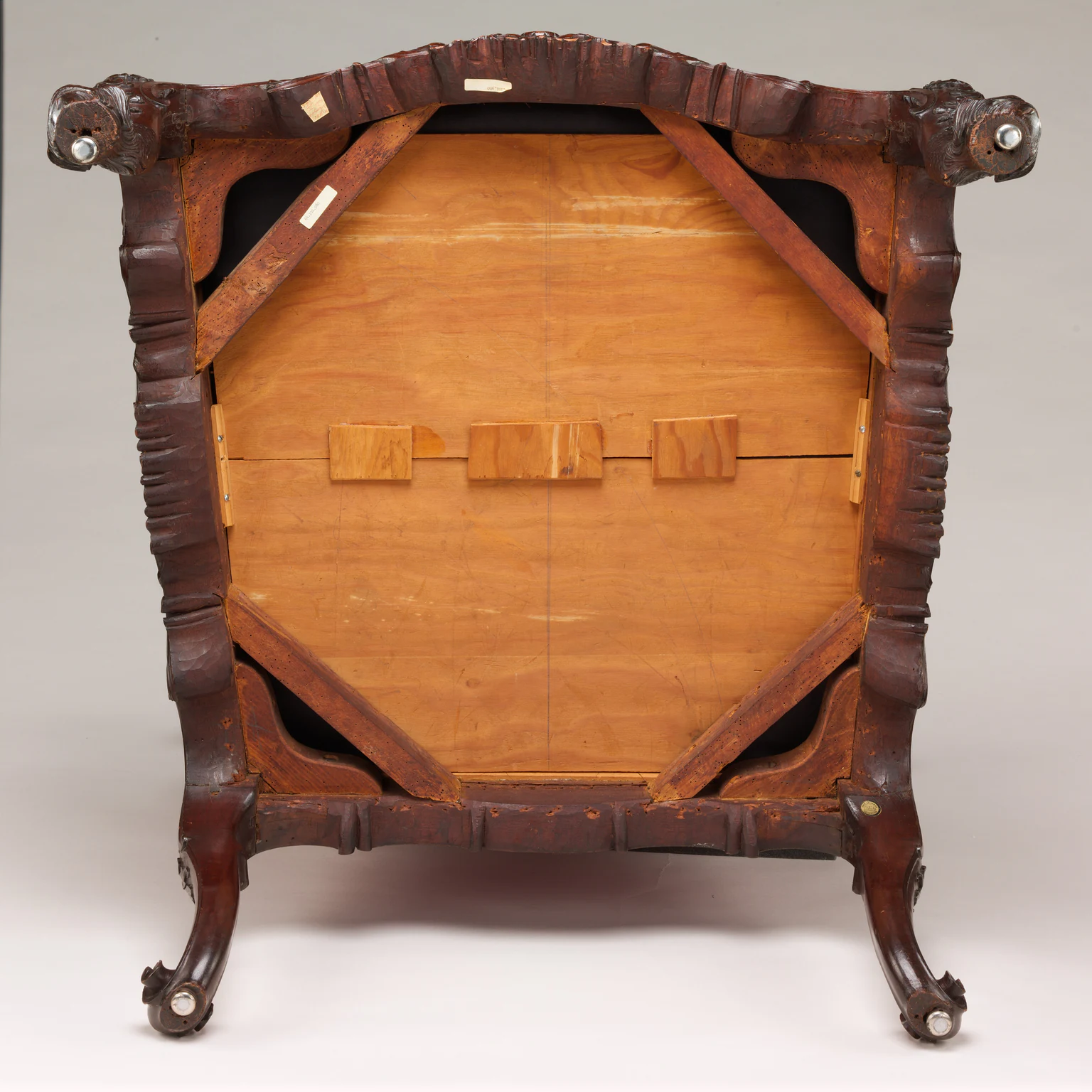
- Ask whether the underside covering is intact, loose, torn, replaced or intentionally removable.
- Ask what support is visible without opening anything: webbing, springs, straps, board, clips or another system.
- Record bent, detached, corroded or improvised fasteners without assuming when they were added.
- Show the rails and joints around the upholstery, not only the centre of the dust cover.
- Keep concealed filling, internal cleanliness and remaining support life unknown unless a responsible inspection has established them.
No invasive inspection
Do not open the piece for an online answer
Cutting a dust cover, removing tacks, lifting old trim or extracting filling can damage evidence and create health or conservation risk. If the hidden layers materially affect the purchase, arrange an upholsterer or conservator's inspection with the seller's permission.
Keep odour, moisture and pests out of a photo conclusion
Ask directly about smoke, perfume, pets, damp storage, flooding, recent cleaning, pest treatment and any persistent odour. Record who observed it and when. “No smell in the room” is useful seller reporting; it is not a guarantee for another person's sensitivity or for odour released after the piece warms indoors.
The Canadian Conservation Institute warns that mould on textiles can damage the object and pose a human-health risk. Suspected mould is not a normal stain-removal question: avoid brushing, vacuuming, smelling closely or bringing the piece into an occupied home while relying on an editorial photograph for clearance.[2]
Upholstered crevices and protein- or cellulose-based materials can also support insect activity. The NPS lists larvae, cast skins, egg cases and fresh debris among possible evidence, but treatment depends on identification and the complete object. Ask for close photographs and a suitable professional decision rather than accepting or prescribing a household spray.[1]
Furniture still needs its own structural and pest check. The Canadian Conservation Institute recommends checking loose joints before movement and treats fresh sawdust-like material beneath holes as a possible sign of active insects that warrants isolation and professional advice.[3]
Health boundary
A musty report is not a discount code
Do not price suspected mould, damp or active pests as if ordinary cleaning will certainly solve them. Decide whether an appropriate professional can inspect before transport; otherwise leave the outcome and cost genuinely unknown or decline the piece.
Test comfort and support without forcing the piece
When an in-person test is practical and the seller considers the piece safe to use, begin gently. Observe whether the frame stands evenly before sitting. Listen and feel for movement, compare left and right, and stop if a joint shifts, a support gives way, a mechanism does not hold or the seller has warned against use.
- Does the seat support the intended user without a hard edge, sudden drop or clear left-to-right failure?
- Does the back support feel attached and coherent with the frame rather than moving independently?
- Do loose cushions return broadly to shape, and are their fillings, covers and sizes consistent with what is included?
- Does a swivel, recline, fold or bed mechanism move and hold through each intended state without being forced?
- Does comfort remain acceptable for long enough to reflect the intended use rather than a few seconds?
Comfort is personal, and a safe-looking chair can still be unsuitable for a particular body or use. A remote buyer can compare exact seat measurements with a familiar chair, but should not turn those numbers into a promise about padding, posture or support.
Use the sofa and armchair measurement Guide for room and seat geometry. Keep the upholstery work scope and delivery route as separate decisions.
Scope the work before comparing price
| Observed or reported state | Scope to request | Keep unpromised |
|---|---|---|
| Sound cover with ordinary wear | Cleaning or no immediate work, assessed for the exact fibre and stability | That every stain or odour will disappear |
| Torn, weak or heavily faded cover | Local conservation, partial repair or complete re-covering options | That new cloth leaves padding and trim untouched |
| Lumps, flattening or uneven crown | Padding and cushion assessment | The hidden material, cause or remaining life |
| Sagging, hard edge or reported spring noise | Webbing, spring, strap, board and support assessment | That replacing the cover corrects the support |
| Loose rail, movement or improvised fastener | Frame and joint work before upholstery is tensioned around it | Safe regular use before structural review |
| Important old textile or layered upholstery | Conservator and upholsterer discussion about retention, documentation and use | That ordinary stripping and re-covering is appropriate |
| Persistent odour, damp, suspected mould or pests | Health, pest and object assessment before transport or treatment | A predictable household cleaning cost or outcome |
Ask for a written scope that states assumptions and exclusions. Compare the asking price plus collection, frame work, support, padding, cover, trim, conservation and delivery—not the asking price plus fabric alone. A sound reupholstered piece can be a better decision than nominal originality with unscoped work; neither is automatically superior.
Quotation boundary
A photograph can support a provisional scope
An upholsterer's remote estimate may still depend on what is found after authorised opening. Ask what the quotation includes, which layers are assumed reusable and how a hidden structural or health issue would change the decision before work begins.
Send one complete upholstery request
Message to copy
Ask for layers, history and limits
Hello—I'm considering this piece for [daily/occasional/display] use. Could you show the complete front, both sides and back; every cushion on and off; the seat, arms, piping, seams and main wear or stain areas in context; and the full underside if it can be photographed safely? Please describe what is known about the cover, padding, support, frame, repairs and dates of earlier upholstery, and whether there is any movement, damp history, smoke, pet, persistent odour, mould or pest concern. Please identify what remains unknown and do not open, clean or remove material for the photographs. Thank you.
Use the photograph-request Guide to keep every close-up attached to the whole piece, and ask the upholsterer to quote against the same evidence packet.
Save the seller's original response with the current images. Mark each fact as observed, seller-reported, inferred or professionally assessed. This keeps a useful answer from becoming a stronger promise when the listing is repeated later.
Make the decision with the unknowns visible
Buy when the exact piece suits its job, the visible condition and disclosed work are acceptable, the important unknowns have a credible plan and the total commitment still makes sense. Pause when support, frame, odour, damp, mould, pests or historic material could materially change use or cost and no responsible inspection is available.
Decline when the decision depends on a guarantee photographs cannot supply. Attractive old cloth, new fabric or a familiar maker name does not overrule an untested load path or a health concern. Ordinary wear and honest previous work, however, can remain part of a good vintage piece when they are understood and priced.