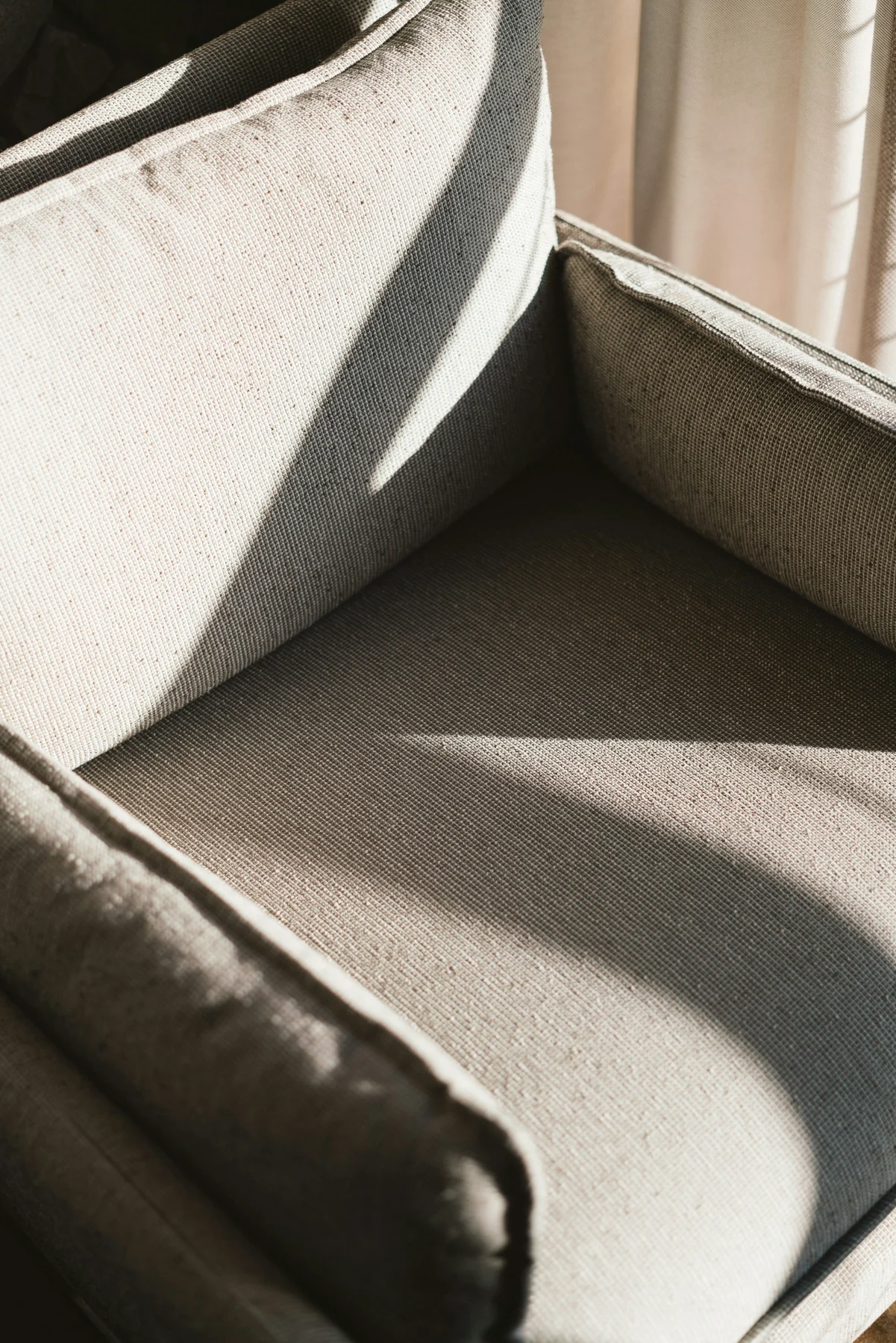
Describe the chair’s next life
Picture an ordinary week. Will this be your evening reading chair, a dining seat used at every meal, or an occasional chair in a bedroom? Will someone sit with bare arms against the fabric? Will a dog curl up on it? Tell the upholsterer about these habits. “Hard-wearing” is too broad a brief to explain what you need.
Choose two or three priorities you can actually compare: a pleasant feel, a cleaning routine you will follow, a quiet appearance beside the wood, or a pattern that makes the chair the focus. A fabric that wins on one can disappoint on another. There is no single best fibre for every vintage chair, and a fibre name alone does not describe the finished textile.
This Guide starts once replacement upholstery is a considered choice. If you are still deciding what to retain, use our upholstery-condition Guide first. An interesting old cover or significant surviving layers deserve a separate preservation discussion before they become a pattern for new work.
Let the chair shape narrow the shortlist
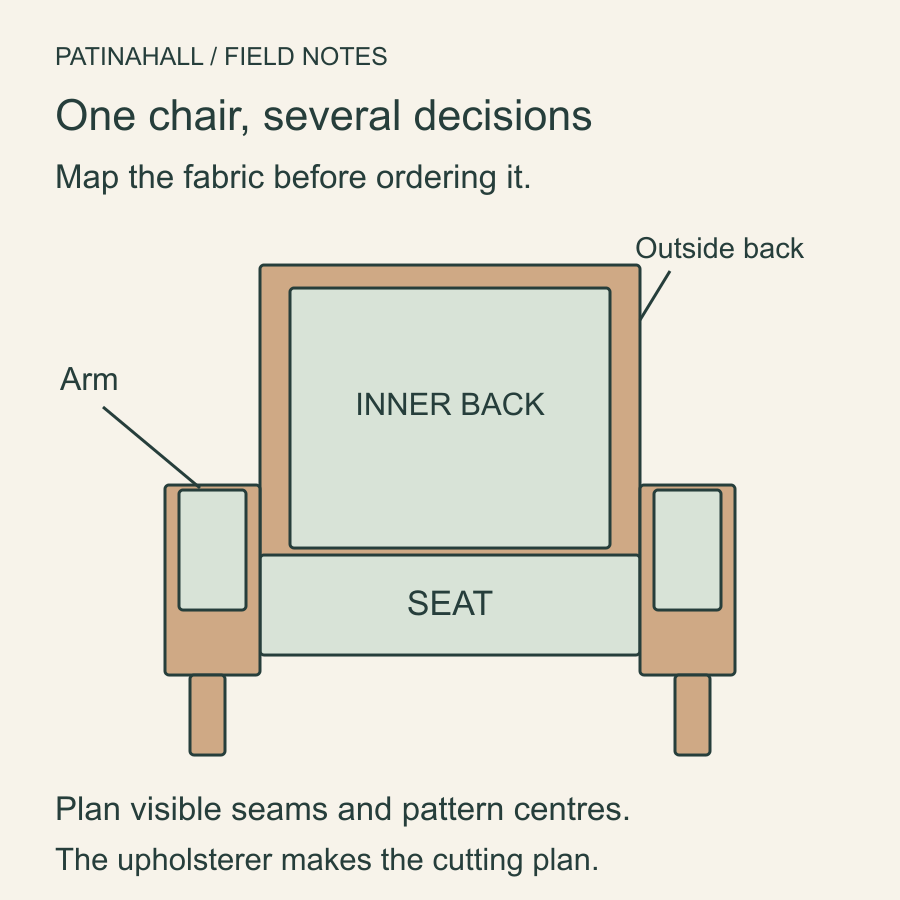
Send the upholsterer clear views of the whole chair, seat, arms, back and any buttons or piping. A square removable seat, a deeply curved back and a buttoned armchair ask different things of a fabric. Ask whether each candidate can be worked successfully around the actual curves and seams, with the intended filling beneath it.
Check that the supplier lists the exact textile for upholstery. A curtain fabric in a perfect colour is not automatically a substitute. Equally, a supplier’s upholstery designation is a starting point: the maker still needs to assess its use on this chair. Include the fabric name, colour code and current specification sheet so everyone is discussing the same product.
Look at the exposed frame while choosing. A coarse, strongly textured cover can become visually dominant beside a fine timber frame; a small pattern can disappear at room distance. Neither effect is inherently wrong. Decide which part you want to notice first, then view the sample from across the room as well as in your hand.
Read the specification without chasing the biggest number
The Association for Contract Textiles explains that Martindale and Wyzenbeek tests measure flat abrasion, leaving out edge wear and other real-use effects. A higher result does not translate directly into a longer service life, and twice the cycles does not mean twice the years. Use the supplier’s suitability guidance alongside the test method, rather than ranking fabrics by one number.[1]
ACT treats rubbing-related colour transfer, lightfastness, physical properties and abrasion as separate performance questions. Its guidelines also depend on construction and application. Ask for the relevant data for the proposed use; a single durability badge does not answer everything in the sheet.[2]
| Specification | Buying question |
|---|---|
| Abrasion method and result | Does the supplier recommend this exact fabric for the expected use? |
| Lightfastness | Is it suitable for the chair’s proposed position and light exposure? |
| Colour transfer under rubbing | What do the wet and dry results say about contact with clothing? |
| Physical properties | Does the upholsterer expect the fabric to work at these seams and curves? |
| Care instructions | Can I realistically maintain the completed upholstery this way? |
Ask the upholsterer to confirm the cover, filling and any interliner together for the intended use and applicable local requirements. Keep this in the quotation. A fabric’s test result is not a blanket statement about an old chair with unknown layers, and this is not something to resolve by a home burn test.
Give the samples a small audition at home
Request a sample large enough to see the weave and, where relevant, a meaningful part of the pattern. Place it beside the chair in daylight and under the lighting you use in the evening. Look from the doorway, sit beside it, then turn it. If the appearance changes with direction, have the supplier identify the intended orientation and the upholsterer mark it in the plan.
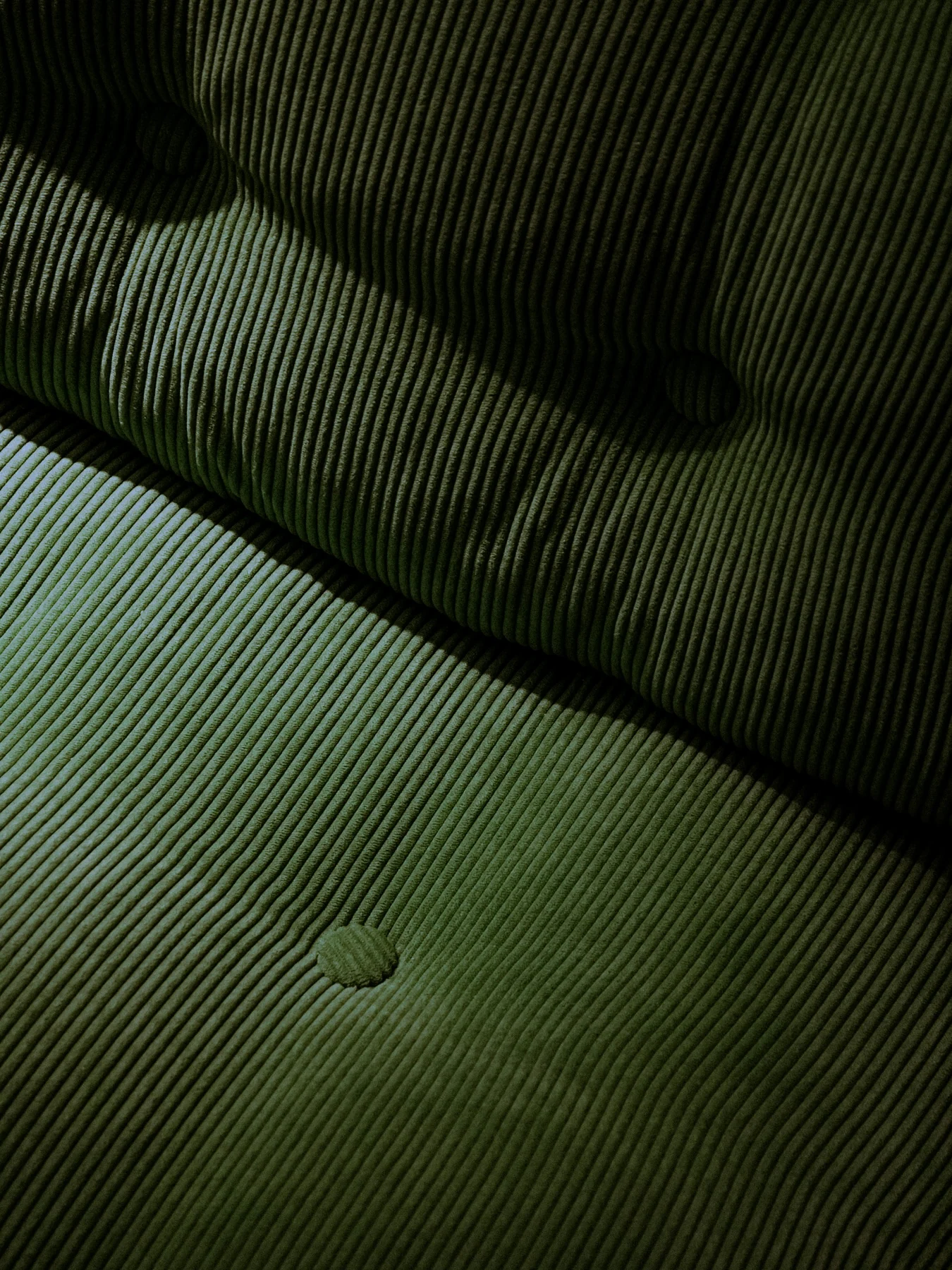
Feel the sample against the clothing and skin that will usually touch it. Compare two finalists on the same day; memory is poor at preserving an exact shade or texture. A phone photograph is useful for remembering a combination, but should not replace looking at the actual samples together.
If claws, food or frequent spills are part of life at home, ask directly about those conditions and the recommended response. “Pet-friendly” and “easy-clean” need an explanation tied to the exact textile. Do not assume either means snag-proof, stain-proof or suitable for any cleaning product.
Care can be more restrictive than the fabric’s robust appearance suggests. For example, Kvadrat’s Base specification includes separate performance information and instructions not to wash the textile. That is guidance for Base, not every Kvadrat fabric. Read the chosen fabric’s own instructions, and confirm how they apply to the finished chair.[3]
A removable cover is not necessarily machine-washable. Ask who should clean it, whether it can be removed and refitted without specialist help, and what to do with an ordinary spill. If the answer is a routine you already know you will avoid, choose another candidate now.
Choose where the pattern lands
A motif that looks generous on a roll may be cut through by a narrow arm or disappear behind a button. Ask to see the proposed centre of the seat and inner back, the treatment of the arms, and the view from behind. The outside back matters particularly when the chair stands in the middle of a room.
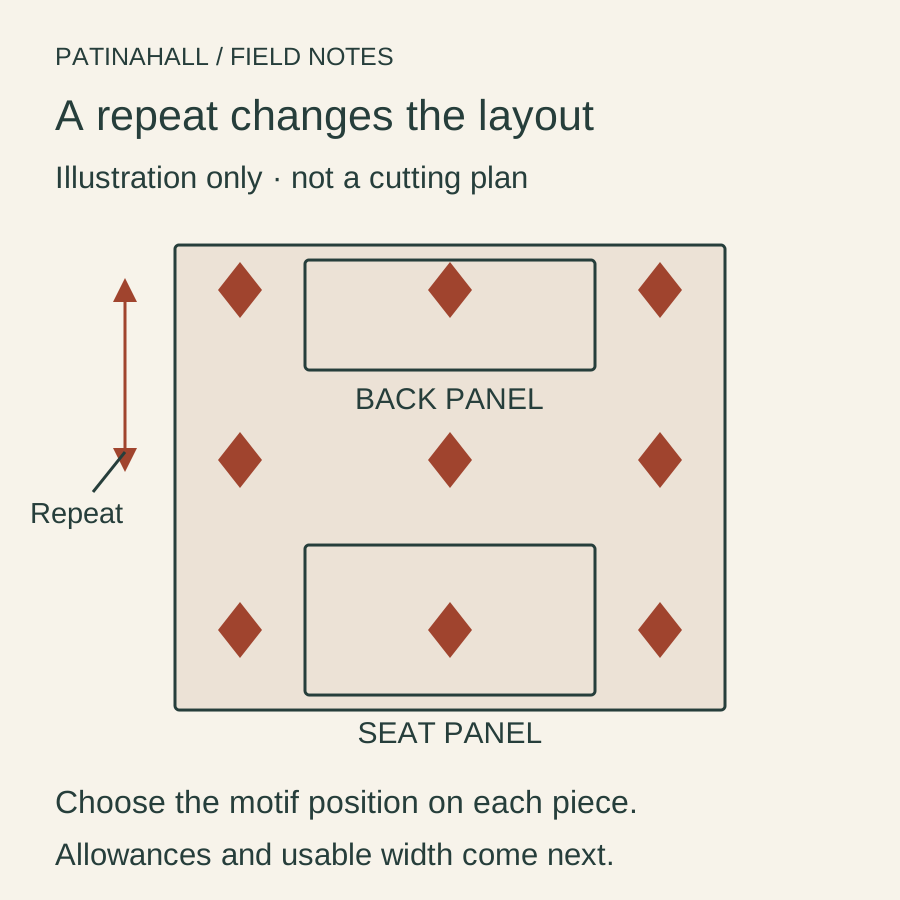
Imagine a patterned fabric with a 30 cm vertical repeat and a seat panel requiring 55 cm before the upholsterer adds the necessary allowances. Ordering only a 55 cm length does not ensure that the chosen motif falls at the seat’s centre: its position at the start of the cut matters. The width, other panels and any matching then change the whole layout. These example numbers explain the problem; they cannot calculate the order.
Ask for a small sketch or an annotated chair photograph if placement is important. Decide whether stripes should continue visually from back to seat, whether piping is plain or patterned, and which face of a loose cushion is visible. These are much easier choices while the fabric is still on the roll.
Approve the fabric and quantity together
Let the upholsterer calculate the order from usable roll width, repeats, direction, seams, cutting allowances and the agreed panel layout. Give them all the pieces in a set at once, including any stool or extra cushions. Ask whether the quote includes a sensible retained offcut for future repairs and whether the supplier can provide the required quantity consistently.
Message to copy
I am reupholstering [chair/set] for [daily use and room]. My priorities are [feel, appearance and care]. Please assess these exact fabric/colour codes for the chair’s construction and intended use, confirm the cover and layers together, and quote the complete work. Before I order, please confirm usable width, repeat/direction, pattern placement, required quantity, any retained offcut and care of the finished upholstery.
The final choice should make sense in three places: on the specification sheet, in the upholsterer’s plan and in your room. Keep the approved code and care instructions with the invoice. They are more useful for the chair’s next chapter than a recollection that the fabric was “the green wool”.