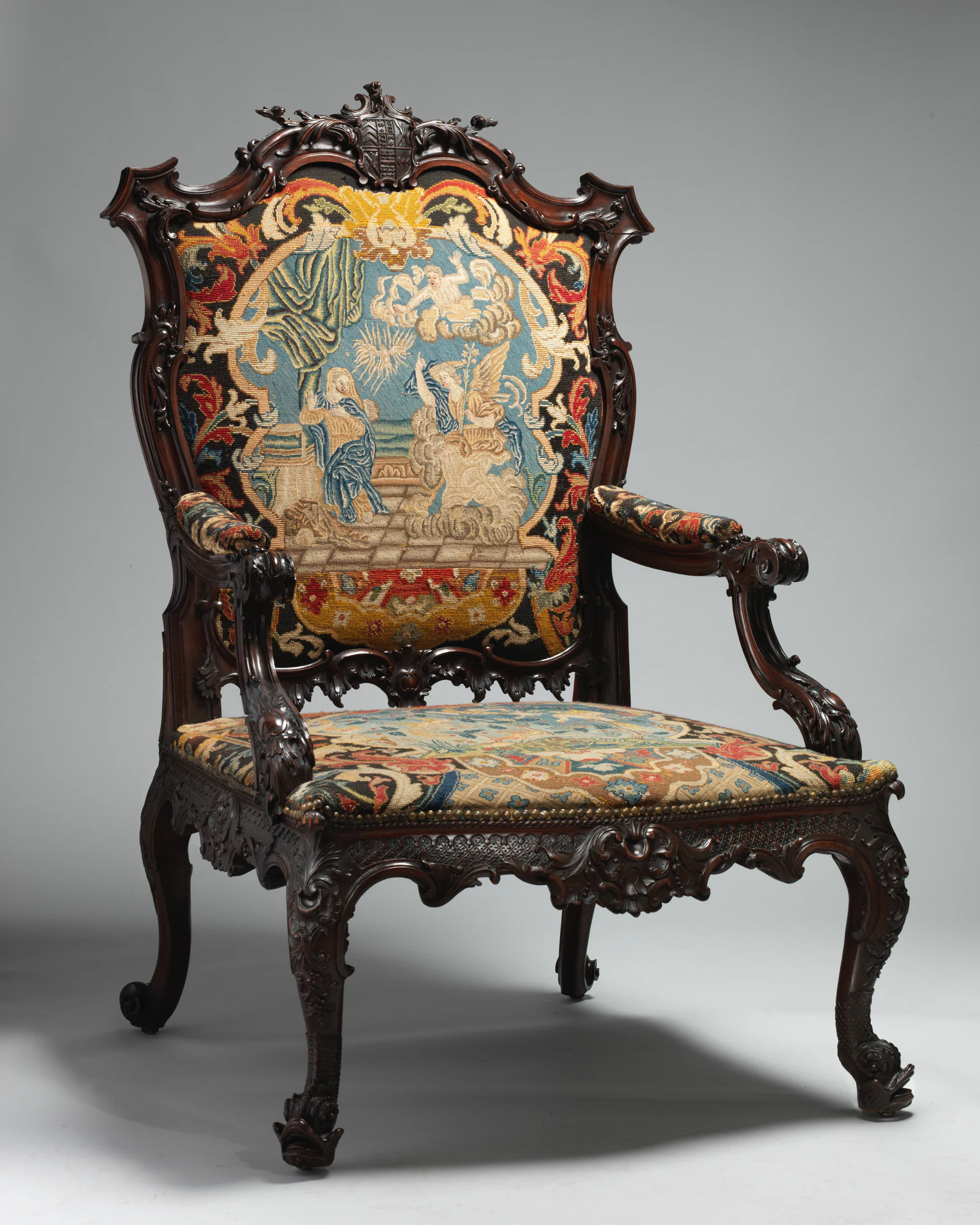
Name the outcome before asking for treatment
Write what the piece must do after the work and what you want to retain. A chair intended for daily sitting asks for a usable structure and support; a rare textile may make preservation more important than ordinary use; a sideboard with a stable marked top may need no visual correction at all. The professional can then discuss methods and consequences against a real outcome rather than the instruction to ‘restore it’.
Choose the working brief
- UseDaily, occasional, display or collection use; the people, loads, moving parts and environment that matter.
- KeepPatina, old finish, tool marks, upholstery, labels, hardware, repairs and evidence you do not want casually removed.
- ChangeThe exact movement, loss, surface, comfort, cleanliness or appearance that prevents the intended use.
- ReadinessWhether the piece must be usable on arrival or may wait for examination, treatment and return delivery.
- LimitYour maximum complete commitment, acceptable time without the piece and any intervention you would decline.
The Canadian Conservation Institute warns that extensive furniture repair and cleaning should be referred to a conservator and that stripping can permanently remove an original finish and historical information. That does not mean every old surface must remain untouched; it means the treatment goal and significance must be understood before a fast cosmetic instruction becomes irreversible.[3]
Brief boundary
Restoration is not one standard finish
Ask the professional to name the proposed outcome and treatment. Stabilisation, structural repair, conservation cleaning, local loss compensation, reupholstery and complete refinishing are not interchangeable merely because a seller or buyer calls each one restoration.
Build one object record before requesting cost
A useful professional enquiry starts with the exact object, not ‘what does it cost to restore a chair?’. Save the current listing and seller answers; give the piece a stable identifier; then assemble whole views, each side, back, top, safely visible underside, moving parts and every area that may change the work. Add dimensions, known materials, current function, previous interventions, storage history and the intended use.
| Record | Useful content | Do not promote it into |
|---|---|---|
| Current observation | Exact location, extent, movement, loss, stain, odour or surface change with dated images | A diagnosis, material identity or repair method |
| Seller report | Known use, storage, repairs, reupholstery, refinishing, cleaning and recent change | Proof that nothing else happened |
| Document | Invoice, treatment report, maker instruction, material record or earlier photograph tied to the piece | Proof that the current state remains identical |
| Unknown | Closed underside, hidden joint, untested mechanism, unidentified finish or unconfirmed weight | The cheapest or most convenient assumption |
Use the condition Guide for the complete observation sequence and the photograph Guide for whole, context and detail views. This Guide begins when that evidence must become a professional brief and budget.
Seller permission
Do not create damage to improve an estimate
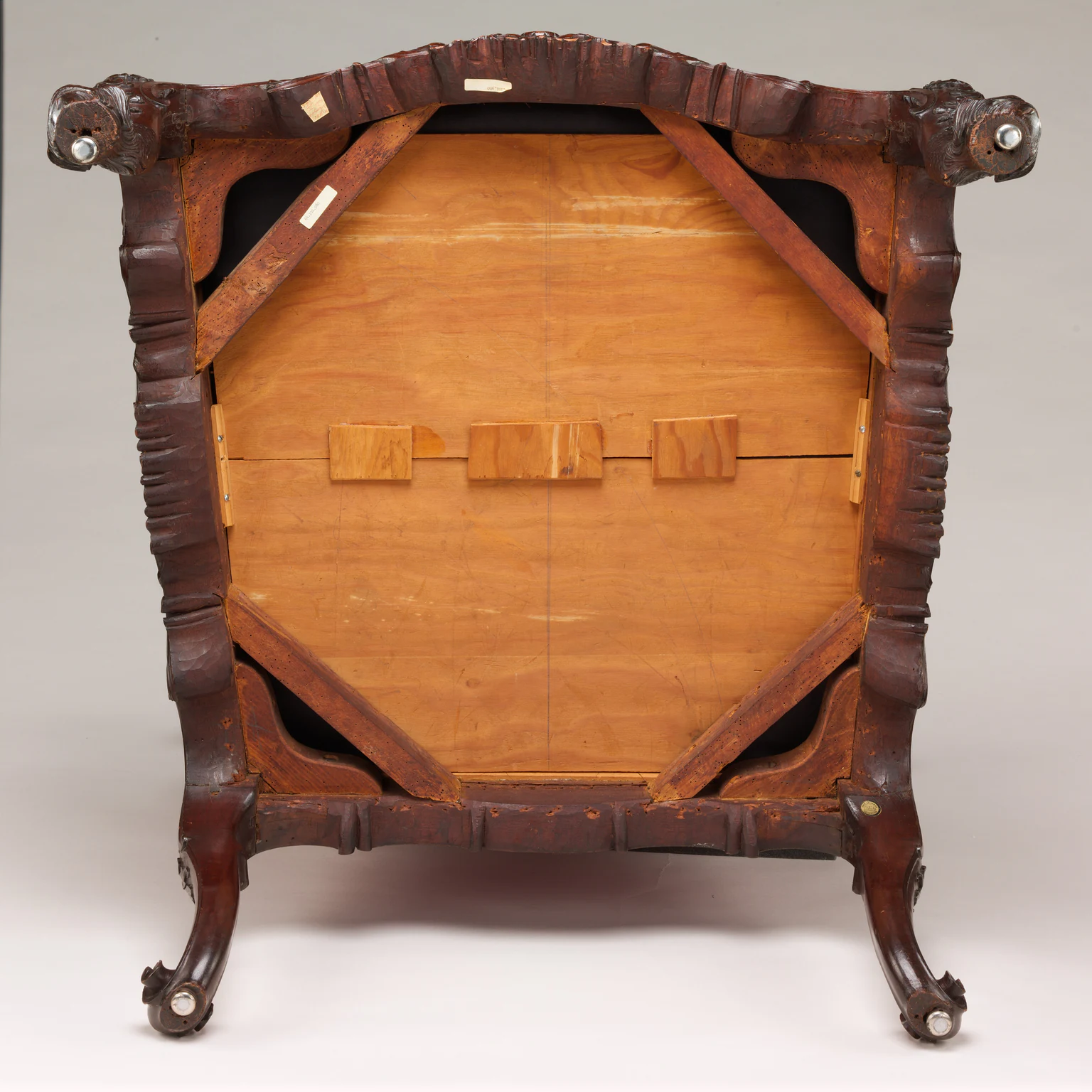
Do not cut a dust cover, lift veneer, remove tacks, force a lock, strip a finish or dismantle uncertain construction for a remote quotation. Record the boundary and ask what an authorised in-person examination would need.
Divide the project into work packages
Move through the object by system. A polished surface can sit over loose structure; new upholstery can expose frame work; moving a stone top can require a carrier before a furniture specialist begins. Keep each work package separate until one qualified person explicitly coordinates it.
| Package | Questions to scope | Common boundary |
|---|---|---|
| Structure and joinery | Stance, load path, movement, splits, joints, added fasteners and earlier repair | Surface appearance does not establish usable structure |
| Surface and finish | Finish identity where known, stability, dirt, staining, lifting veneer, losses and intended appearance | Cleaning, coating and refinishing are different interventions |
| Upholstery | Cover, trim, padding, support, frame, retained material and likely authorised opening | Fabric price does not represent the whole upholstery job |
| Moving parts and hardware | Runners, hinges, locks, catches, mechanisms, missing parts and compatible replacements | Lubrication or a new key is not a universal repair |
| Stone, glass, metal or electrics | Material-specific condition, attachment, compliance or replacement evidence and responsible specialist | A furniture generalist may not own the consequential work |
| Transport and access | Collection state, separations, handling, packing, stairs, workshop journey, storage and return | Treatment price does not automatically include movement |
| Documentation | Examination record, photographs, treatment proposal, change record and final report | Verbal completion does not preserve what changed |
For a layered seat, use the upholstery Guide before asking for a cloth-only figure. For stone, glass, leather or woven seats, use the material Guide to form the evidence request—not to prescribe treatment.
Leave concealed work visibly conditional
Closed construction is not a failure of the budget. It is a condition on it. Ask the professional to state what the visible record supports, what is assumed, what can be examined before purchase, what may appear only during authorised work and which discovery would stop or change the treatment.
Give each unknown a state
- Resolved before purchaseThe seller permits a responsible examination and the resulting finding enters the written scope.
- Provisional allowanceThe professional describes the explicit assumption and a bounded range without presenting it as certain.
- Conditional workThe proposal names the discovery, price method and buyer approval required before additional treatment.
- Unaccepted unknownThe consequence cannot be bounded well enough for the intended use or decision ceiling, so the buyer pauses or declines.
No invented reserve
A percentage does not make concealed work known
Do not apply a universal ten, twenty or fifty per cent contingency. Use a professionally described conditional range where one is supportable; otherwise leave the cost unresolved and decide whether you can accept that fact.
Choose the professional for the material and outcome
The American Institute for Conservation says conservation fees vary greatly with location, education and experience, project difficulty and object value. It also separates conservation information from monetary appraisal. For a buyer, a rate without the professional's relevant experience and the exact scope is not a useful comparison, and a treatment proposal is not a market valuation.[2]
Match the person to the question
- Furniture conservator-restorerSignificant, composite or historically sensitive objects; examination, stabilisation, retained evidence and coordinated treatment.
- Cabinetmaker or furniture repairerAppropriate structural or joinery work when their experience matches the construction, materials and desired outcome.
- Upholsterer or specialist weaverCover, filling, support, trim, cane, rush or cord work, coordinated with frame and conservation needs.
- Material specialistStone, glass, metal, leather, coating, lock, mechanism or electrical work within the person's demonstrated competence.
- Valuer or appraisal expertMonetary valuation when it is genuinely required; do not ask the treatment professional to make the sale price true.
- Specialist carrierCollection, packing, workshop custody, storage and return when ordinary self-transport is not responsible.
Ask for examples of relevant work, who will actually perform it, whether other specialists are subcontracted, and who owns coordination when one treatment changes another. Cheapest hourly rate and shortest availability do not compare competence or the number of hours in the same scope.
Ask for the right level of cost evidence
The Institute of Conservation advises outlining the brief, contacting someone with relevant experience and meeting in the presence of the object so that a treatment proposal and quotation can be prepared. It also recommends choosing with experience, cost and availability in view. A pre-purchase photograph pack may therefore support an initial conversation or range, but it cannot force a responsible professional to skip necessary examination.[1]
| Stage | What it can do | What remains open |
|---|---|---|
| Initial conversation | Confirm whether the professional handles the material and whether the project is plausible | Treatment, timing and cost for the exact piece |
| Remote indication or range | Support a buy, pause or inspect-first decision against stated photographs and assumptions | Concealed condition, exact treatment and discoveries |
| Paid examination | Describe current condition and options through agreed access and tests | Any area outside the examination and later discovery |
| Written proposal and estimate or quotation | Name treatment, materials, inclusions, exclusions, timing and price basis | Only the conditional work and changes stated in the document |
Terms boundary
Confirm what estimate and quotation mean here
The legal and commercial effect of those words varies by document and jurisdiction. Ask the provider to state the price basis, validity period, tax, deposit, payment stages, assumptions and process for extra work in plain writing.
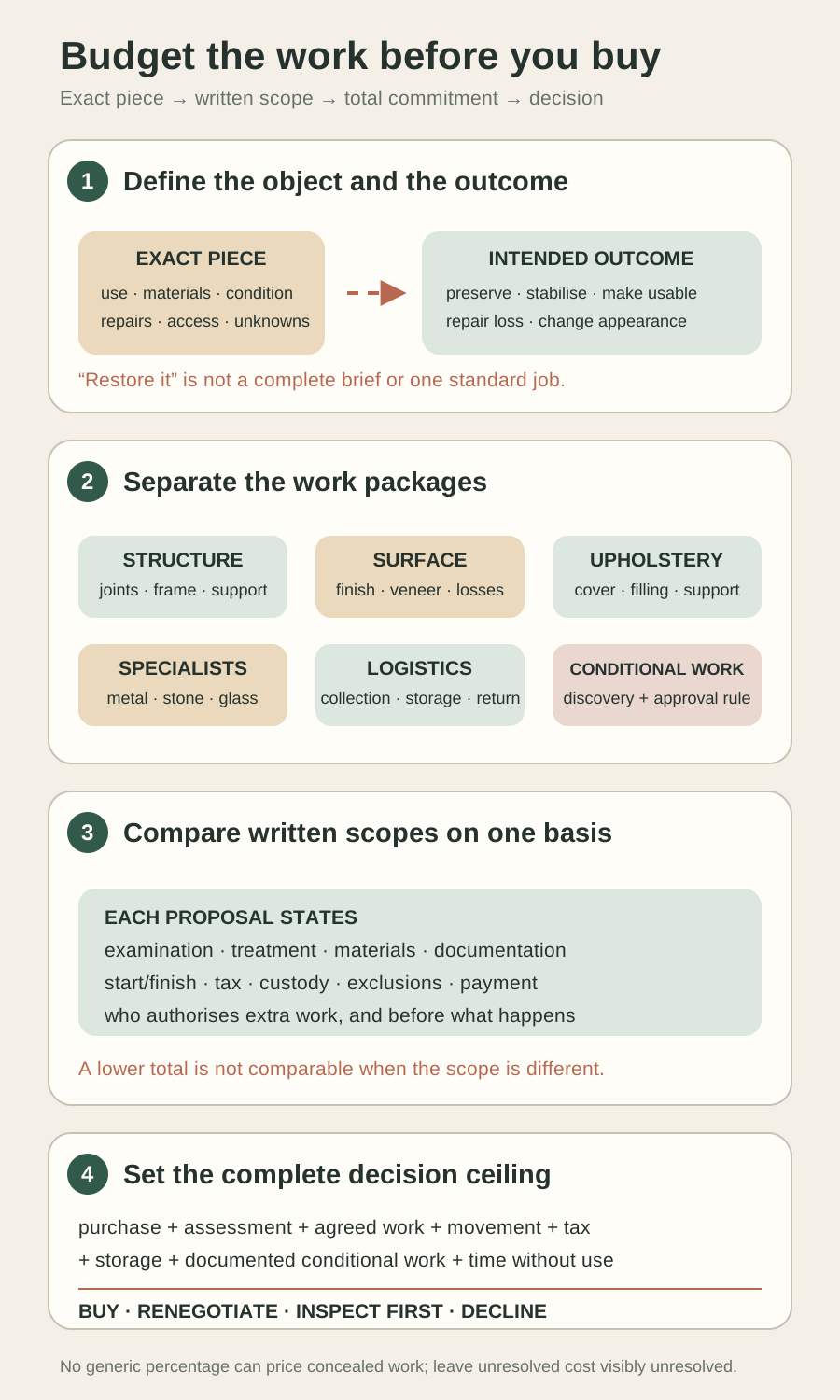
Compare written scopes before comparing totals
Icon recommends a written treatment proposal with the estimate, a contract that records the treatment plan and dates, a cost breakdown with VAT shown, consultation before the proposal changes and a final project report. Use those as comparison fields rather than assuming every professional packages the same work in the same way.[1]
Normalise each proposal
- Examination and objectiveWhat was examined, what remains inaccessible and the condition or treatment outcome being addressed.
- Treatment and materialsEvery included stage, retained or replaced material, finish level and work assigned to another specialist.
- Exclusions and optionsWork not included, alternative treatments, client-supplied material and discoveries that trigger another decision.
- MoneyLabour, materials, specialist charges, documentation, tax, deposit, staged payment and validity period.
- Time and custodyExpected start and finish, collection, storage, insurance responsibility, return and delay communication.
- Change and recordWho may authorise extra work, the stop point before it begins, and the photographs and final report supplied.
Ask why the scopes differ before selecting one. One professional may preserve an old finish while another prices its removal; one may include frame work before upholstery while another assumes the frame is sound. Those are different projects, not competing totals.
Calculate the complete commitment
| Commitment | Include | Leave visible |
|---|---|---|
| Purchase | Agreed price plus any buyer fee, payment charge or tax attached to the sale | Terms, returns and condition differences at handoff |
| Before treatment | Professional examination, collection, packing, access, storage and interim protection | Whether purchase can wait for the examination |
| Agreed treatment | Every accepted work package, labour, materials, subcontractor, documentation and tax | Options not selected and owner-supplied material |
| Conditional treatment | Only a documented range or approval mechanism supported by the professional | Unbounded concealed work that remains unresolved |
| Return to use | Return transport, reinstallation, room preparation and any follow-up specified | Time without use and schedule dependency |
Use the price-comparison Guide to keep asking price, completed sale evidence, fees and logistics on a consistent basis. A high restoration budget does not prove the seller's price is wrong, and a low asking price does not make the project affordable.
Decision ceiling
Do not spend the entire ceiling on the optimistic scope
Your ceiling is the maximum commitment you are willing and able to accept, not a target for the professional to reach. If the agreed work plus the unresolved consequence leaves no room for an honest decision, inspect before buying, renegotiate the transaction or decline.
Send one restoration-budget brief before committing
Message to copy
Ask for the right stage of professional answer
Hello—I'm considering buying this exact [piece] for [daily/occasional/display] use. My intended outcome is [preserve/stabilise/make usable/repair/change], while retaining [finish, material, hardware or evidence]. I have attached dated whole, side, back, top, underside and detail views; dimensions; seller-reported use, storage and earlier work; and a list of what remains closed or untested. Could you tell me whether this is within your experience, whether the record supports only an initial range or requires an in-person examination, and what a written proposal would include for structure, surface, upholstery or other specialist work, materials, documentation, collection/return, storage, tax, timing, exclusions and conditional discoveries? Please state what would require my written approval before extra work begins. Thank you.
PatinaHall helps the buyer form an evidence request. The independent seller remains responsible for their description, sale, payment, handoff, delivery and returns; the chosen professional remains responsible for their examination, proposal, treatment and terms. Agree whether the sale depends on inspection before money or custody changes hands.
Buy when the exact piece suits its intended job, the accepted treatment scope and logistics fit the complete ceiling, and the remaining unknowns have an explicit boundary. Renegotiate when disclosed work changes the transaction but the project still works. Inspect first when one professional finding controls the decision. Decline when the outcome depends on an unsupported cheap fix, an irreversible treatment you do not accept or a concealed cost you cannot responsibly carry.